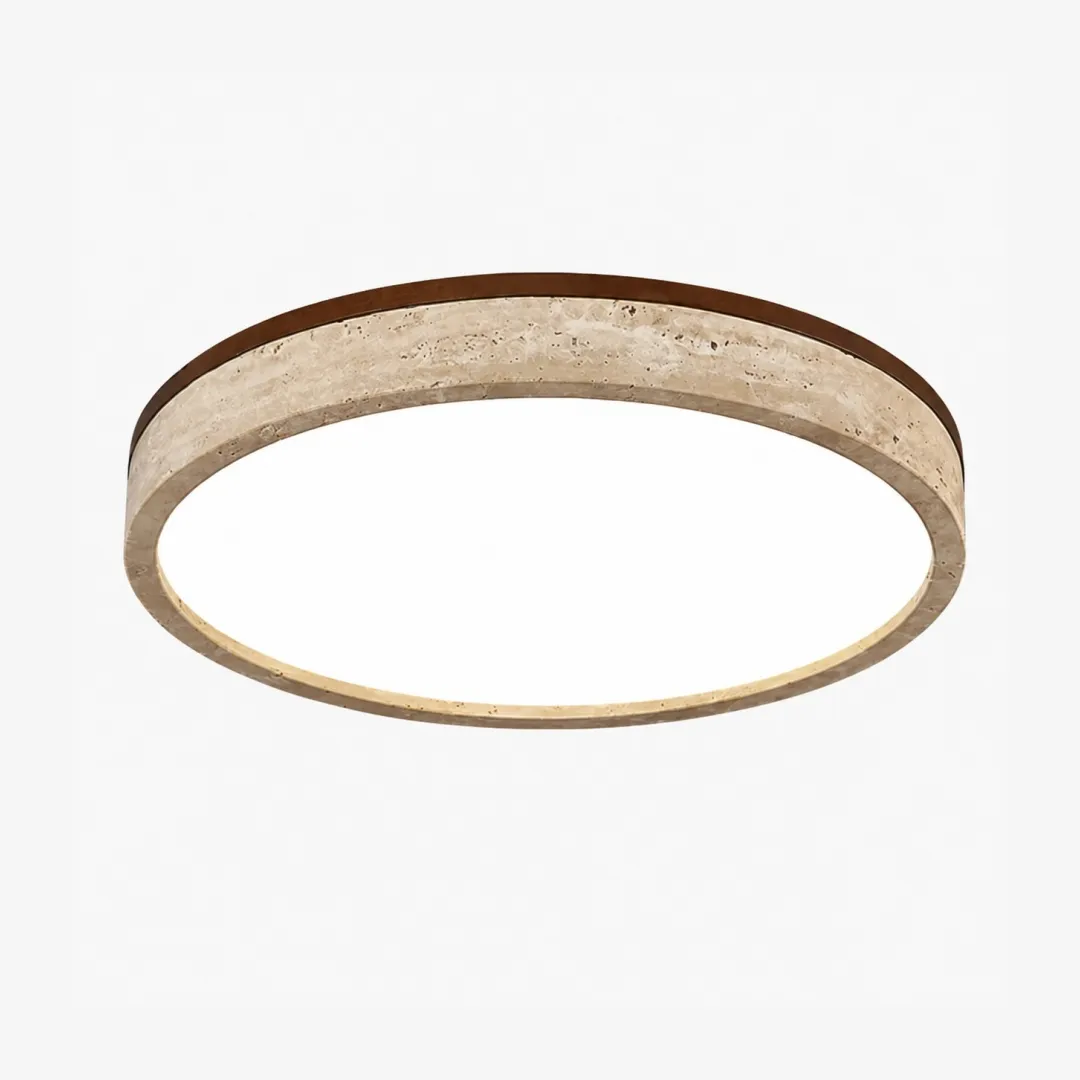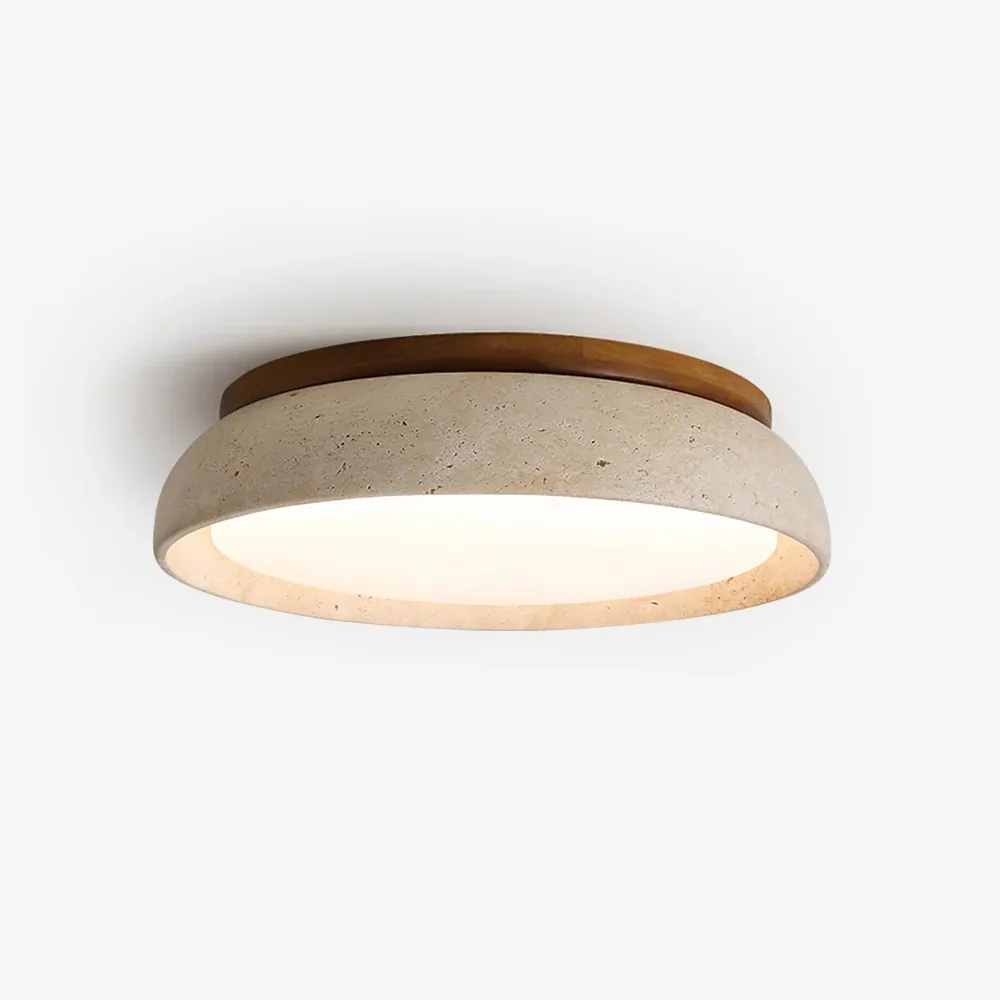
Small or Large Travertine Ceiling Light: Which Size Fits Your Space?
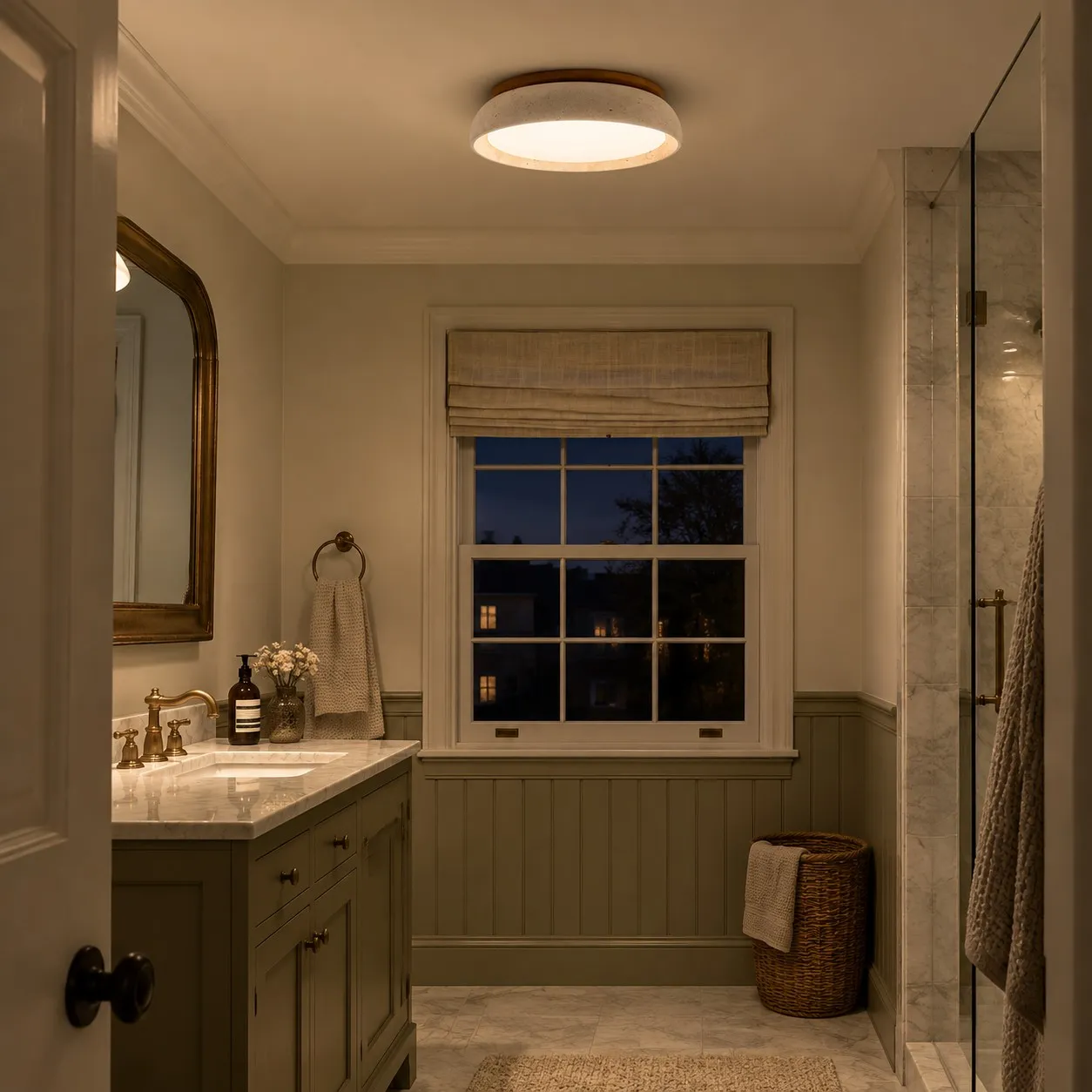
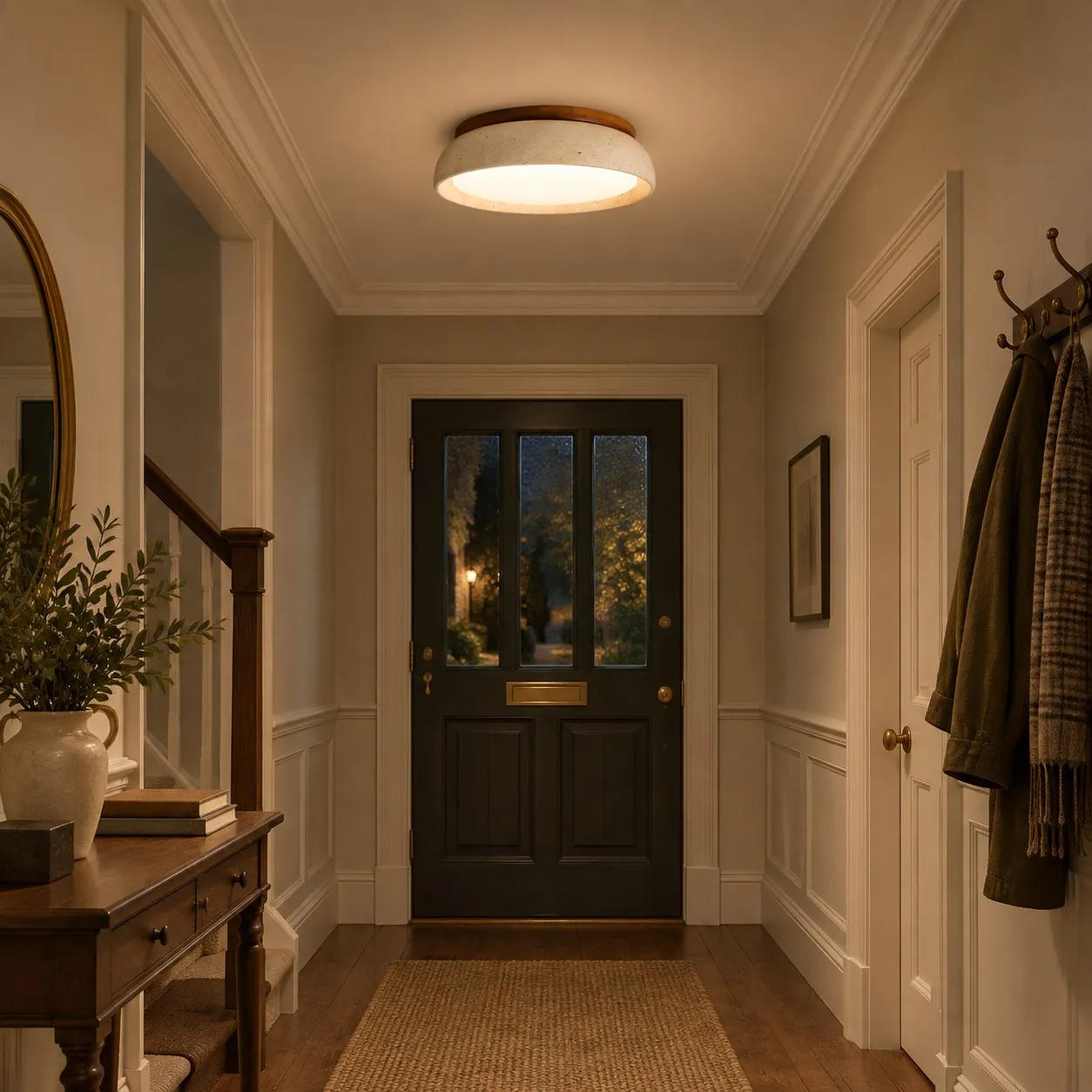
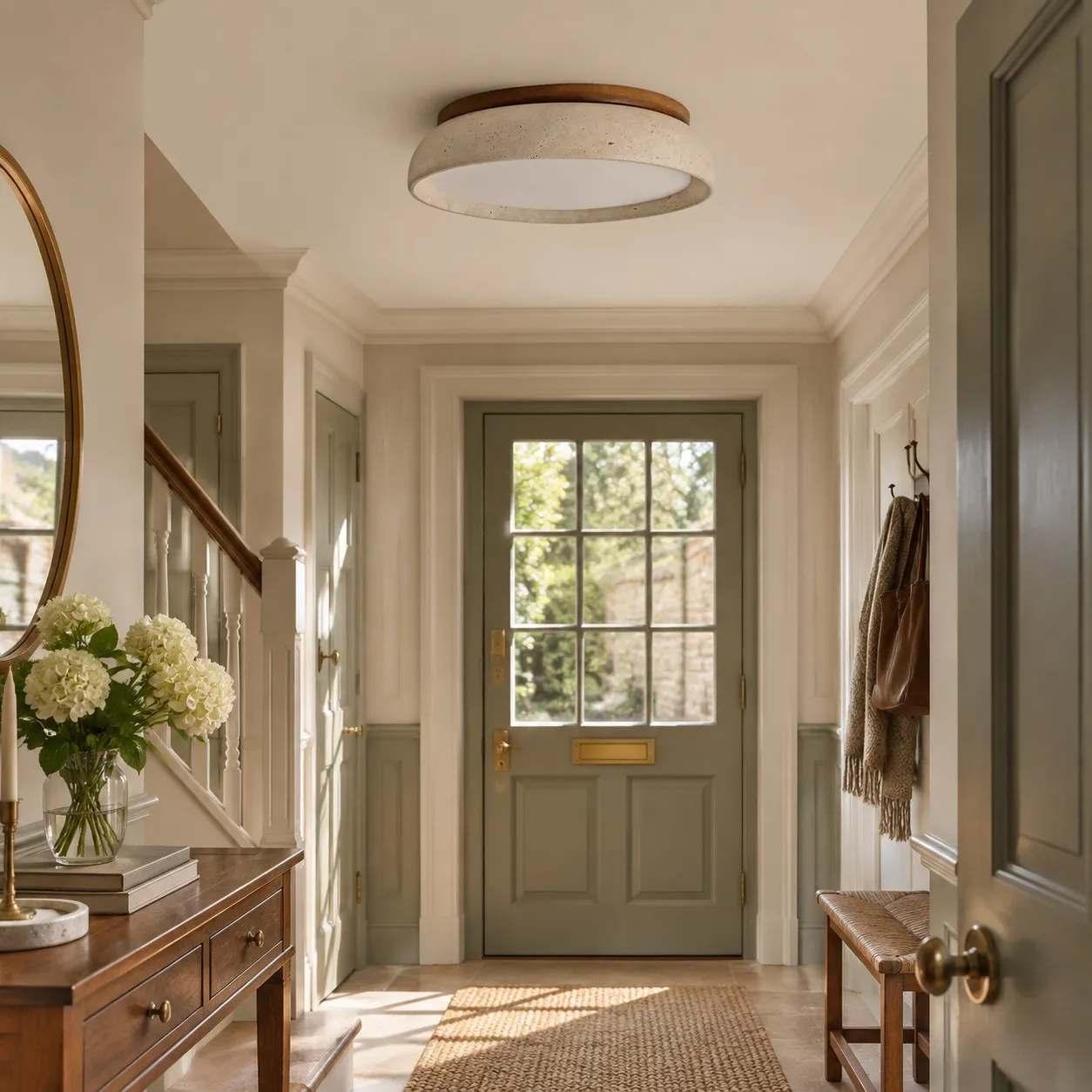
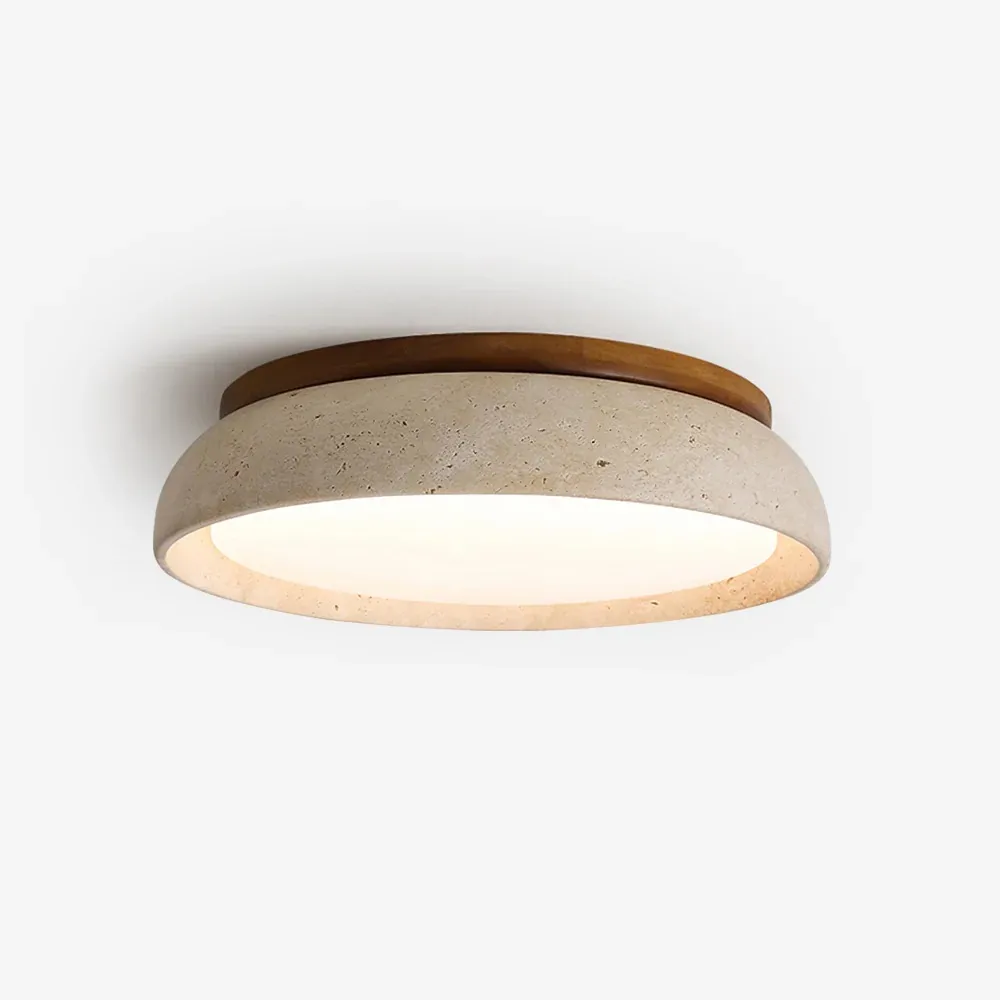
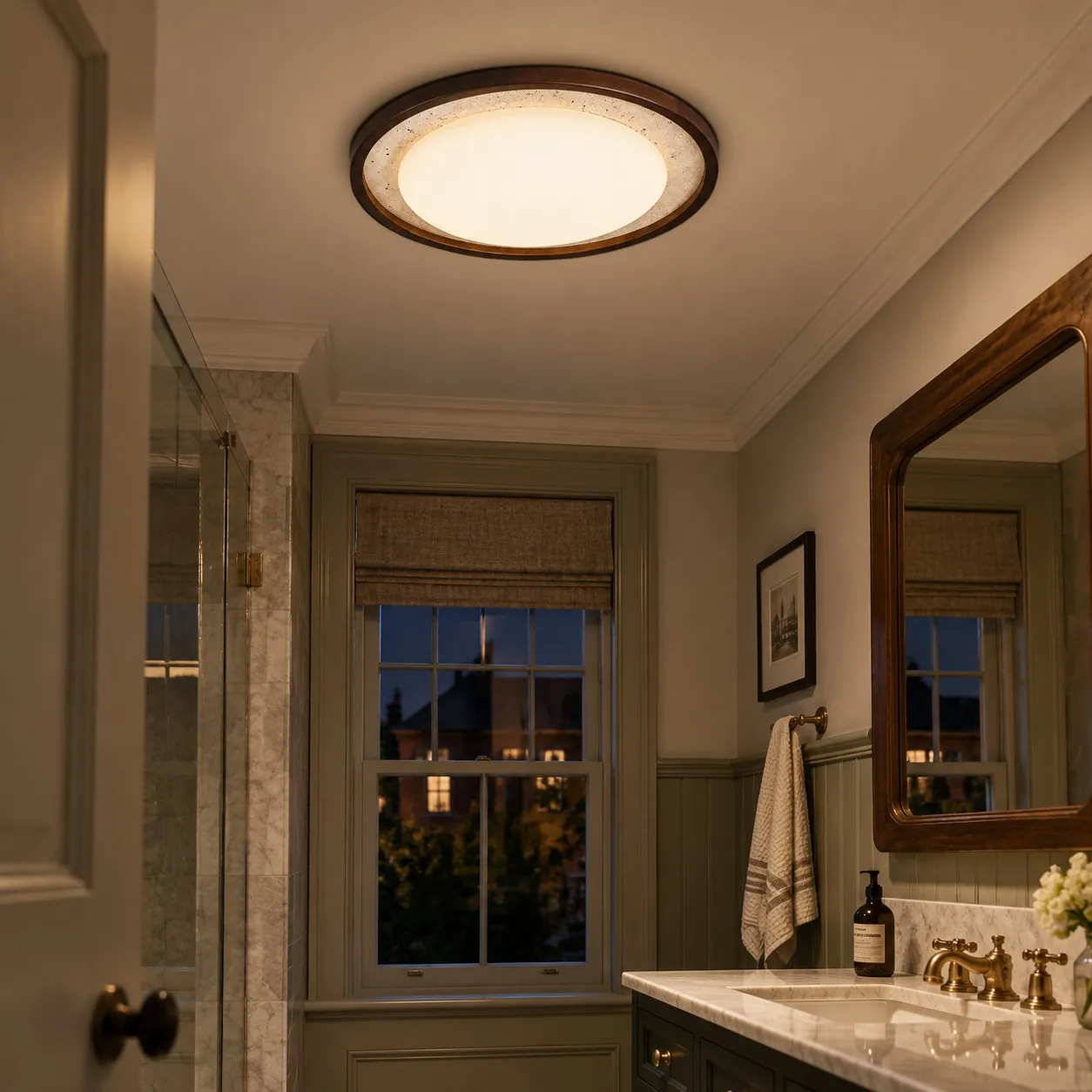
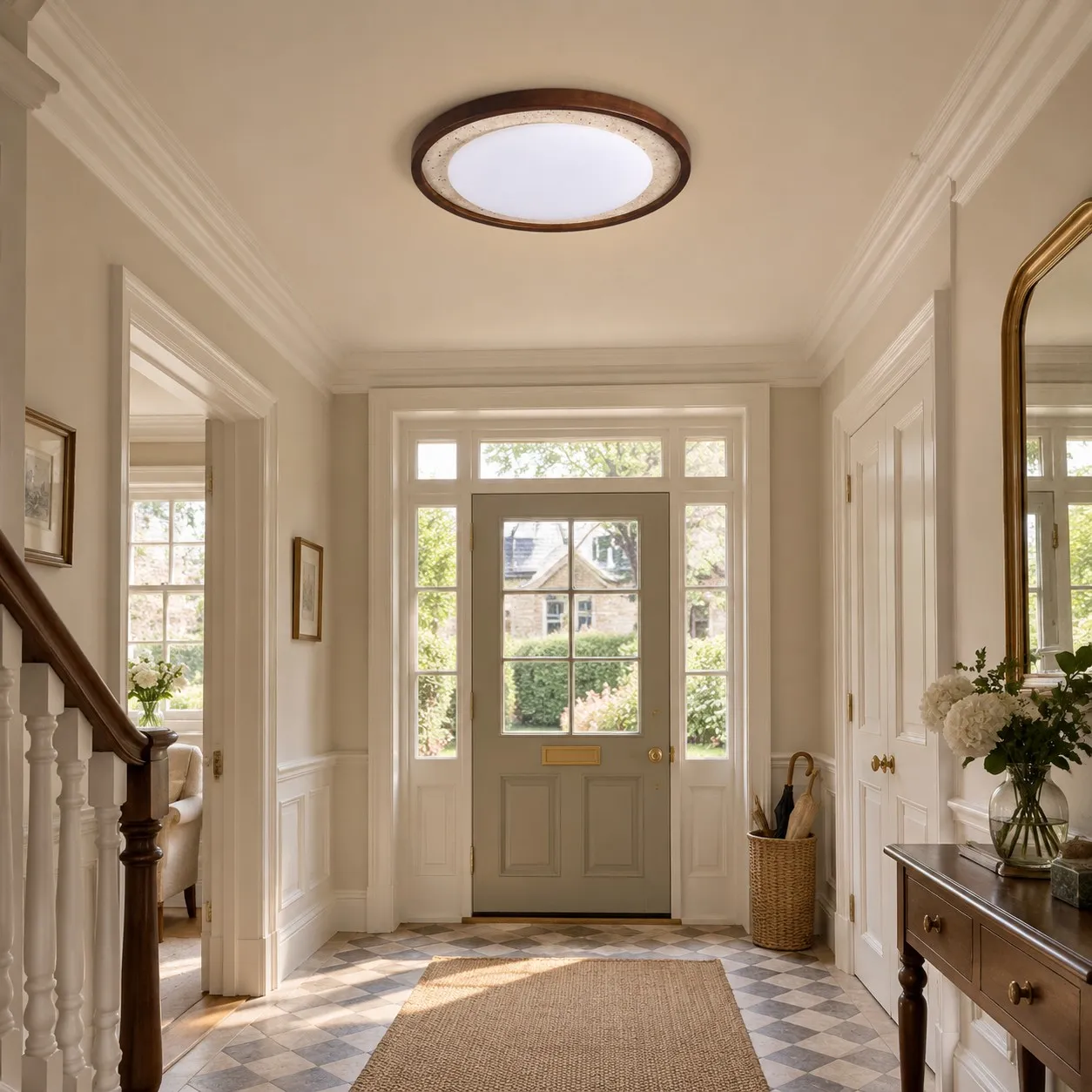
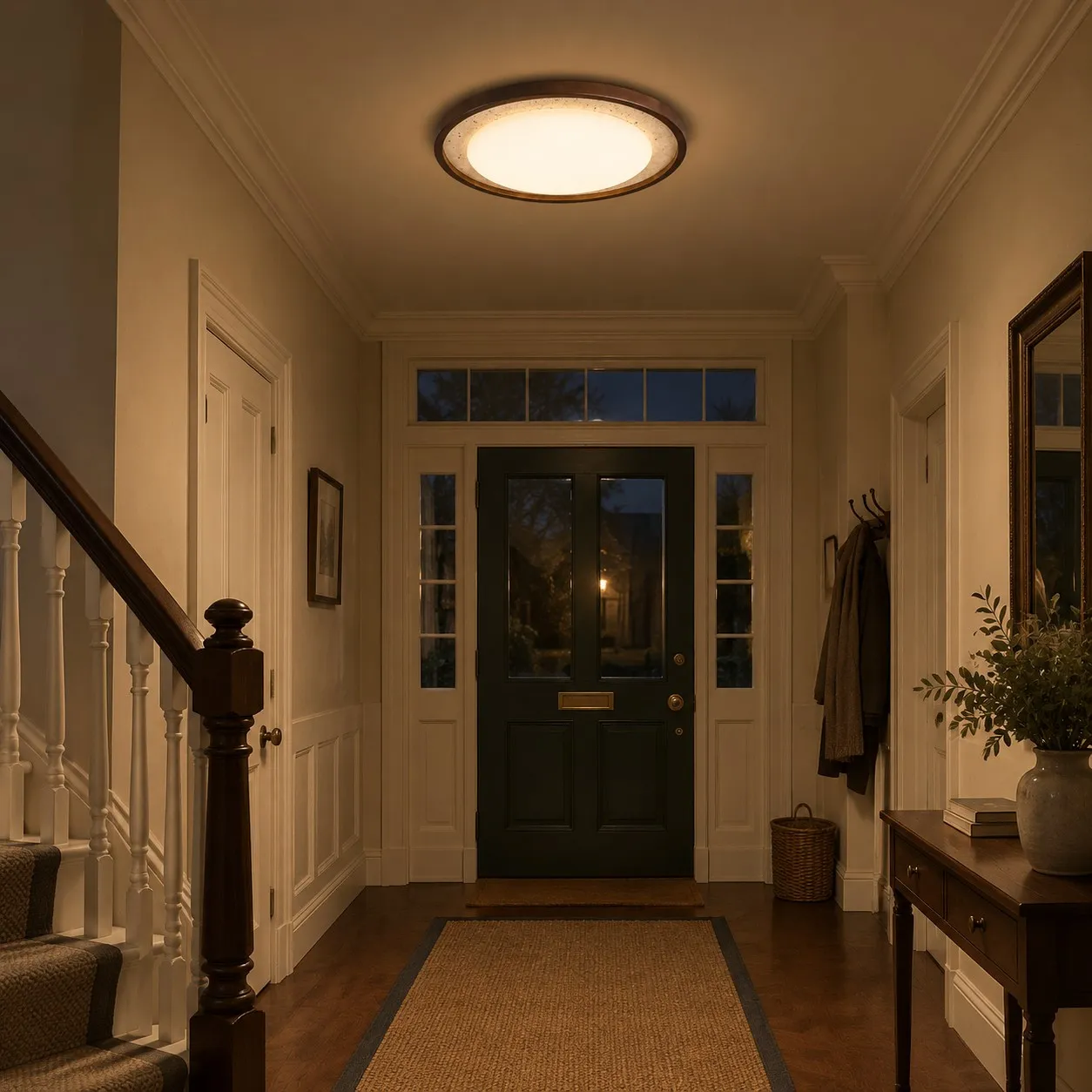
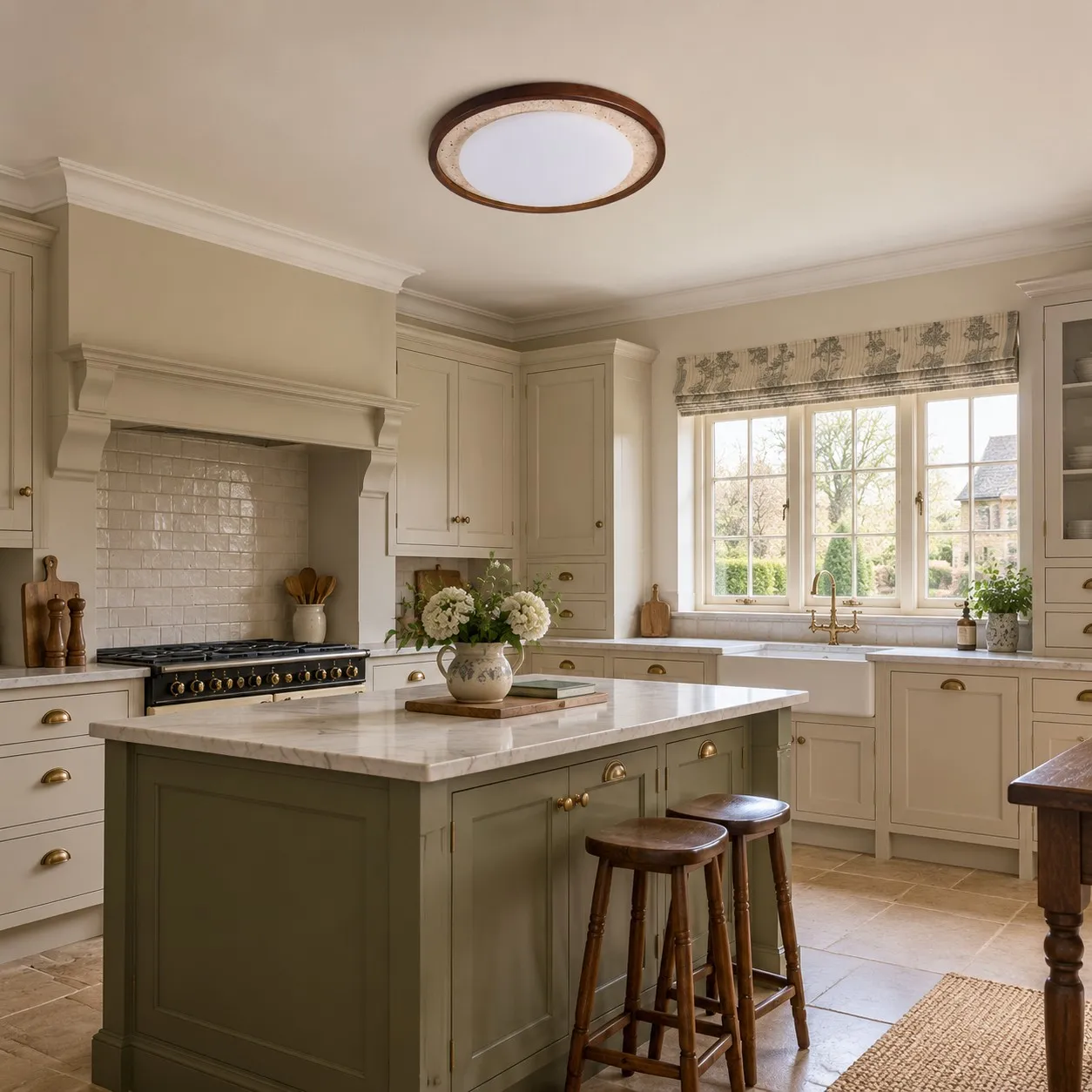
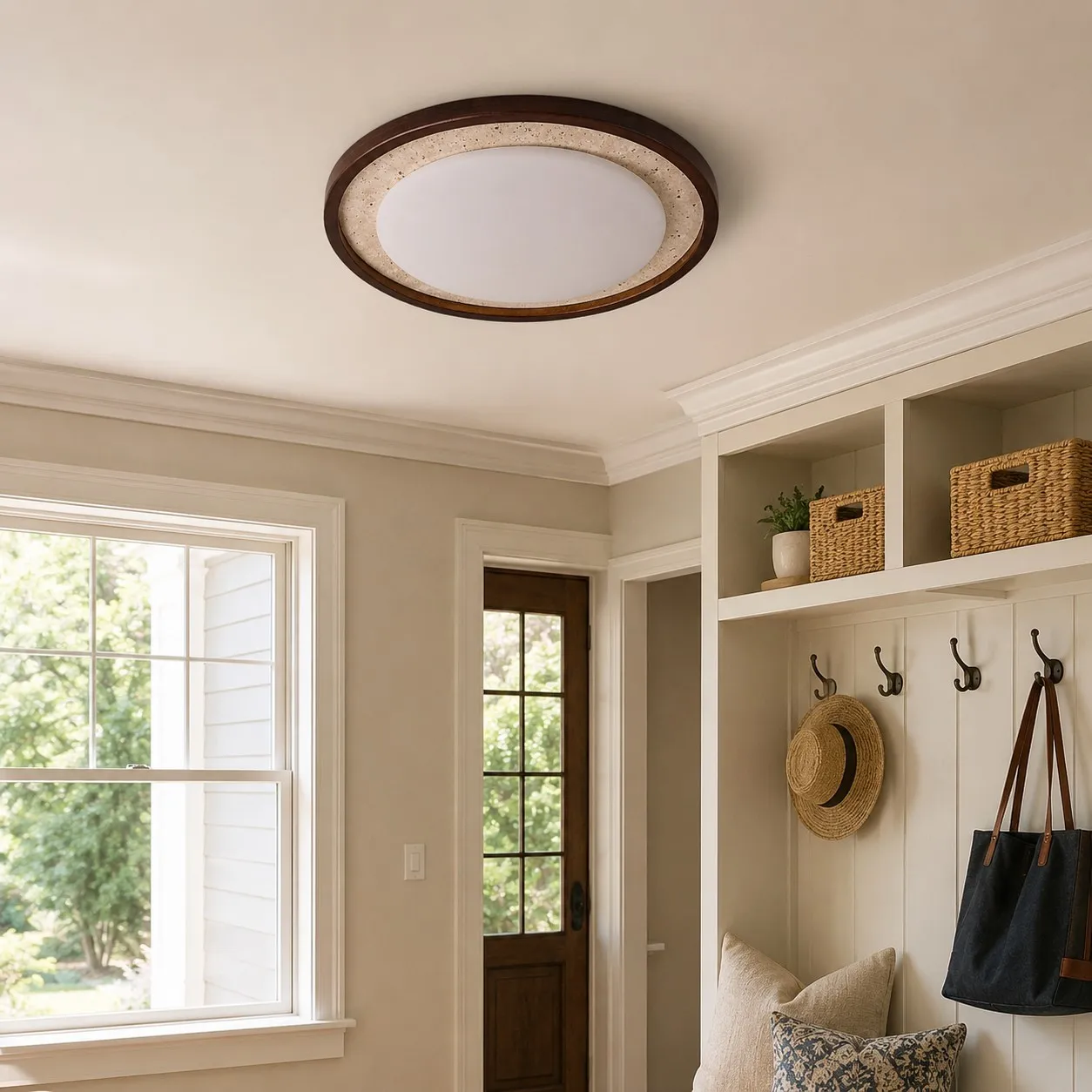
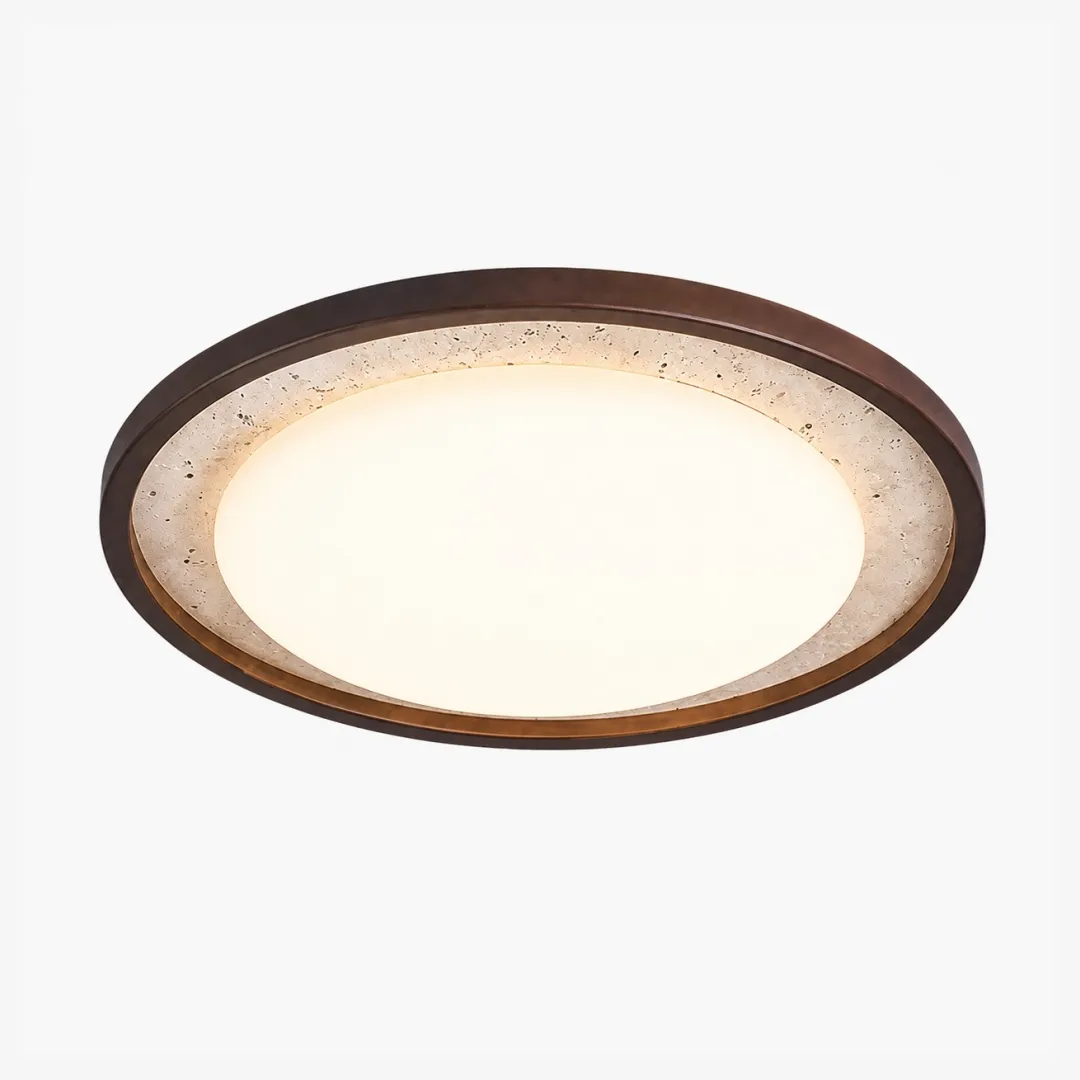
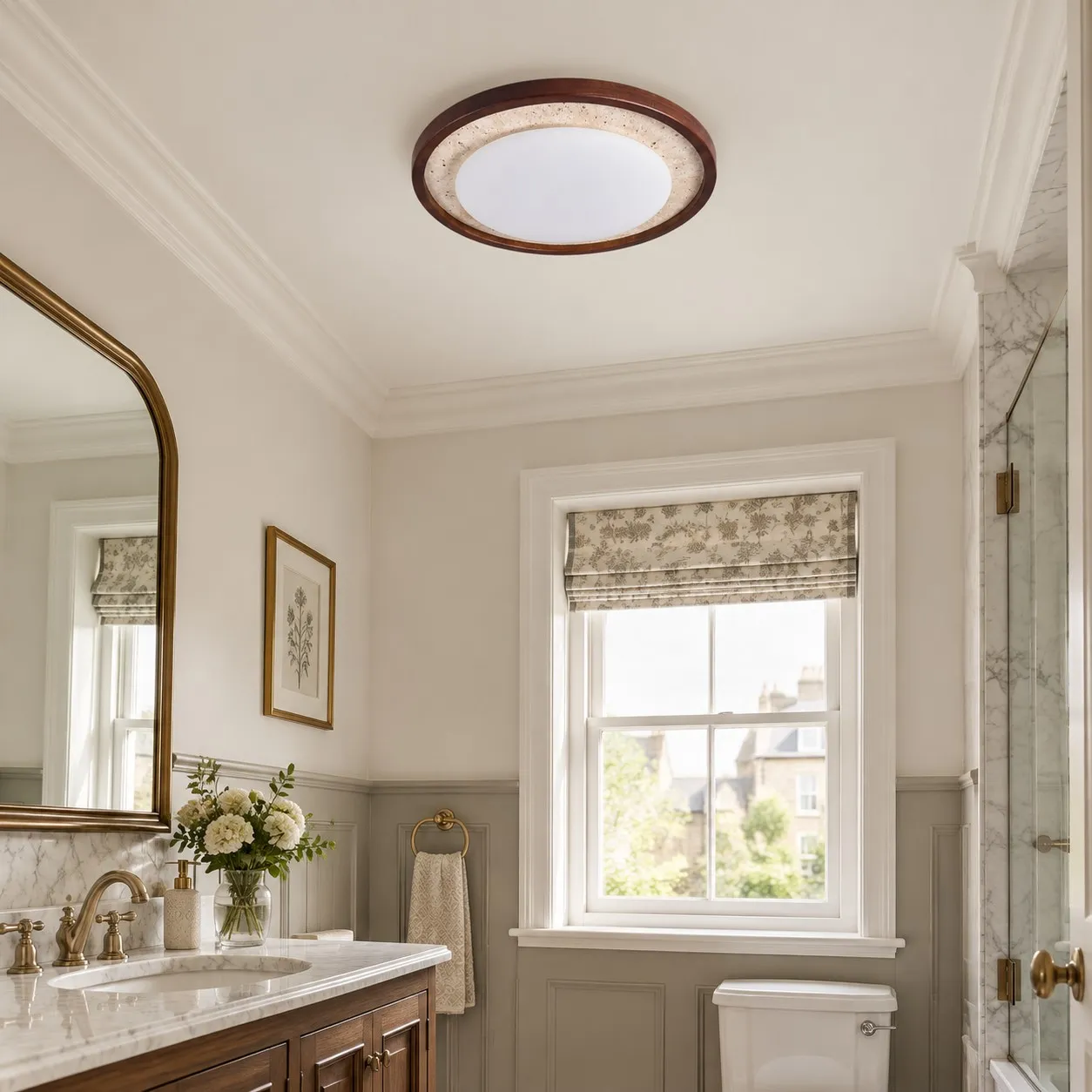
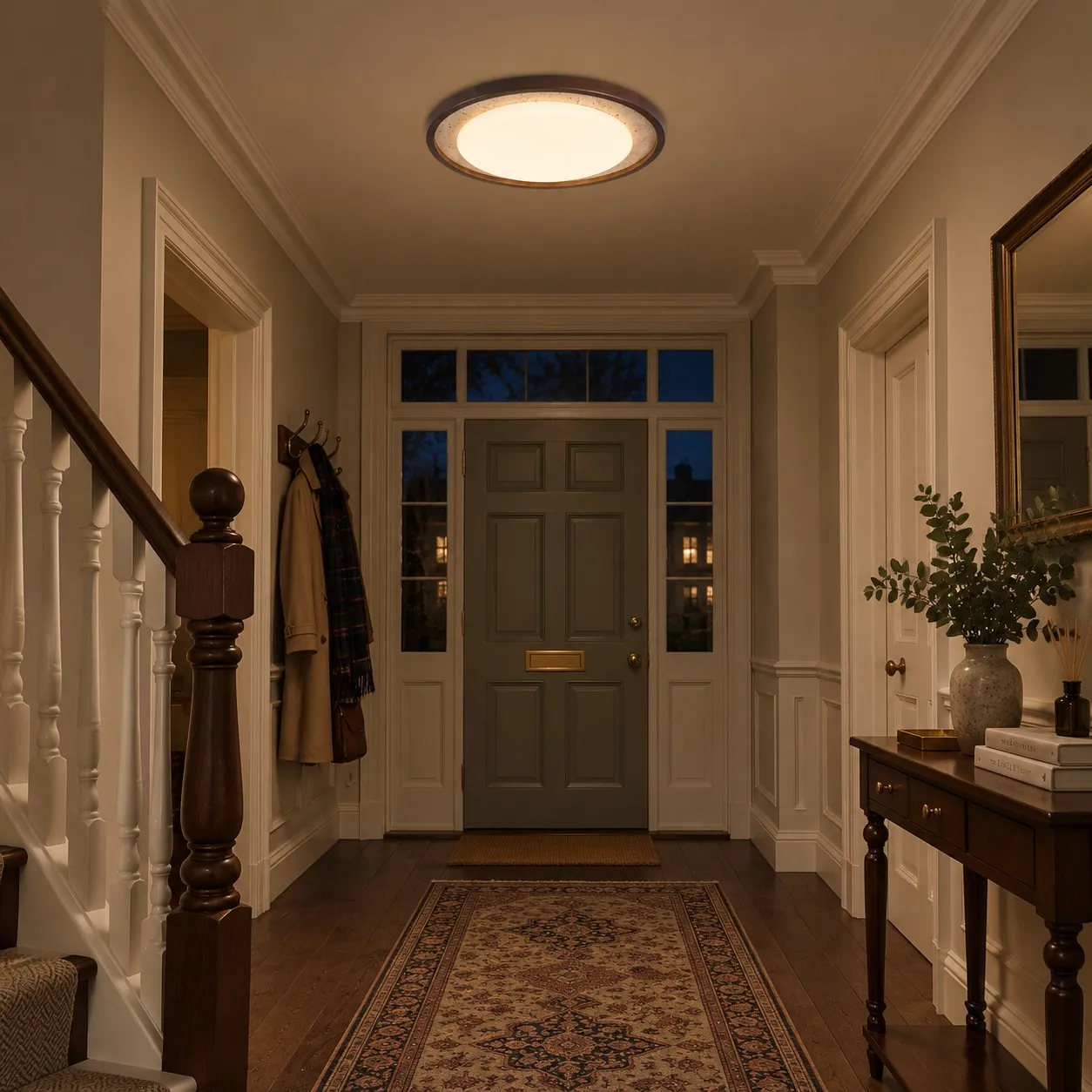
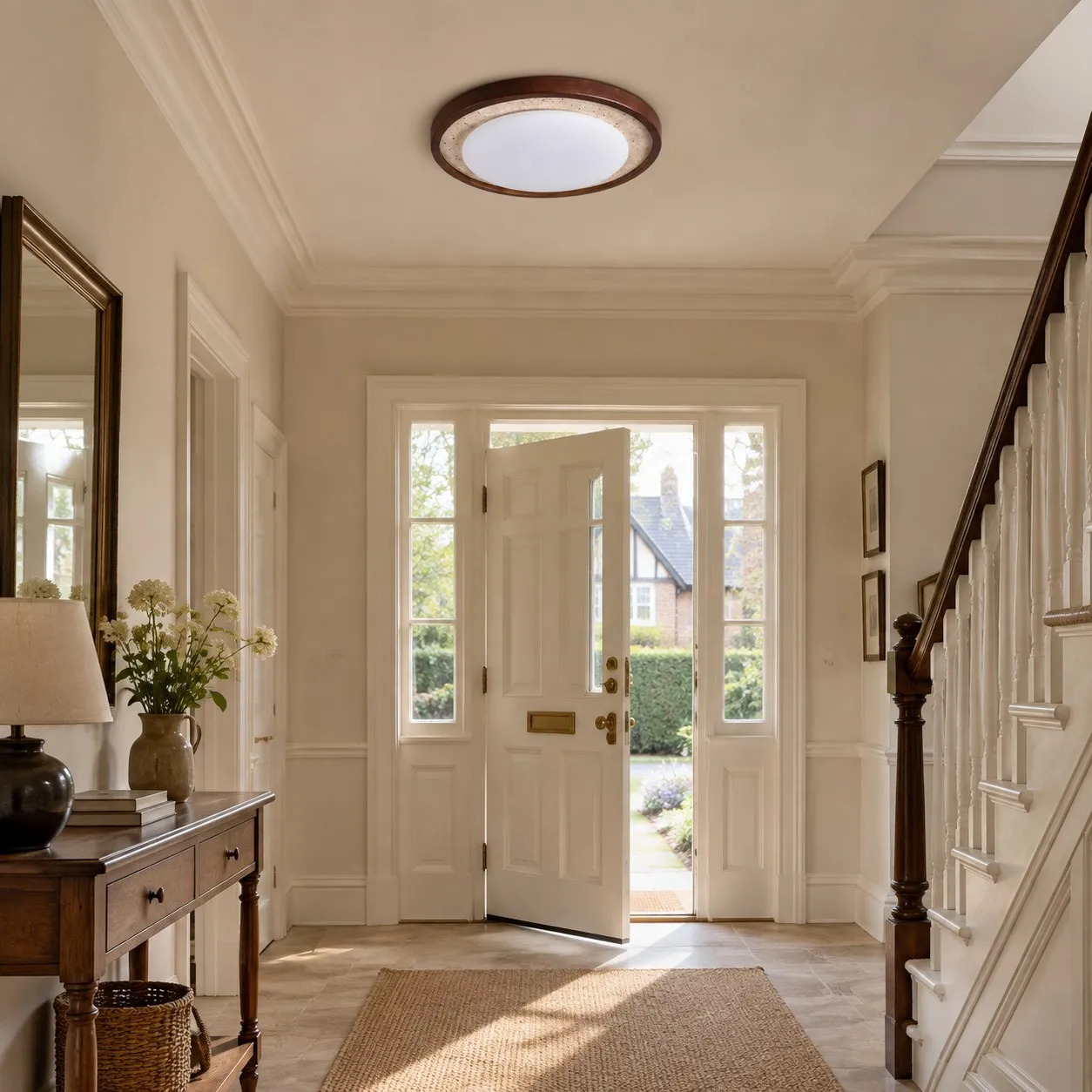
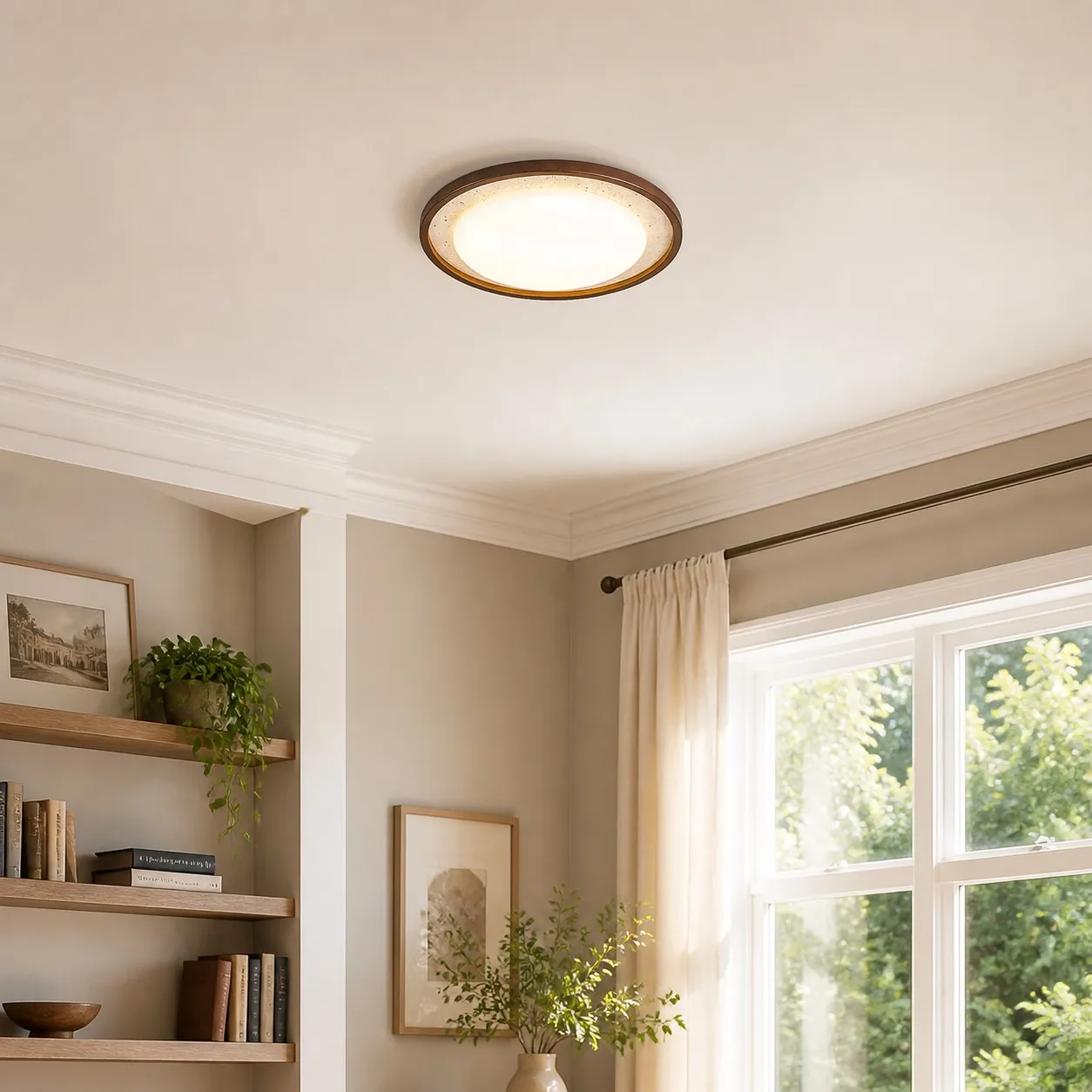
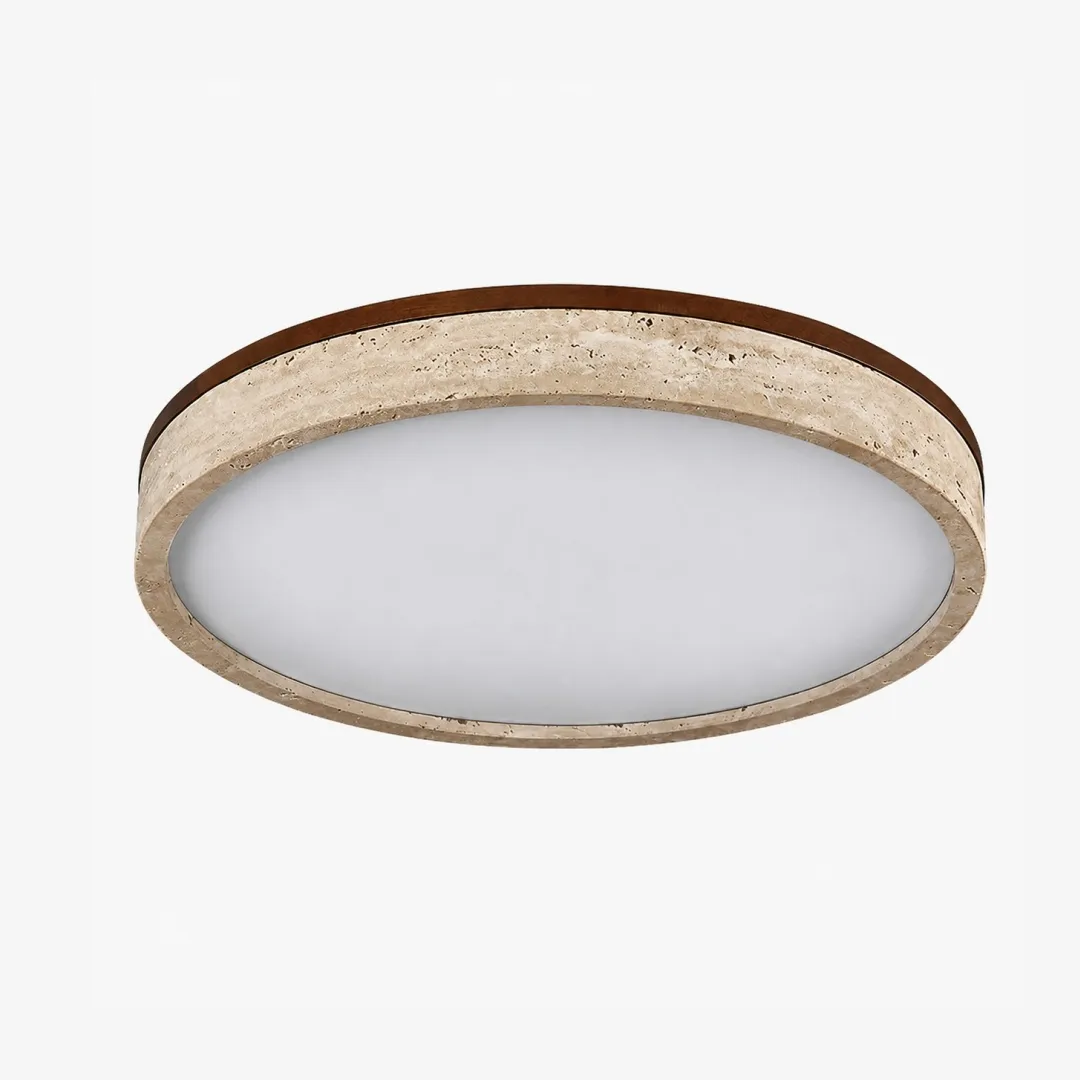
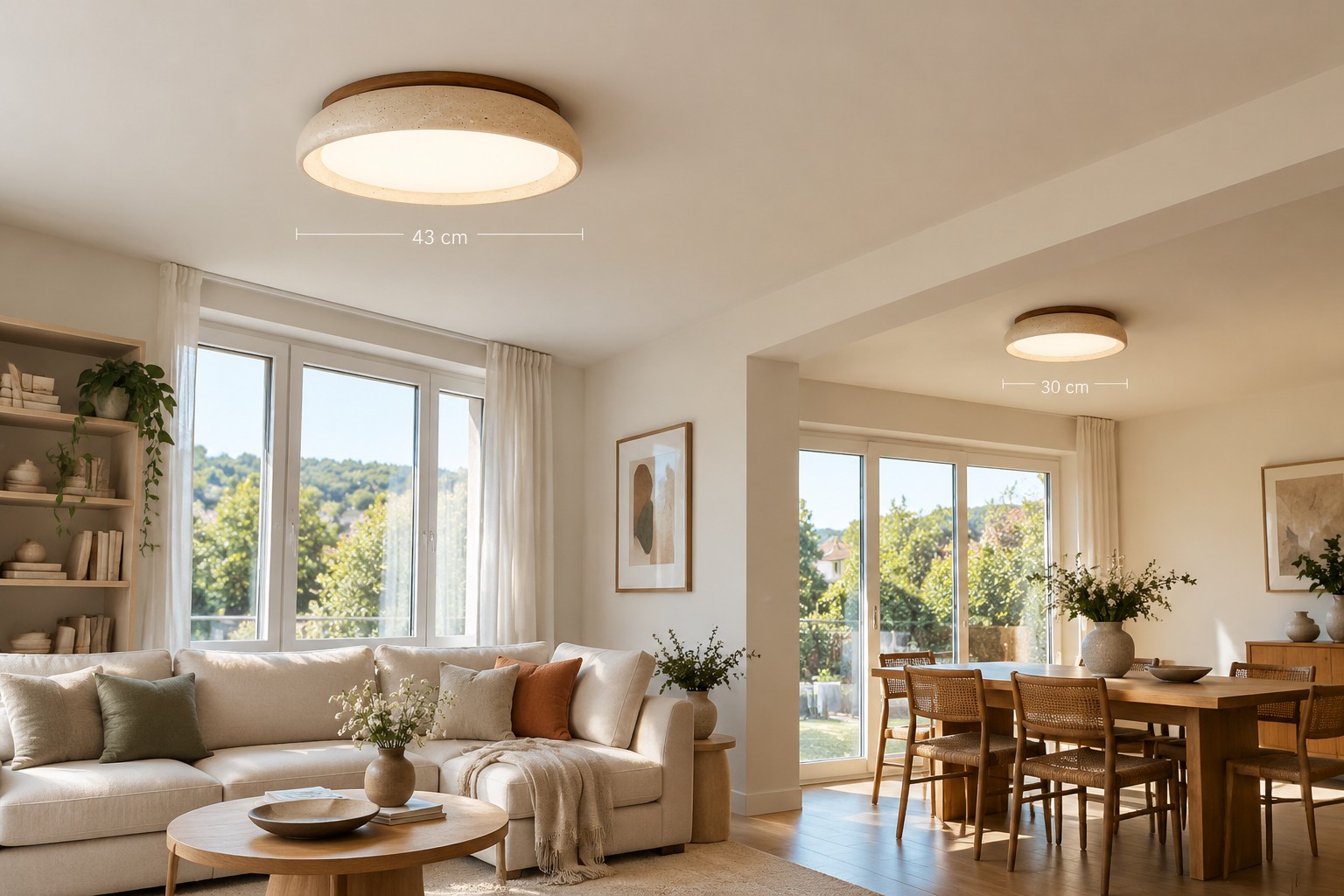
Choose the 30 cm travertine ceiling light for a compact hallway, entrance, small bedroom or other space where the fixture should stay visually quiet. Choose the 43 cm version for a living room, dining area or medium-sized bedroom where the ceiling light needs more presence. Both Veliana sizes are listed at 7 cm high, so the main decision is visual diameter rather than hanging clearance.
30 cm and 43 cm at a glance
| Size | Best starting point | Main advantage | Check before buying |
|---|---|---|---|
| 30 cm diameter x 7 cm high | Hallways, entrances, compact bedrooms and smaller rooms | Lower visual weight and more clear ceiling around the fixture | It may look undersized in a broad open room or above a large furniture group |
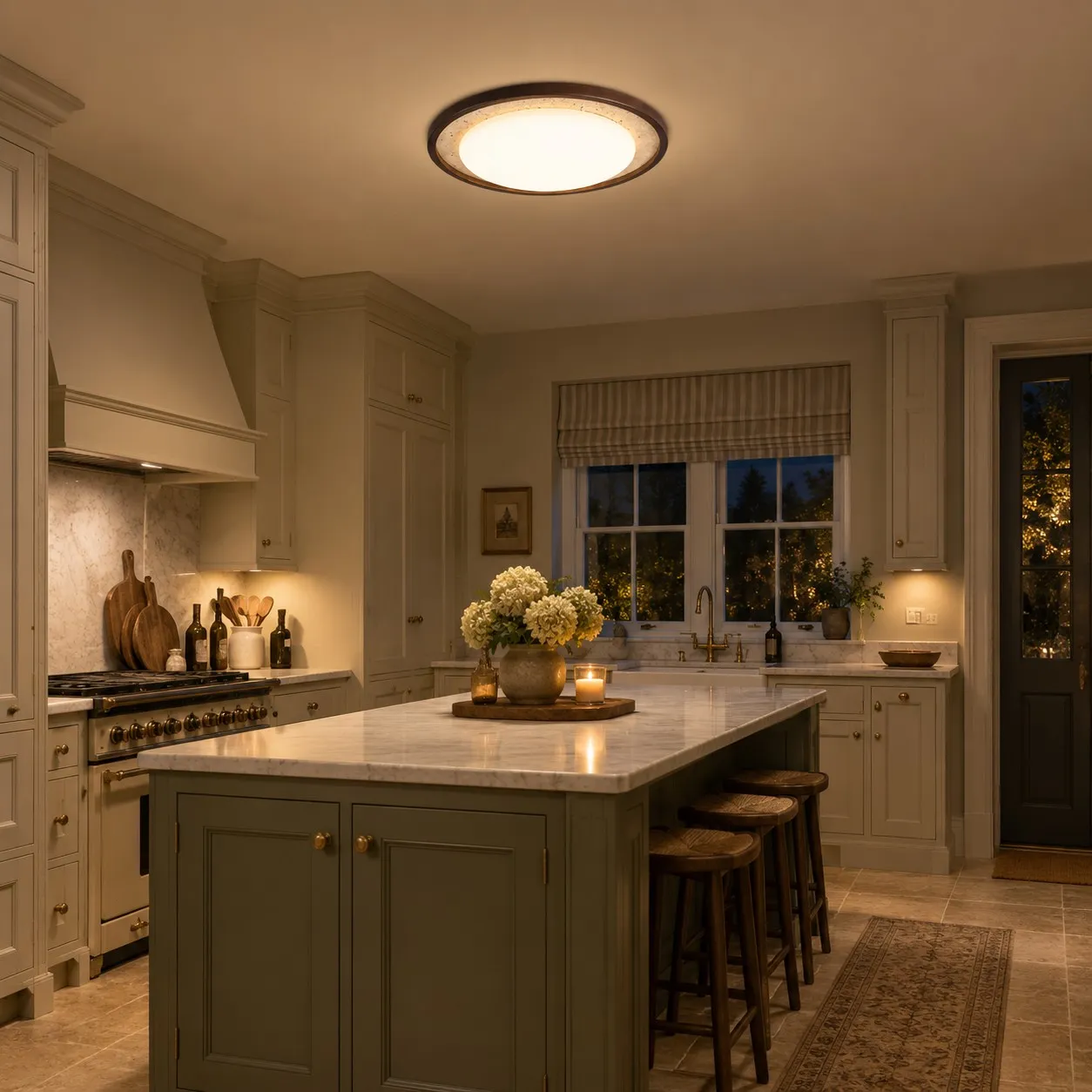
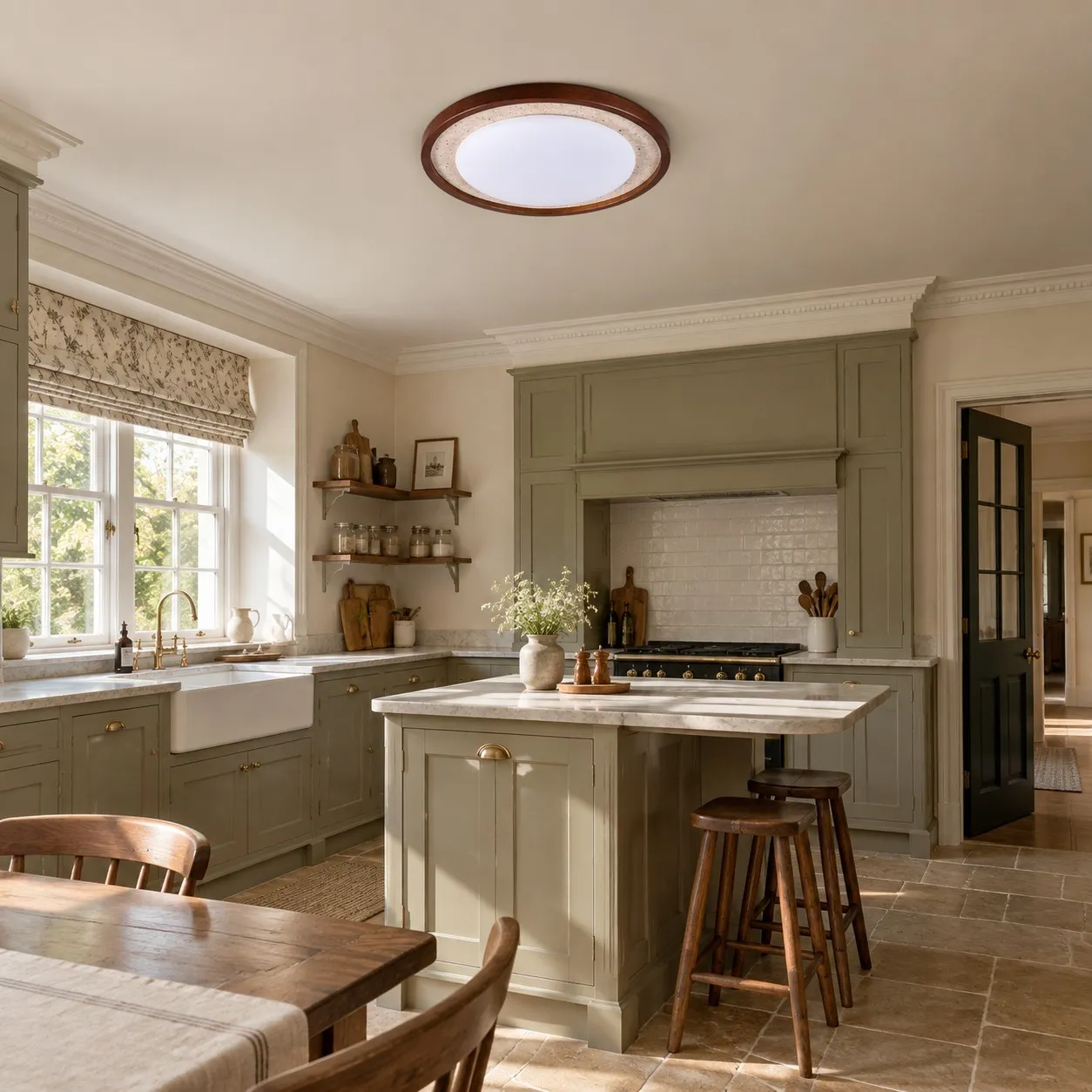
| 43 cm diameter x 7 cm high | Living rooms, dining areas and medium-sized bedrooms | Stronger presence and a wider visual anchor | Confirm clearance from tall doors, cupboards and ceiling details |
These are starting points, not automatic rules. Room proportions, furniture and the location of the electrical point can make two rooms with the same floor area feel very different.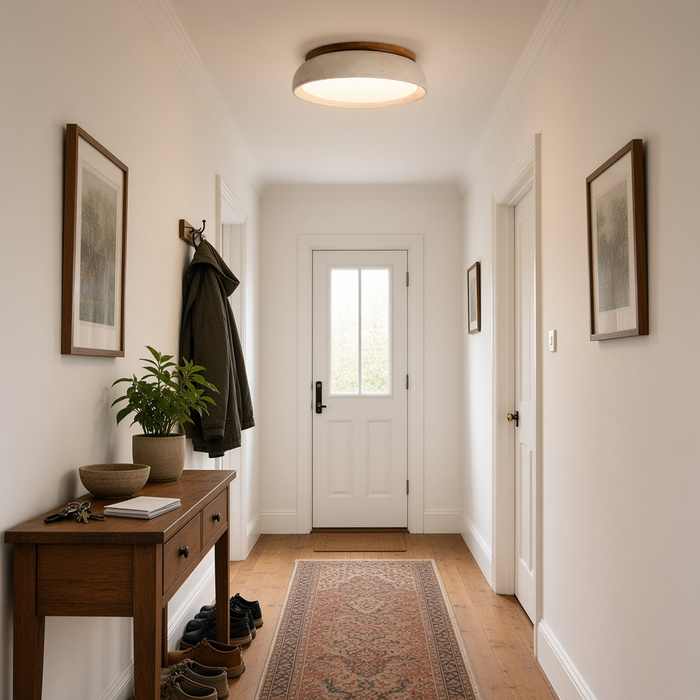
Choose 30 cm when the ceiling needs visual space
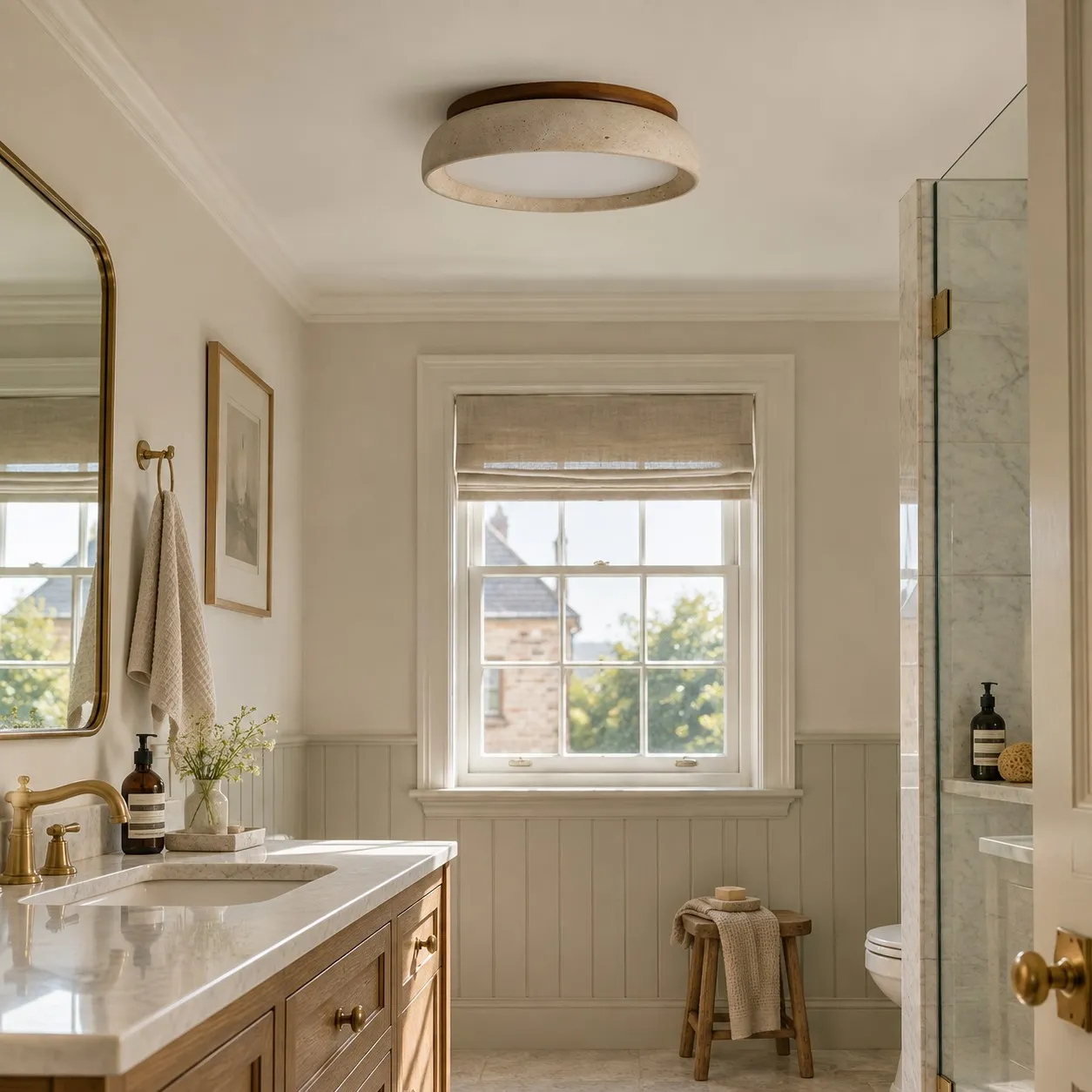
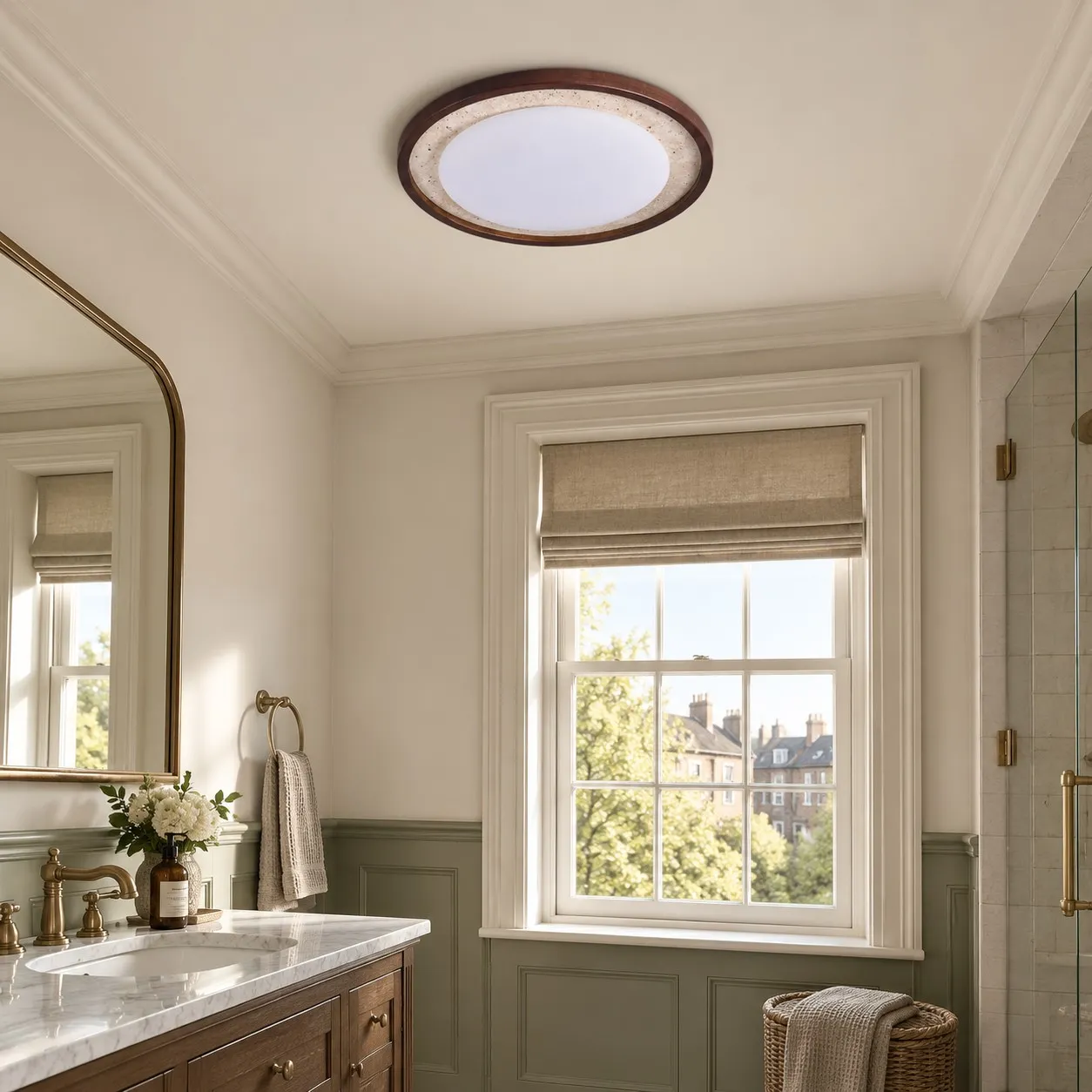
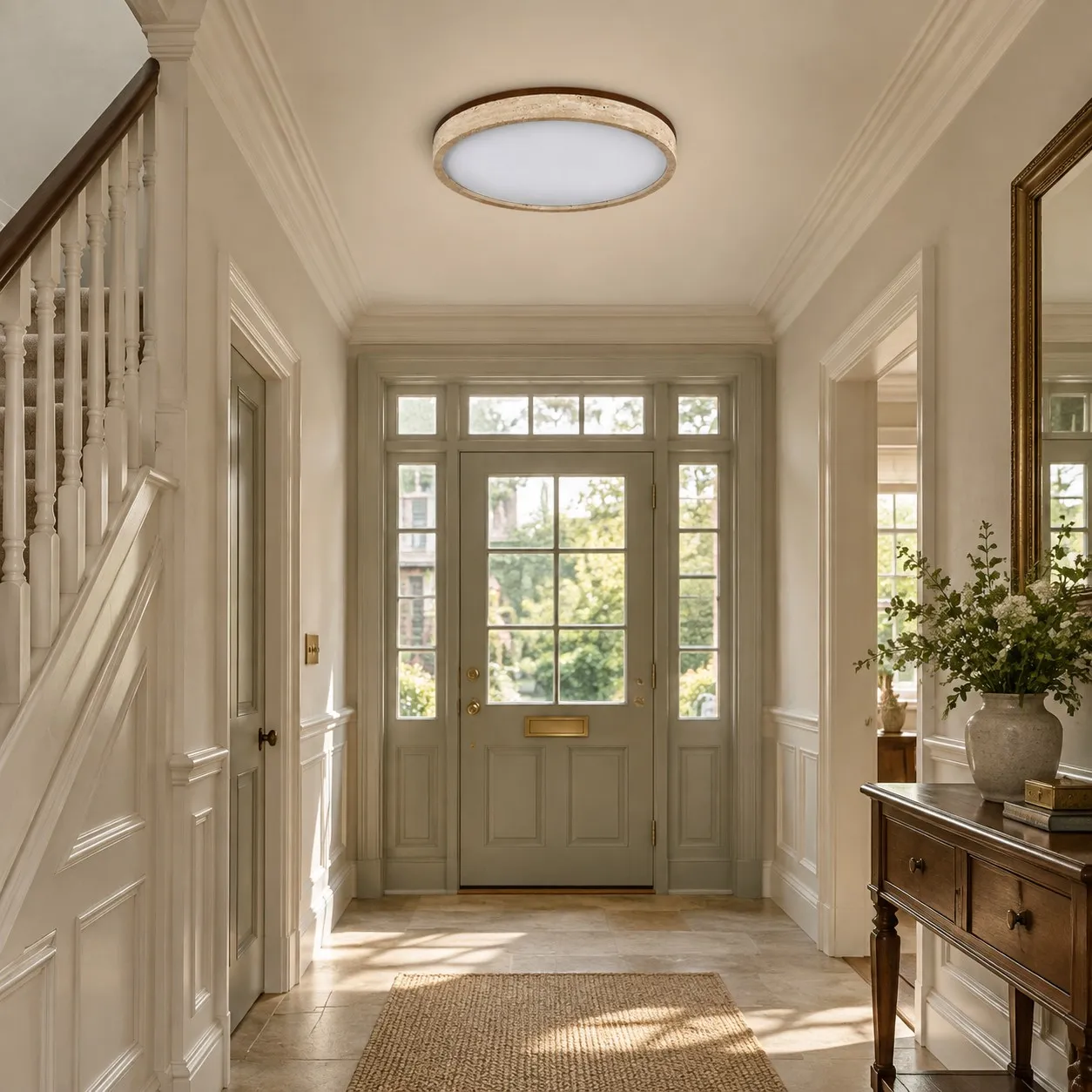
The smaller diameter works well where people see the fixture at close range. In a narrow hallway, a broad light can dominate the ceiling even when it does not obstruct movement. A 30 cm fitting leaves more negative space around coving, smoke alarms, loft hatches and door lines.
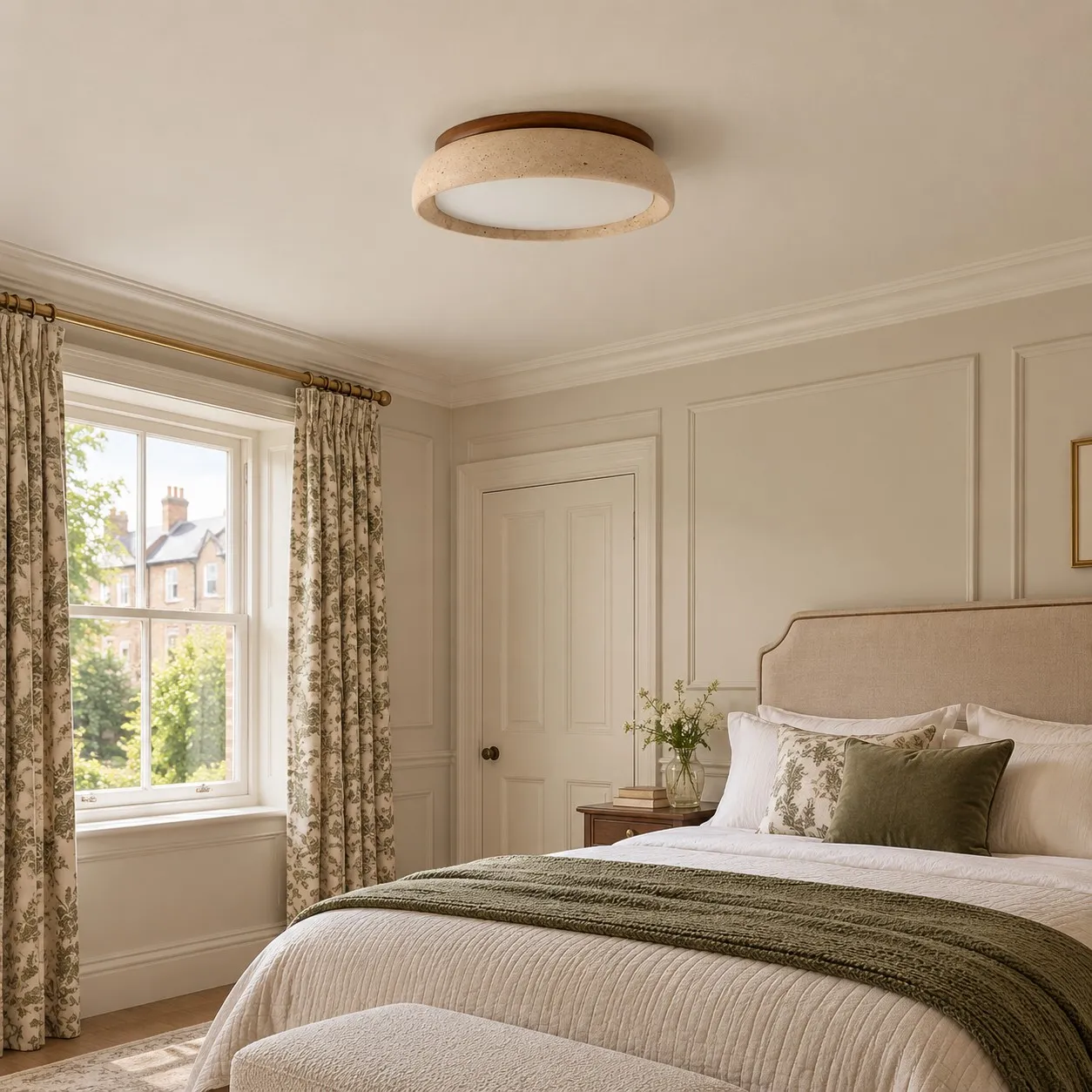
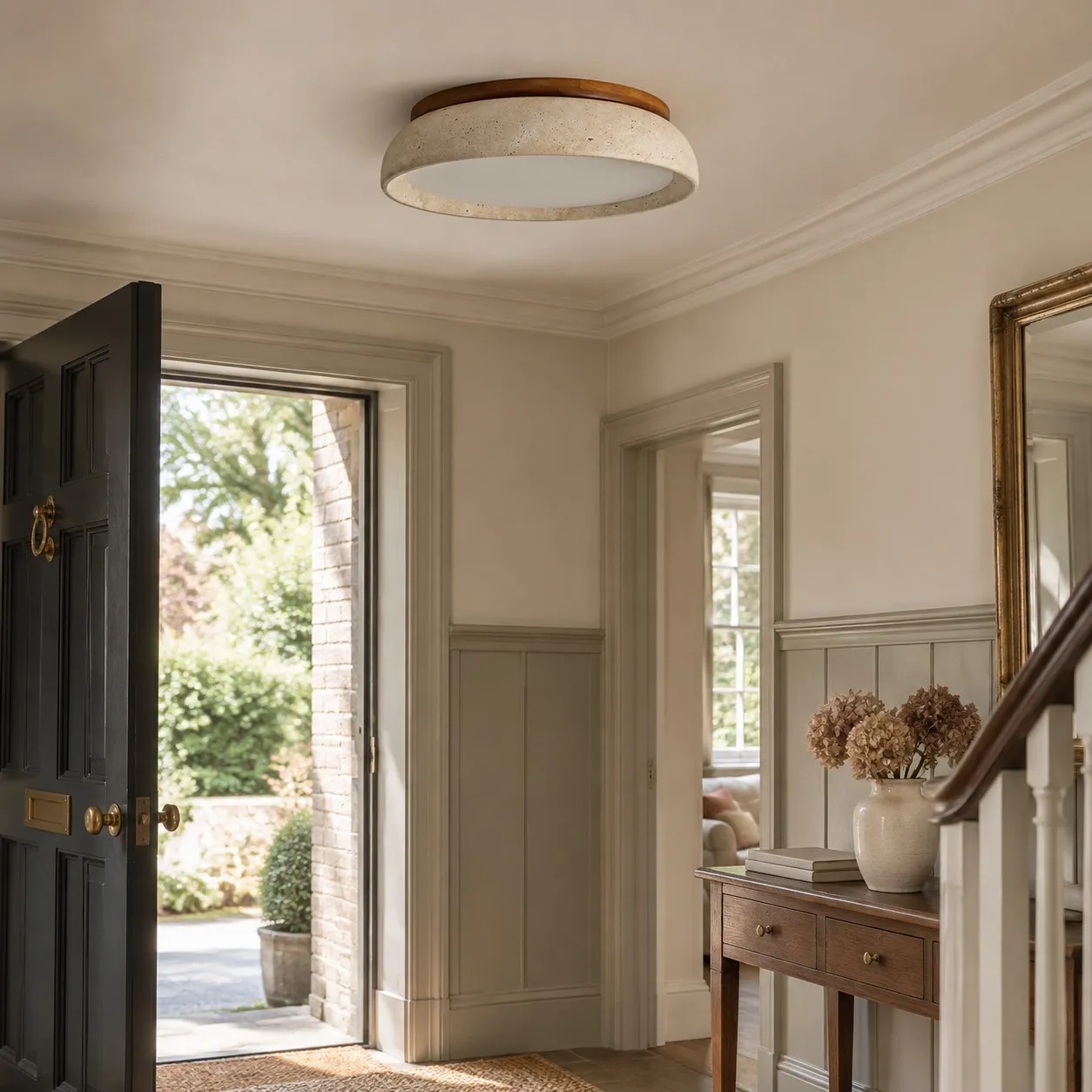
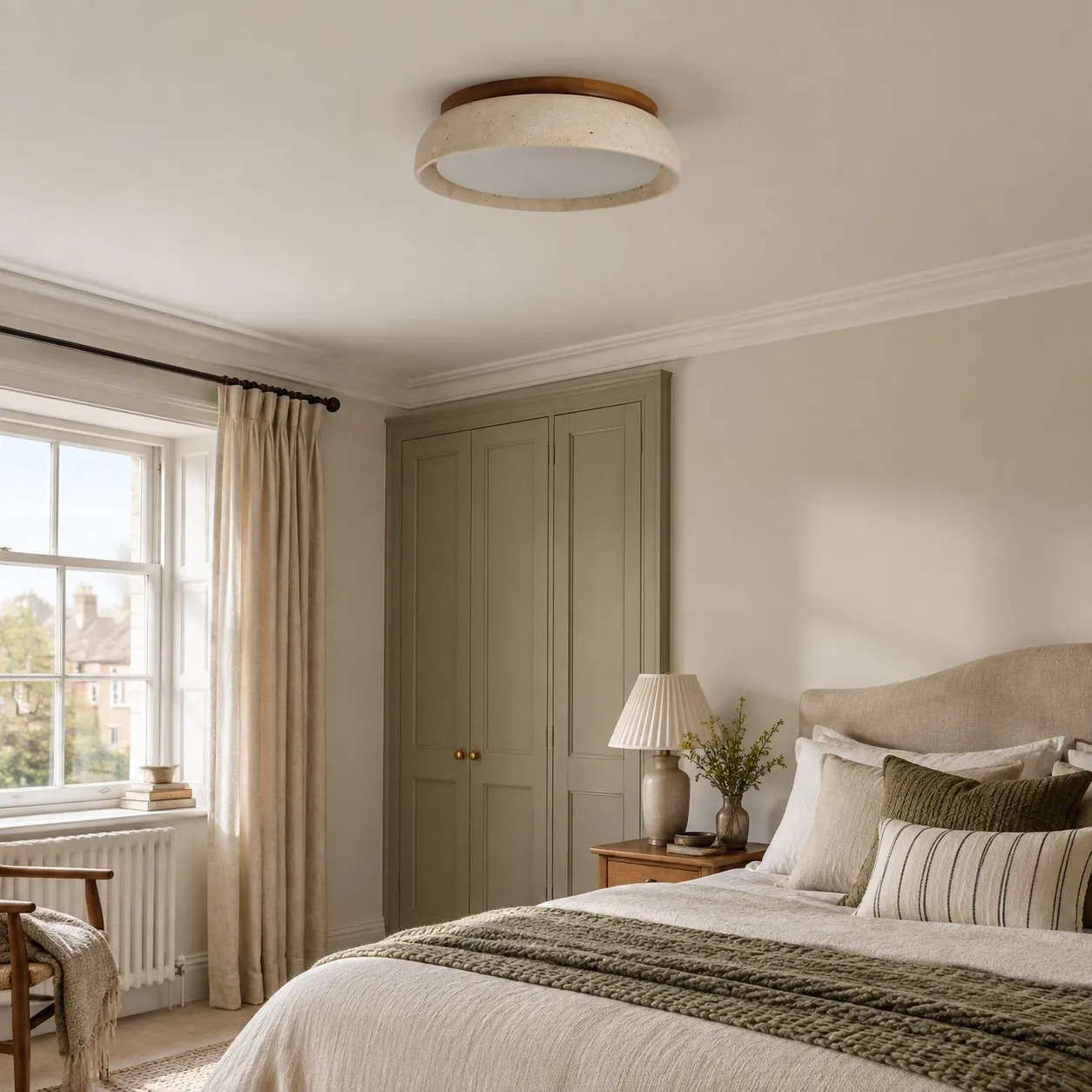
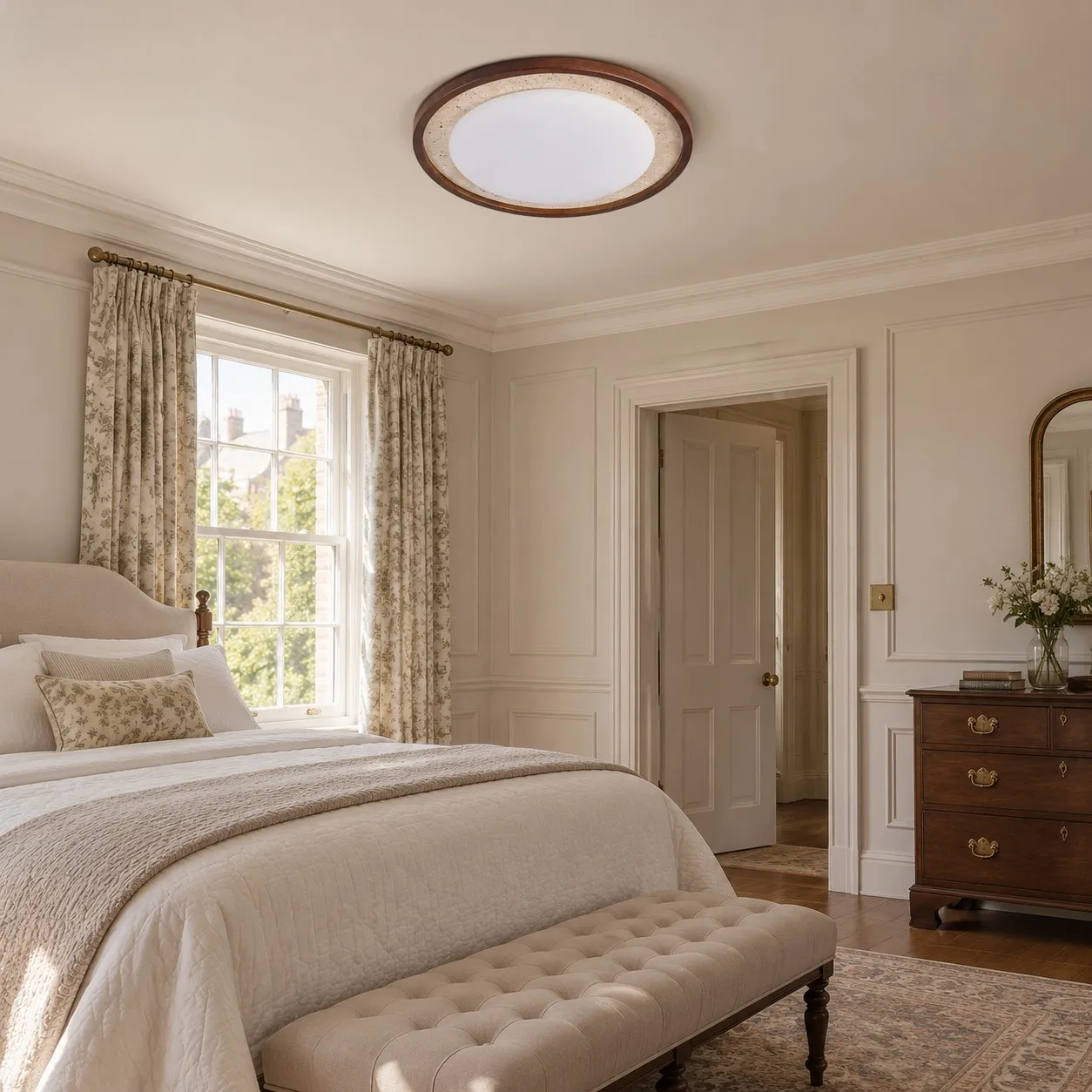
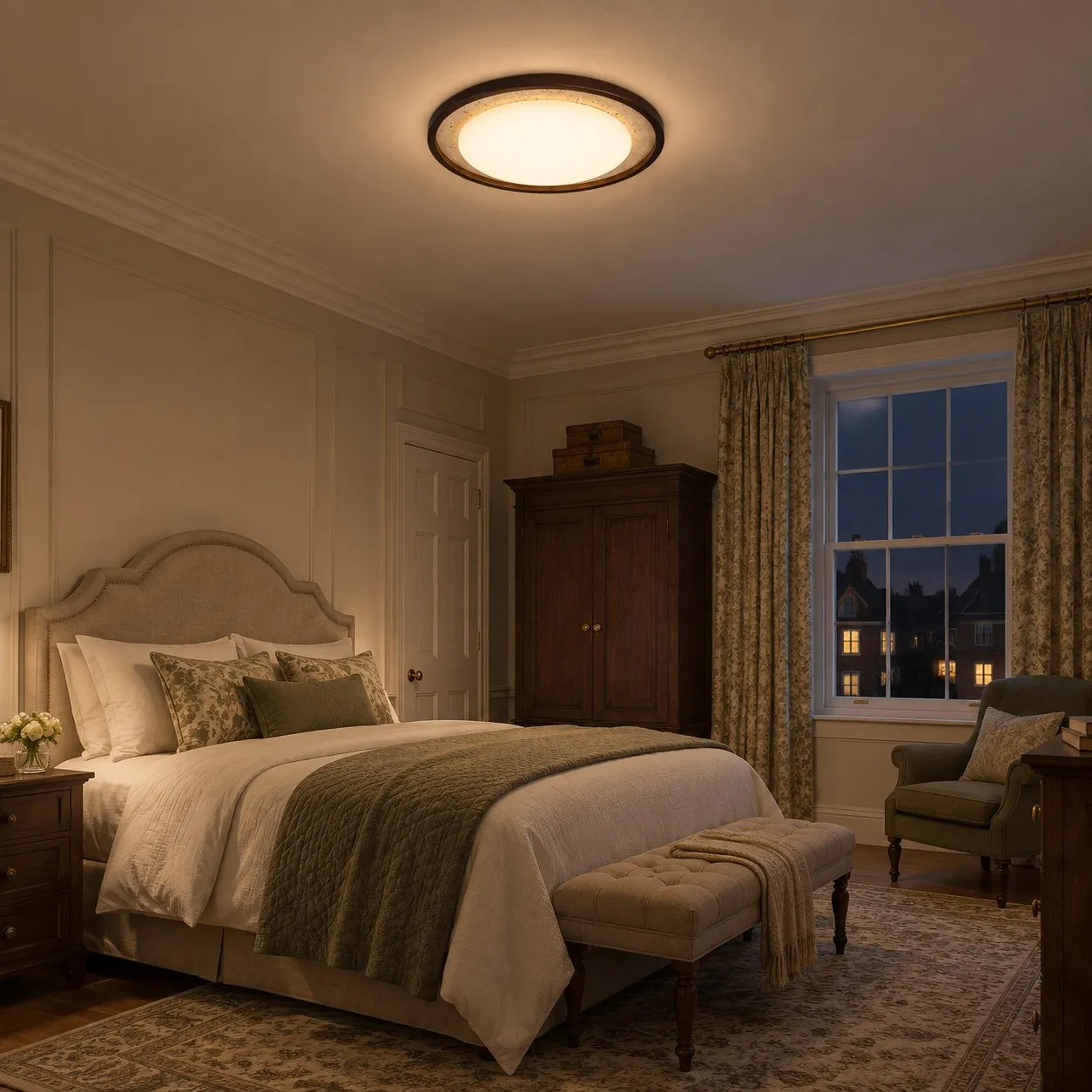
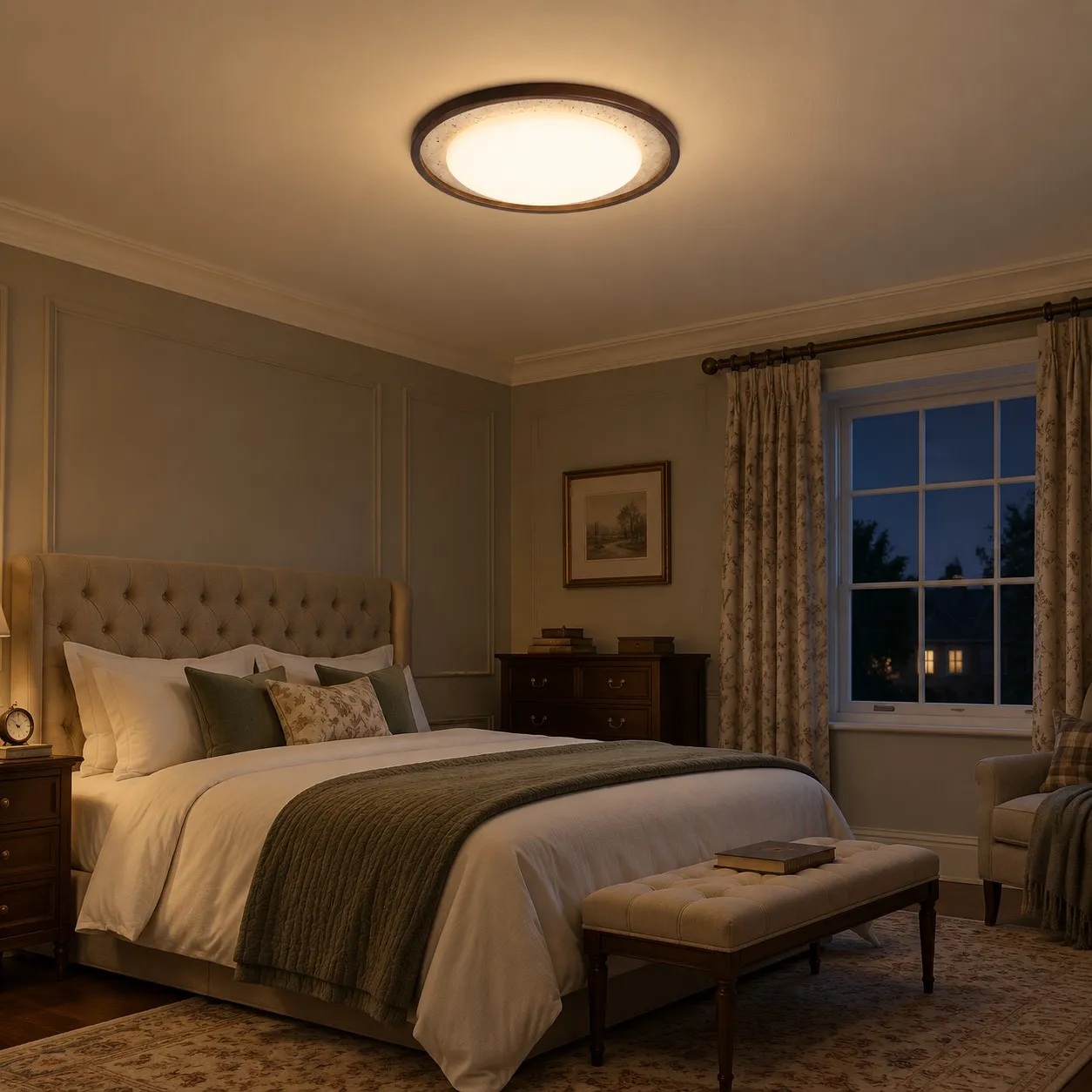
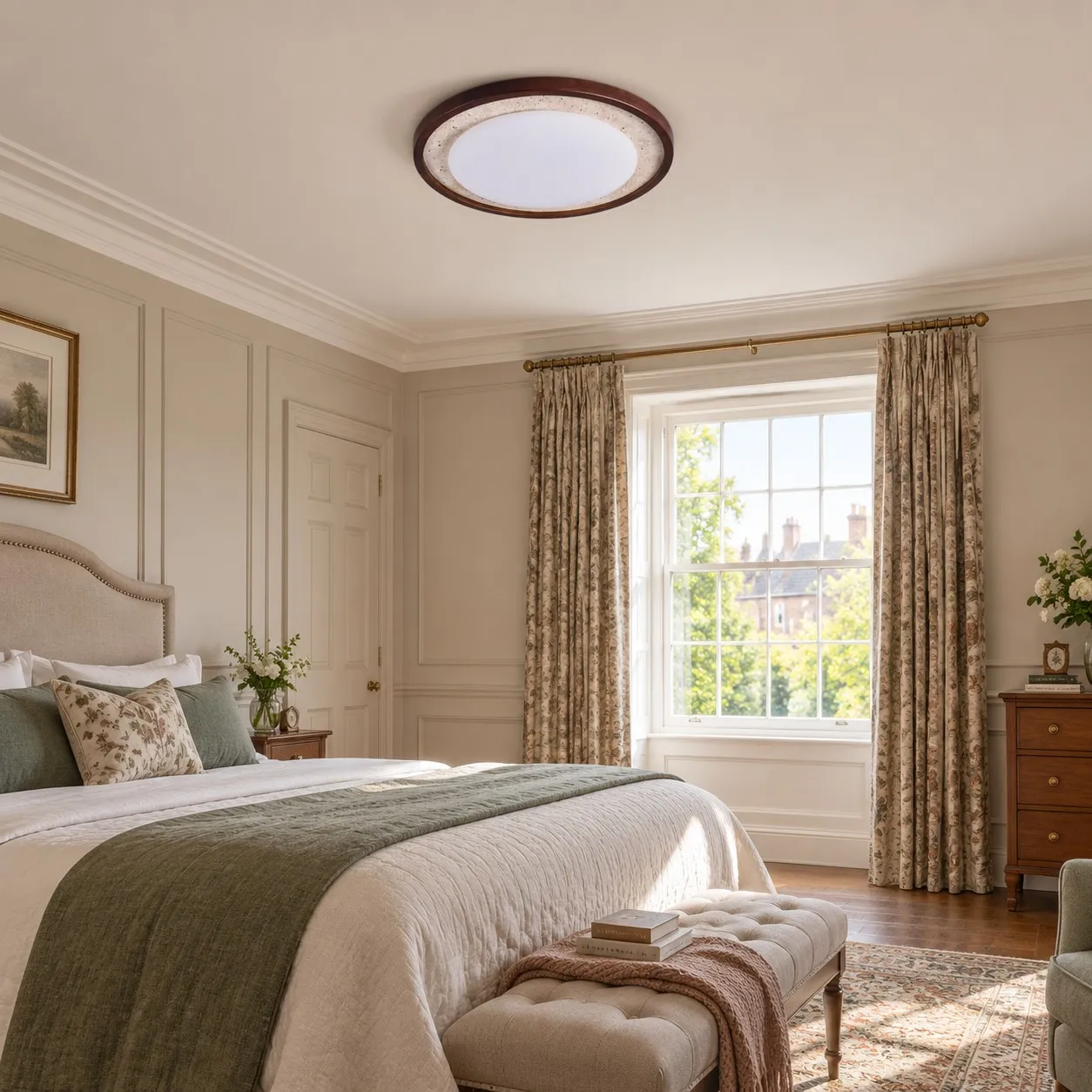
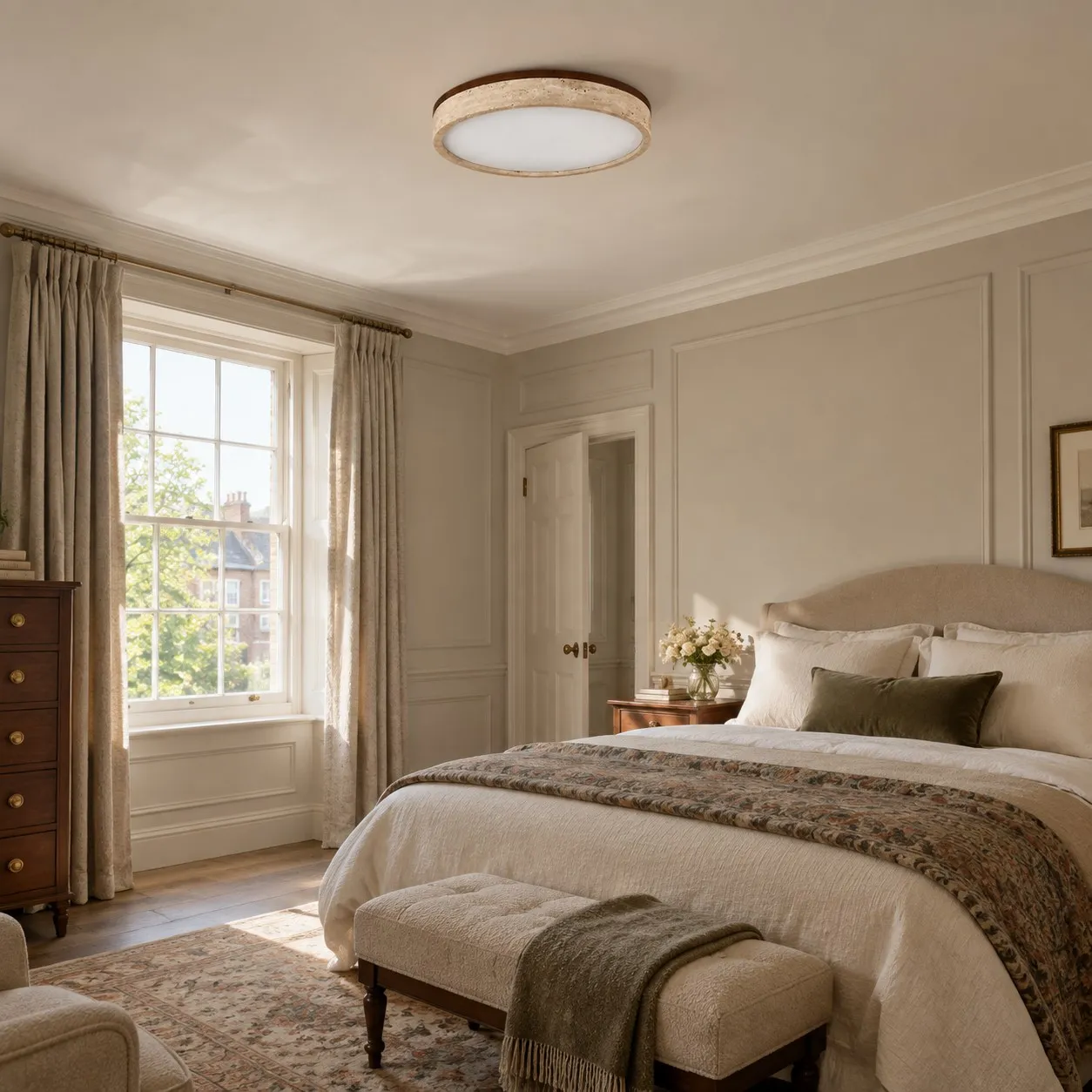
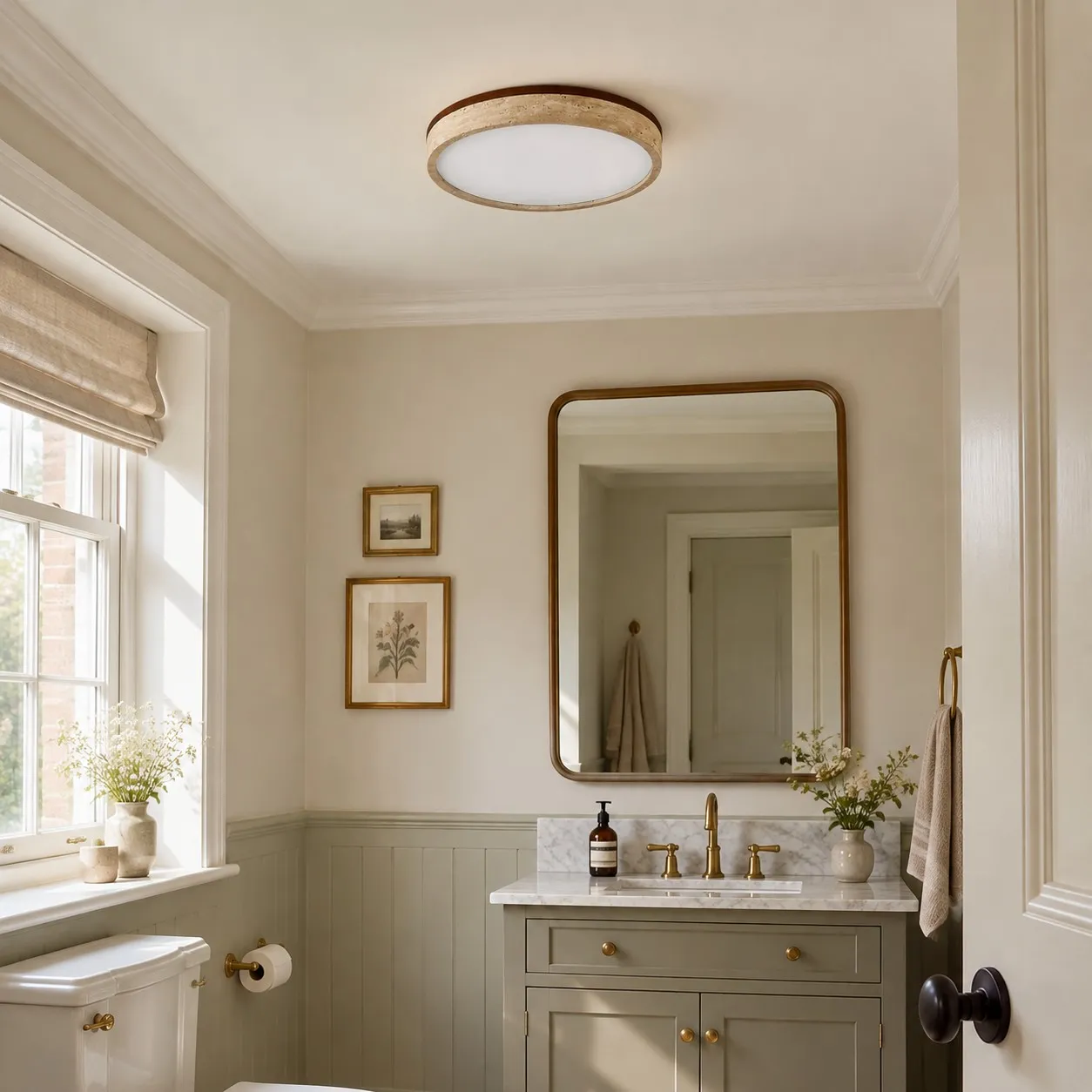
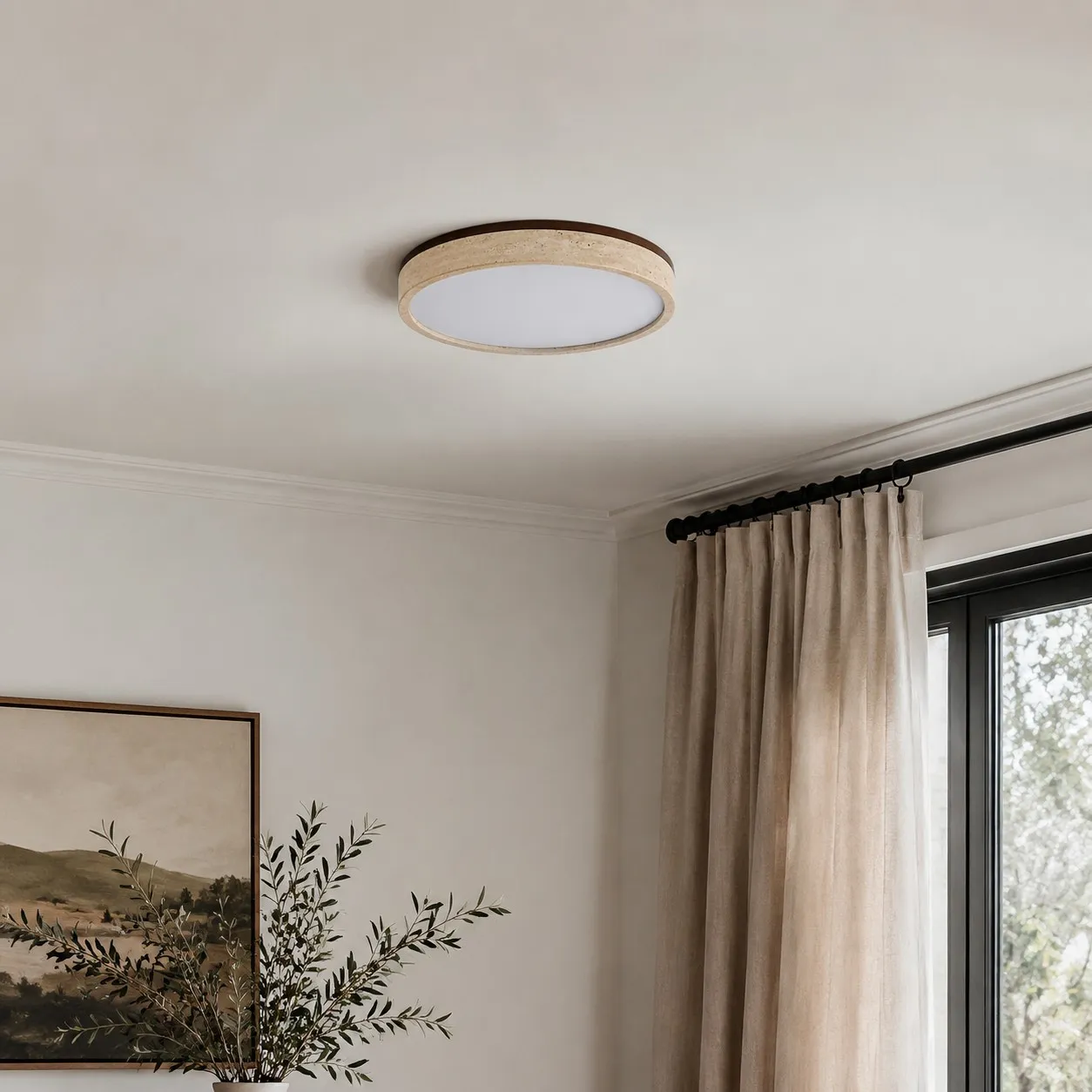
It can also suit a compact bedroom with a single bed or modest double bed, especially when bedside lamps provide task light. In an entrance, the smaller fixture supports a calm first impression without competing with a mirror, coat storage or patterned floor.
Do not choose the smaller size only because the ceiling is low. Both Veliana options share the same listed 7 cm height. For this product, low-ceiling suitability does not automatically mean the narrowest diameter.
Choose 43 cm when the fixture must anchor a larger zone
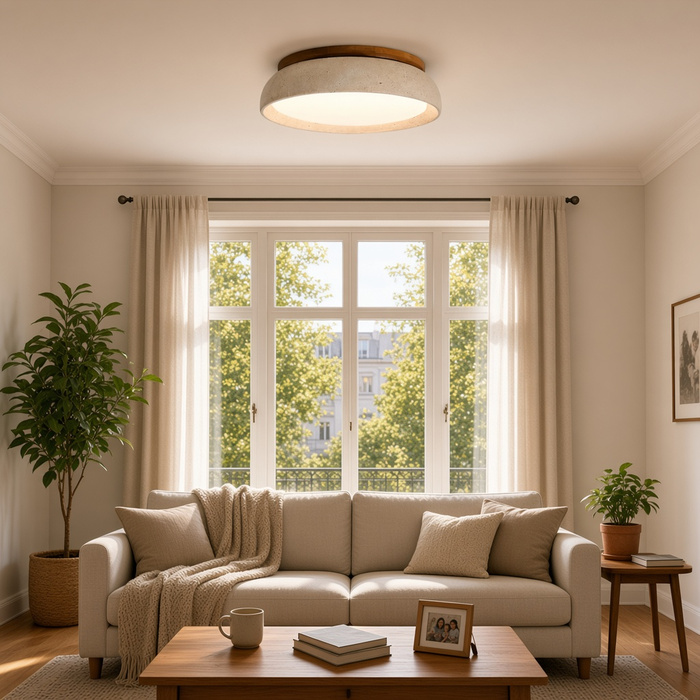
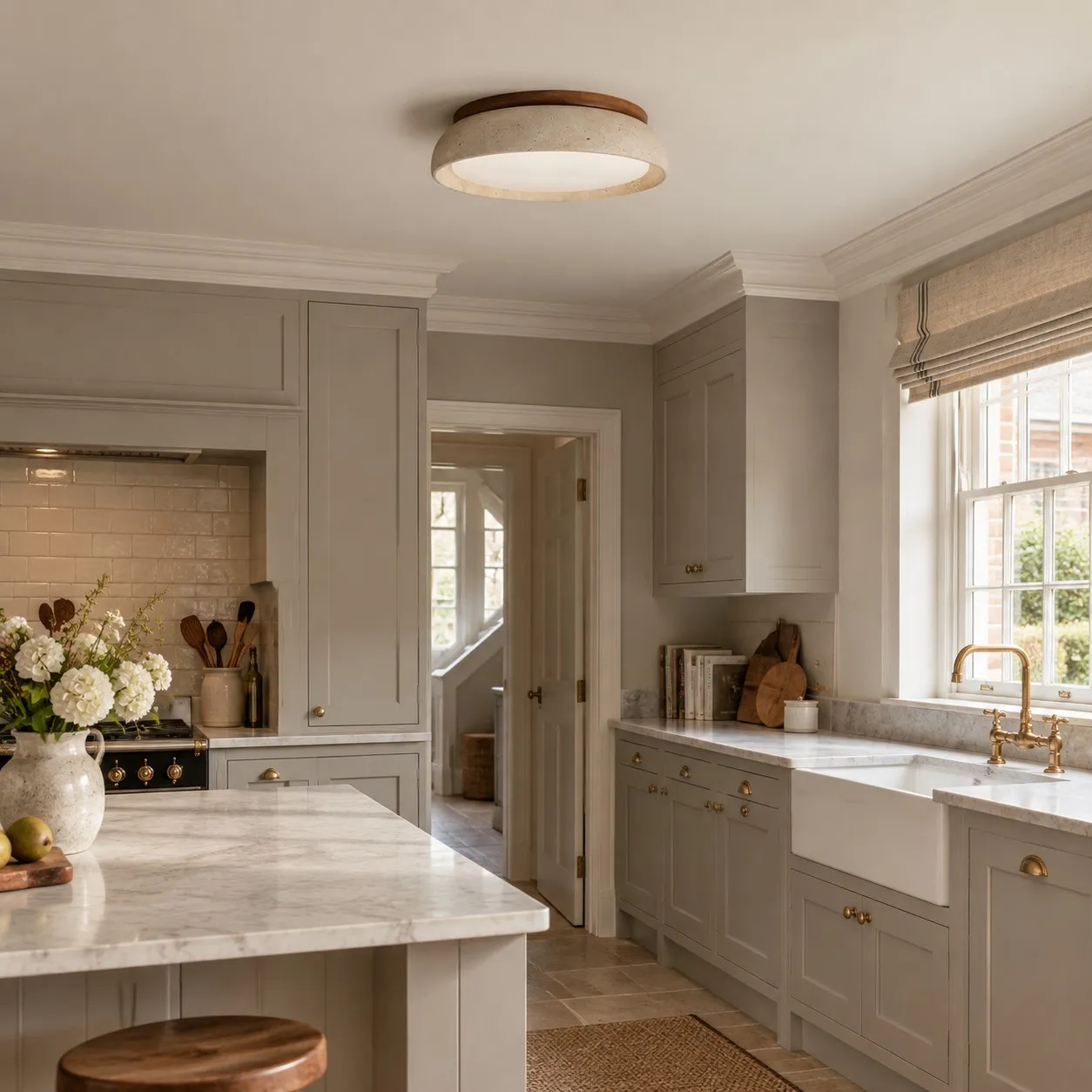
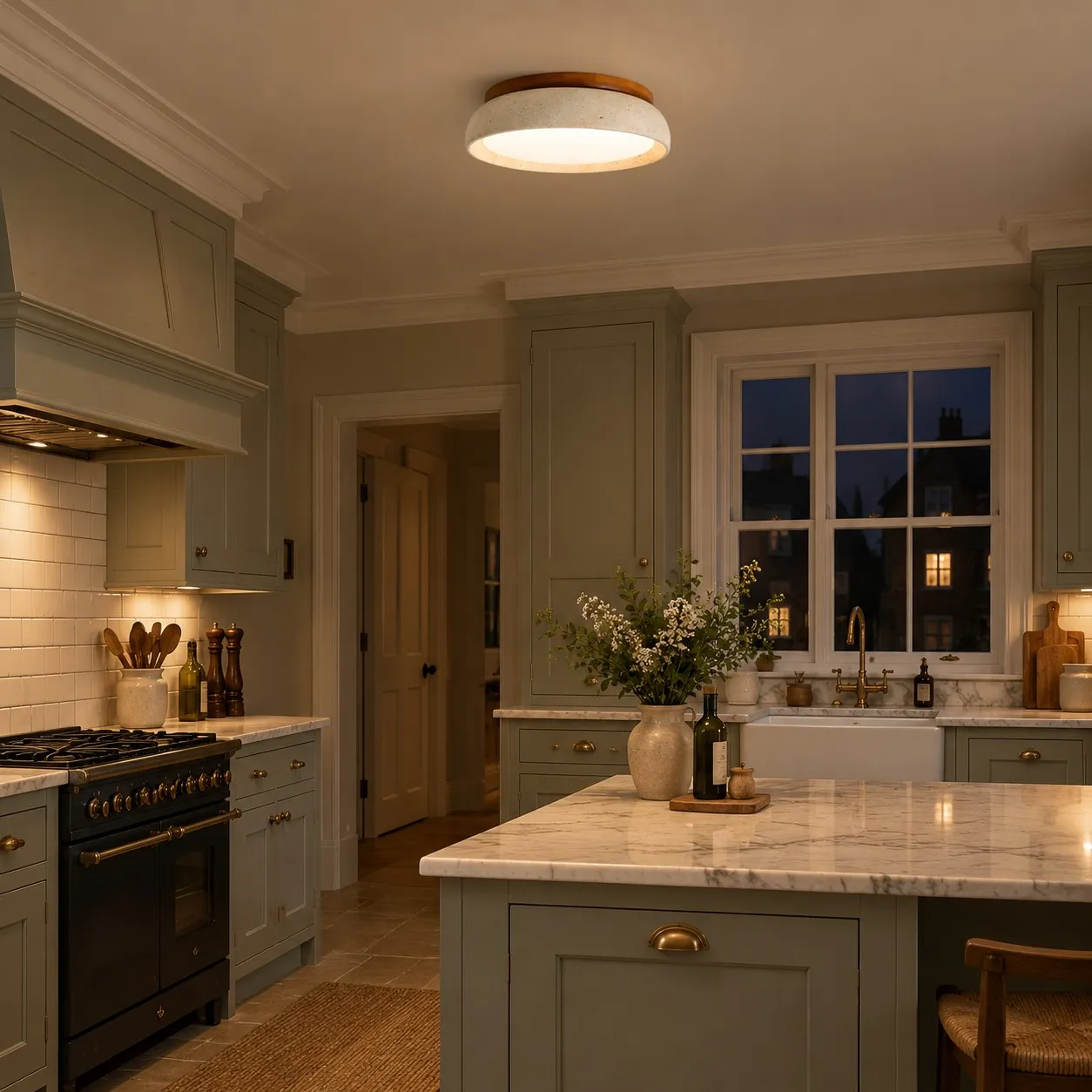
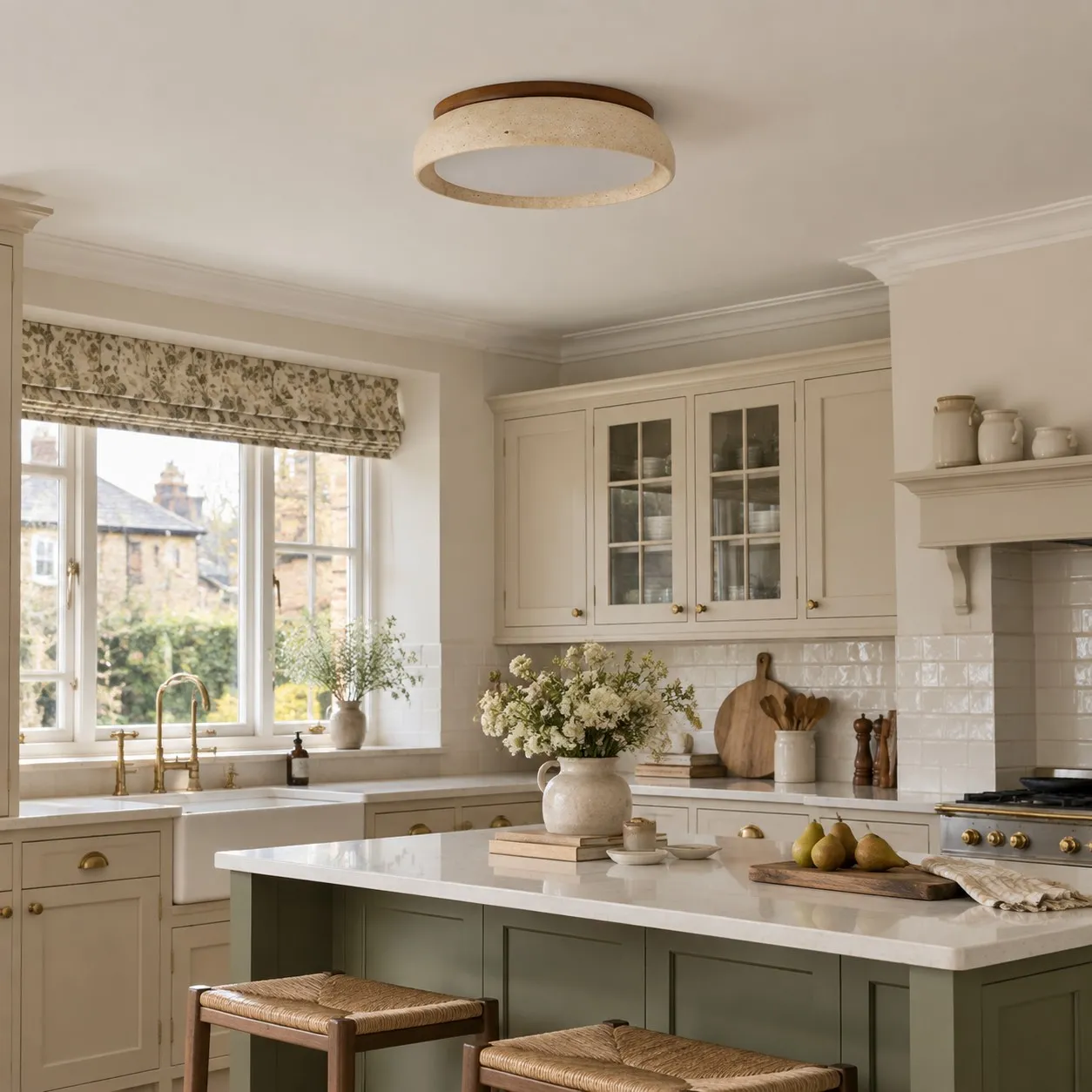
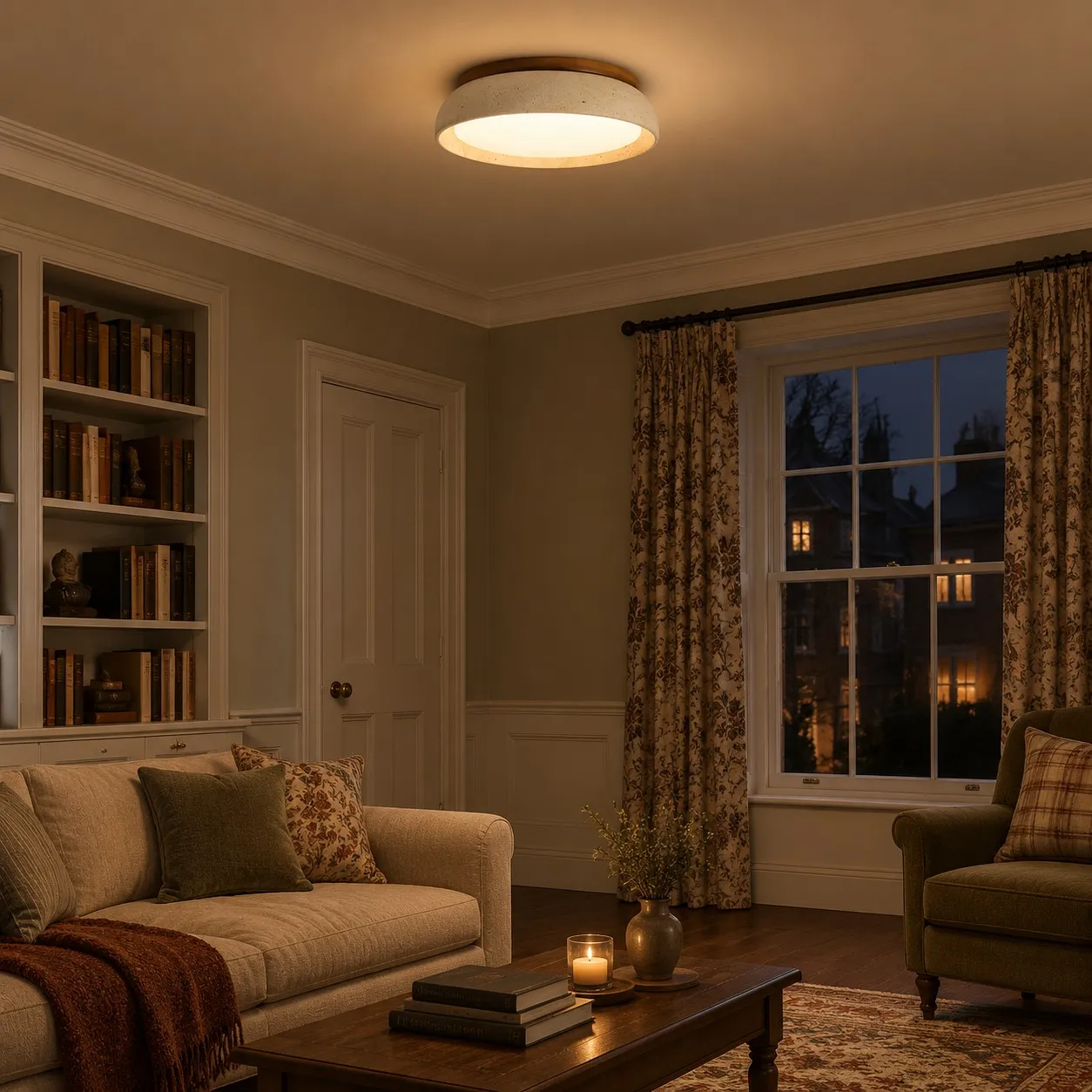
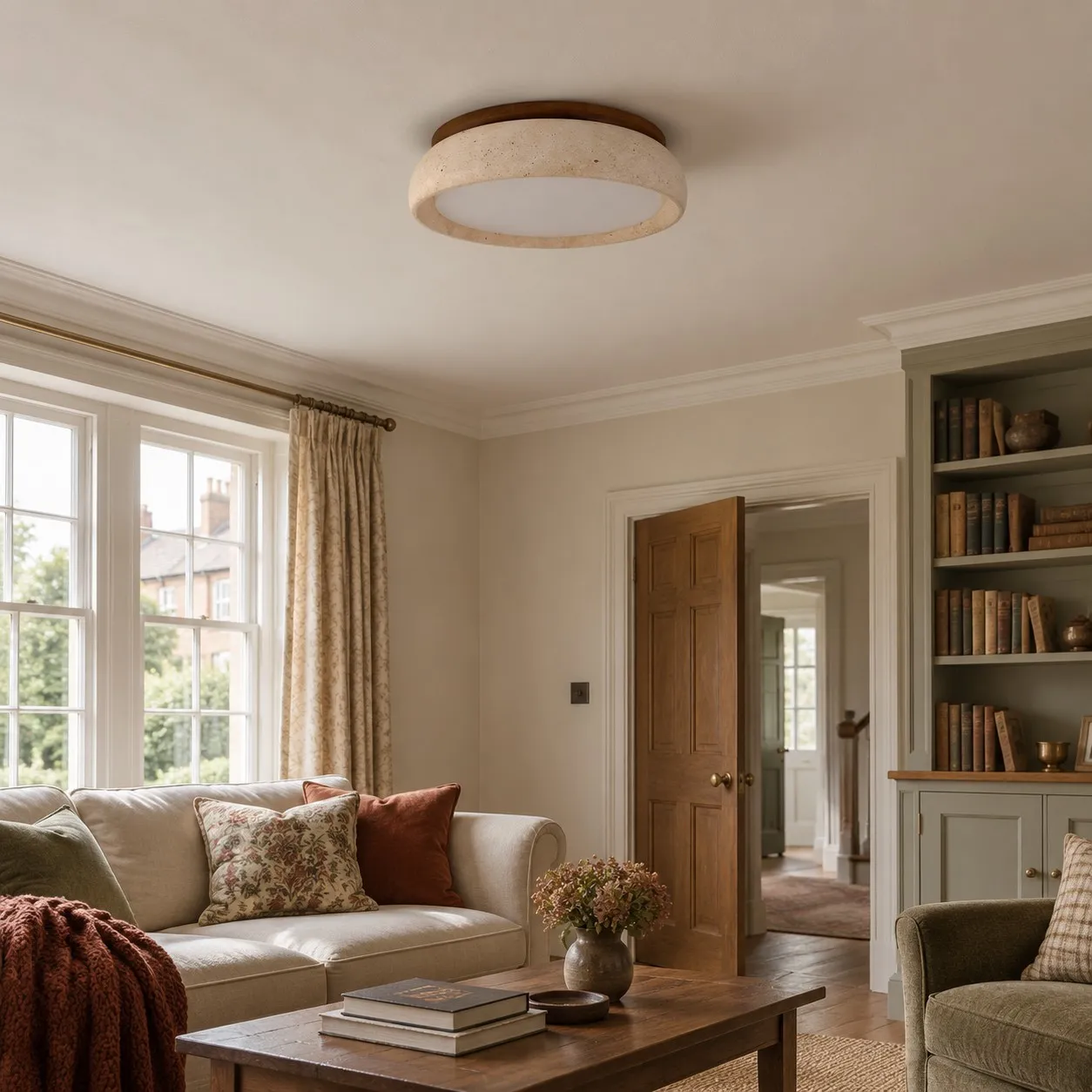
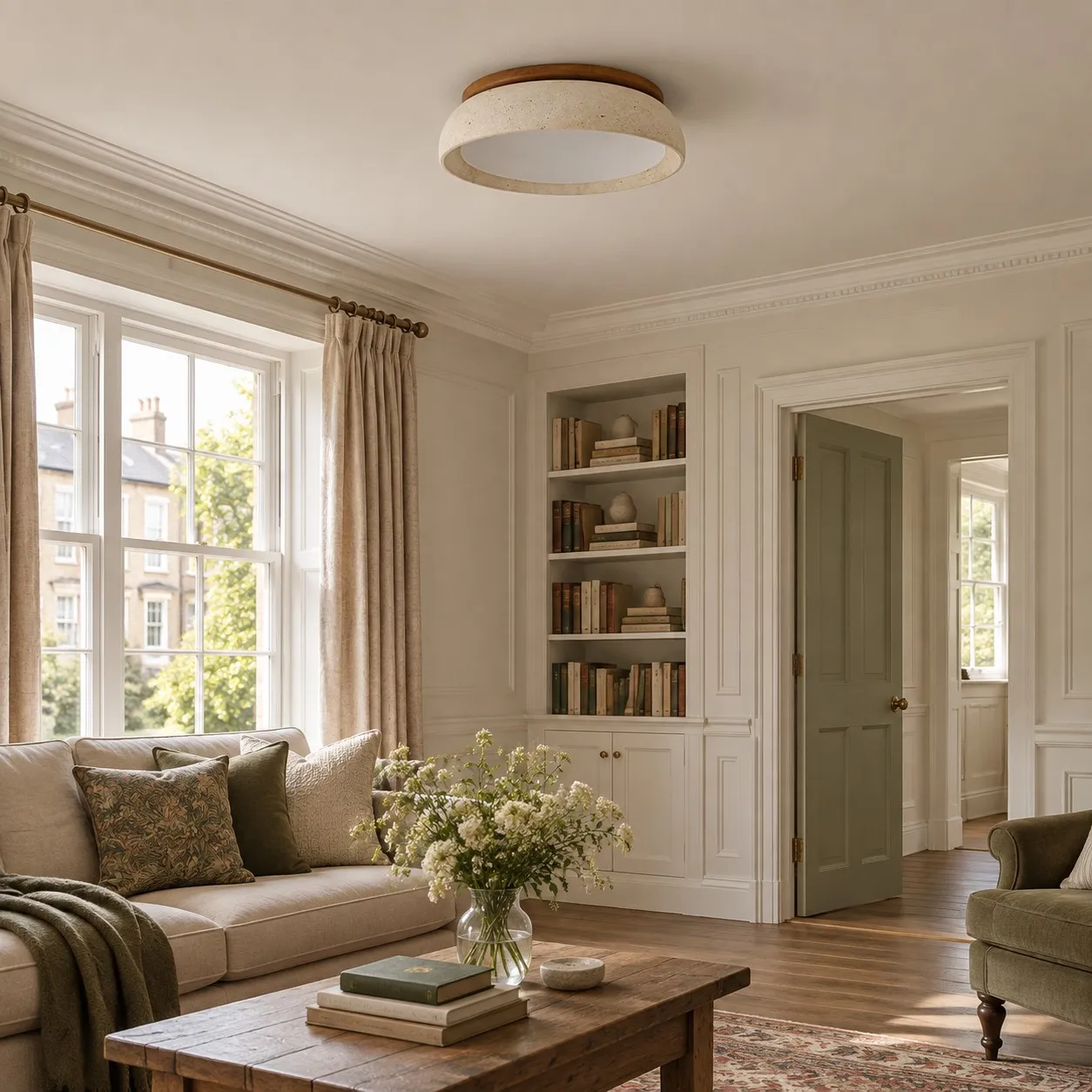
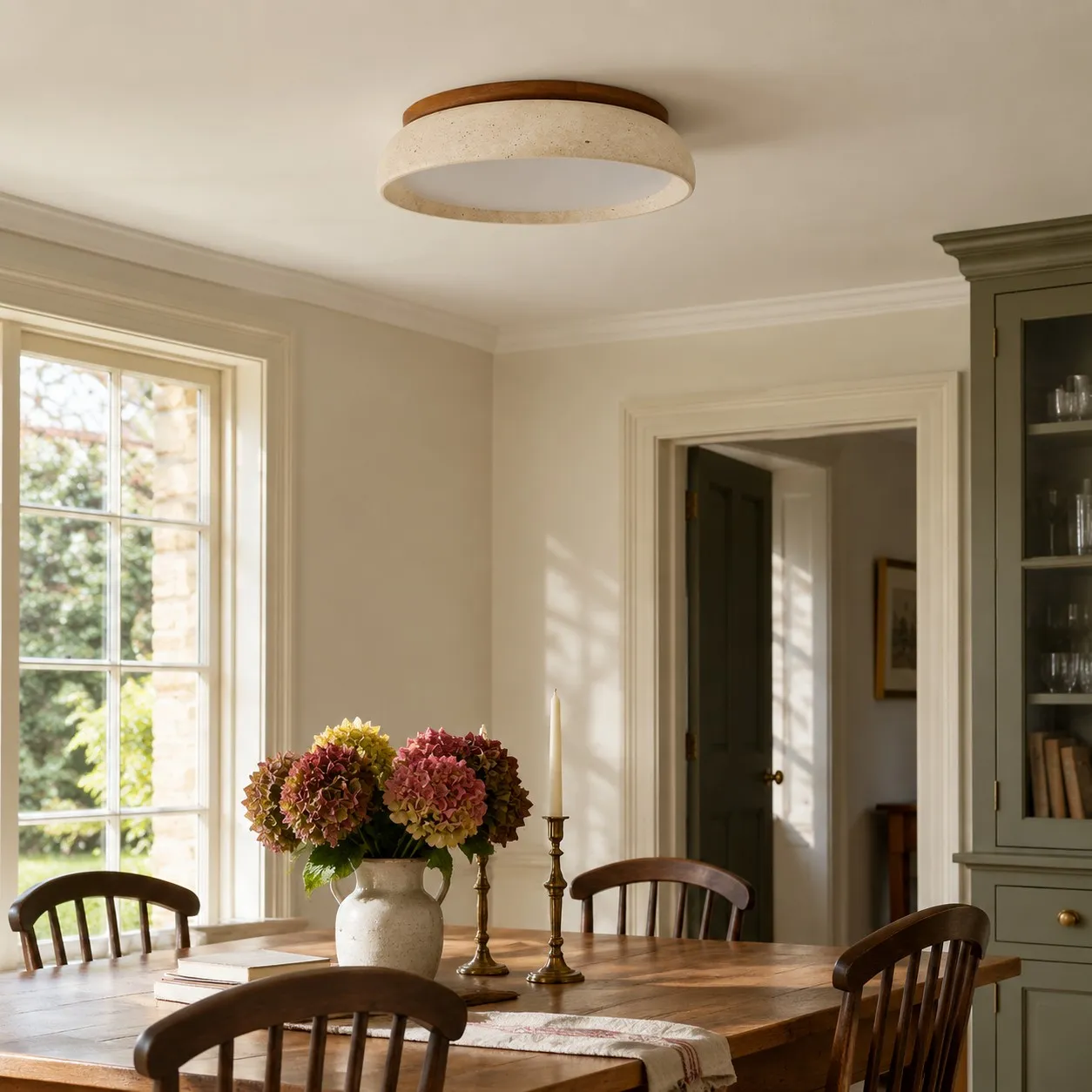
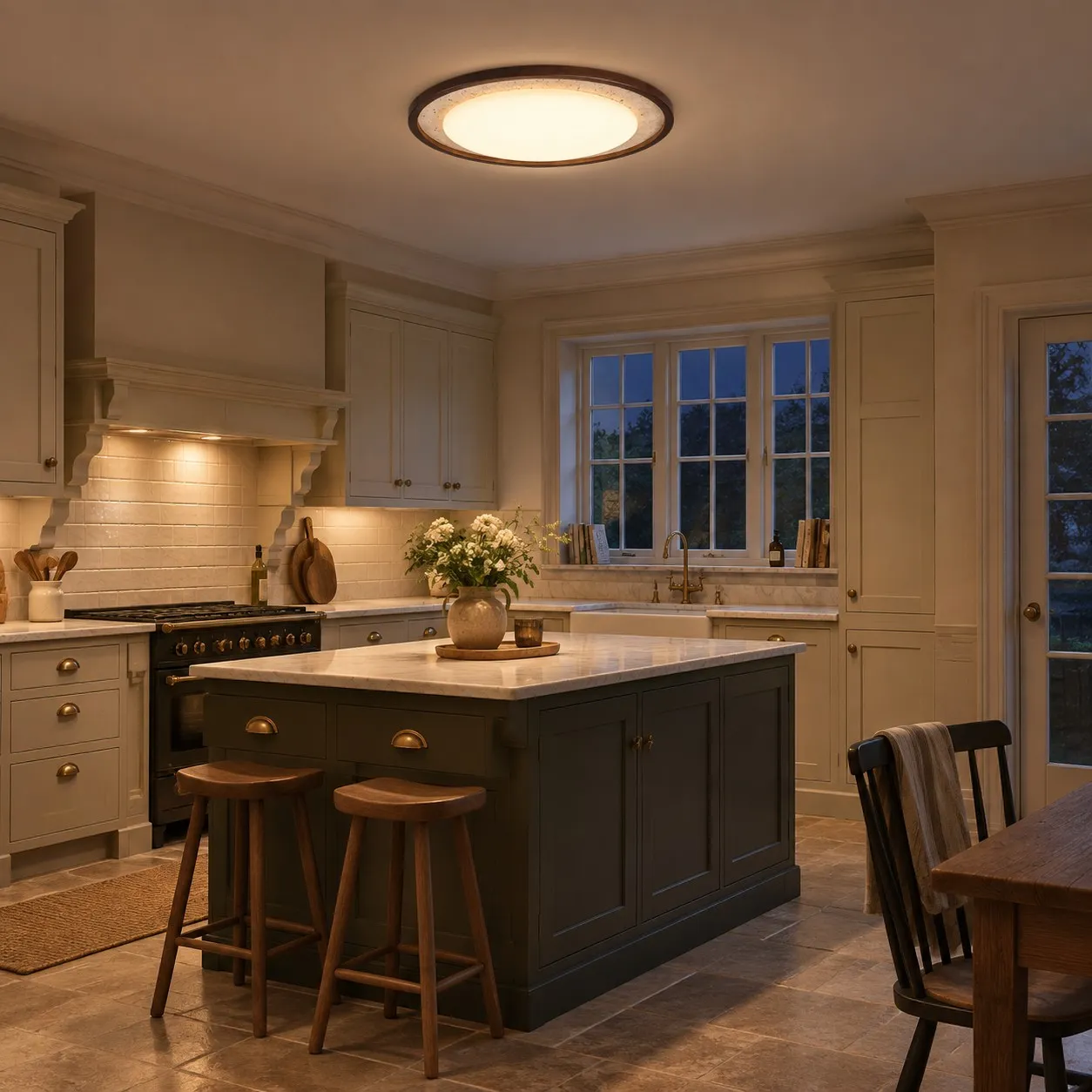
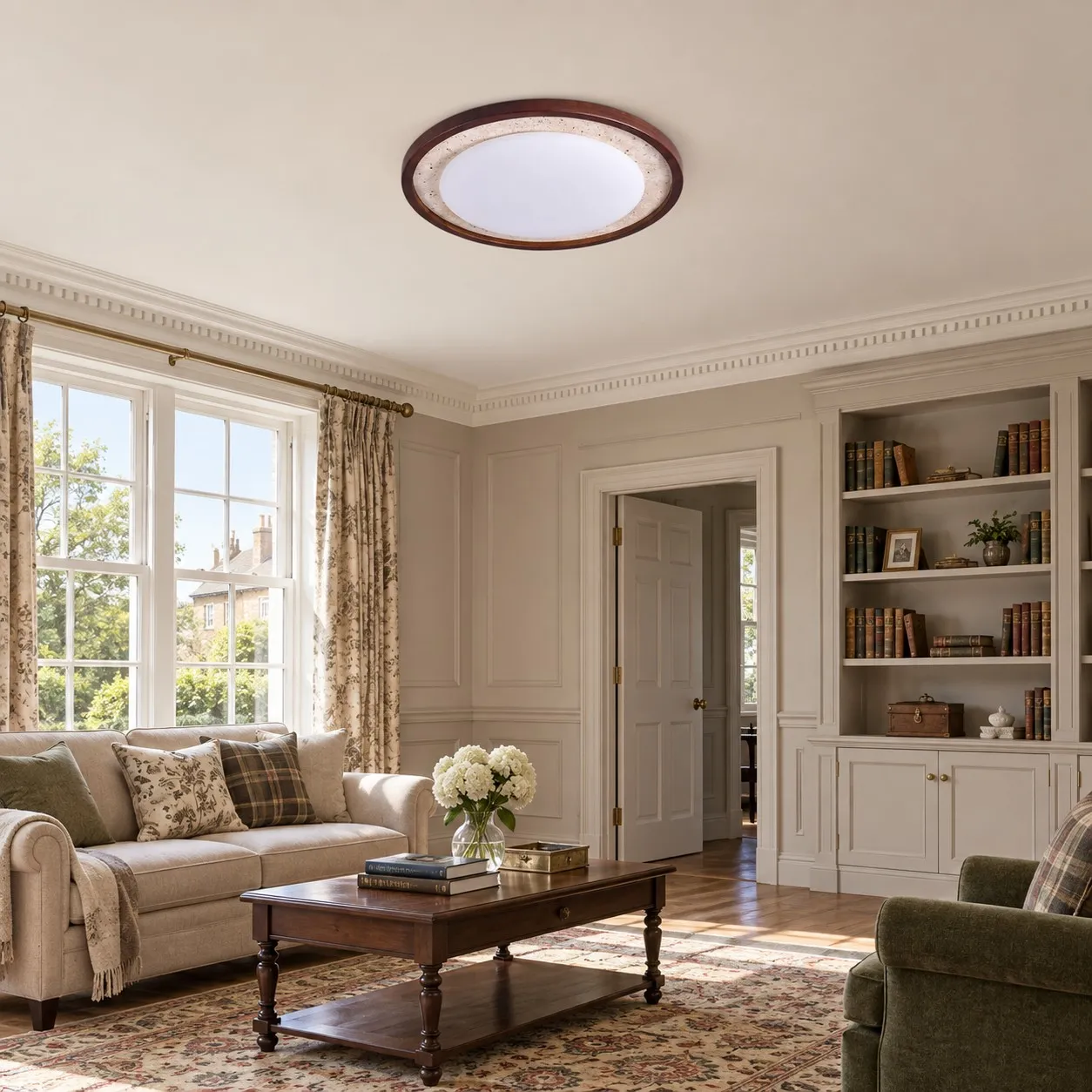
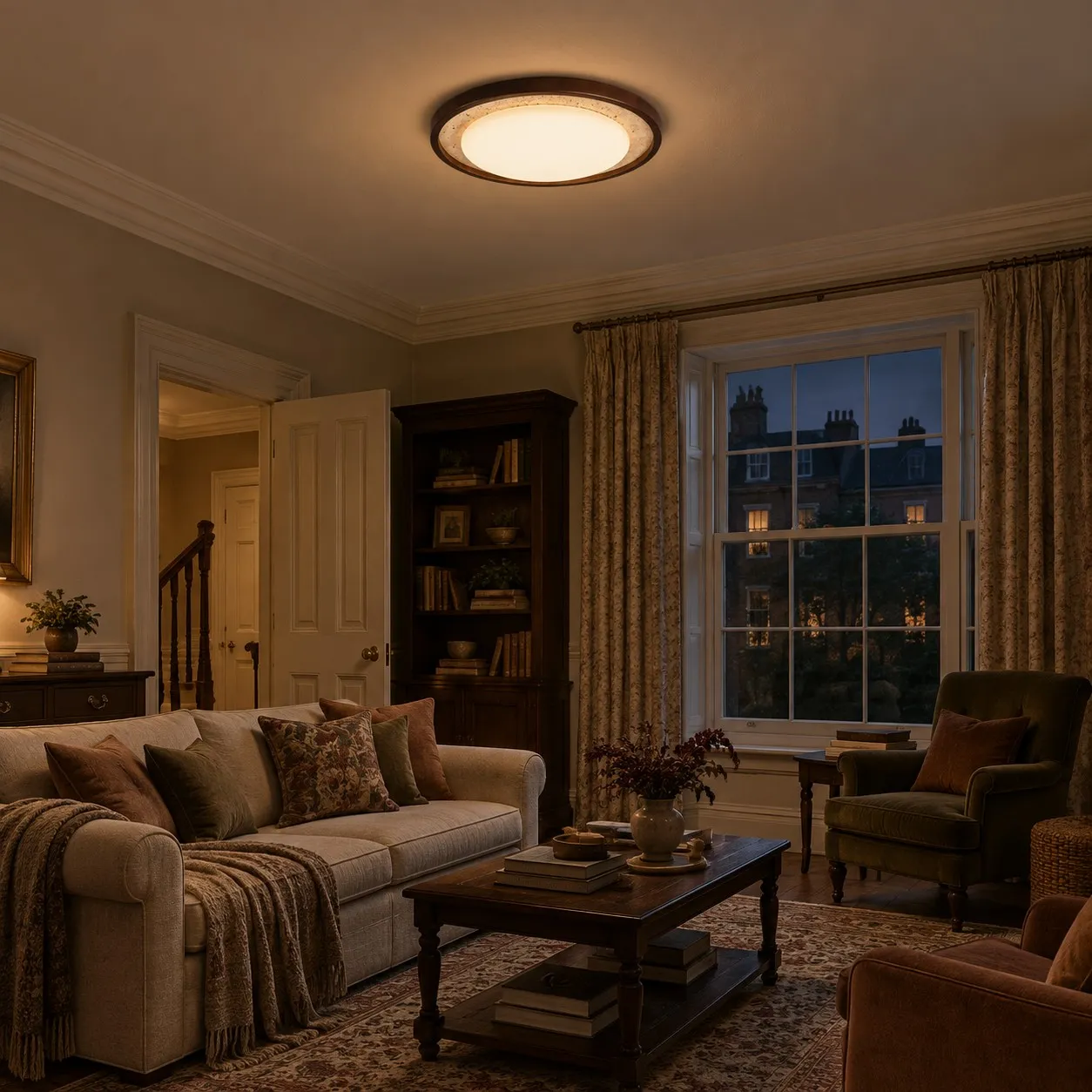
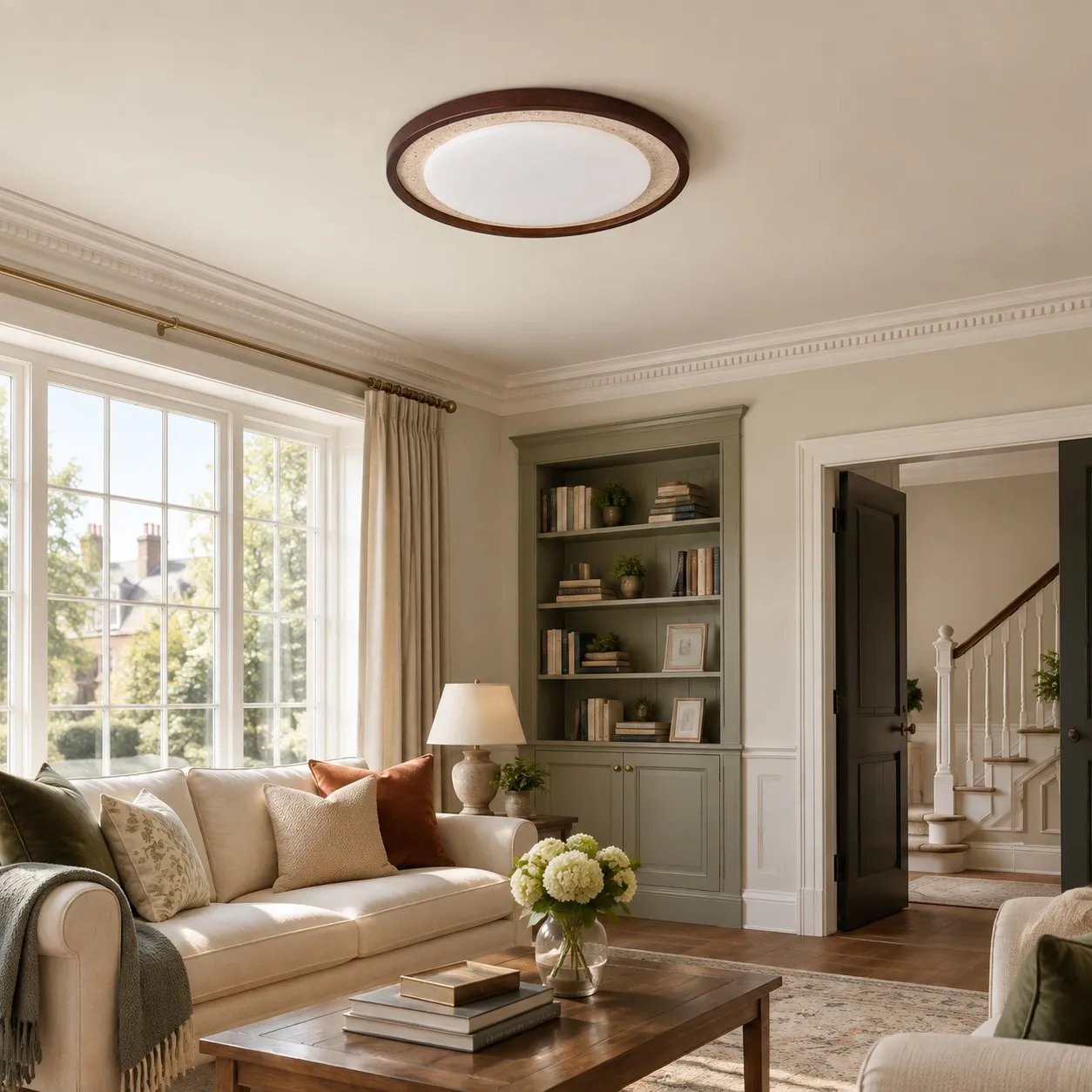
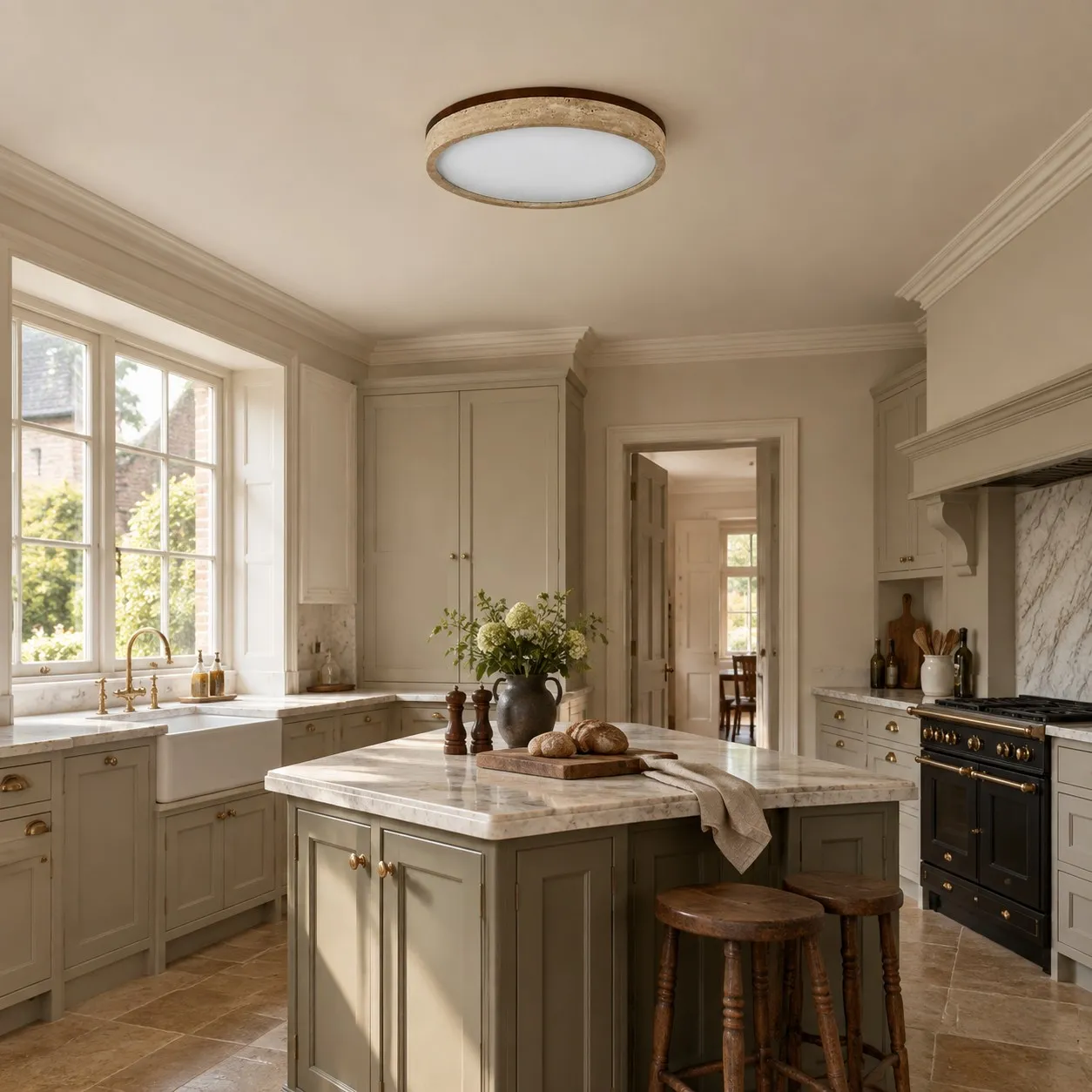
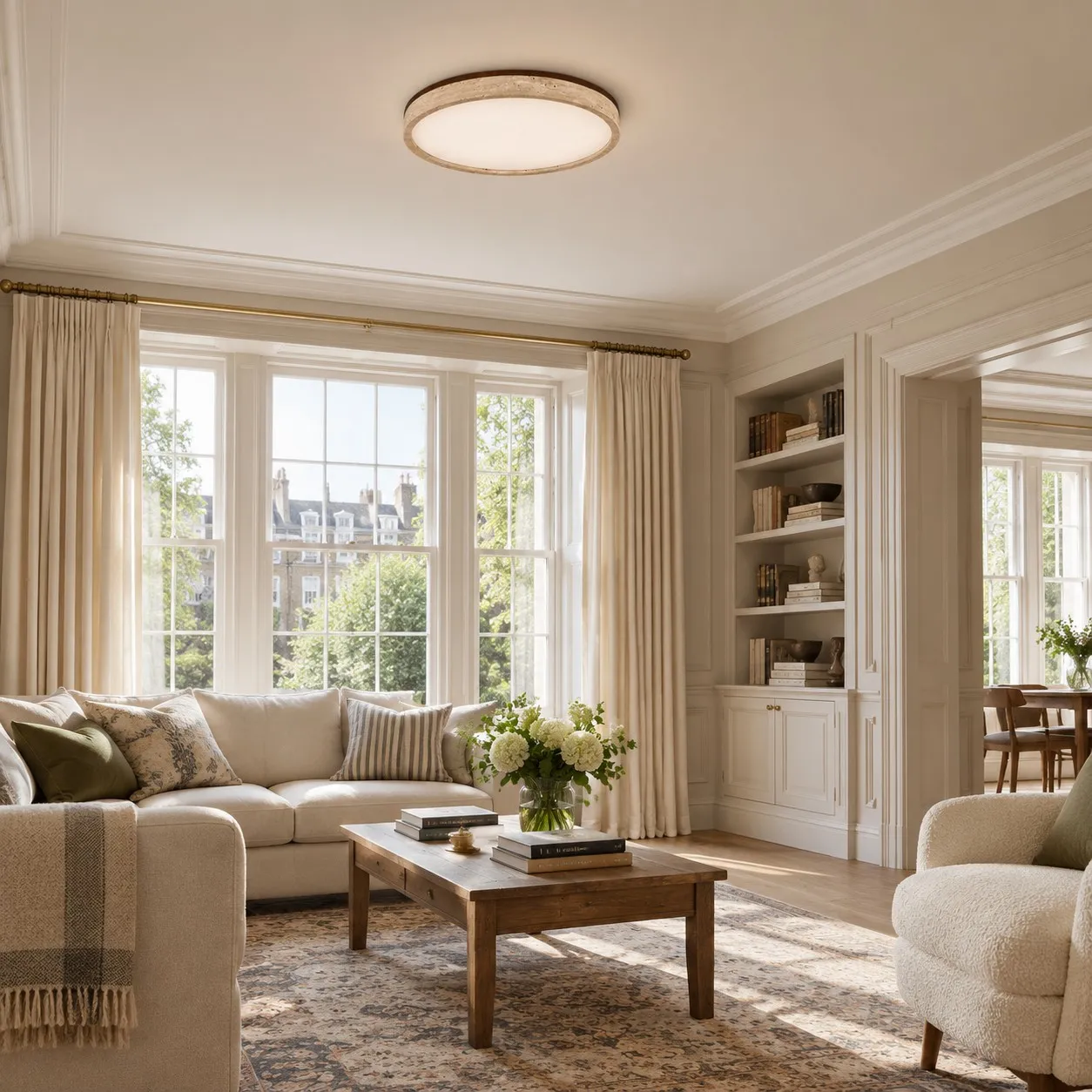
The larger version is more convincing in a living room with a full seating group or in a dining area where the ceiling point sits over a table. Its wider bowl shape can connect visually with the furniture below and prevent the light from appearing isolated in a broad ceiling.
A 43 cm fixture may also suit a medium-sized bedroom with a large bed, provided the surrounding ceiling remains clear. View it from the doorway: the light should relate to the bed or central floor area without appearing squeezed between wardrobes or architectural details.
Use furniture to judge scale
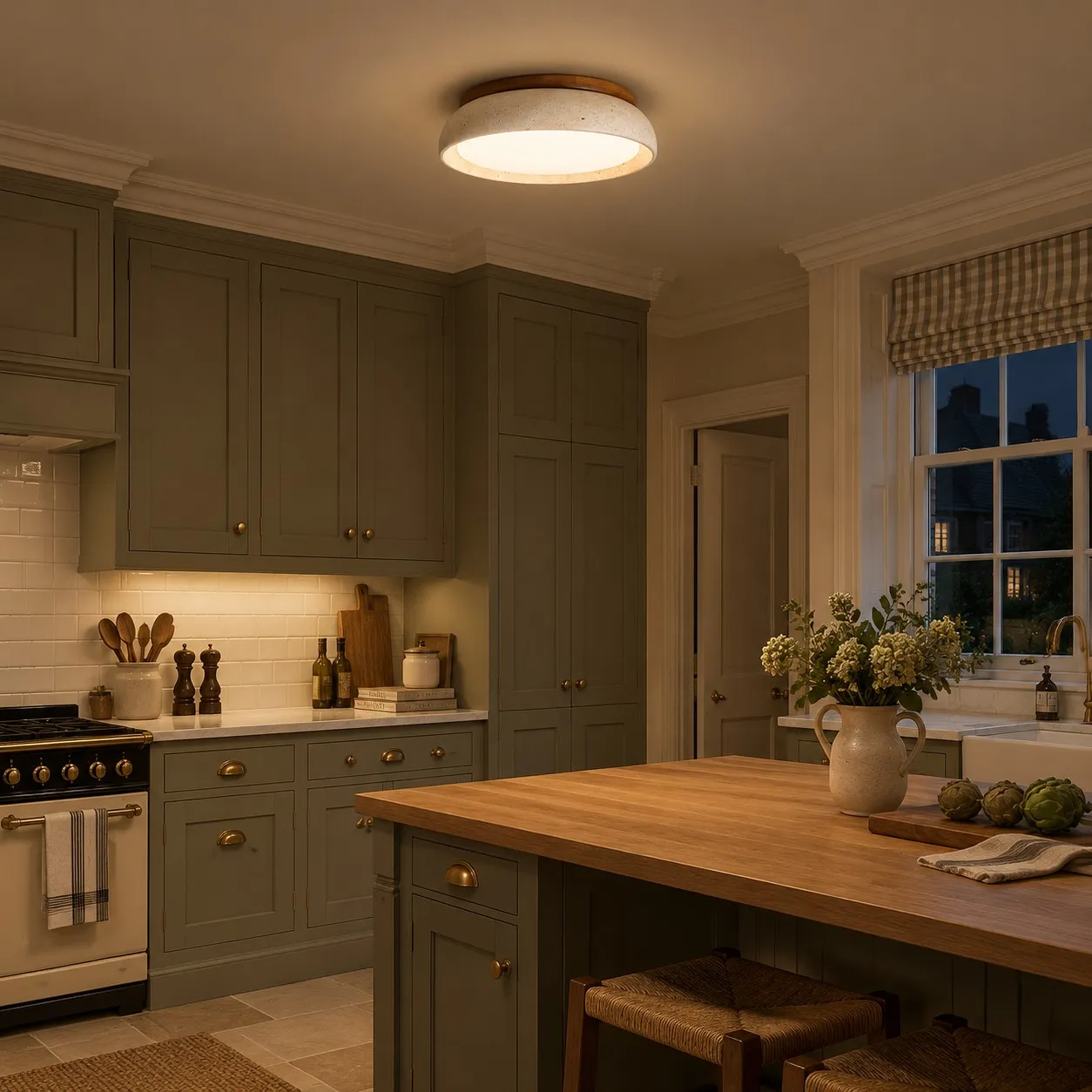
Floor area gives only part of the answer. The eye reads a ceiling fixture in relation to the objects below it. A small light above a broad dining table can look disconnected, while a large fitting in an empty corridor can feel heavy. Identify the main visual zone first: the bed, dining table, seating group or open circulation route.
If the electrical point is off-centre, do not assume that a larger diameter will hide the problem. Decide whether the intended composition can accommodate the position or whether an electrician should assess relocation. Installation changes should be planned before ordering.
Test the diameter at full size
- Cut paper or cardboard circles at 30 cm and 43 cm, or mark the outlines with low-tack tape.
- Place each template around the electrical point.
- Stand at the doorway, the main seating position and the far corner.
- Check nearby doors, cupboards, beams, alarms and ceiling trim.
- Photograph both tests from the same position and compare them side by side.
This simple mock-up is more dependable than choosing from a close-up product image because it shows the fixture at the scale of your own room.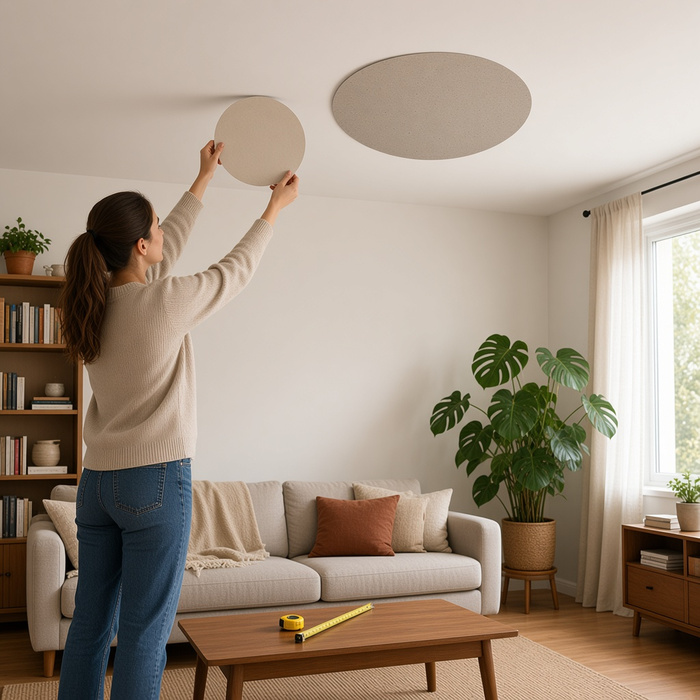
Do not use diameter as a brightness estimate
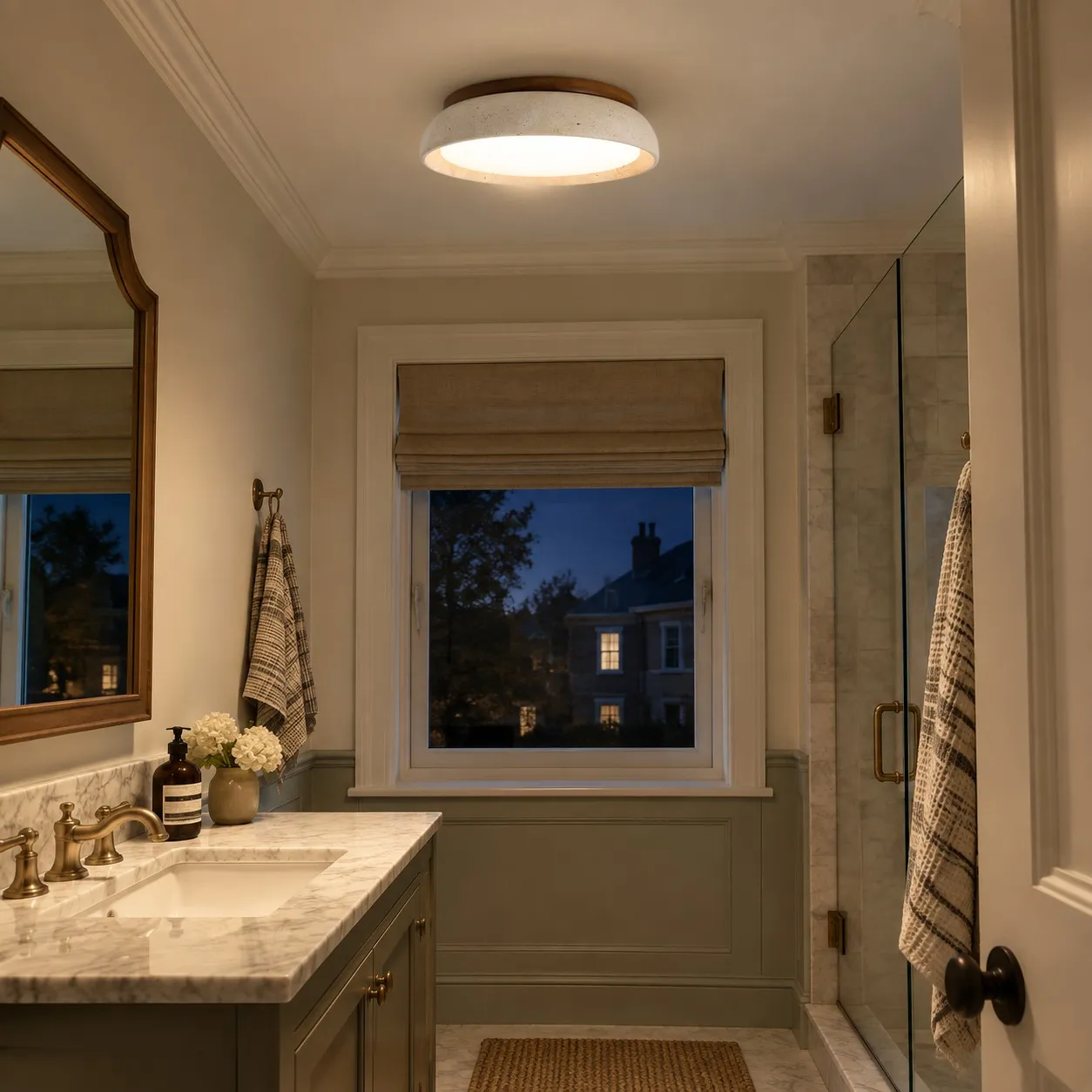
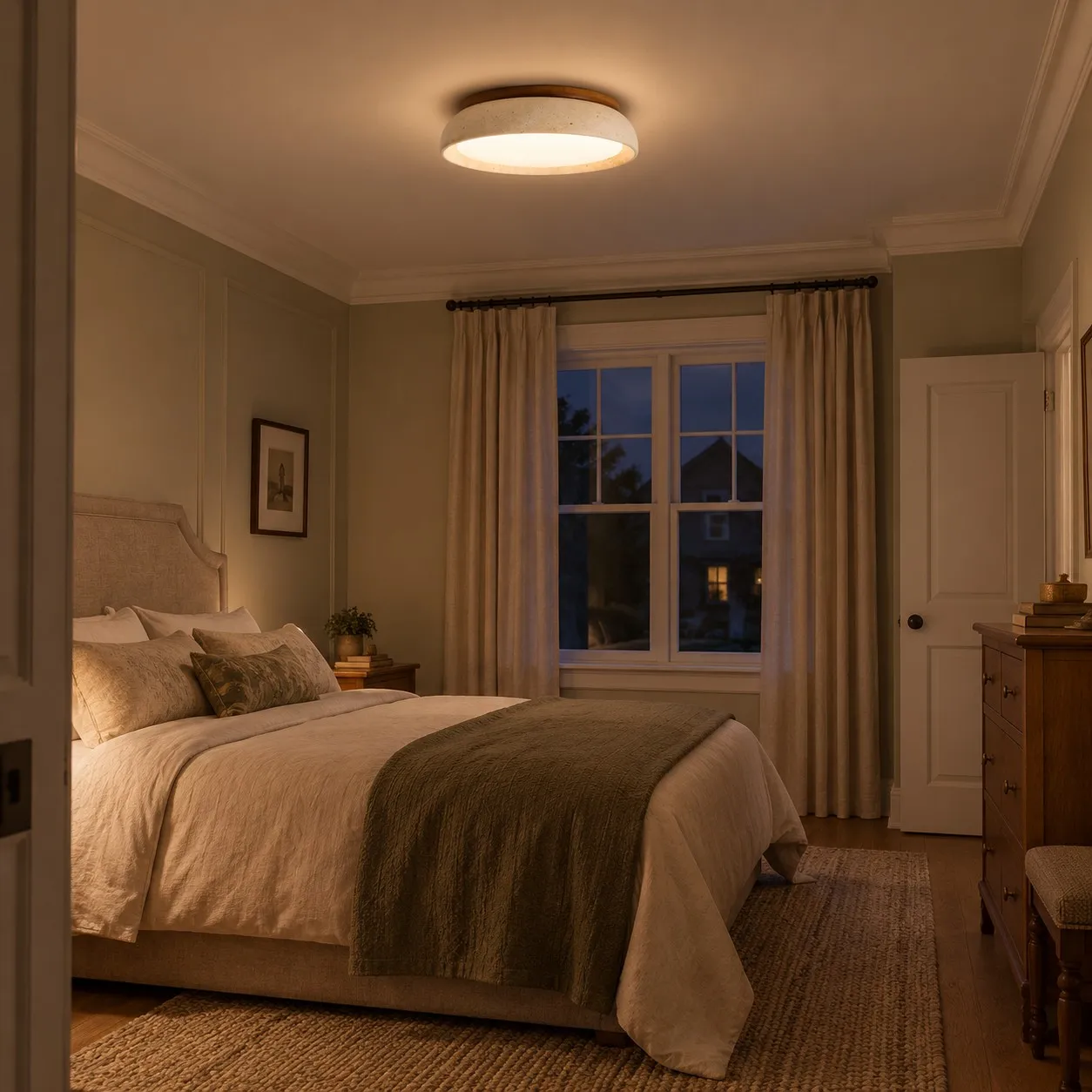
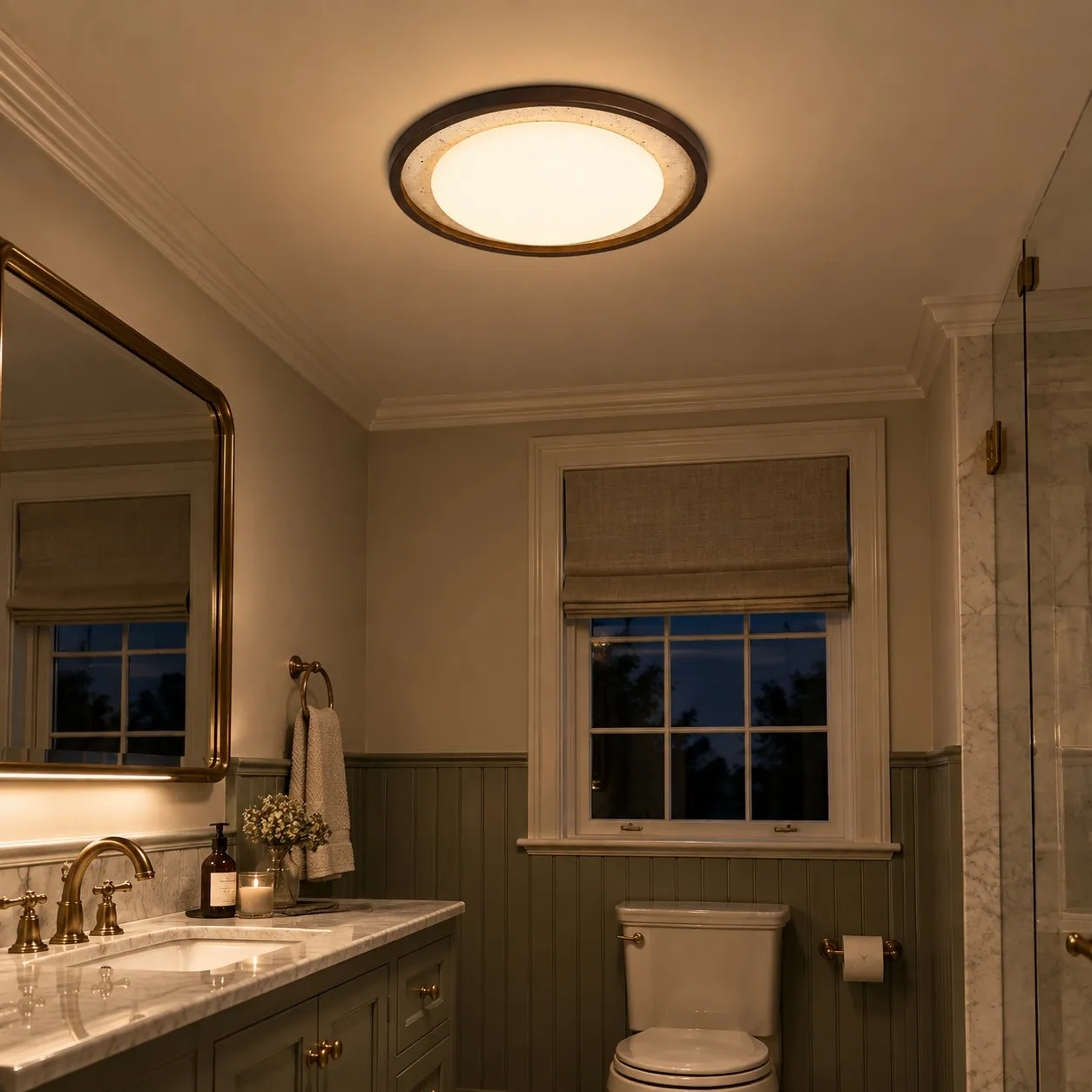
A larger fixture is not automatically the right brightness for every room. Verify the light specification for the selected variant and plan additional lamps where tasks demand them. The Veliana product page identifies a warm integrated LED source. Warm light can support a relaxed scheme, but the full lighting plan still depends on surfaces, room use and other sources.
For a complete specification check, use our guide on how to choose the right travertine ceiling light for your room.
Confirm the electrical point, ceiling support and intended lighting layers before moving from size selection to decoration.
Once the size is settled, coordinate the fixture with colours and furniture using our guide to styling a travertine ceiling light in a Wabi-Sabi home.
Installation considerations apply to both sizes
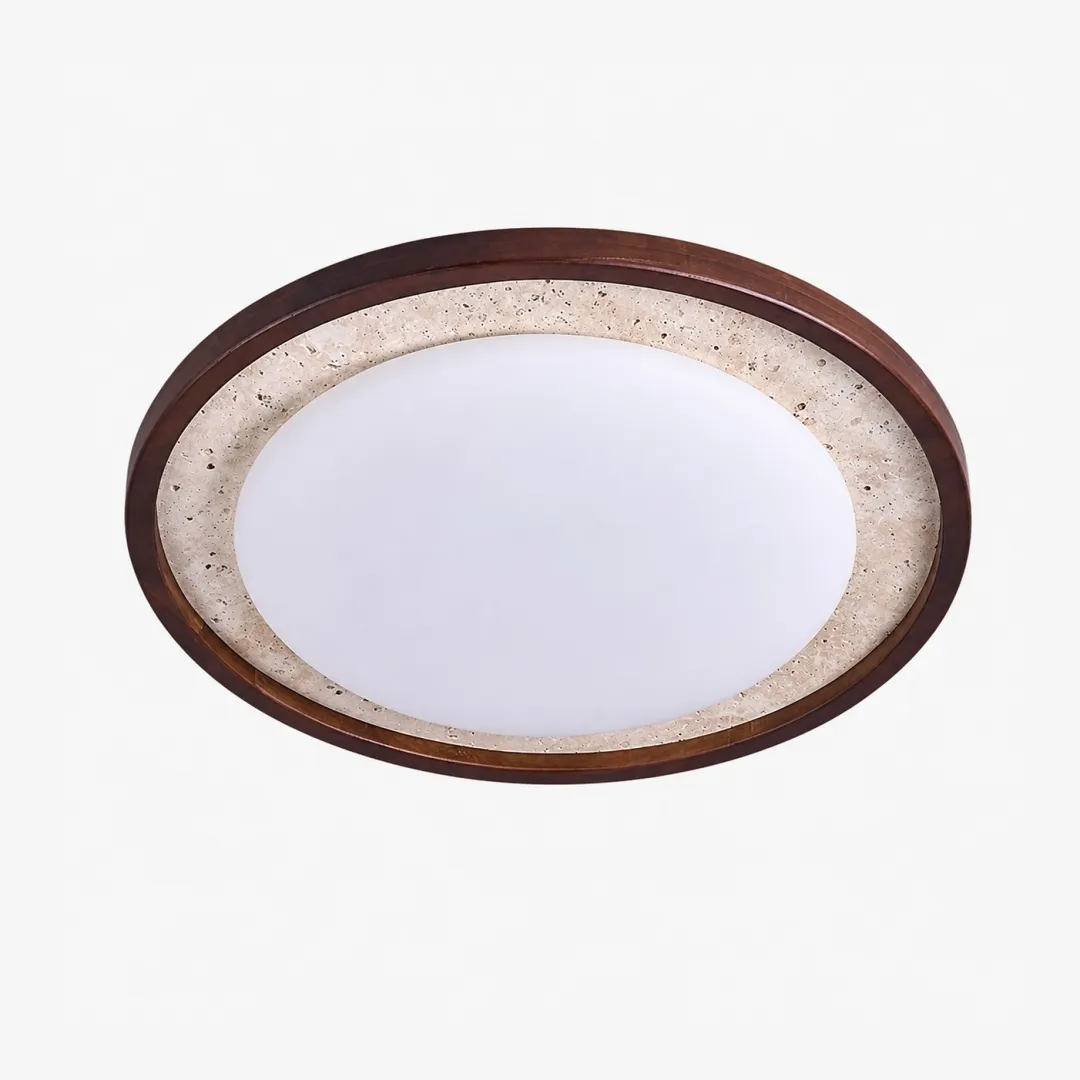
Both versions are natural stone, acrylic and wood fixtures designed for hardwired installation. Confirm that the ceiling and fixings can support the selected product. Electrical work must follow applicable requirements; the UK government's Approved Document P explains the electrical safety framework for dwellings.
Natural stone also varies from piece to piece. Size does not change that characteristic. Expect some differences in tone, pores and markings, and use gentle care methods consistent with the product instructions and established natural stone care guidance.
Decide first whether the stone itself or the low-profile construction is the more important feature for the room.
If a shallow profile matters more than the material, compare the wider flush ceiling light collection.
Repeat the full-size ceiling-template check for any alternative because a different outline can change the balance even at a similar diameter.
Frequently asked questions
Is 30 cm too small for a bedroom?
Not necessarily. It can suit a compact bedroom, particularly when bedside or task lamps supplement the general light. Test its outline against the bed and ceiling area.
Is 43 cm suitable for a low ceiling?
The Veliana 43 cm option is listed at only 7 cm high, but you should still check the complete installed clearance and its visual scale in the room.
Should a ceiling light match the width of a dining table?
It should relate to the table, but it does not need to match its width. Centre the composition where possible and use a full-size template to judge the balance.
Does a larger ceiling light produce more light?
Not always. Diameter alone does not establish brightness. Compare the verified light output and selected variant rather than using size as a proxy.
What if I am between the two sizes?
Test both outlines and prioritise the main furniture zone. Choose 30 cm for a quieter effect and 43 cm when the fixture needs to act as a stronger visual anchor.