How to Style a Travertine Ceiling Light in a Wabi-Sabi Home
A travertine ceiling light suits a Wabi-Sabi interior because the stone already carries the qualities the style values: visible texture, gentle variation and an honest connection to nature. The best result comes from giving that texture room to breathe. Use a restrained palette, repeat a few natural materials and build the lighting in layers rather than asking one ceiling fixture to do every job.
Let the stone set the palette
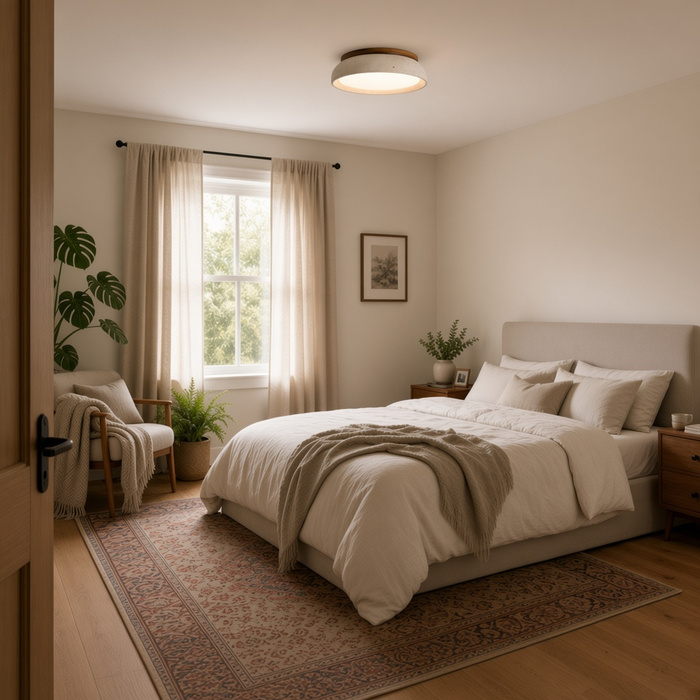
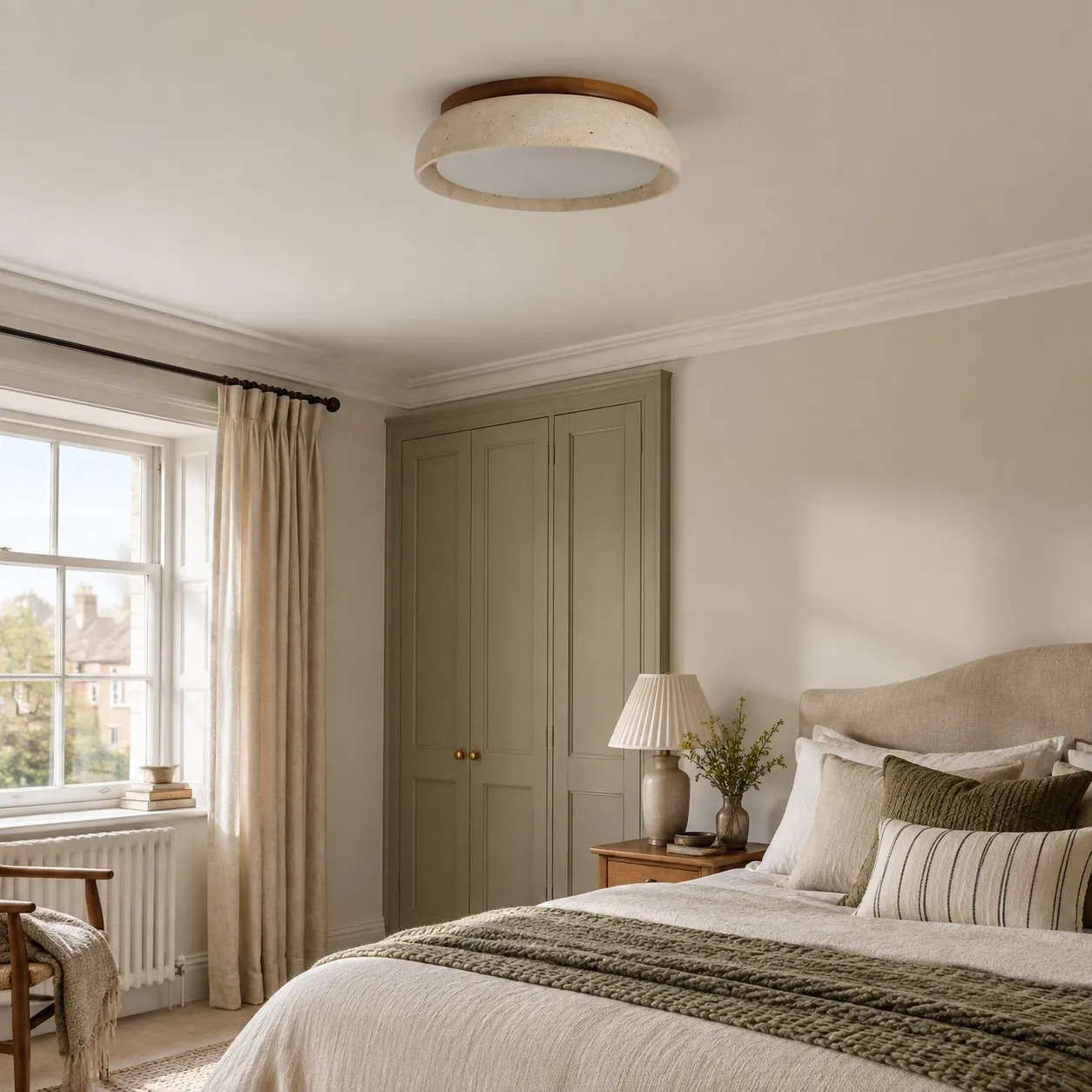
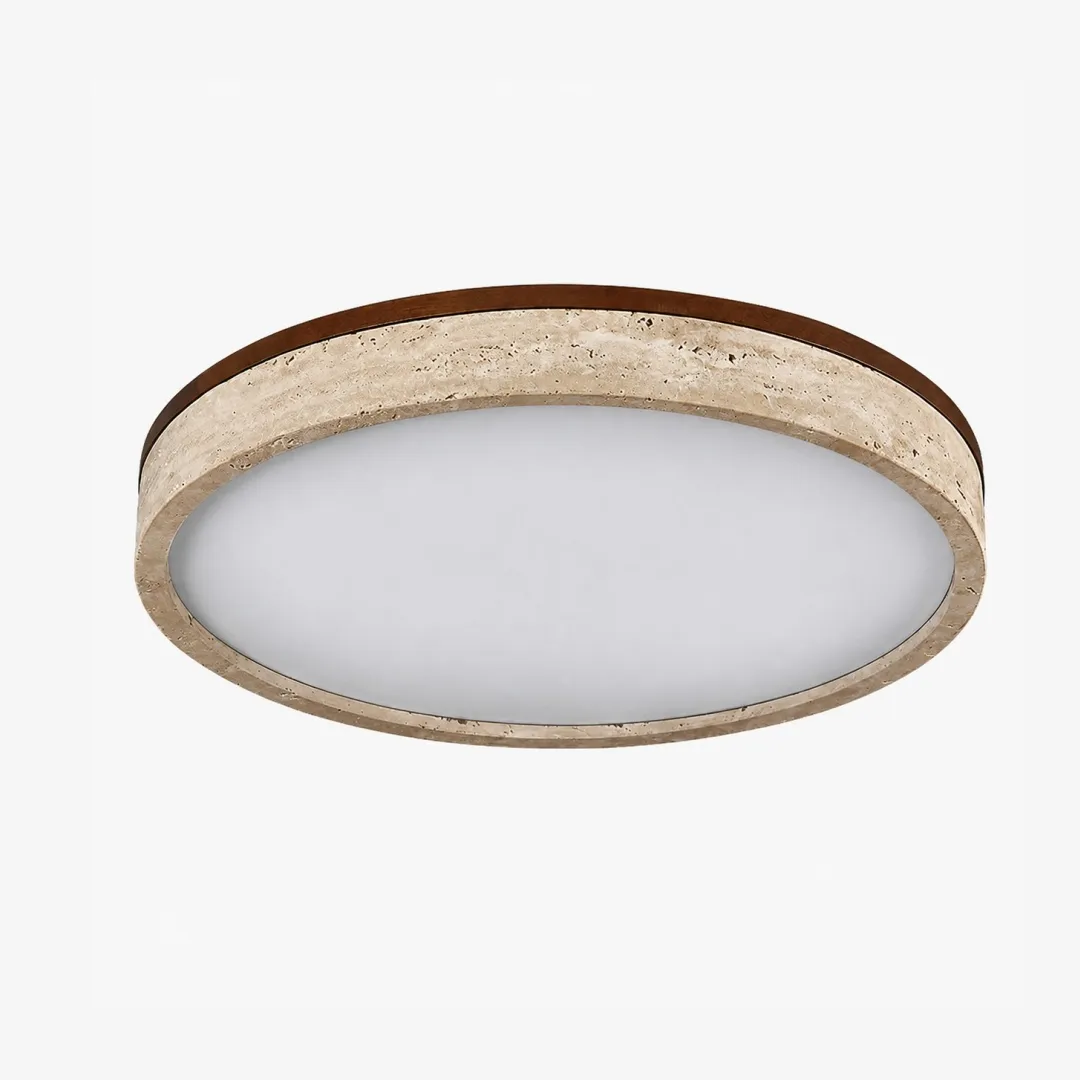
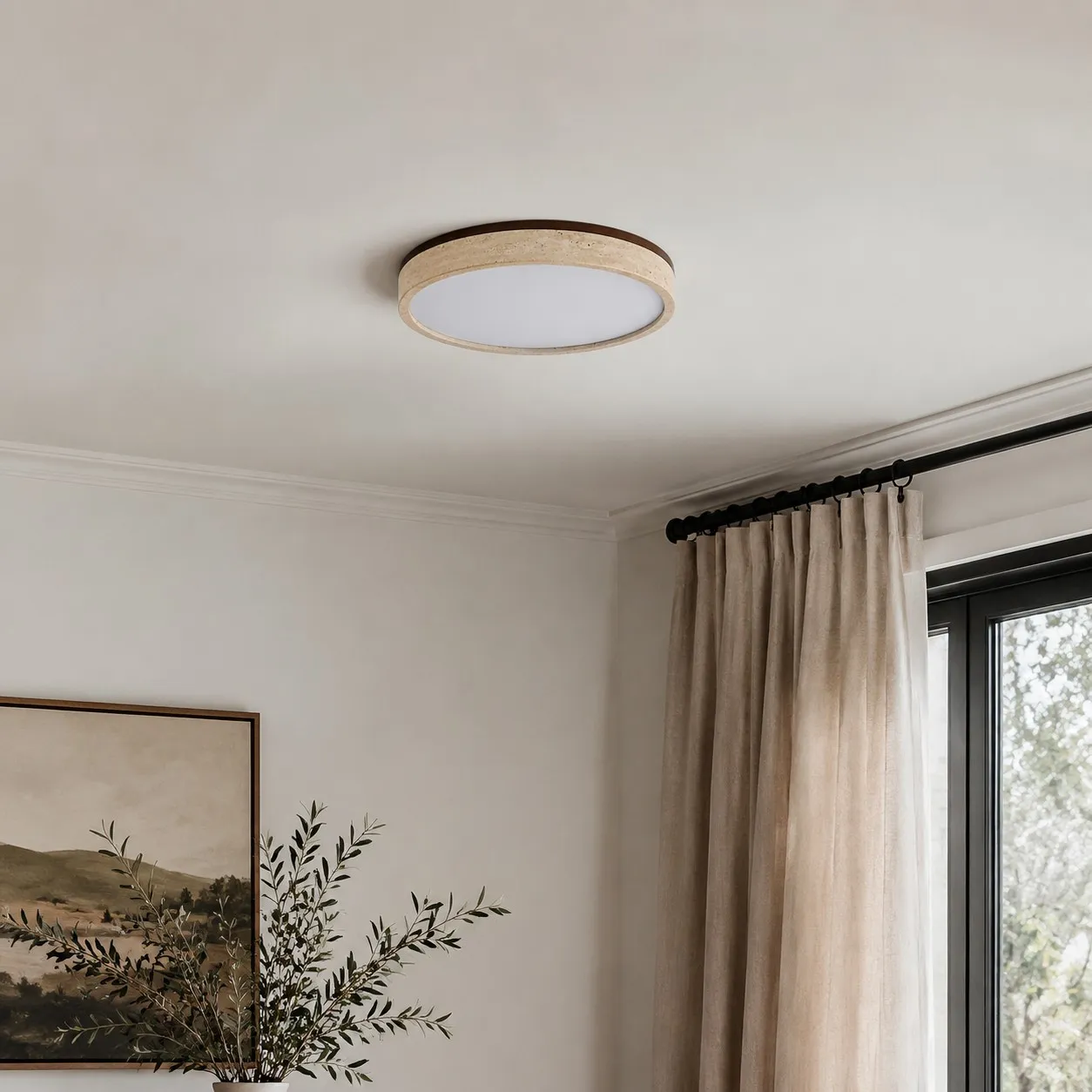
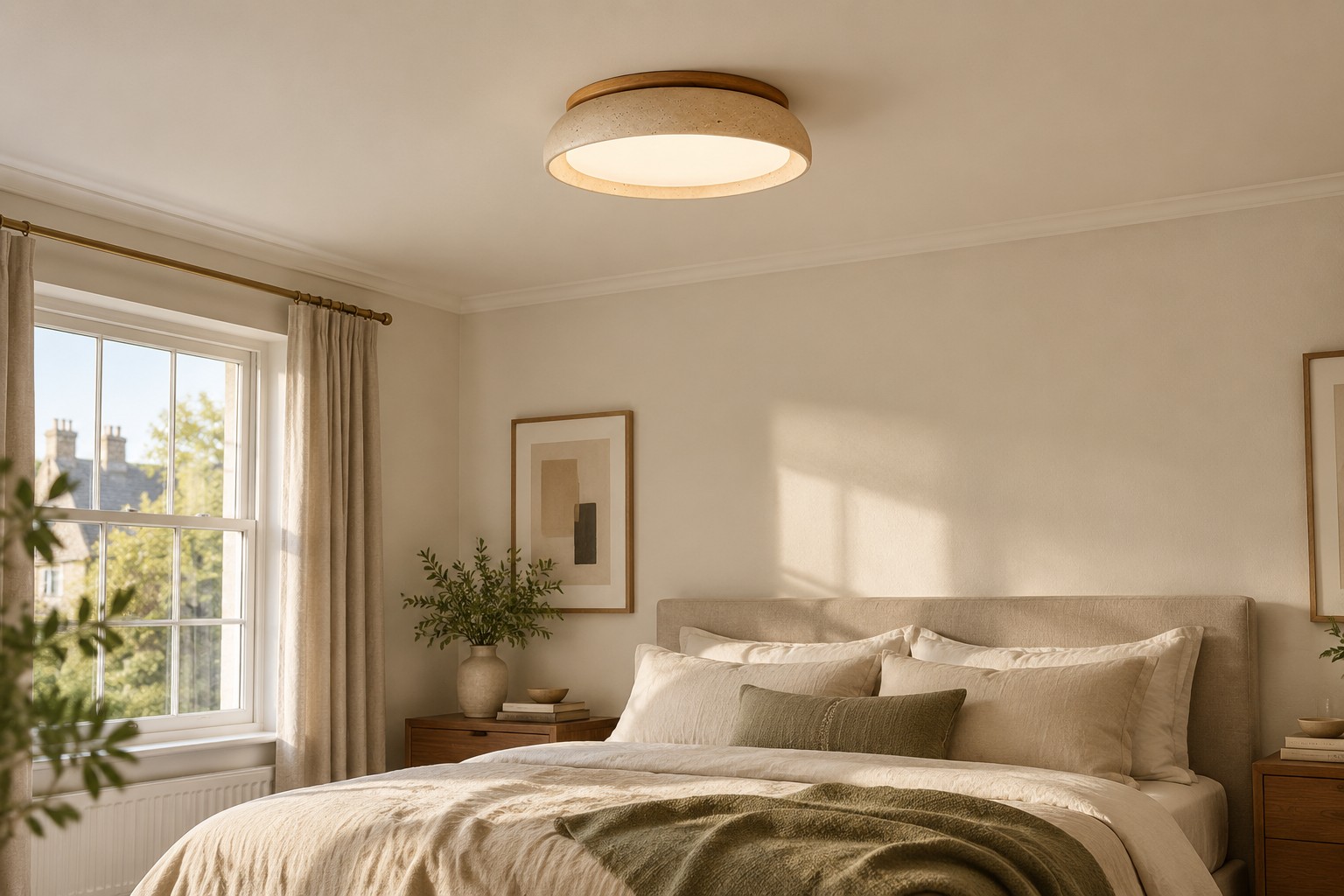
Start with the actual colour of the fixture rather than a generic beige mood board. Travertine can contain cream, sand, pale grey and warmer mineral marks. Pull two or three of those tones into larger surfaces such as limewash-style walls, linen curtains, wool rugs or pale timber. A small amount of walnut or dark oak adds definition without making the room feel busy.
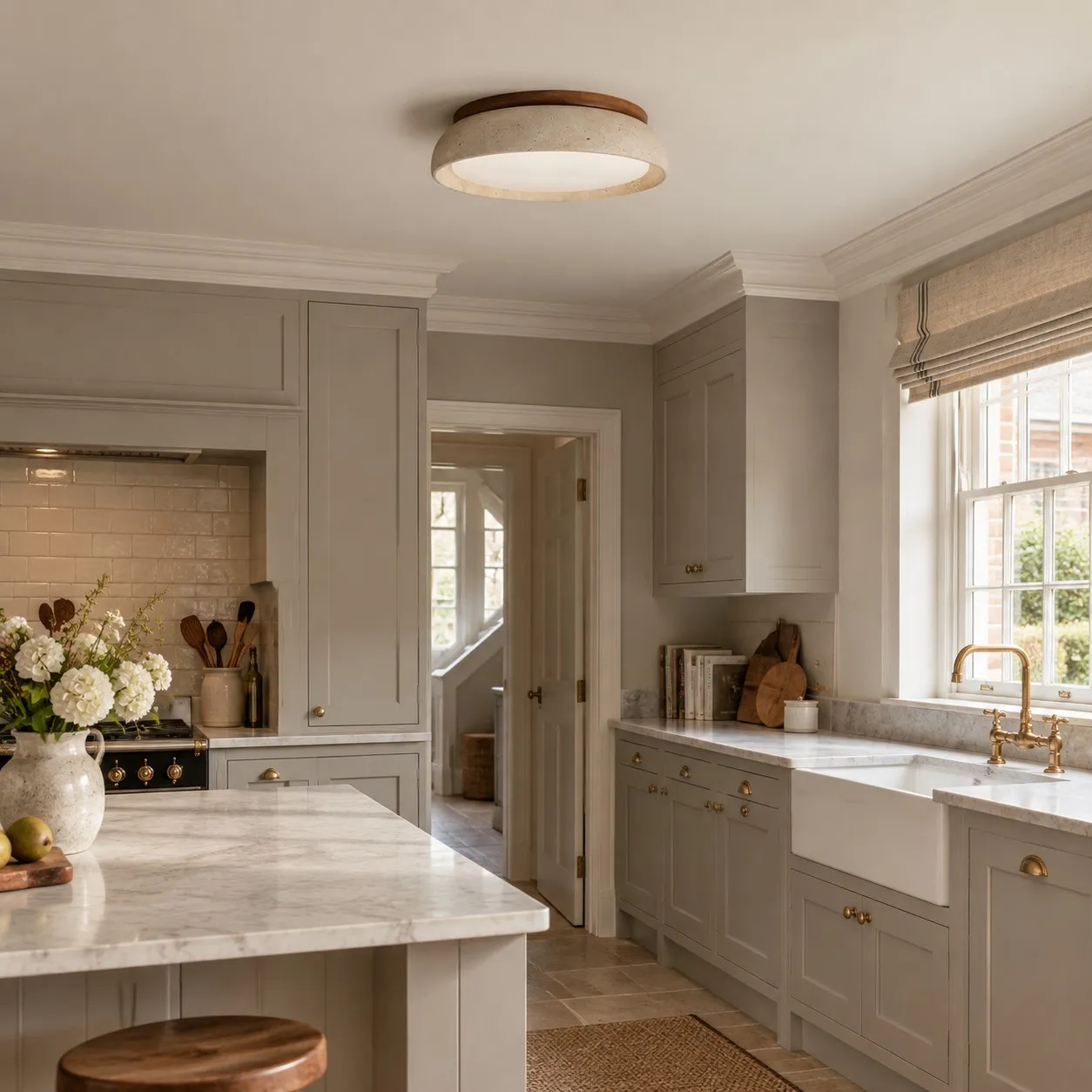
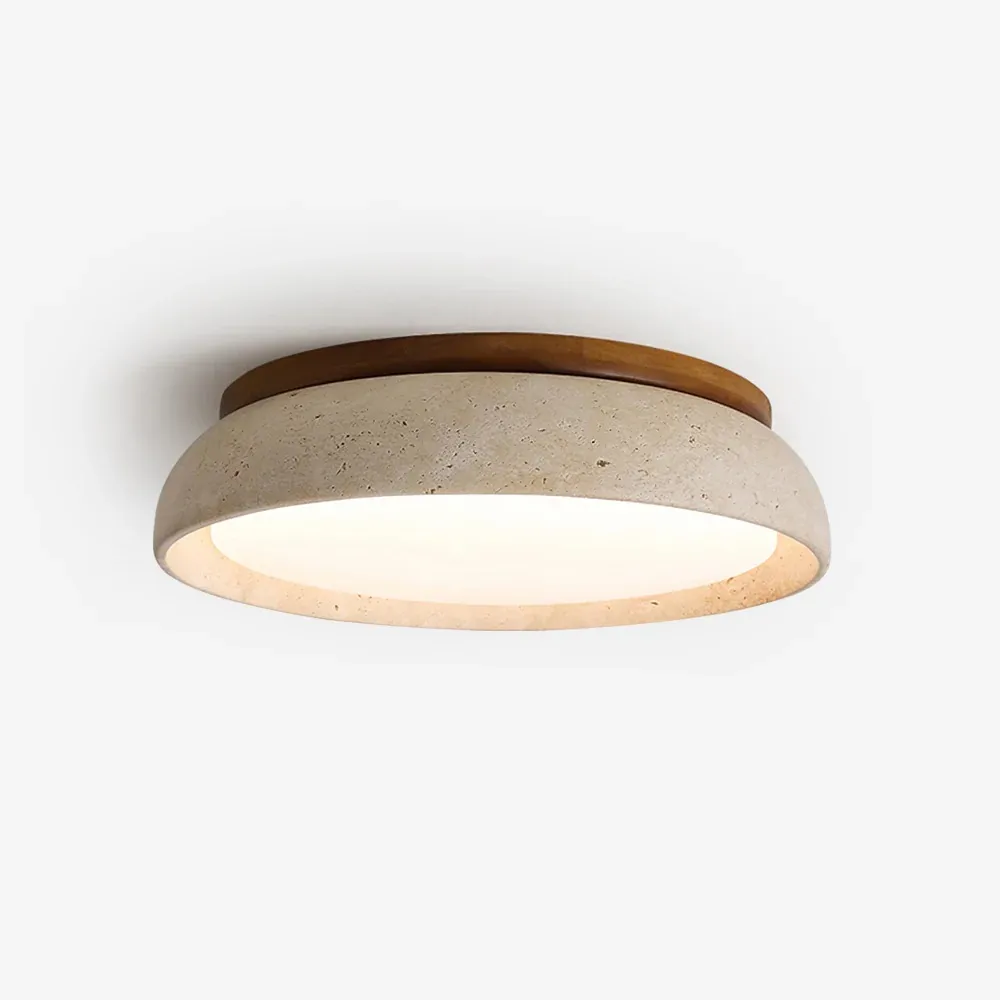
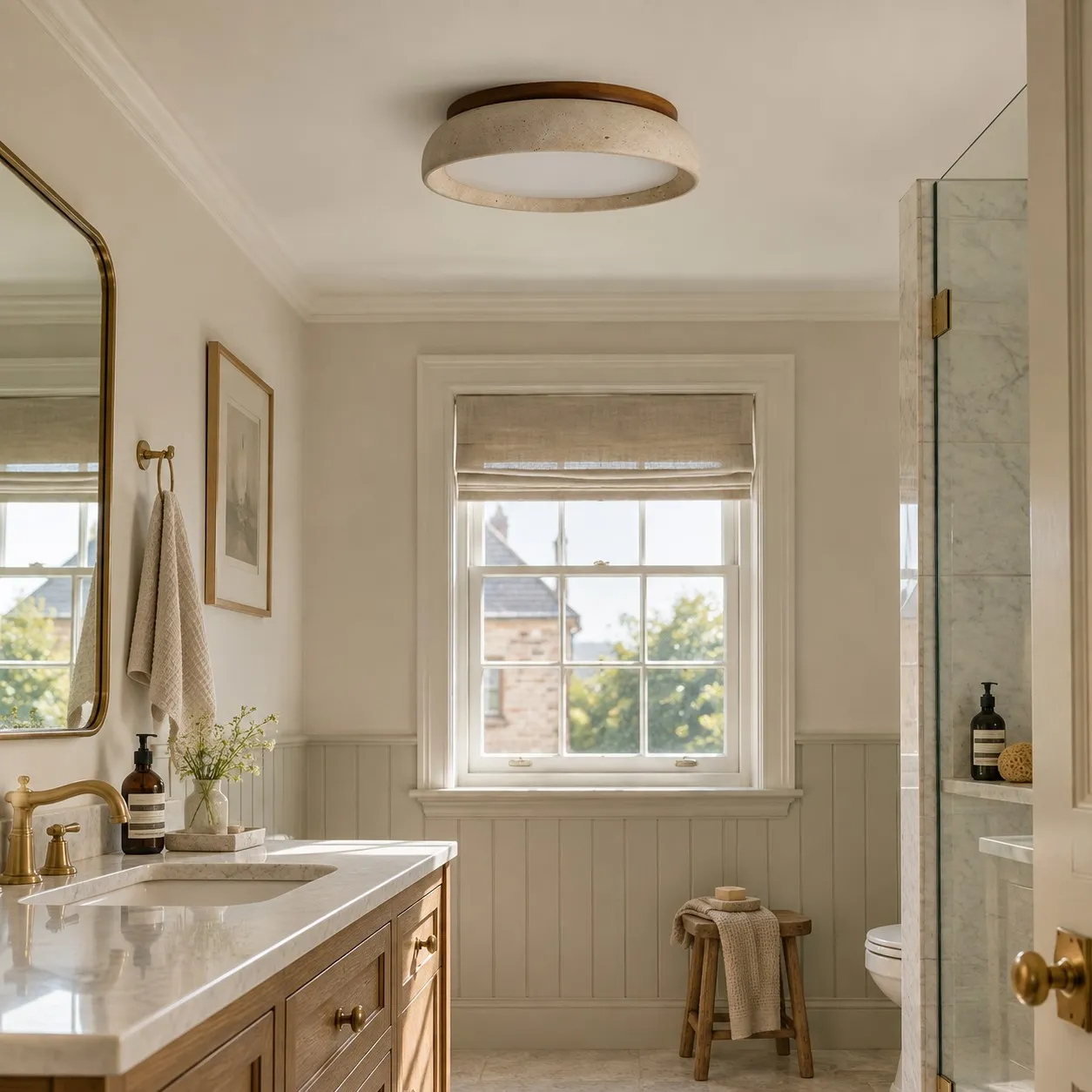
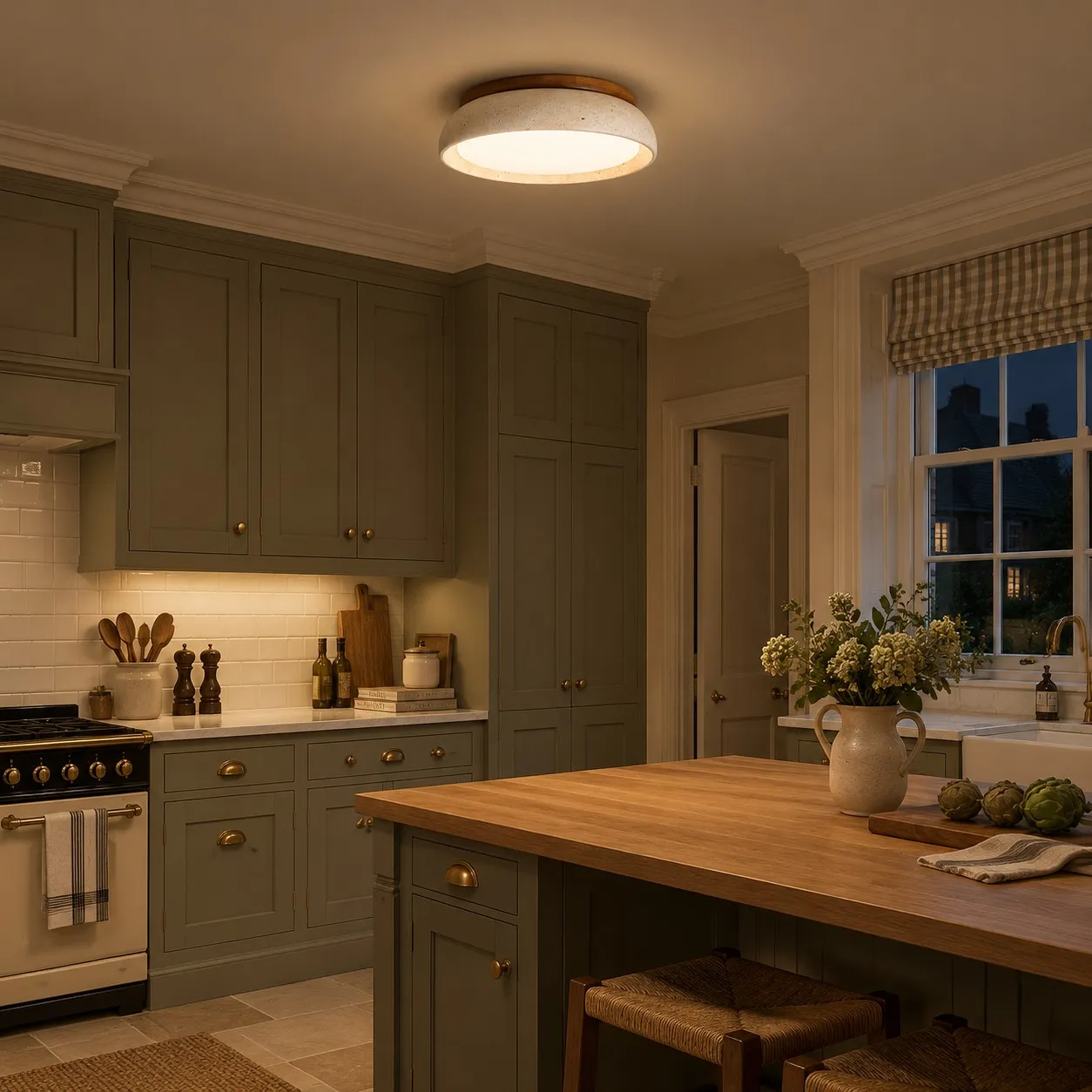
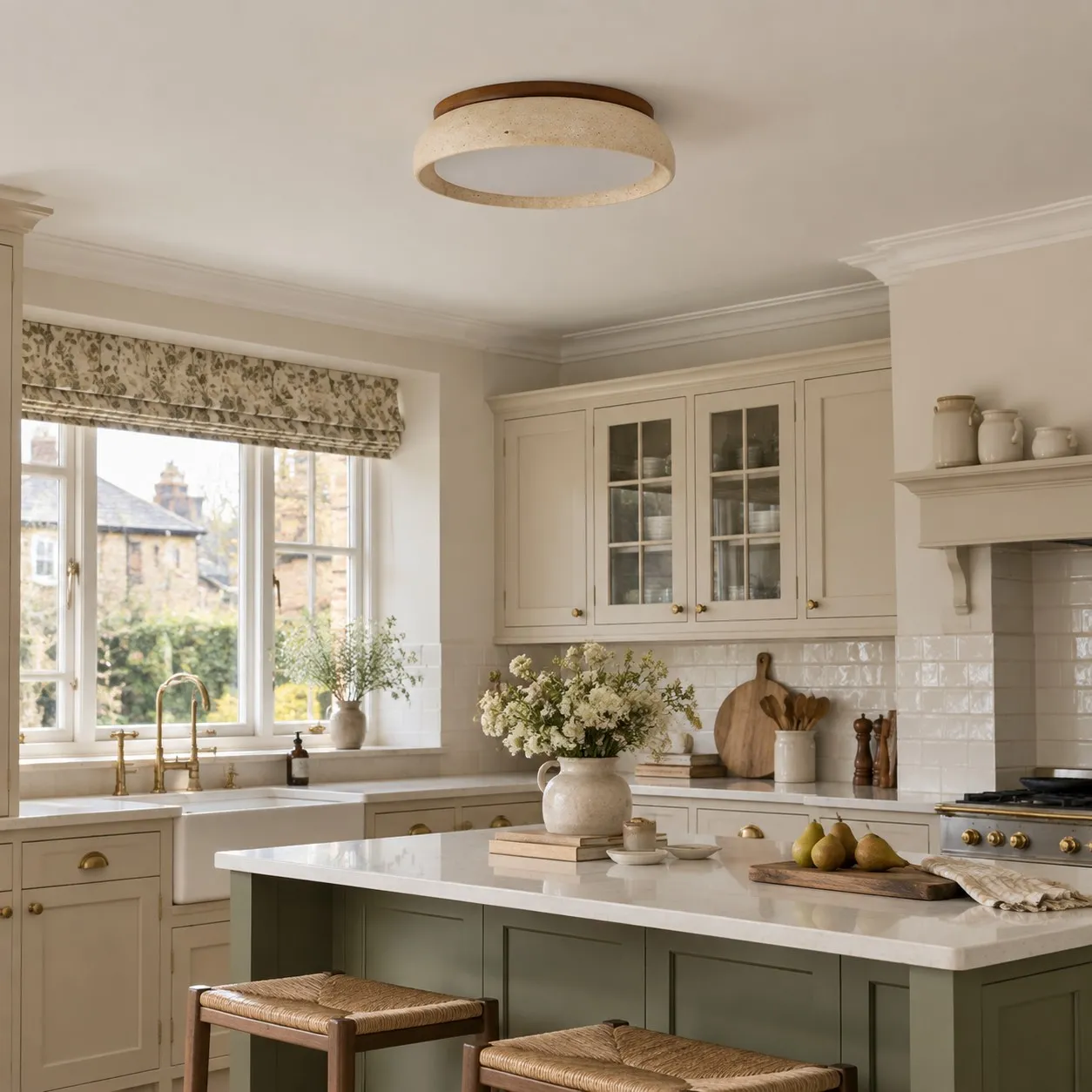
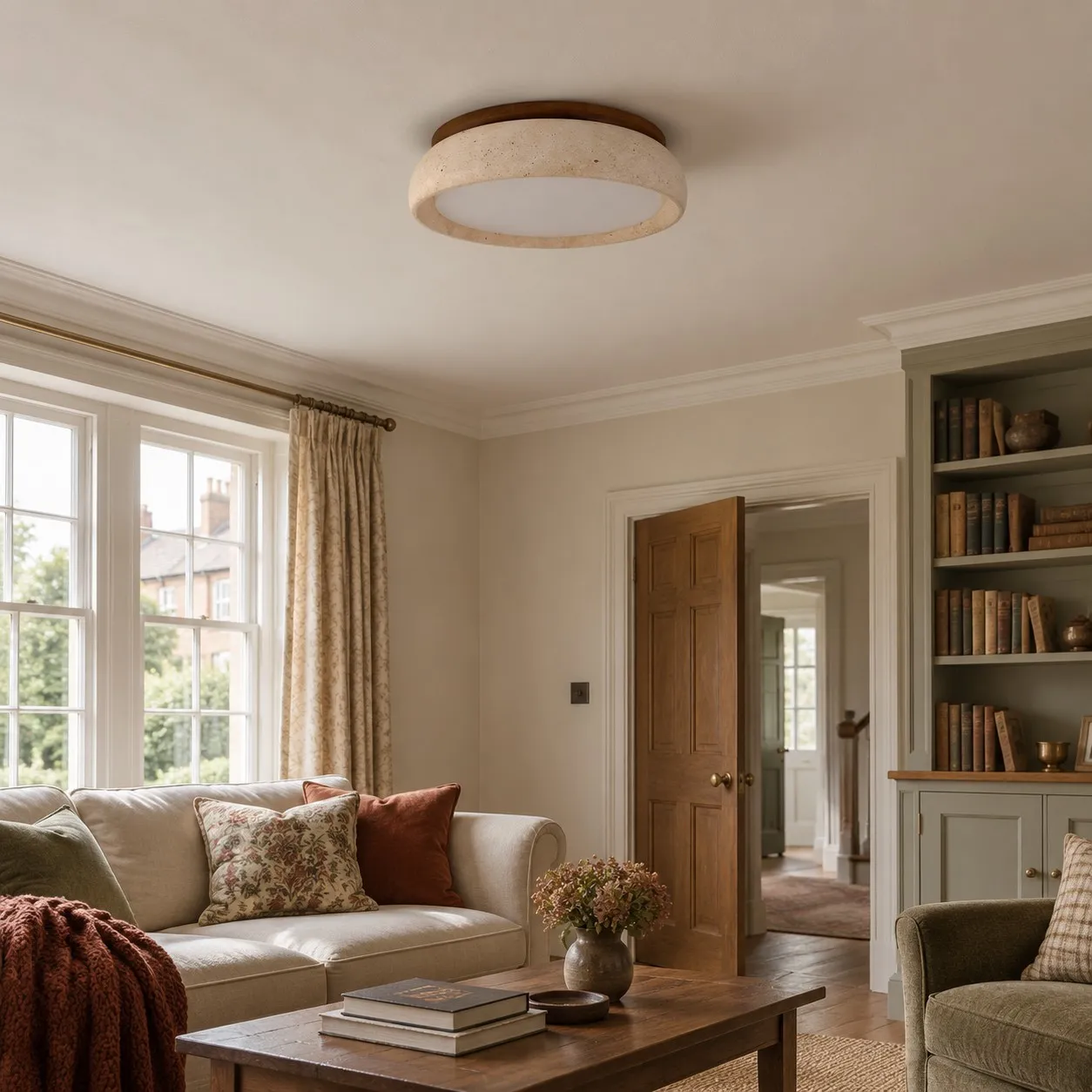
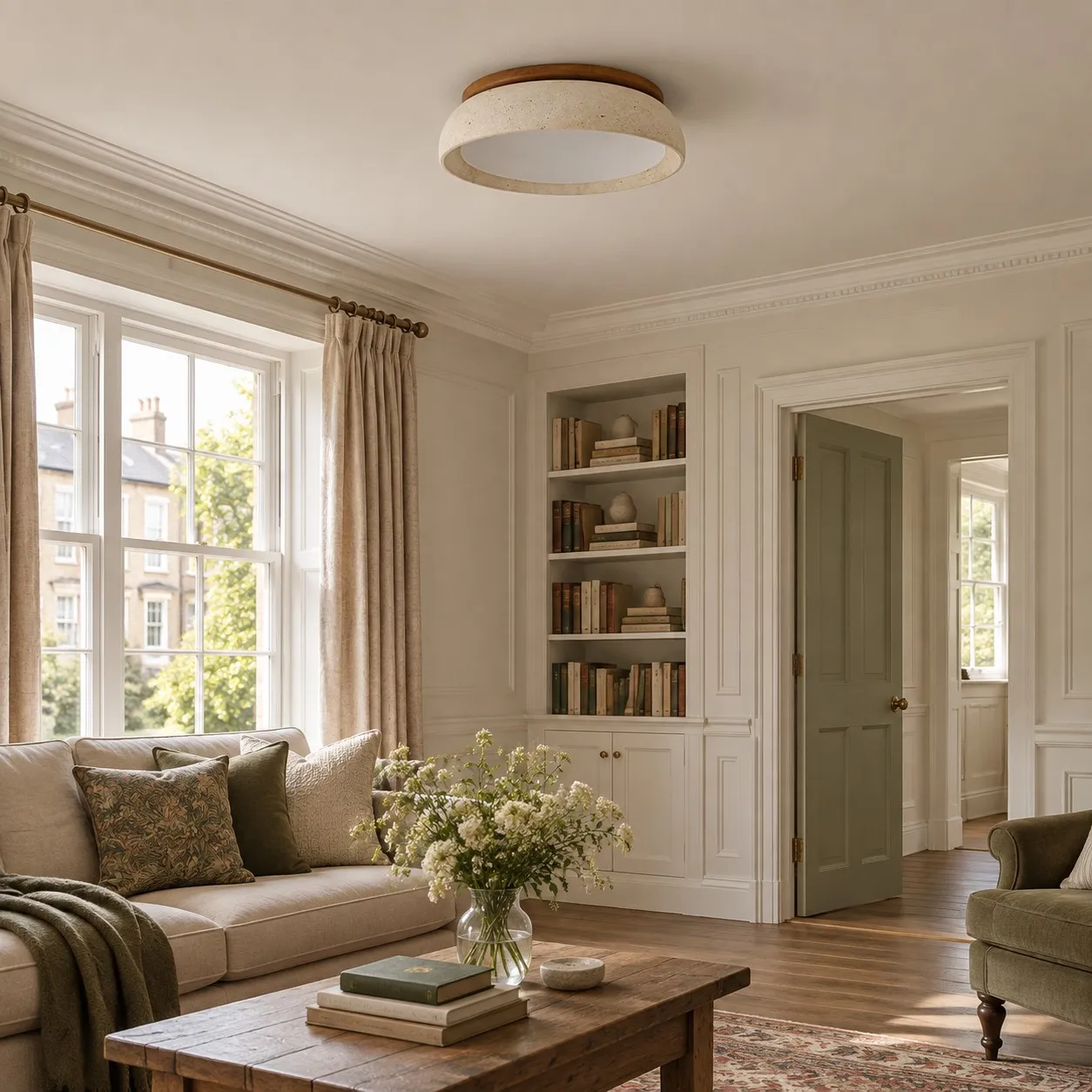
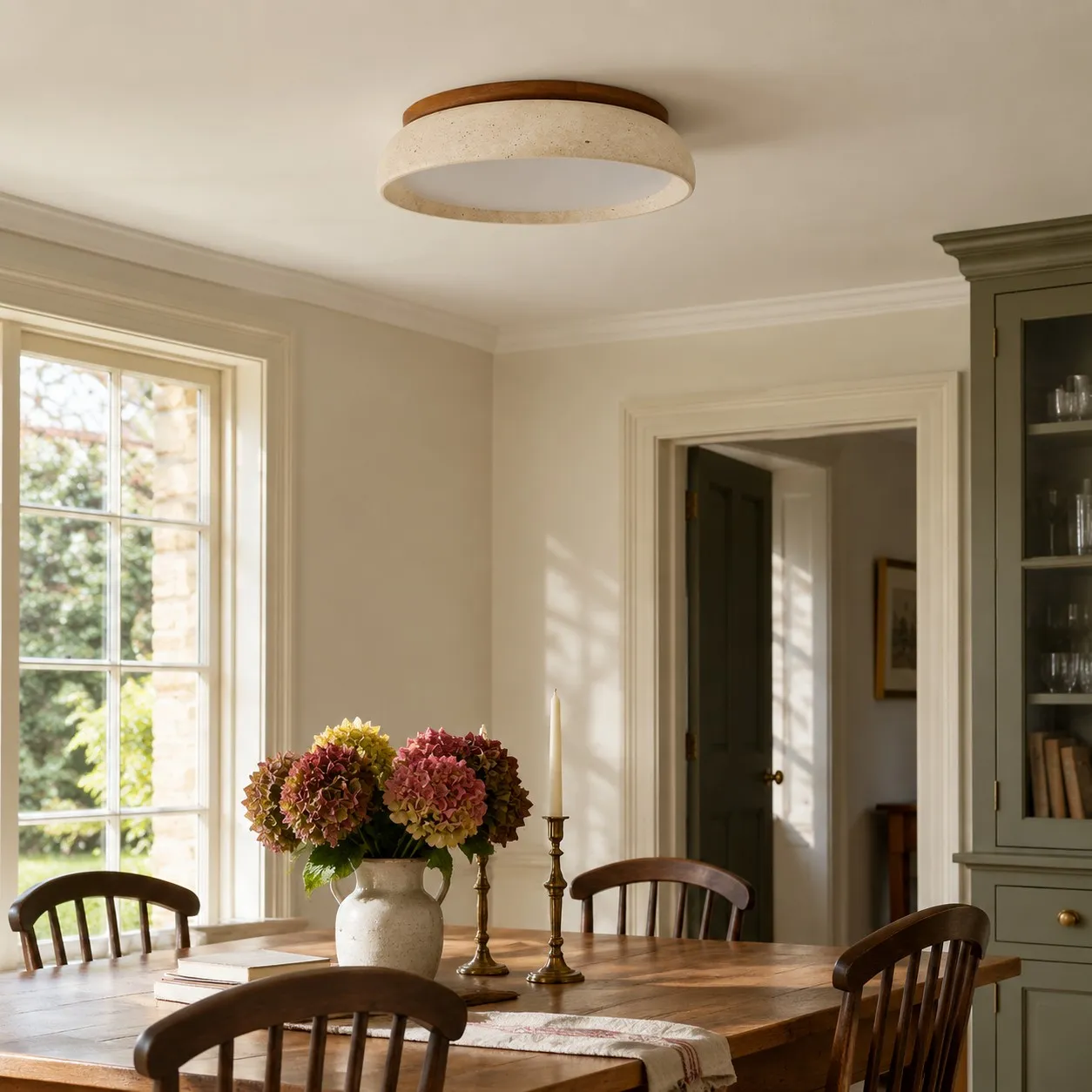
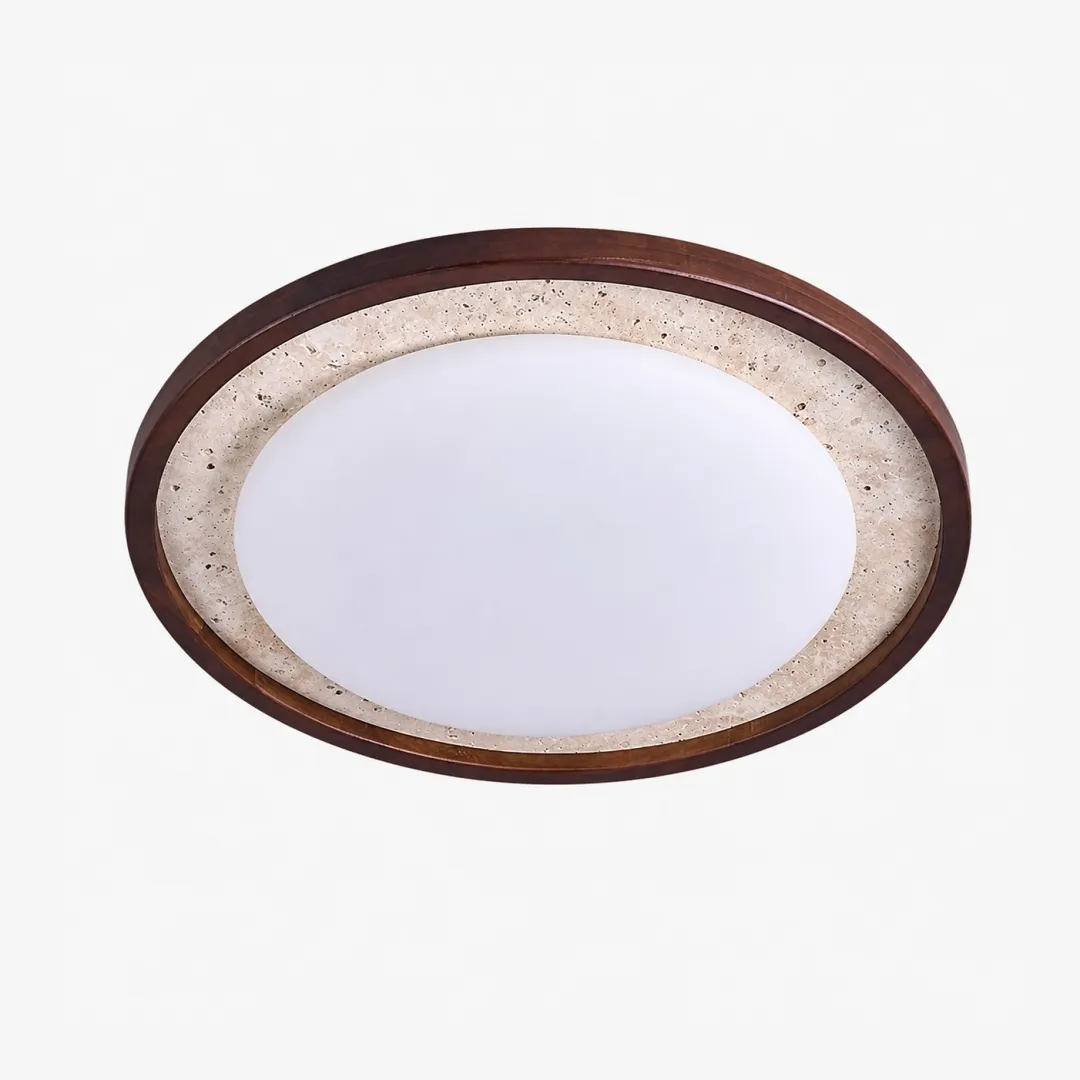
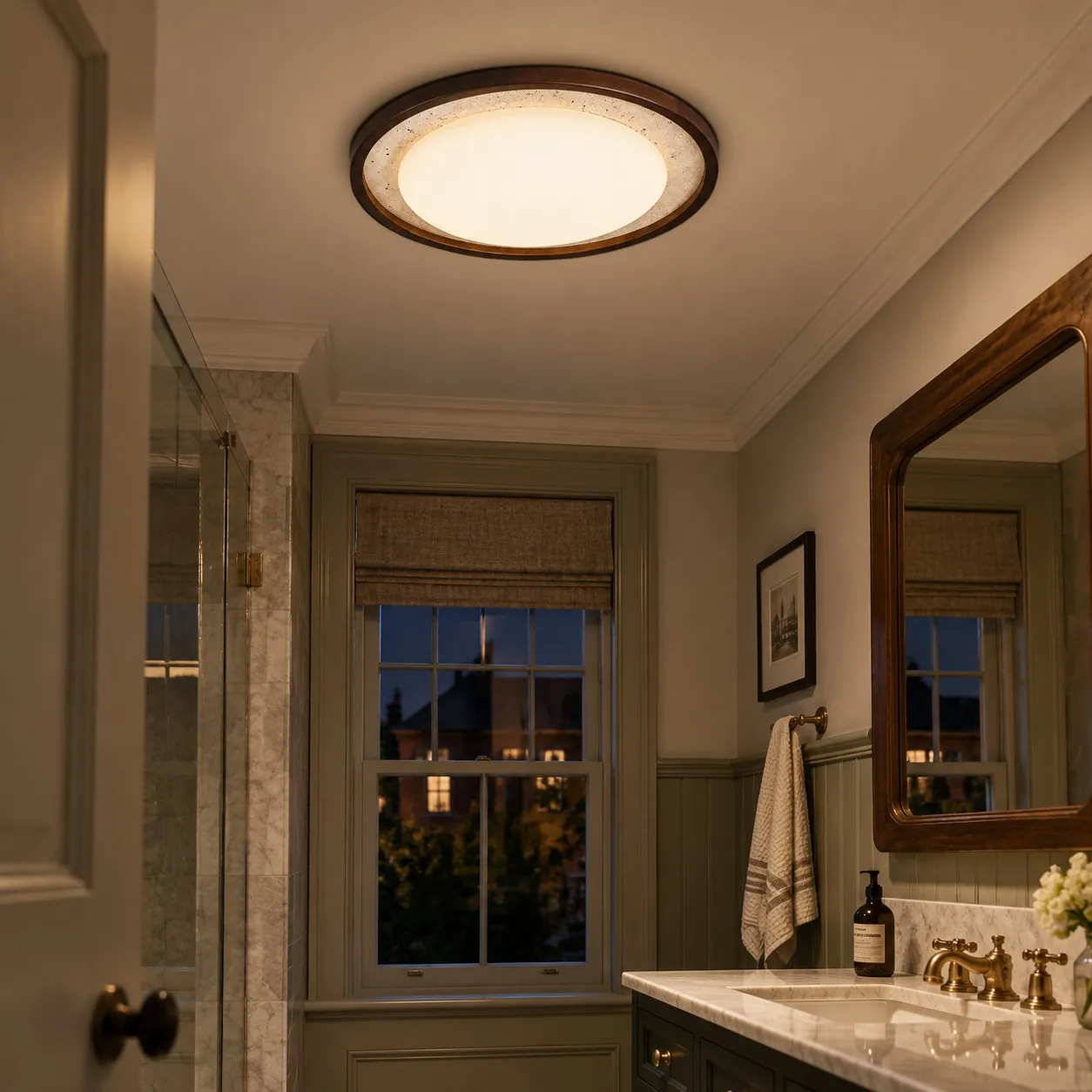
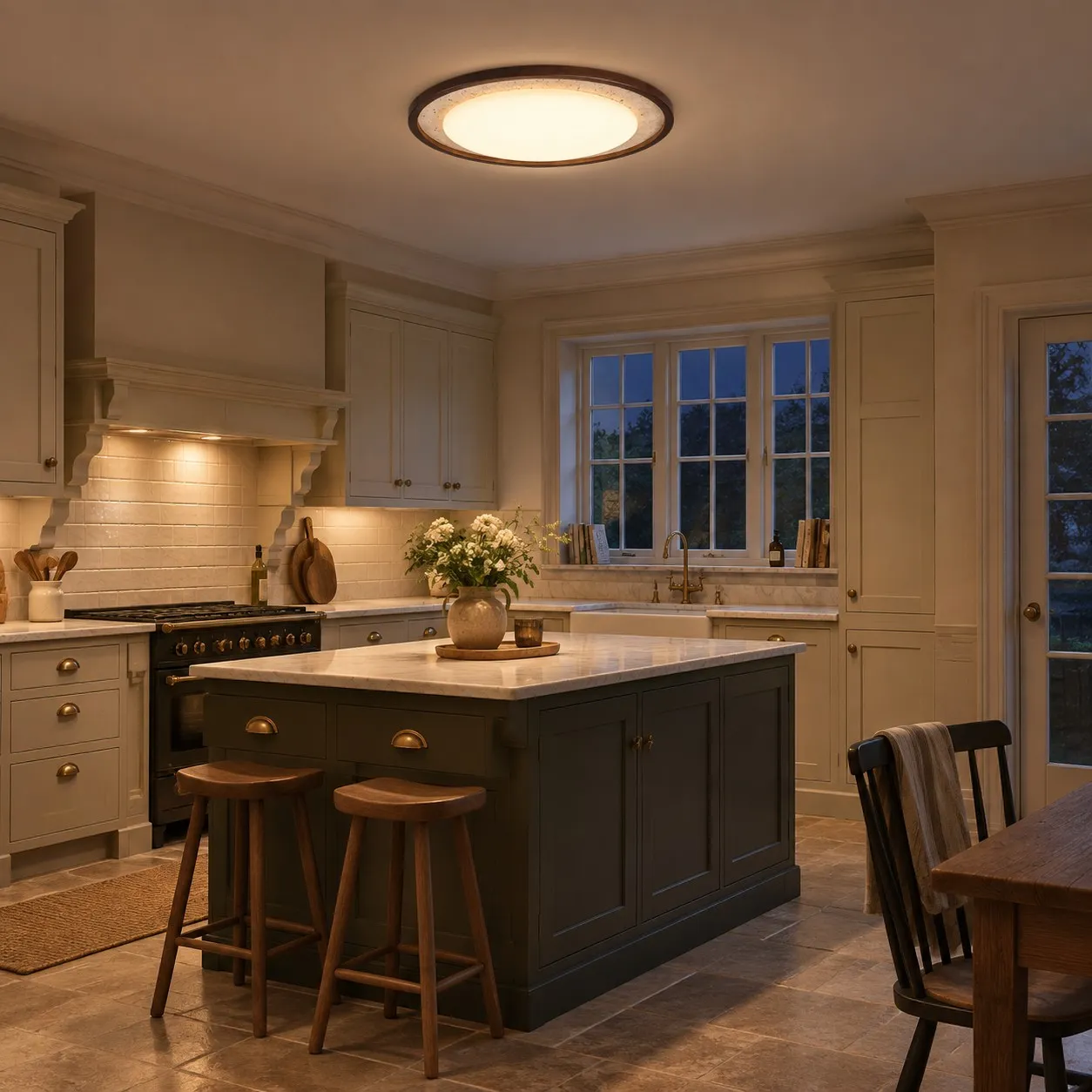
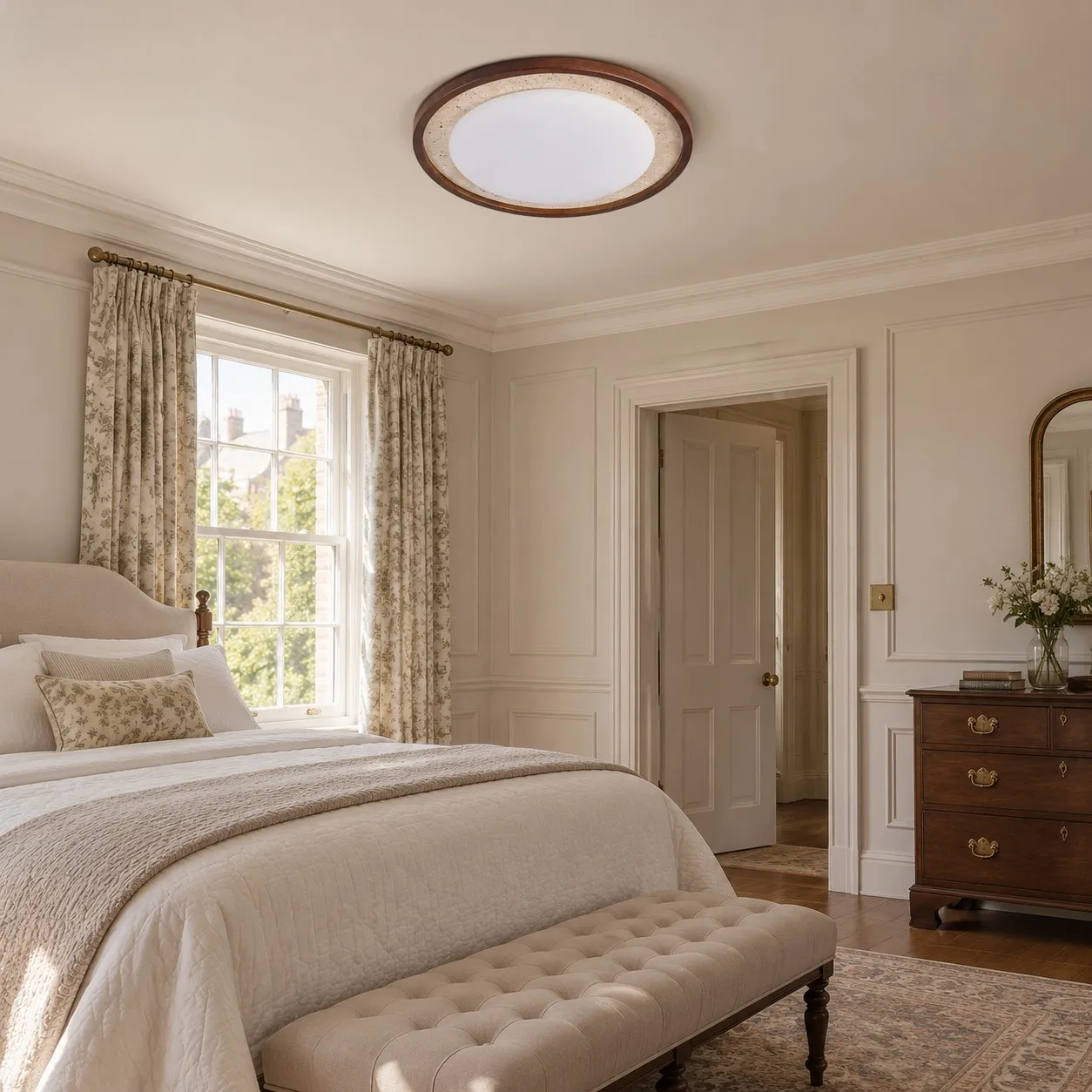
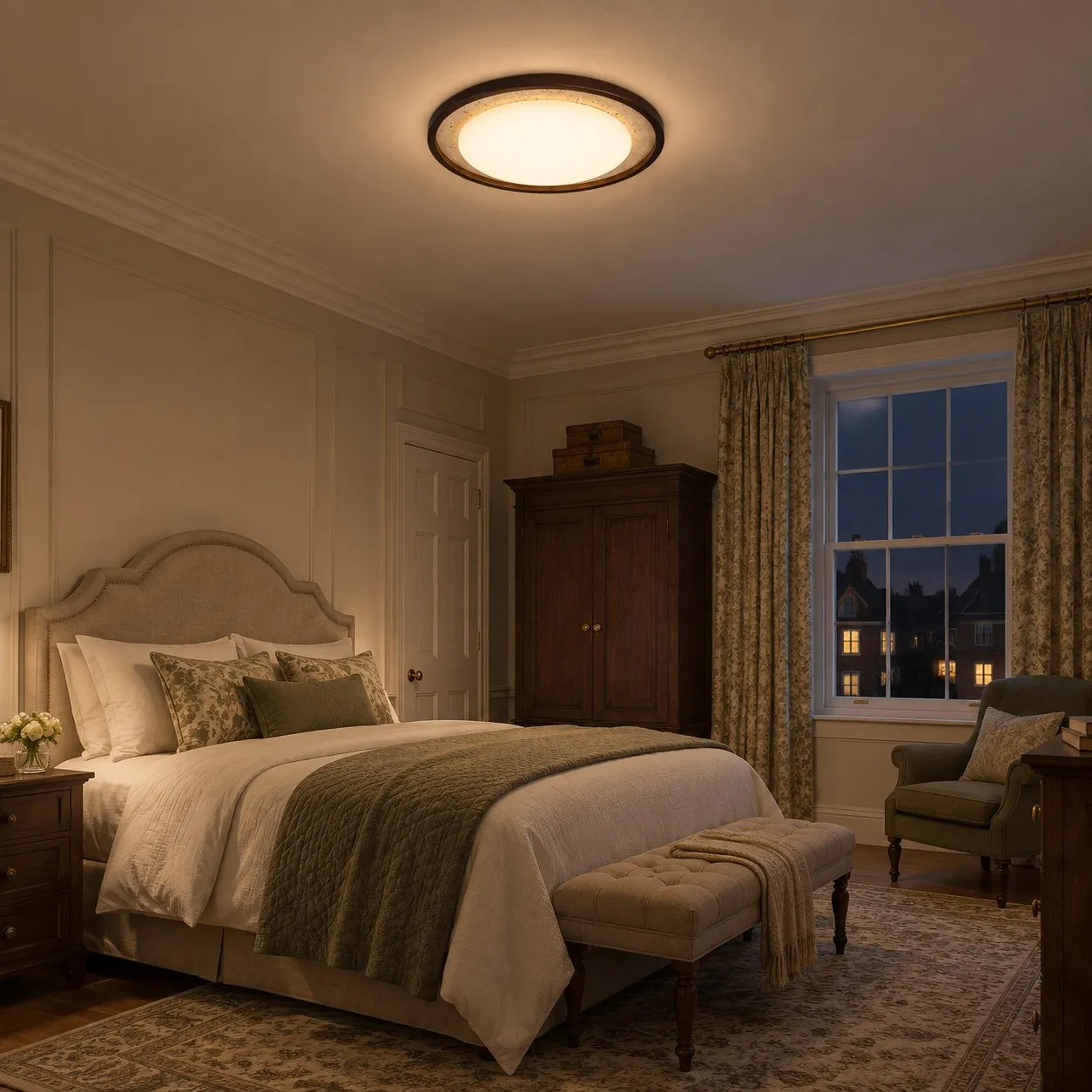
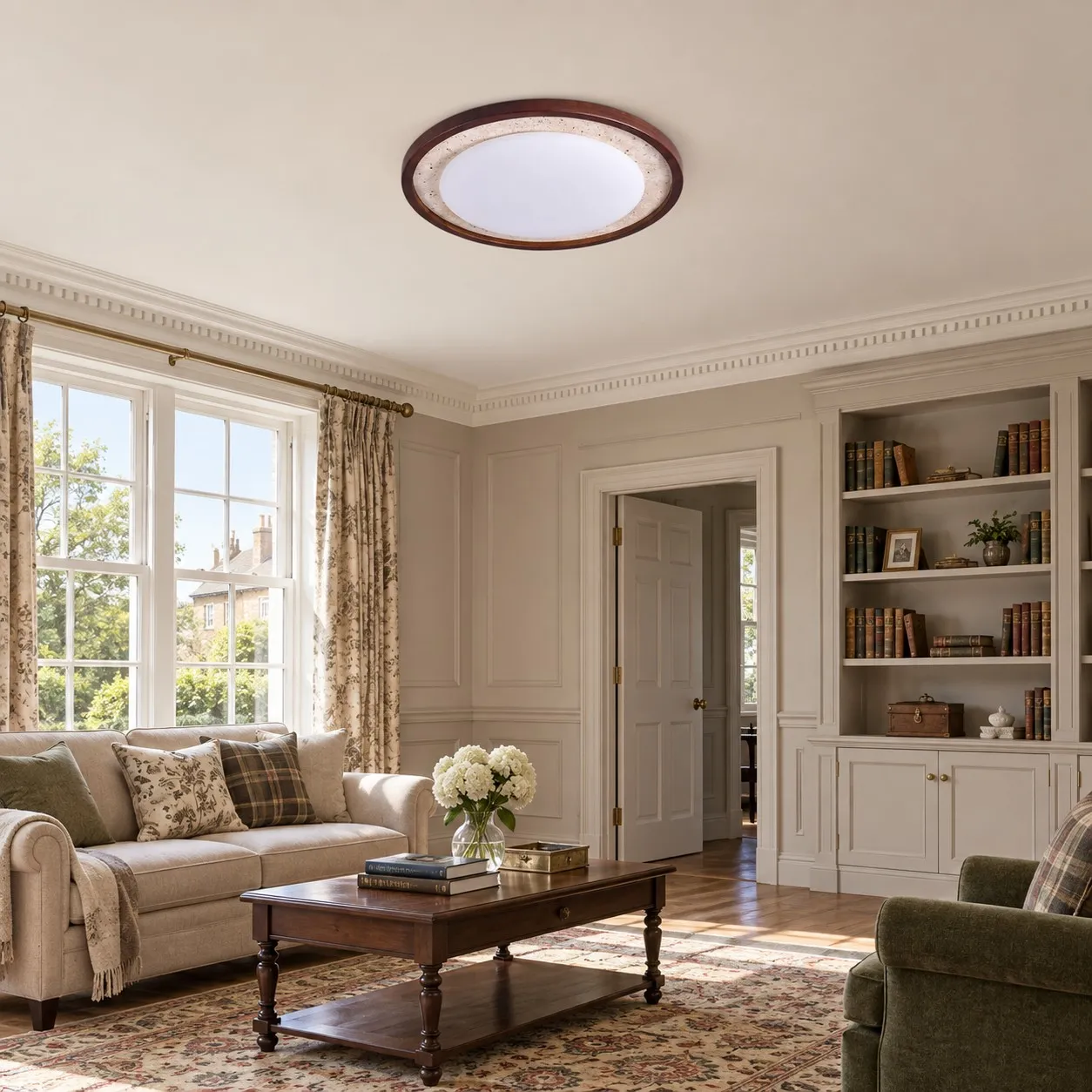
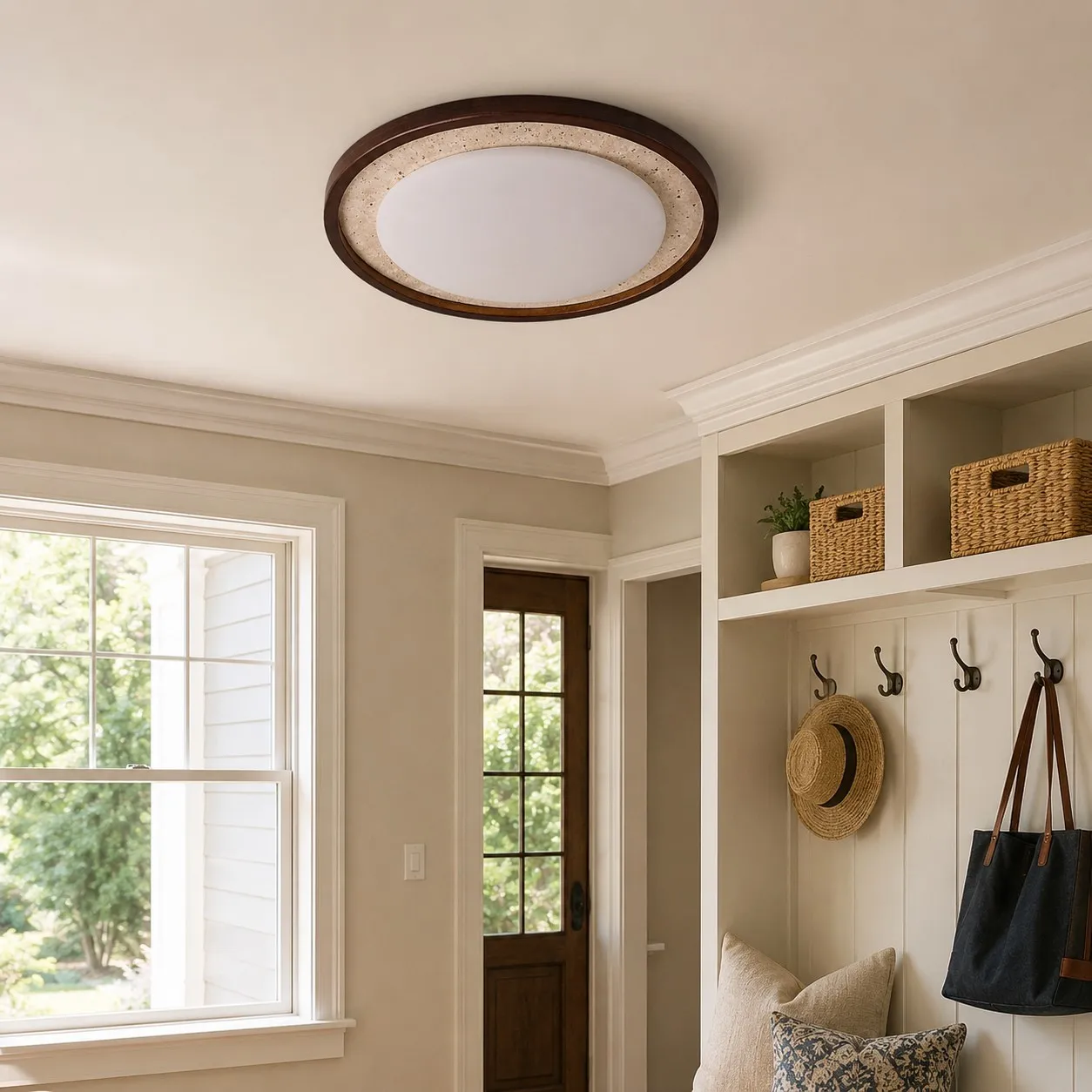
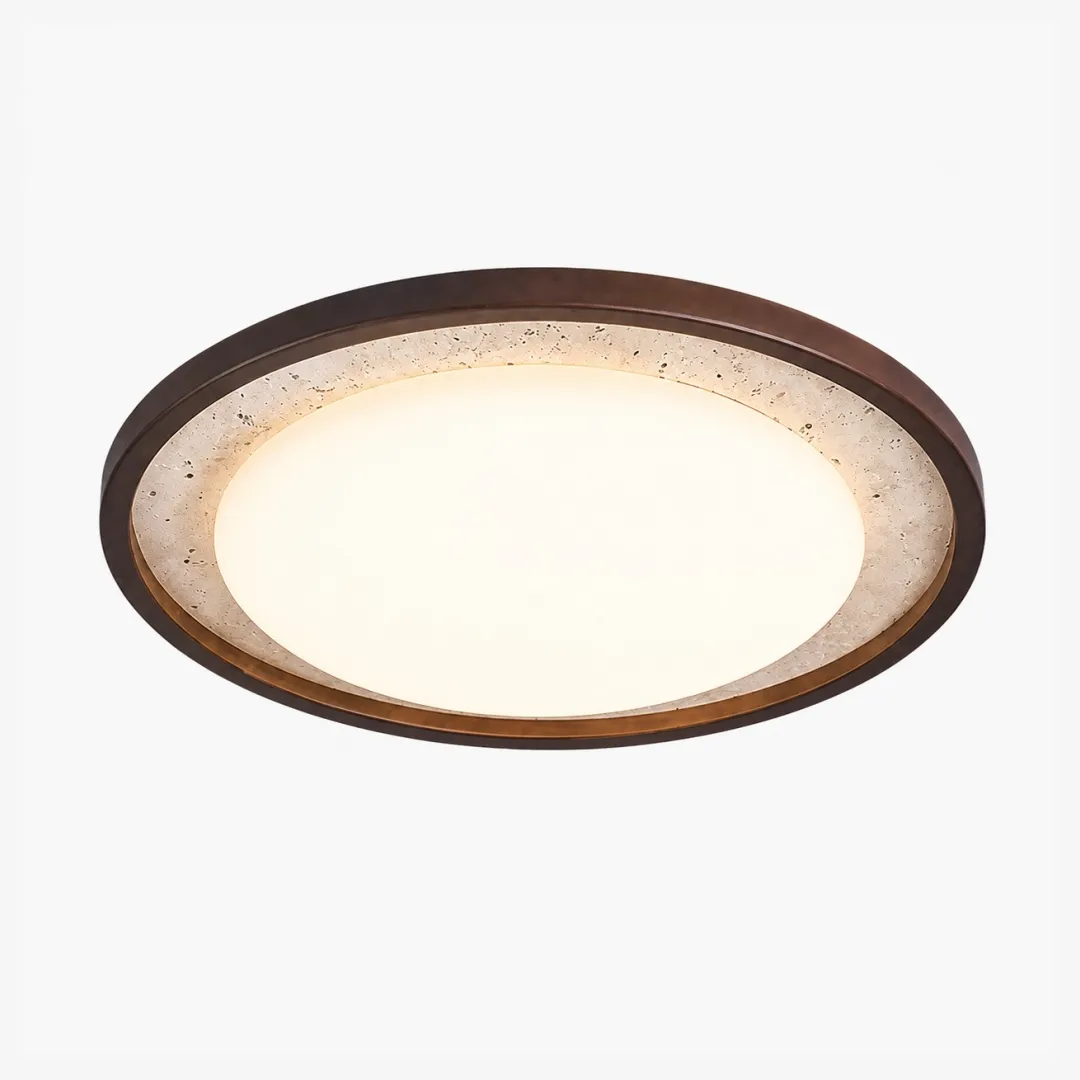
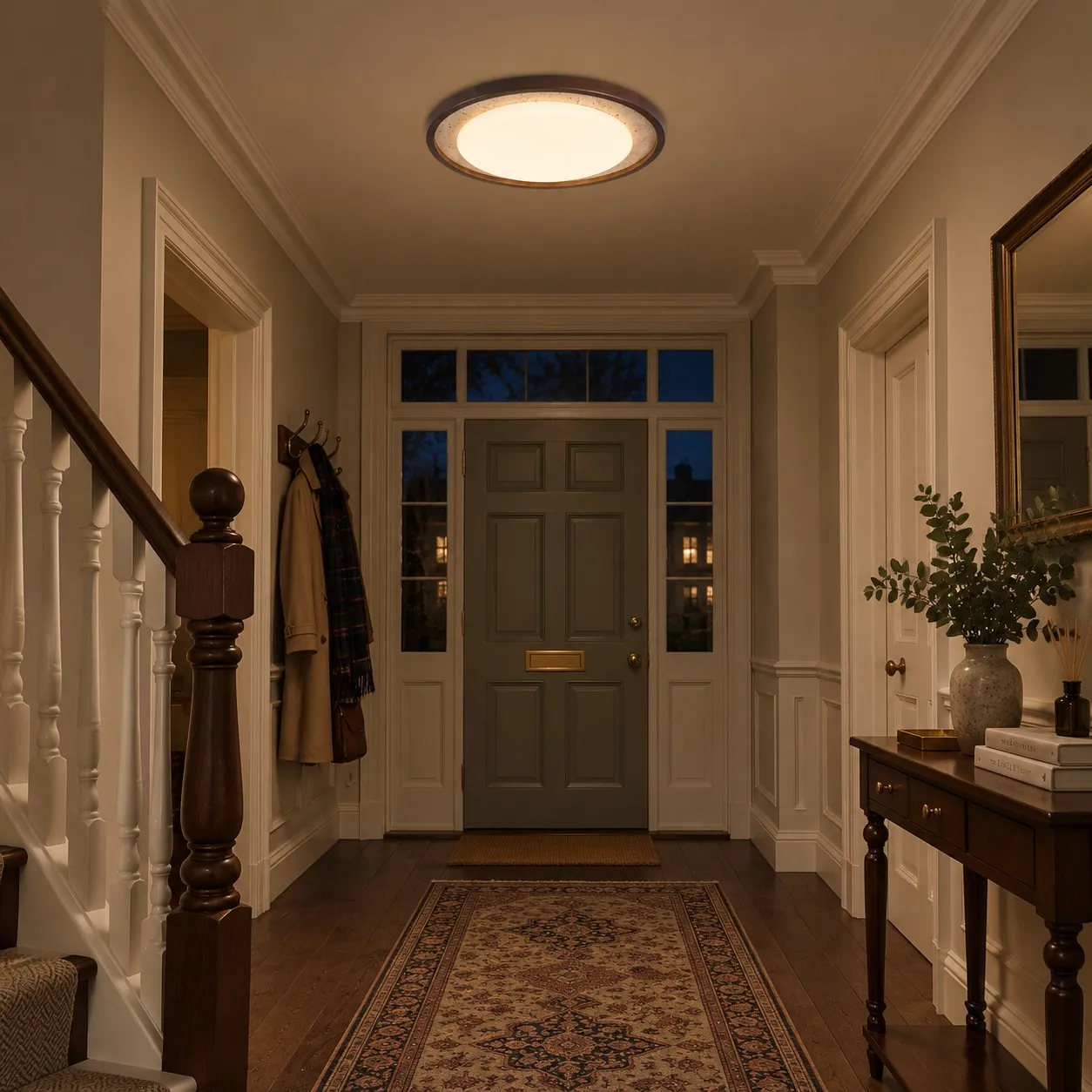
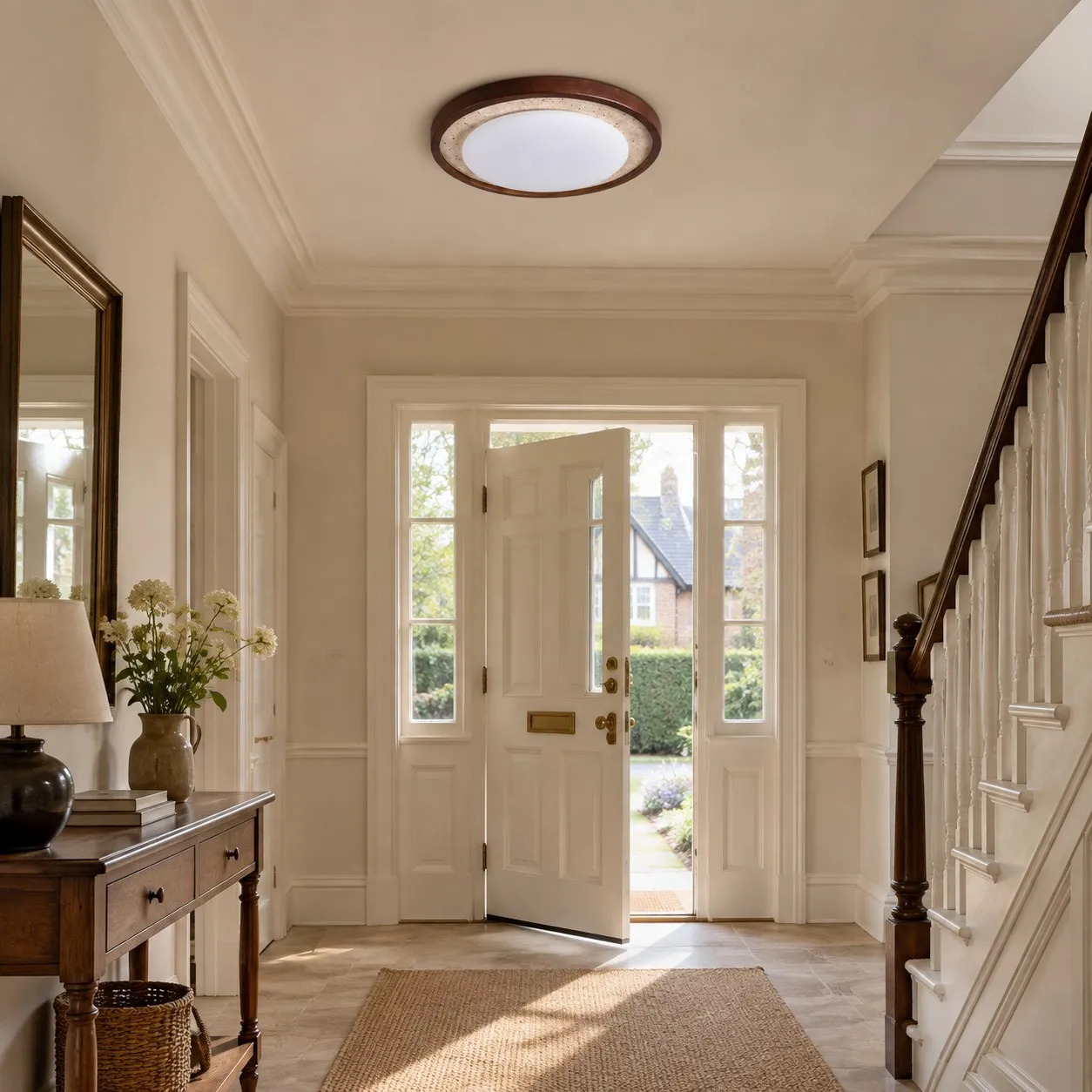
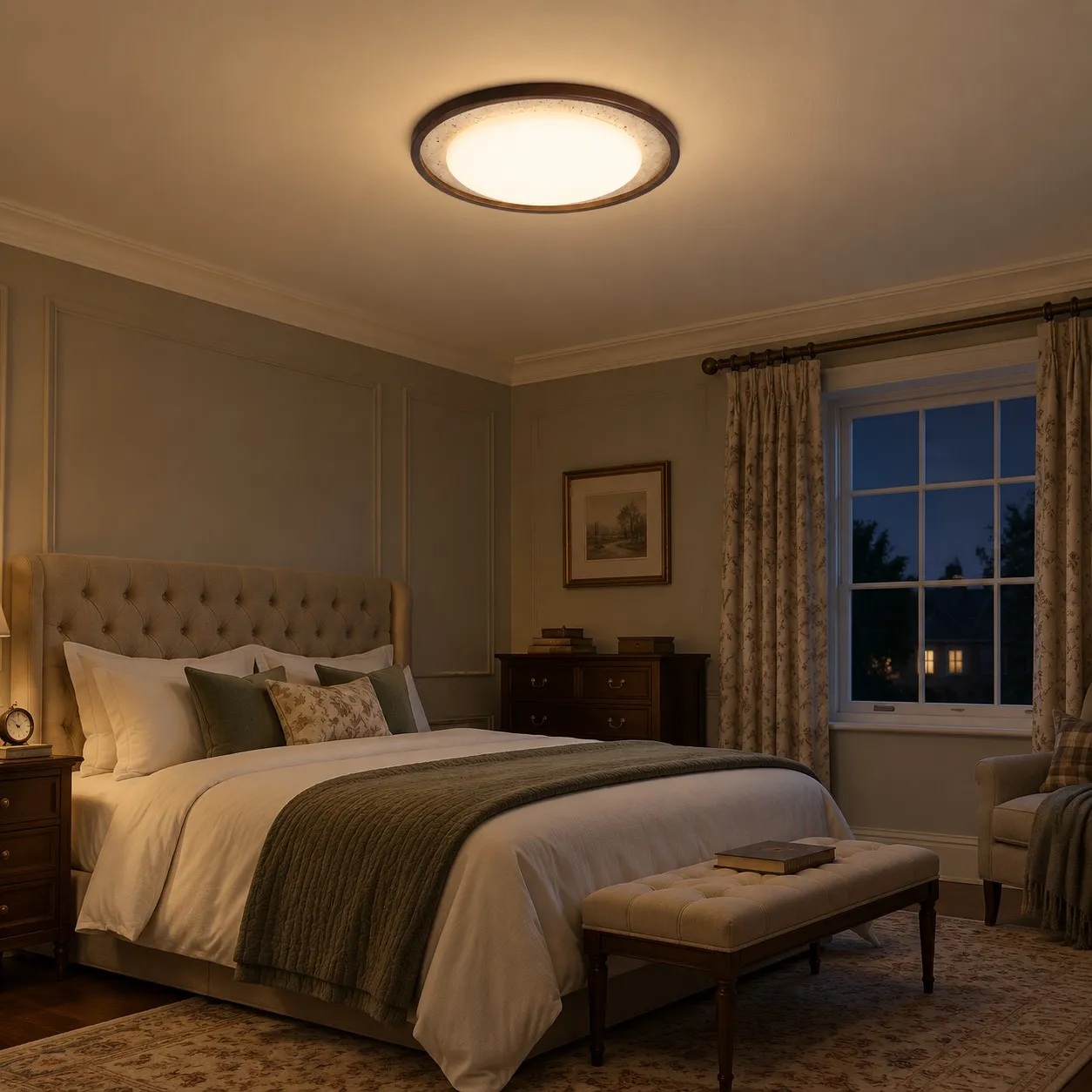
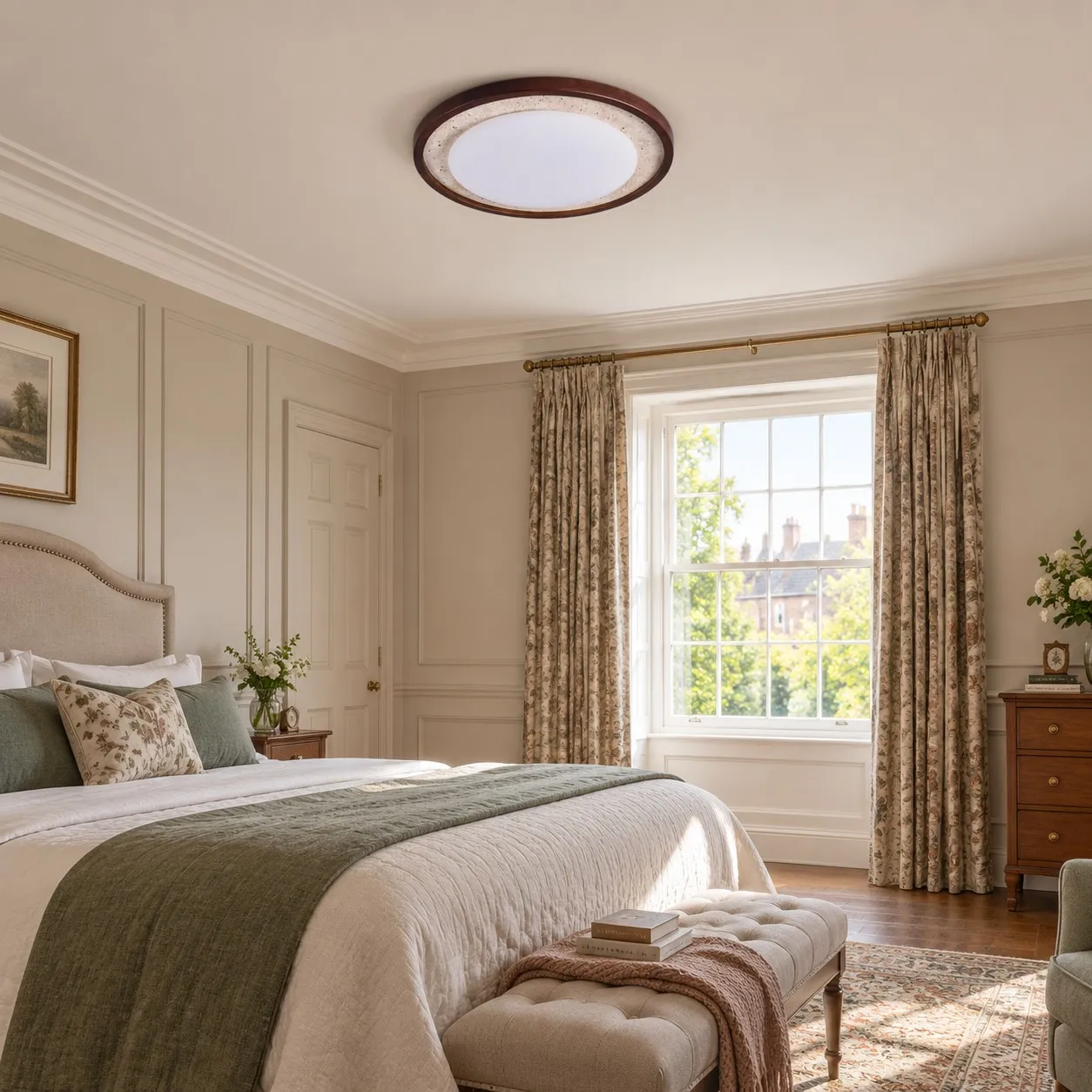
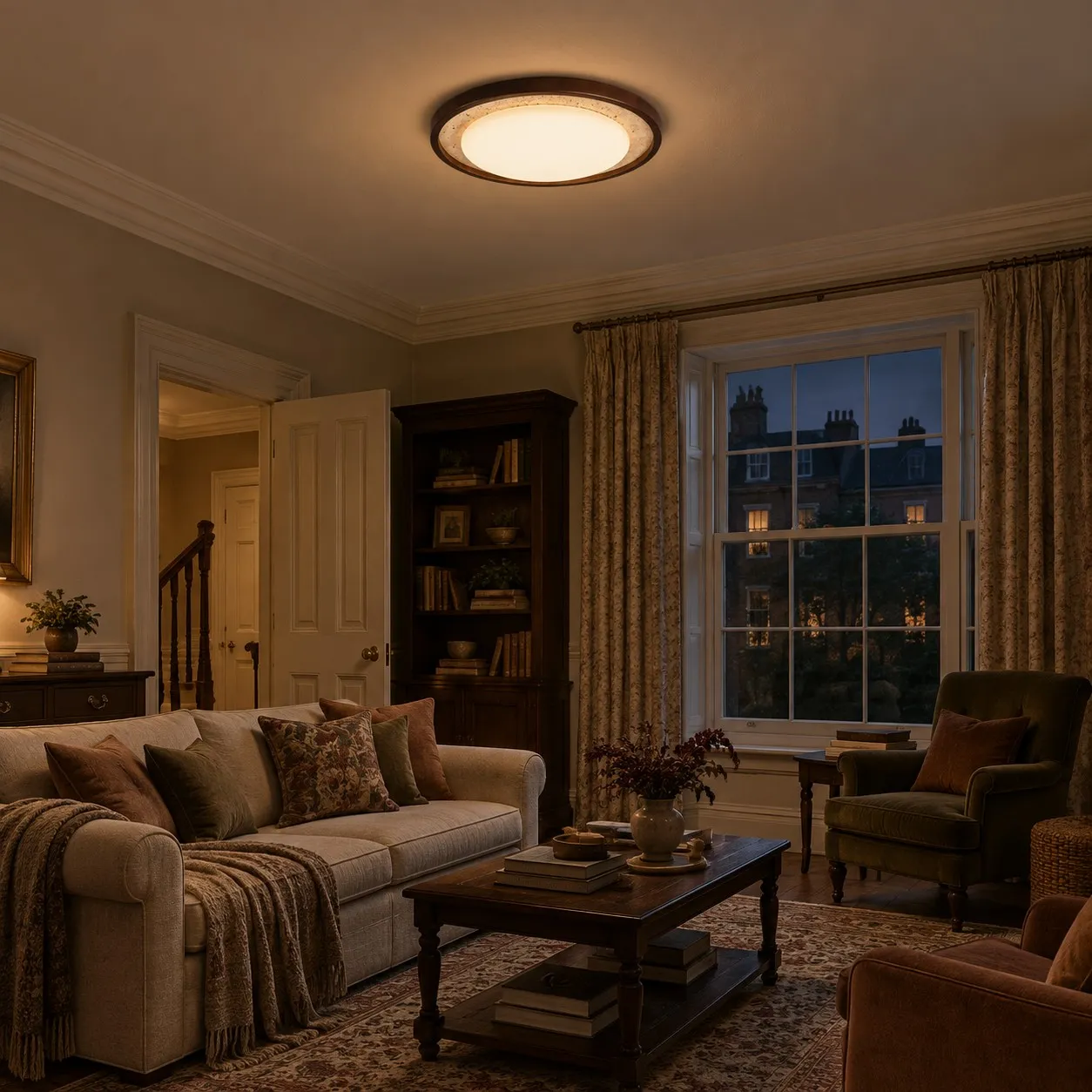
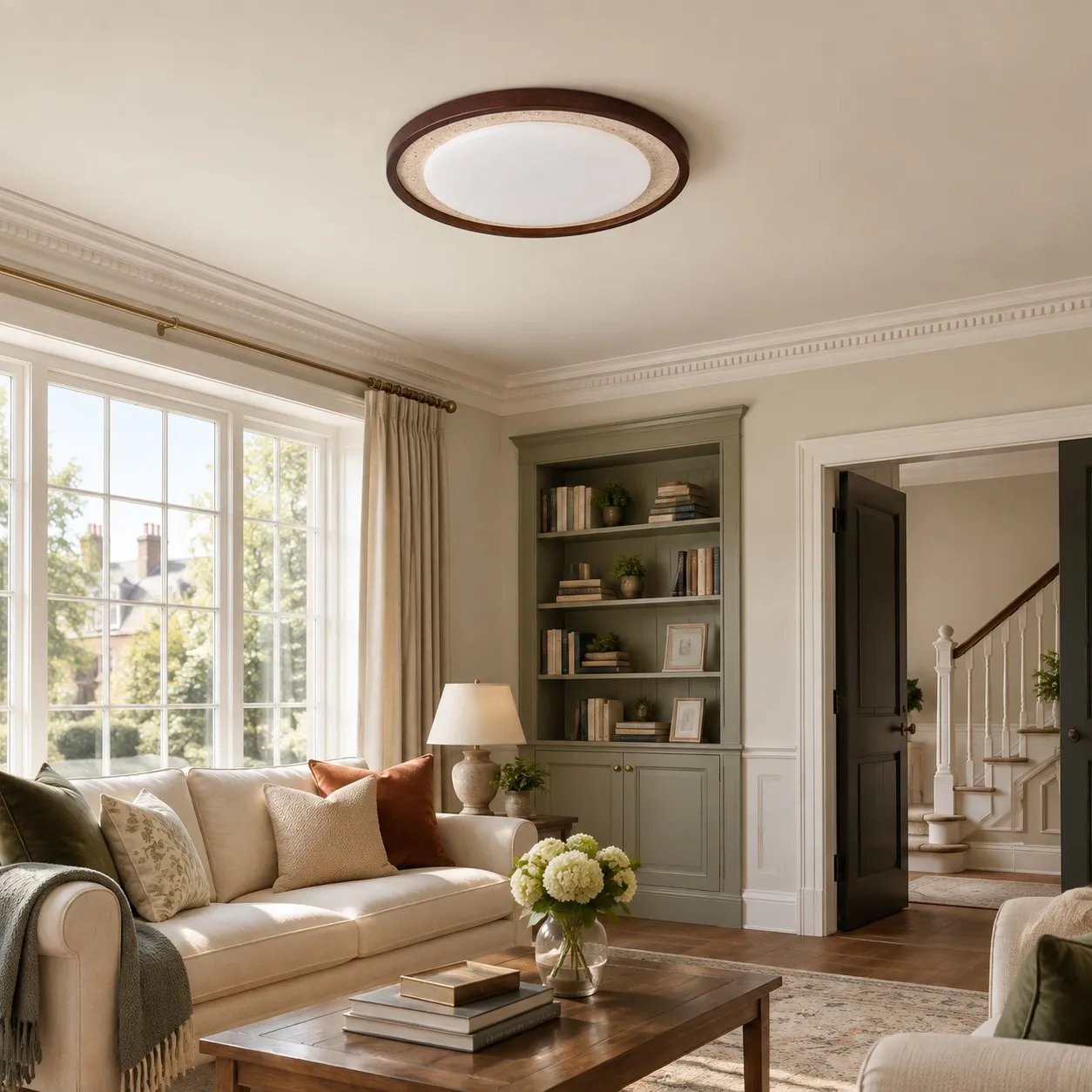
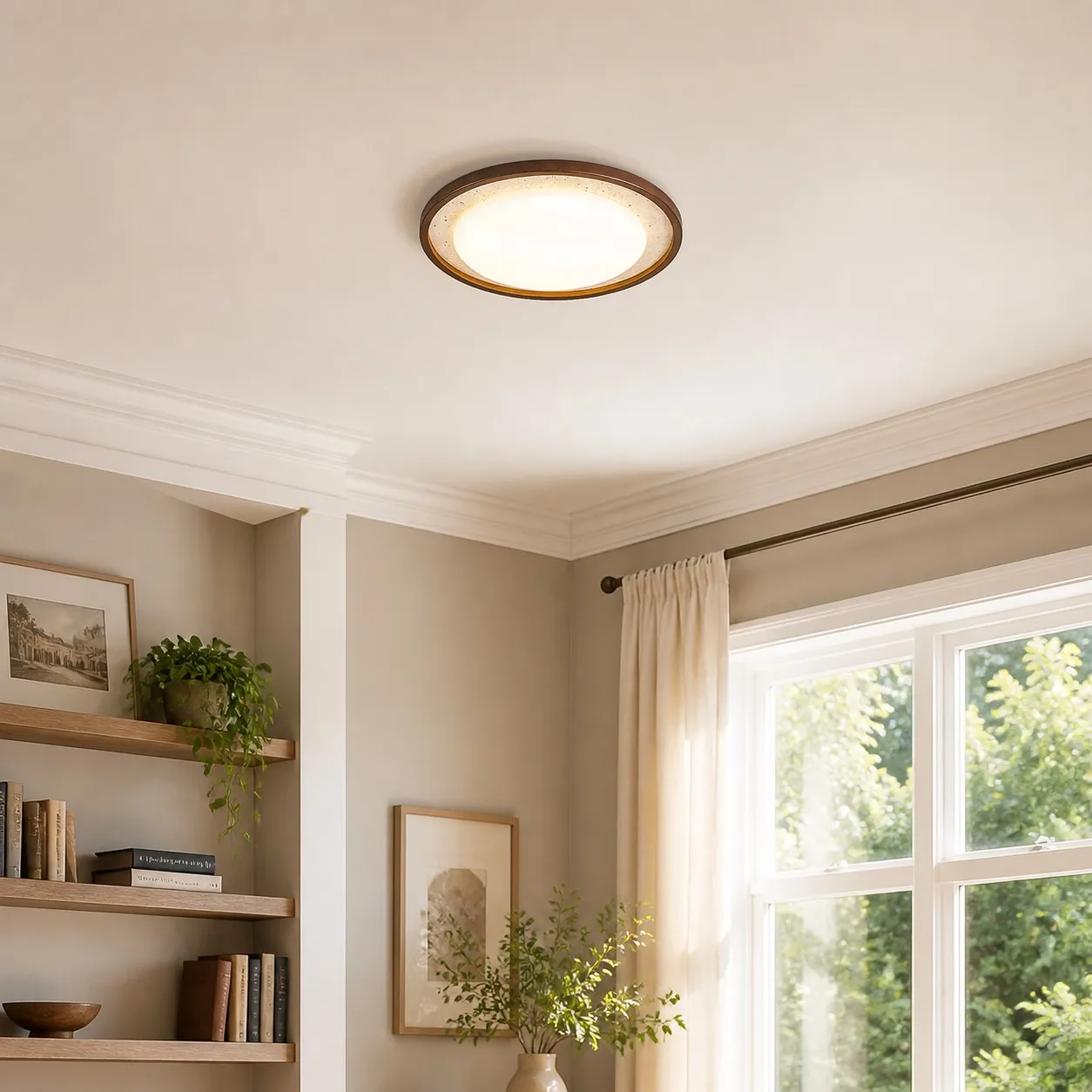
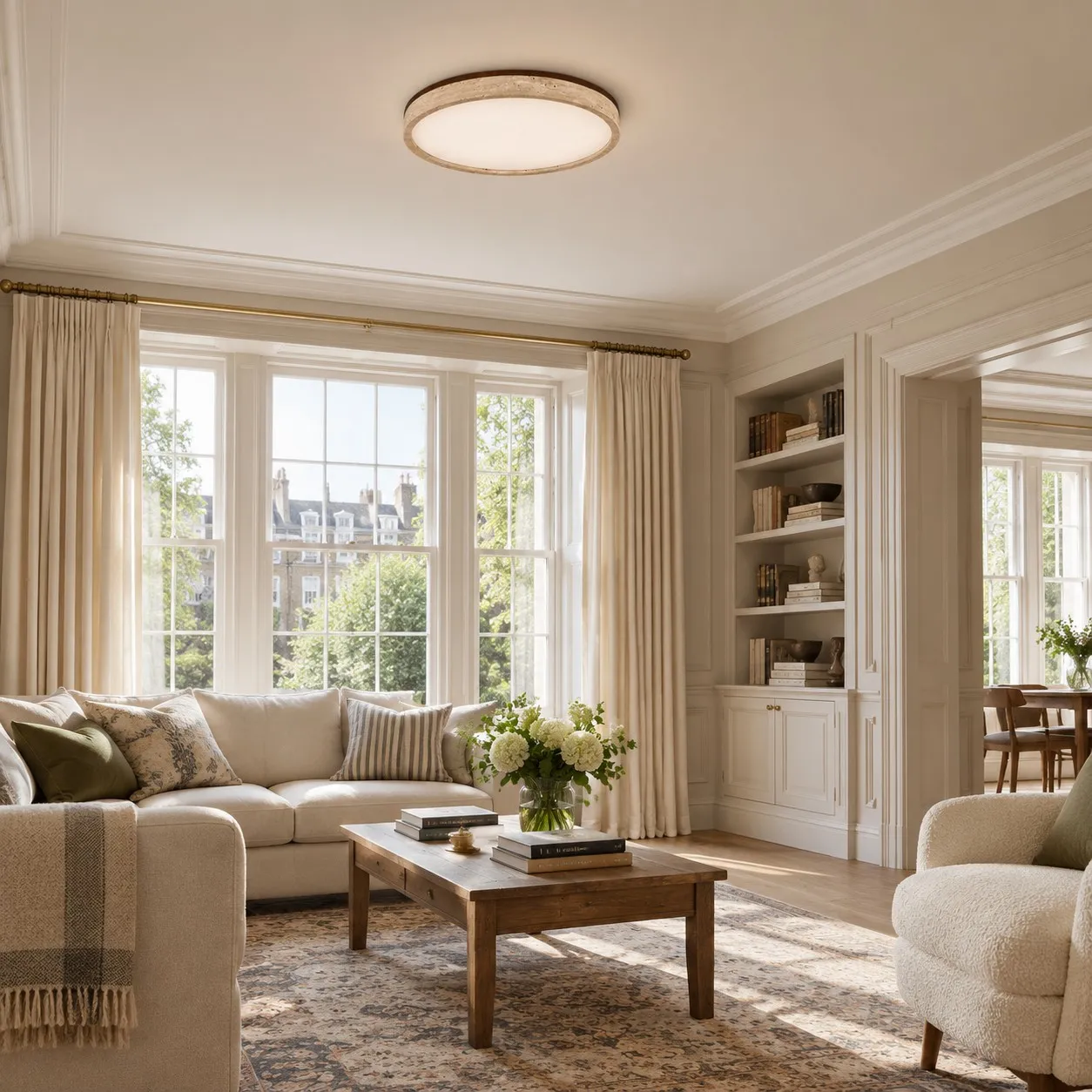
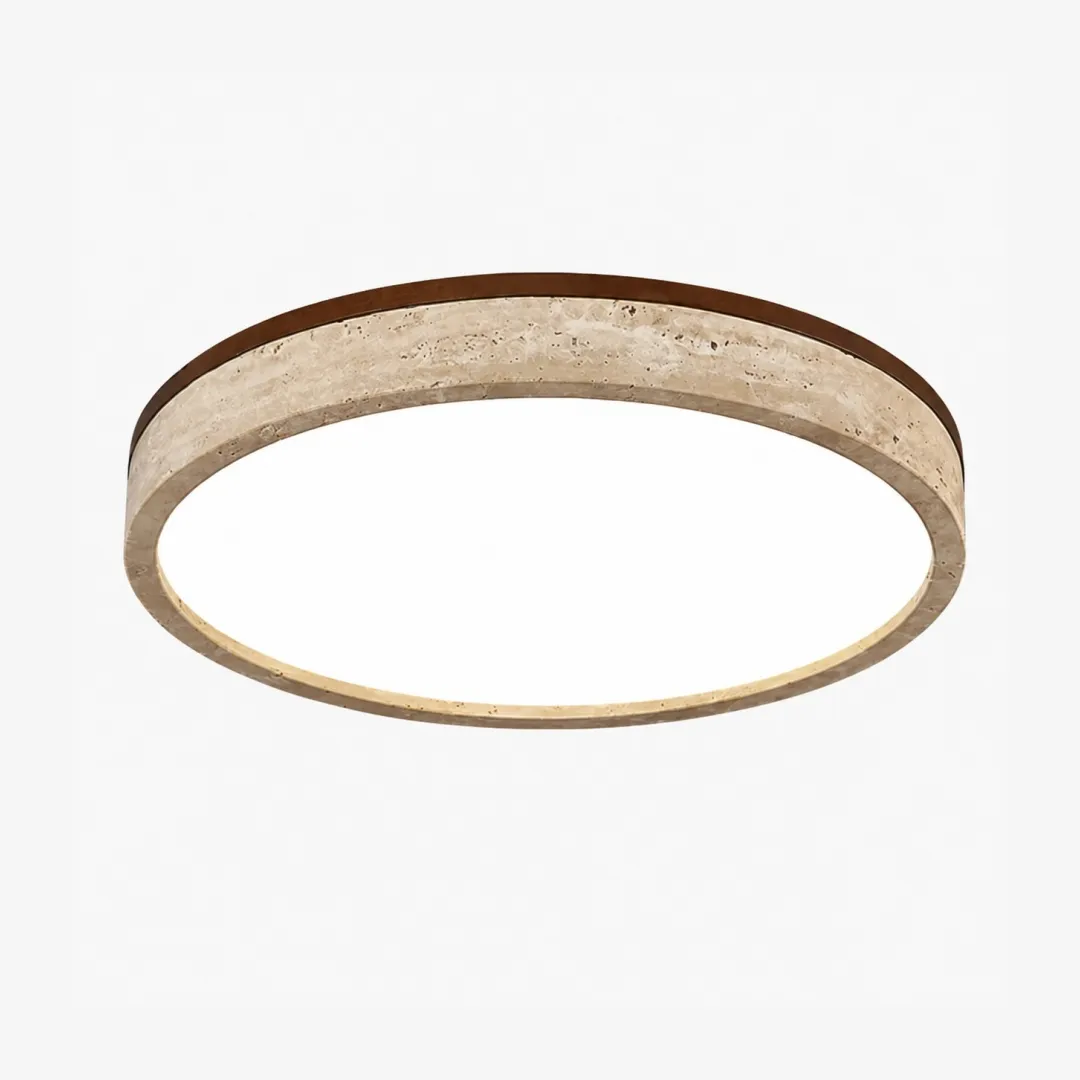
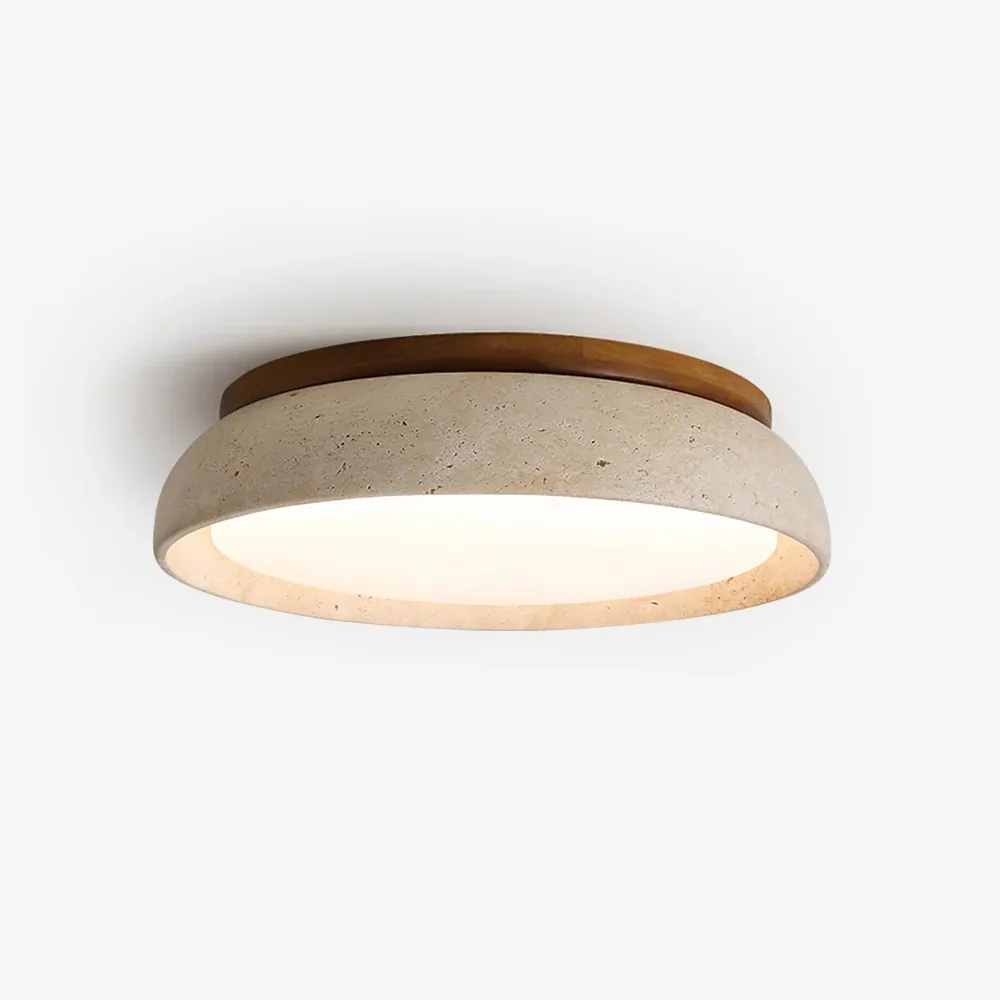
The Veliana fixture combines beige travertine with a walnut-toned detail and warm LED light. That pairing gives you a simple colour plan: warm off-white walls, mid-tone wood and one or two darker accents. Avoid matching every object to the stone. Wabi-Sabi rooms feel collected and calm when materials relate without looking identical.
Balance the smooth and the imperfect
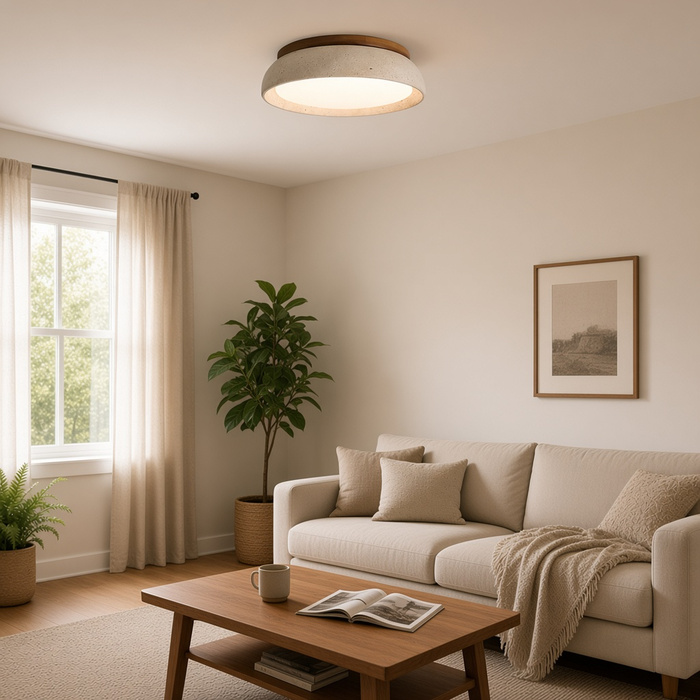
Travertine has pores and natural surface variation, so place it near quieter finishes. Plain plaster, matt-painted ceilings and softly woven fabrics allow the stone to remain the focal texture. If every surface is heavily grained, ribbed or distressed, the room can lose its visual hierarchy.
Repeat the material sparingly. A small stone tray, a ceramic vase or a side table with a mineral finish is usually enough. You can browse the wider travertine lighting collection to compare how the material behaves in different lamp forms, but a single ceiling light may be the stronger choice in a compact room.
Use warm light for atmosphere and add task light separately
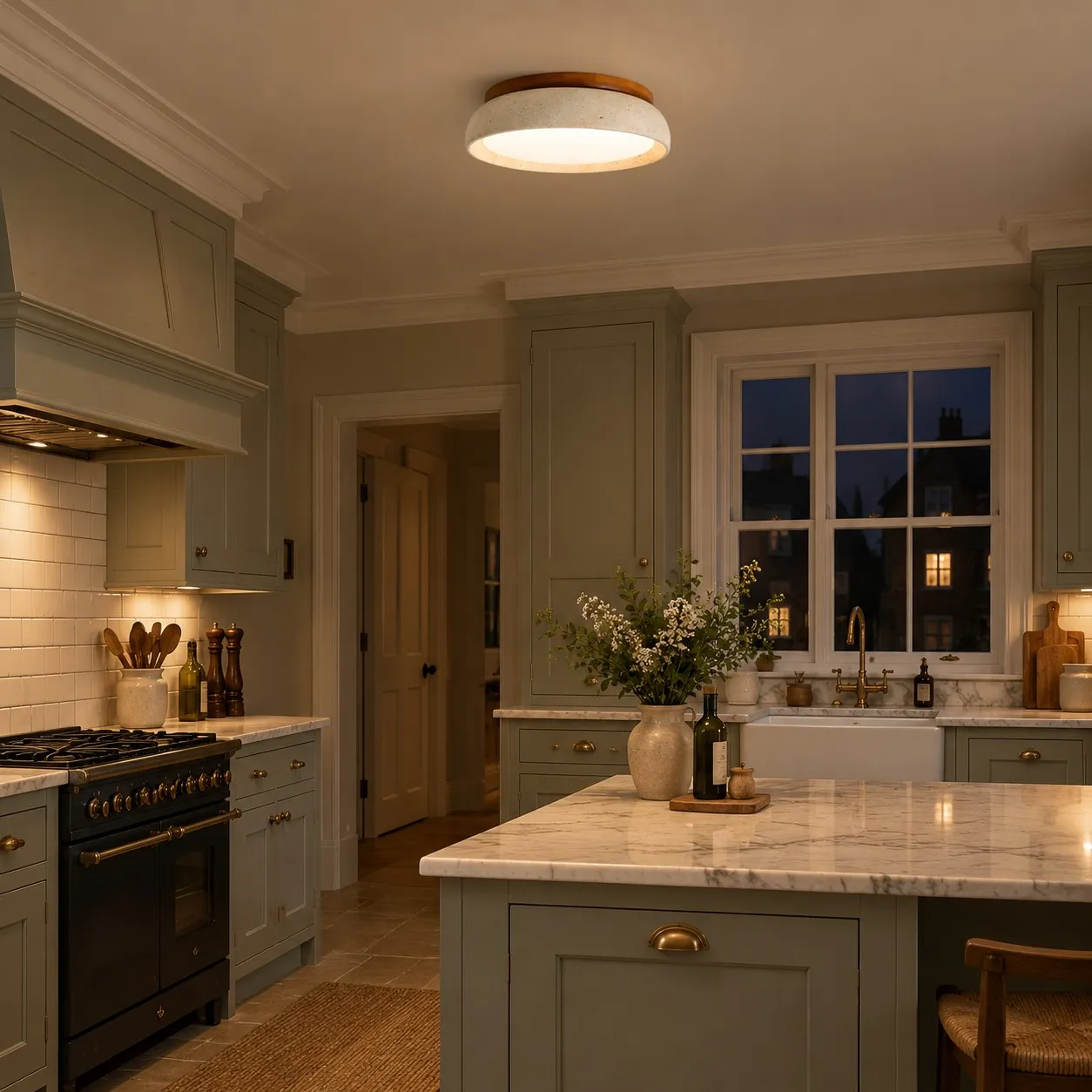
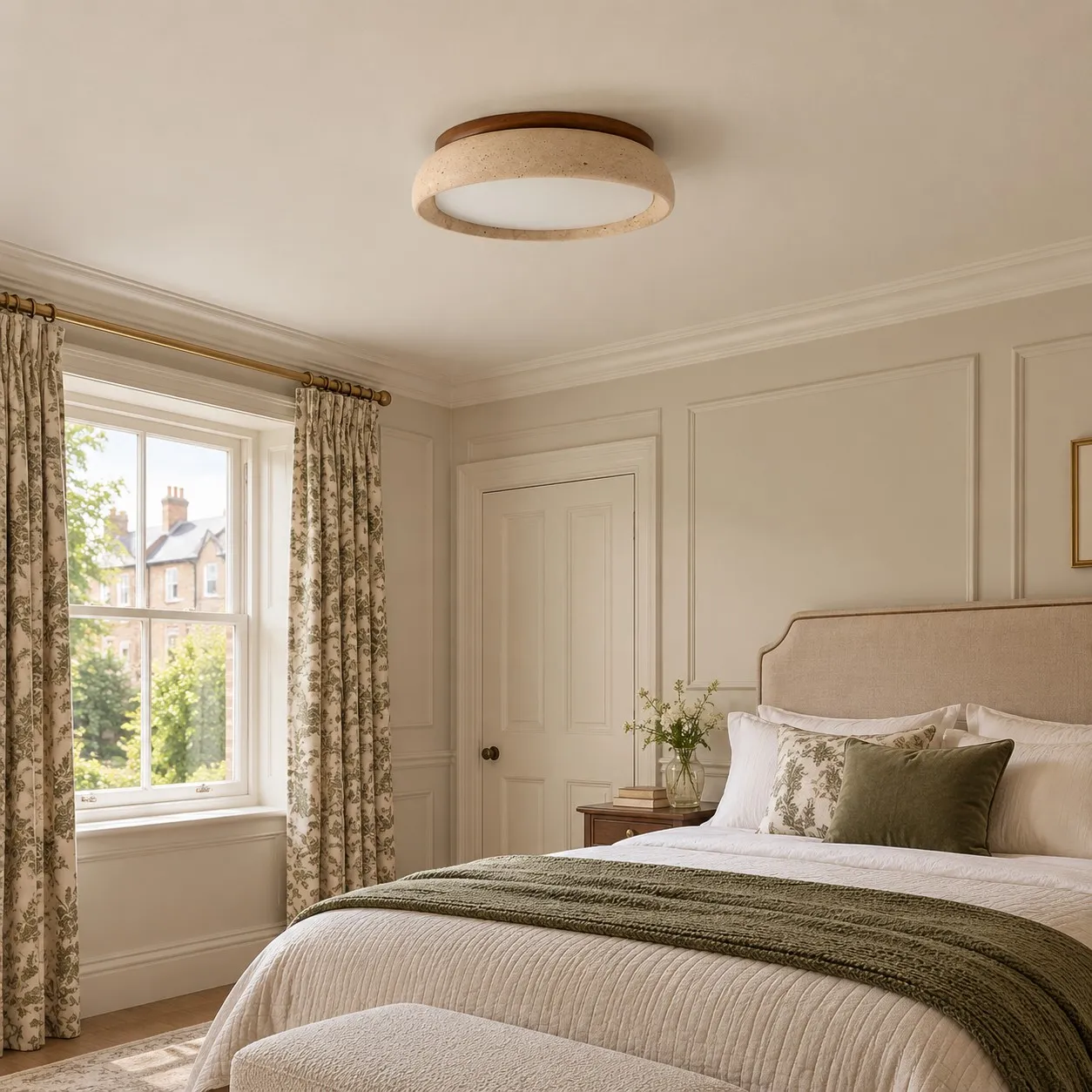
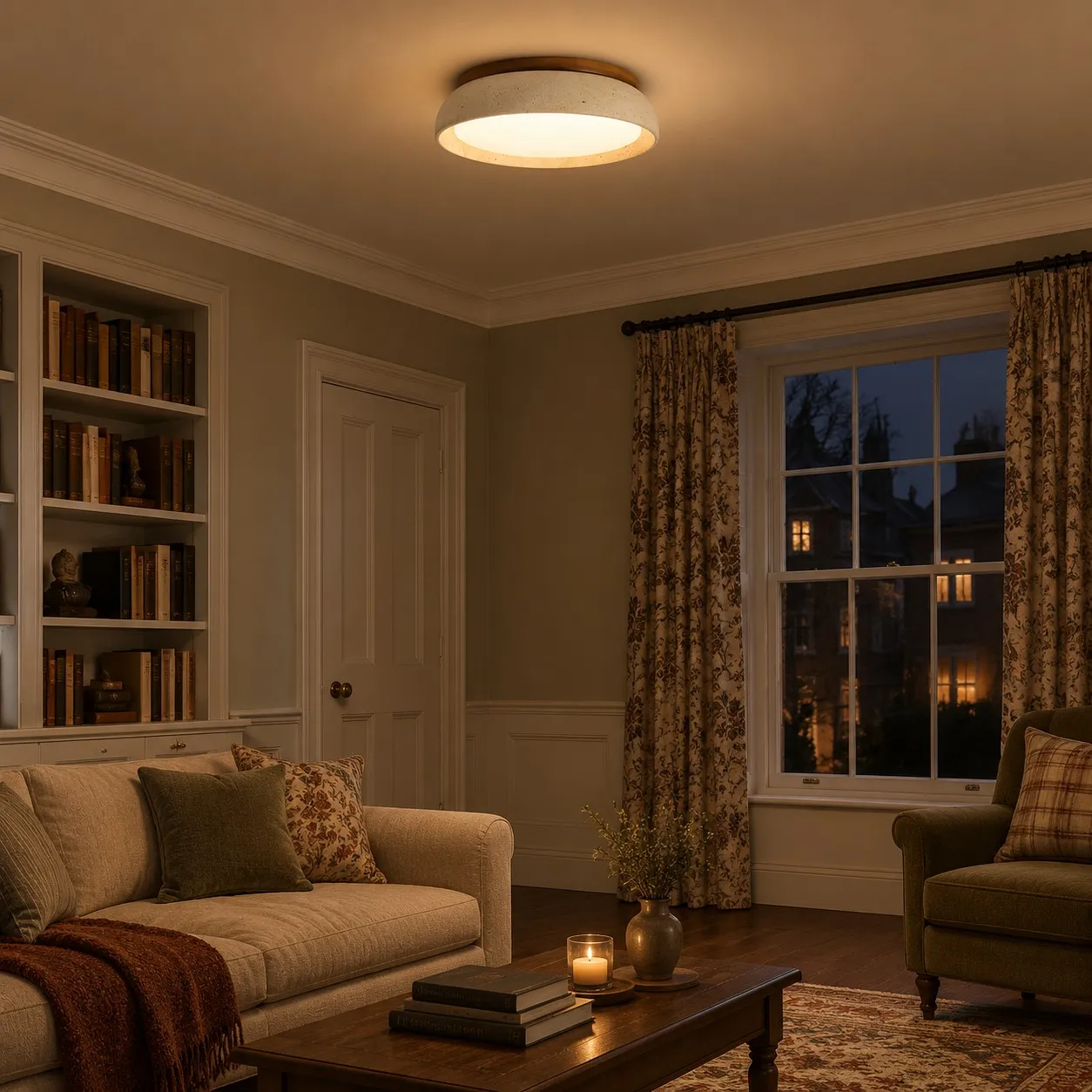
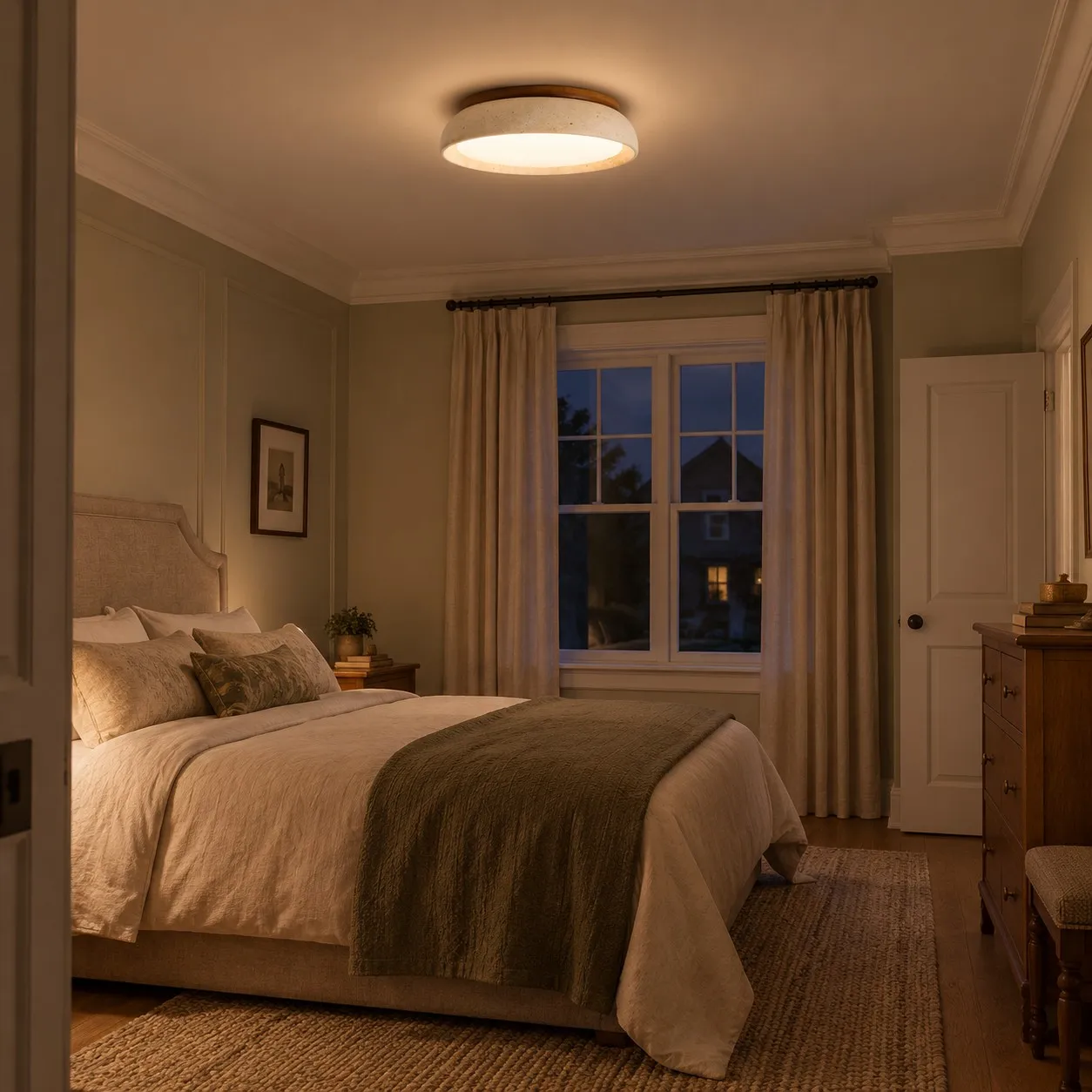
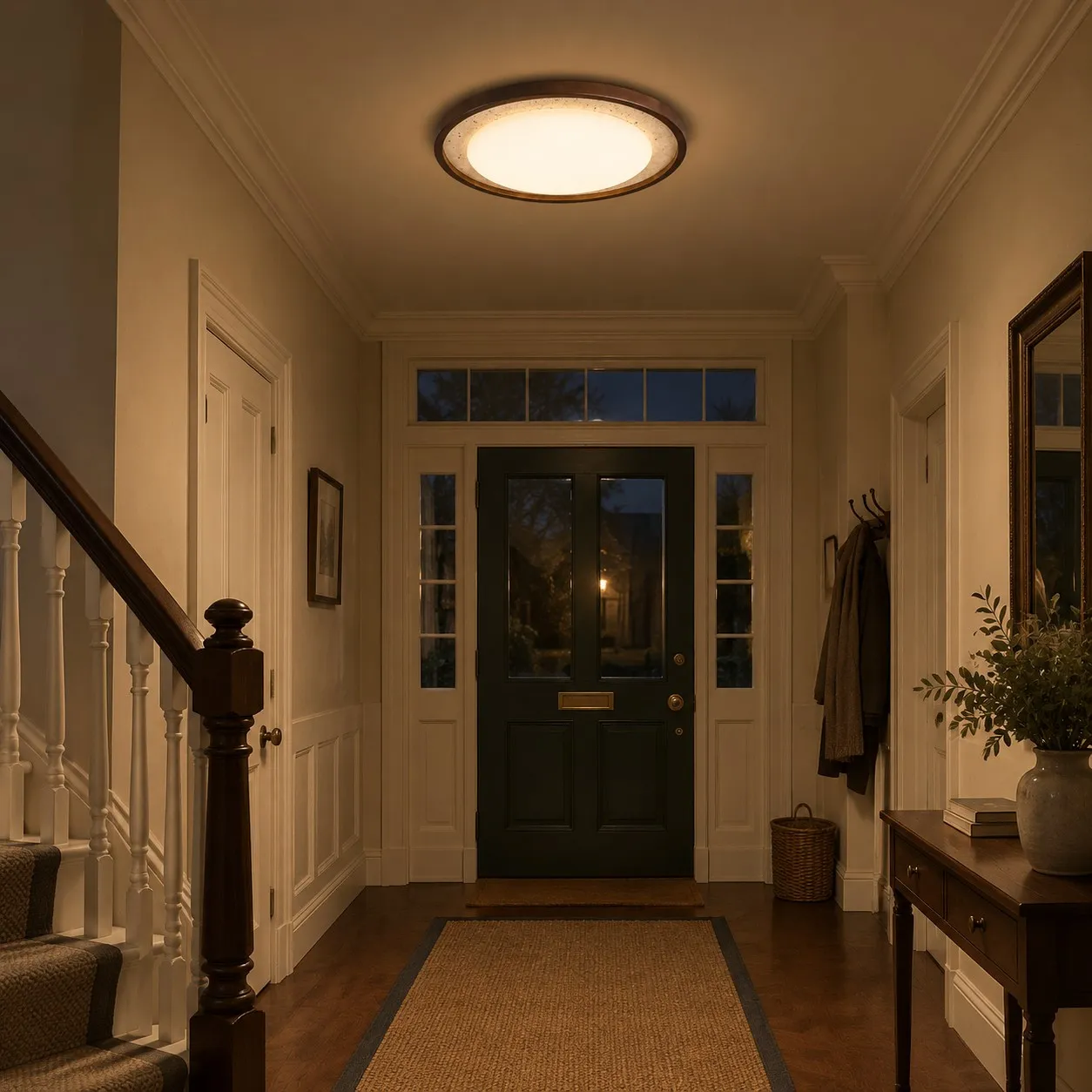
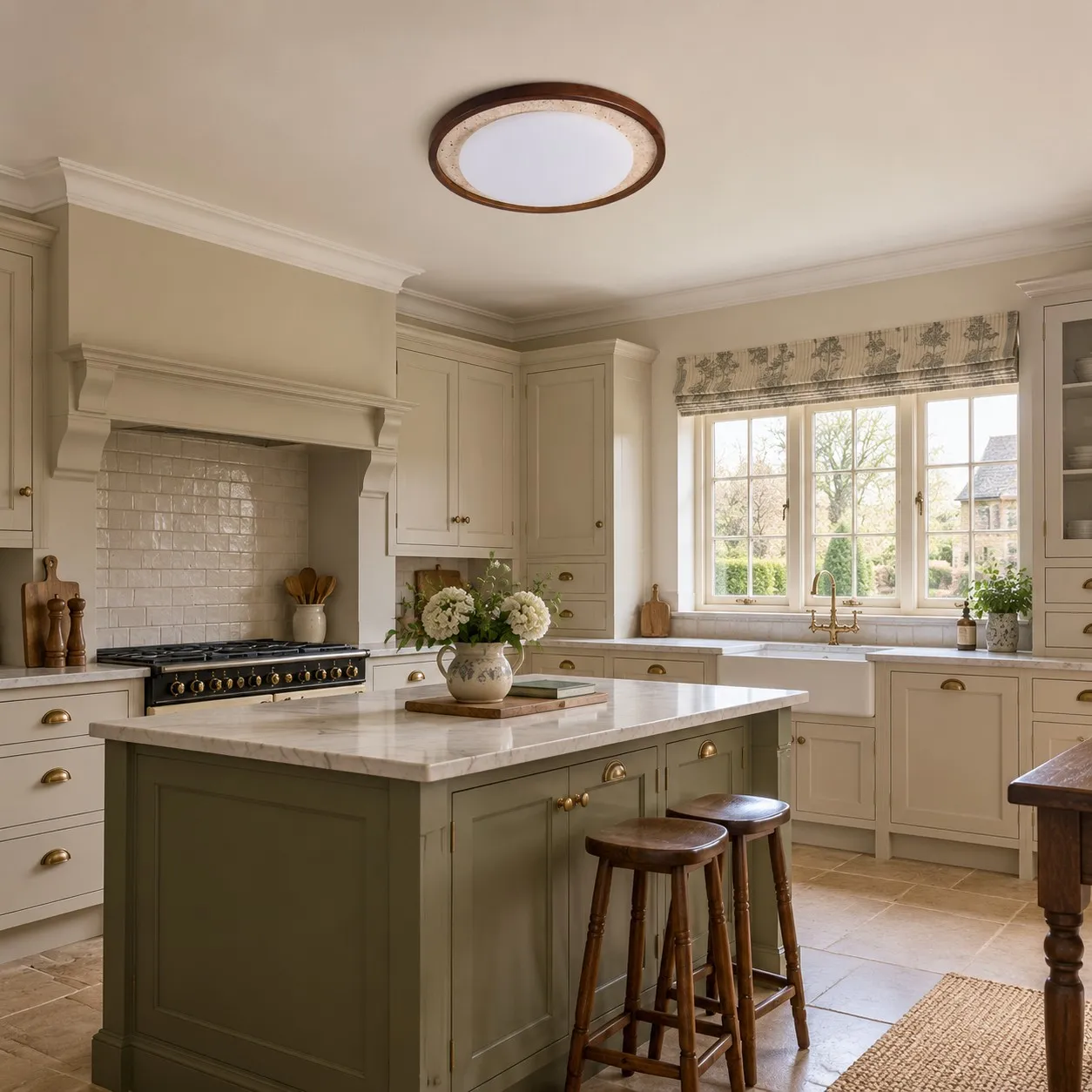
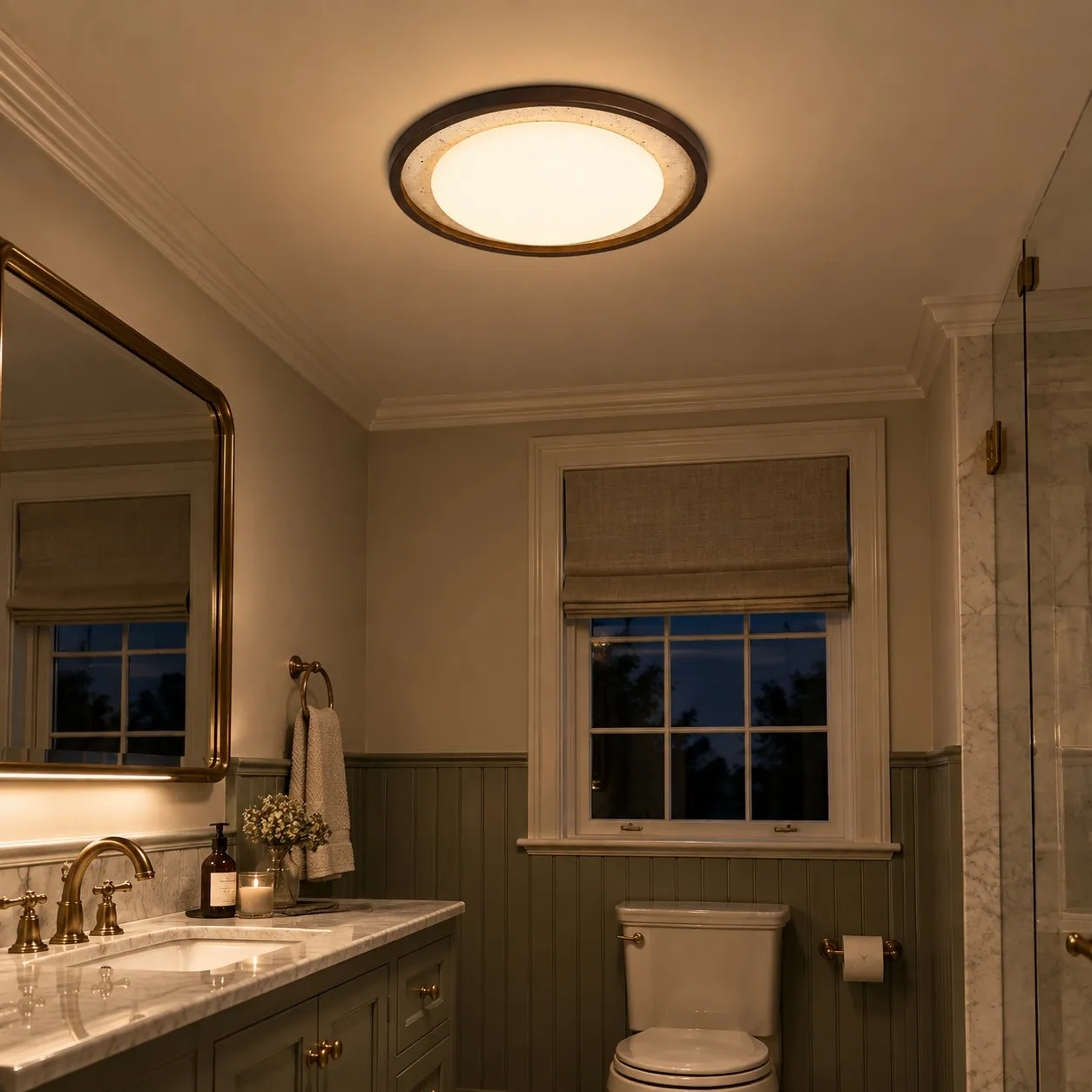
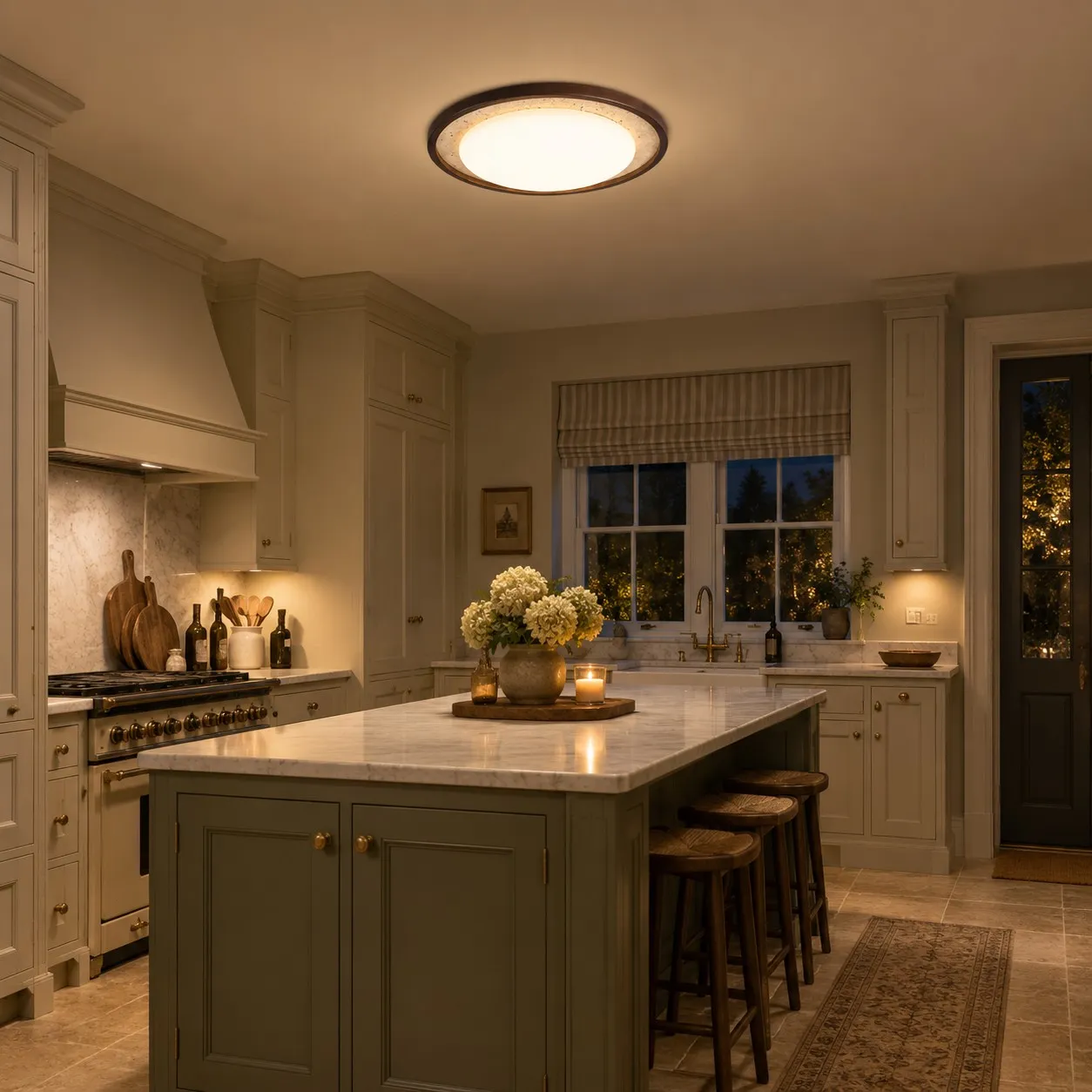
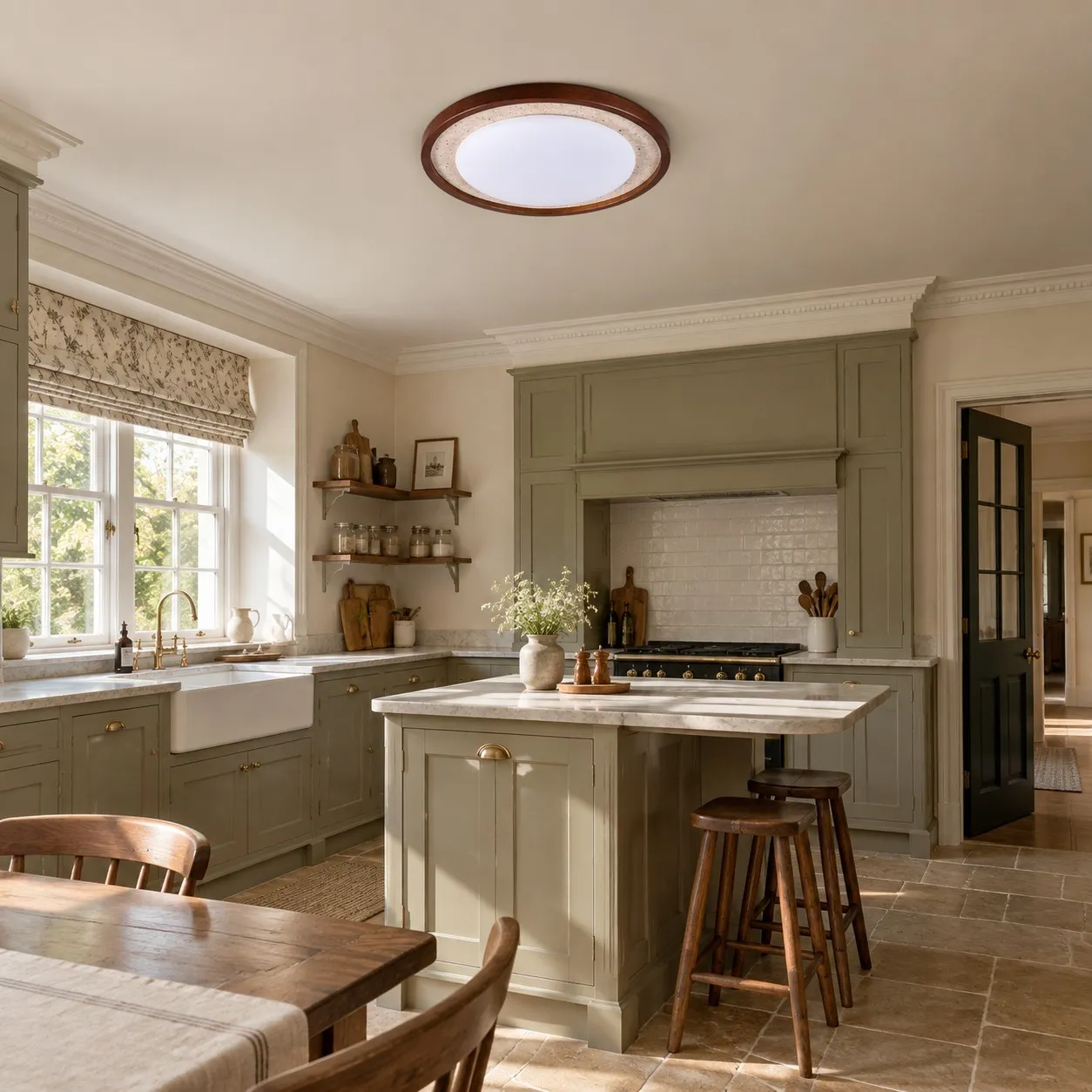
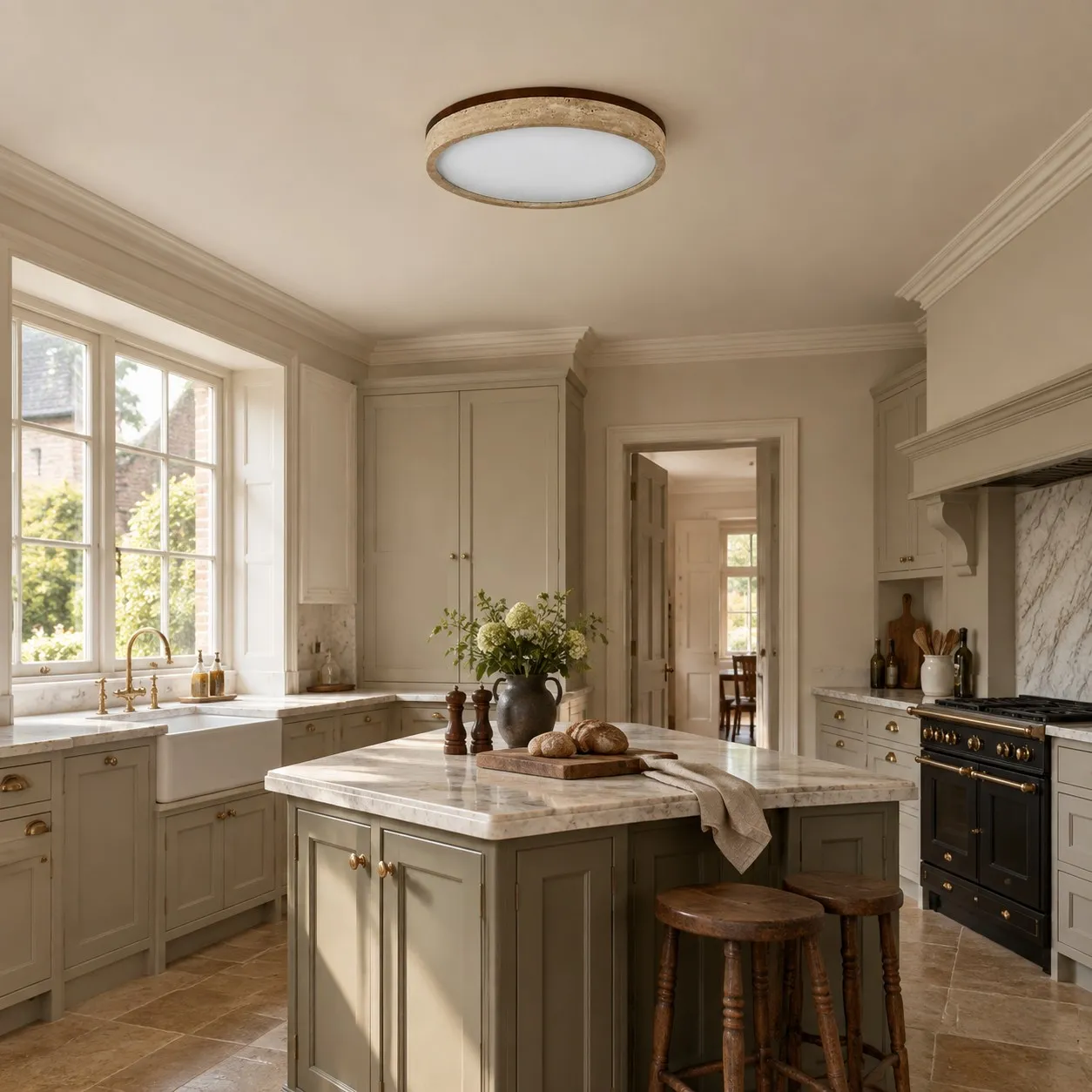
Warm light reinforces the cream and walnut tones in a natural interior. It is well suited to bedrooms, living rooms and entrance spaces where the aim is a relaxed atmosphere. Even so, ambience and useful illumination are separate jobs. Add a reading lamp beside a chair, under-cabinet lighting in a kitchen or a focused mirror light where detailed tasks take place.
Use dimming only when the product specification and the installed control are compatible. The Veliana product page identifies an integrated warm LED source but does not promise dimming on every option. Confirm the selected variant before choosing a dimmer.
Choose furniture with breathing room
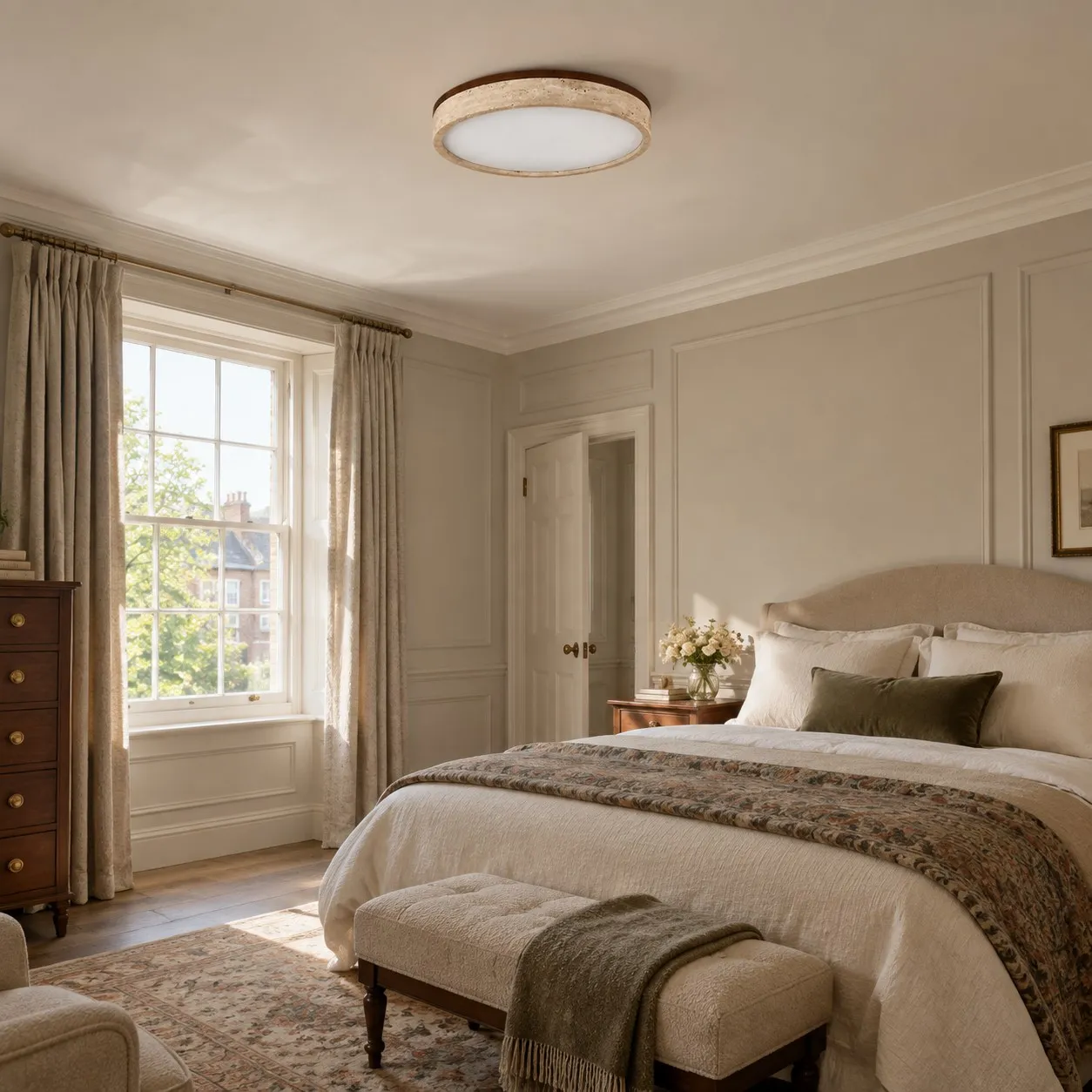
Low, simple furniture keeps attention on material and proportion. In a bedroom, pair the light with an oak bed, linen bedding and an uncluttered bedside surface. In a living room, use a softly shaped sofa, a timber coffee table and one handmade-looking ceramic piece. The goal is not an empty room; it is a room in which each material is easy to notice.
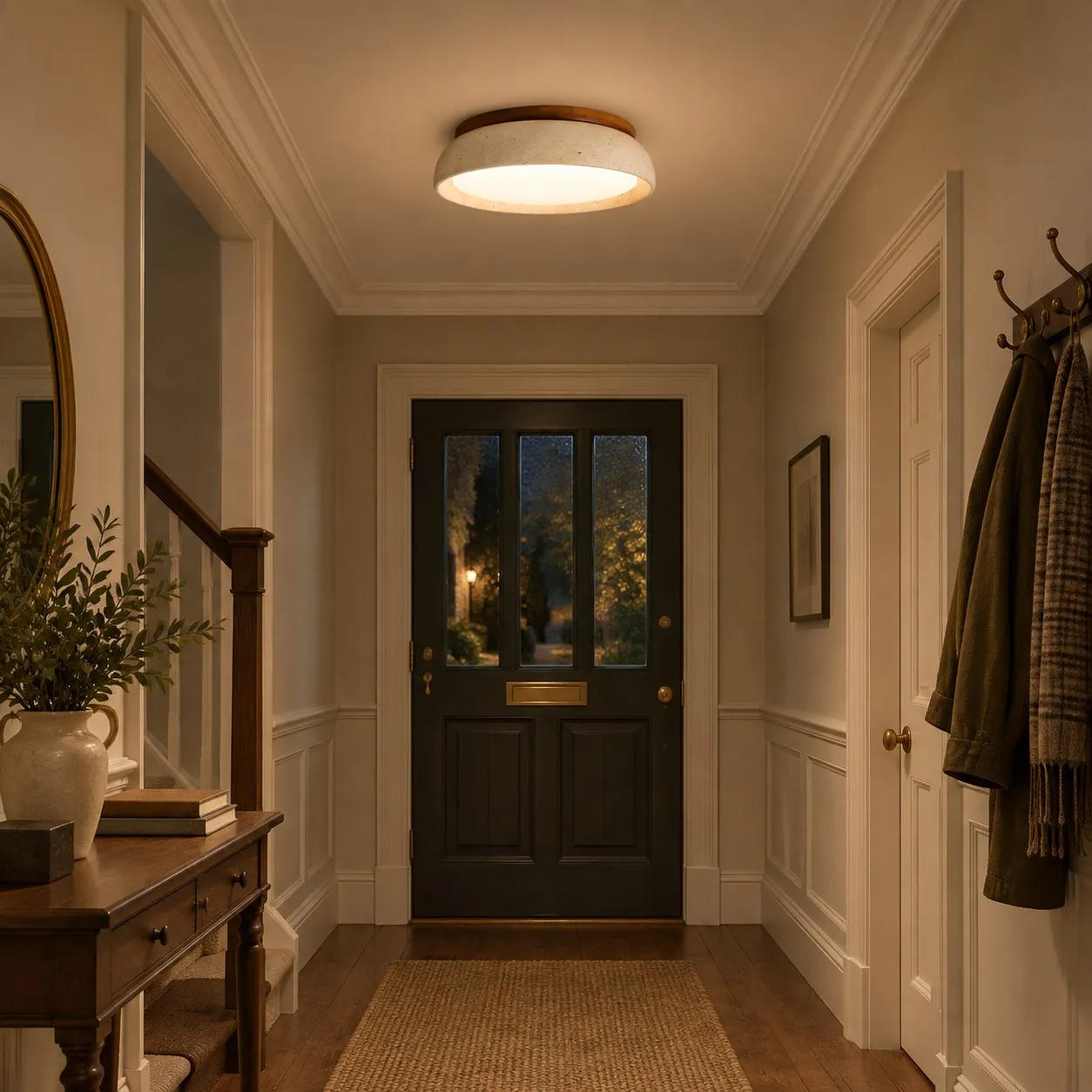
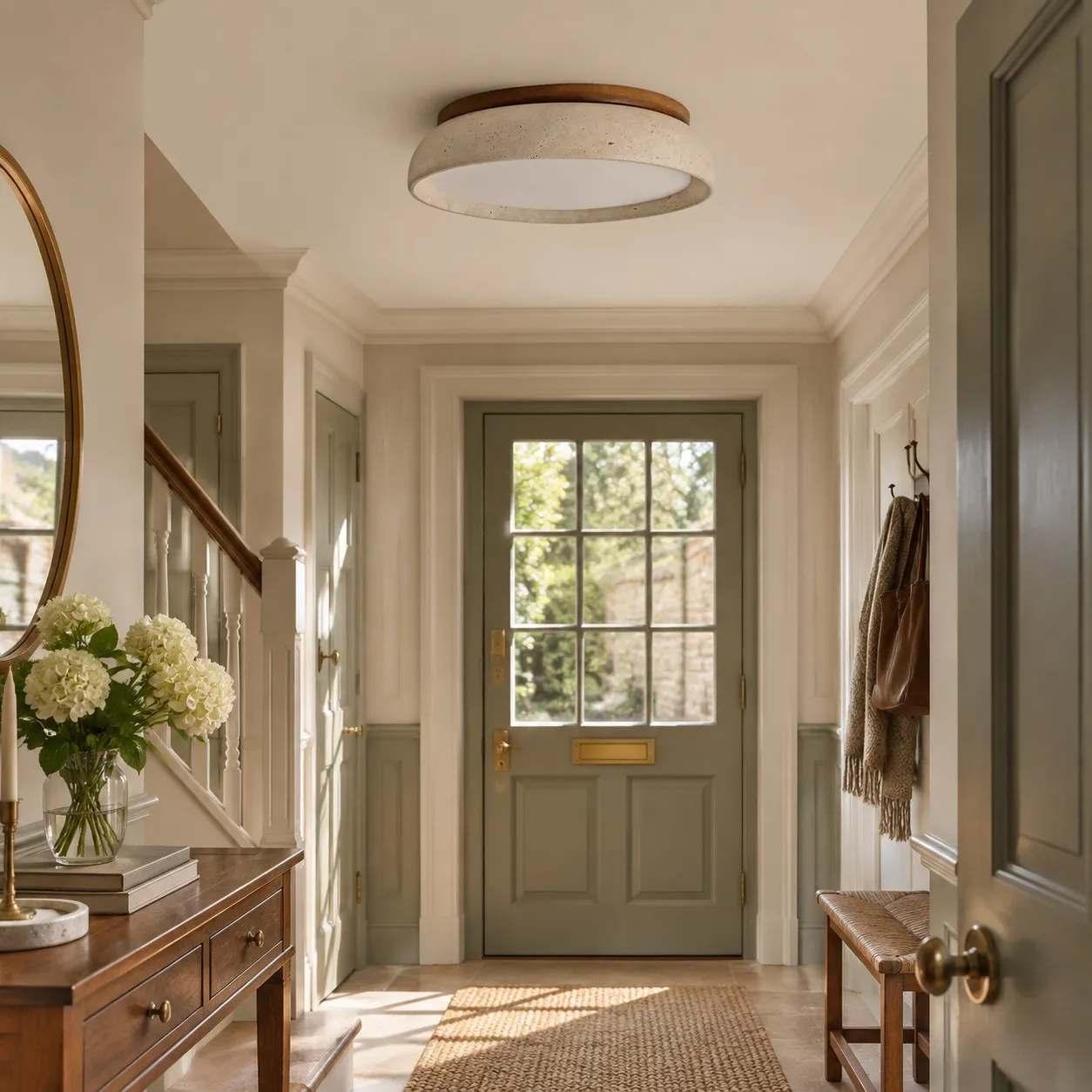
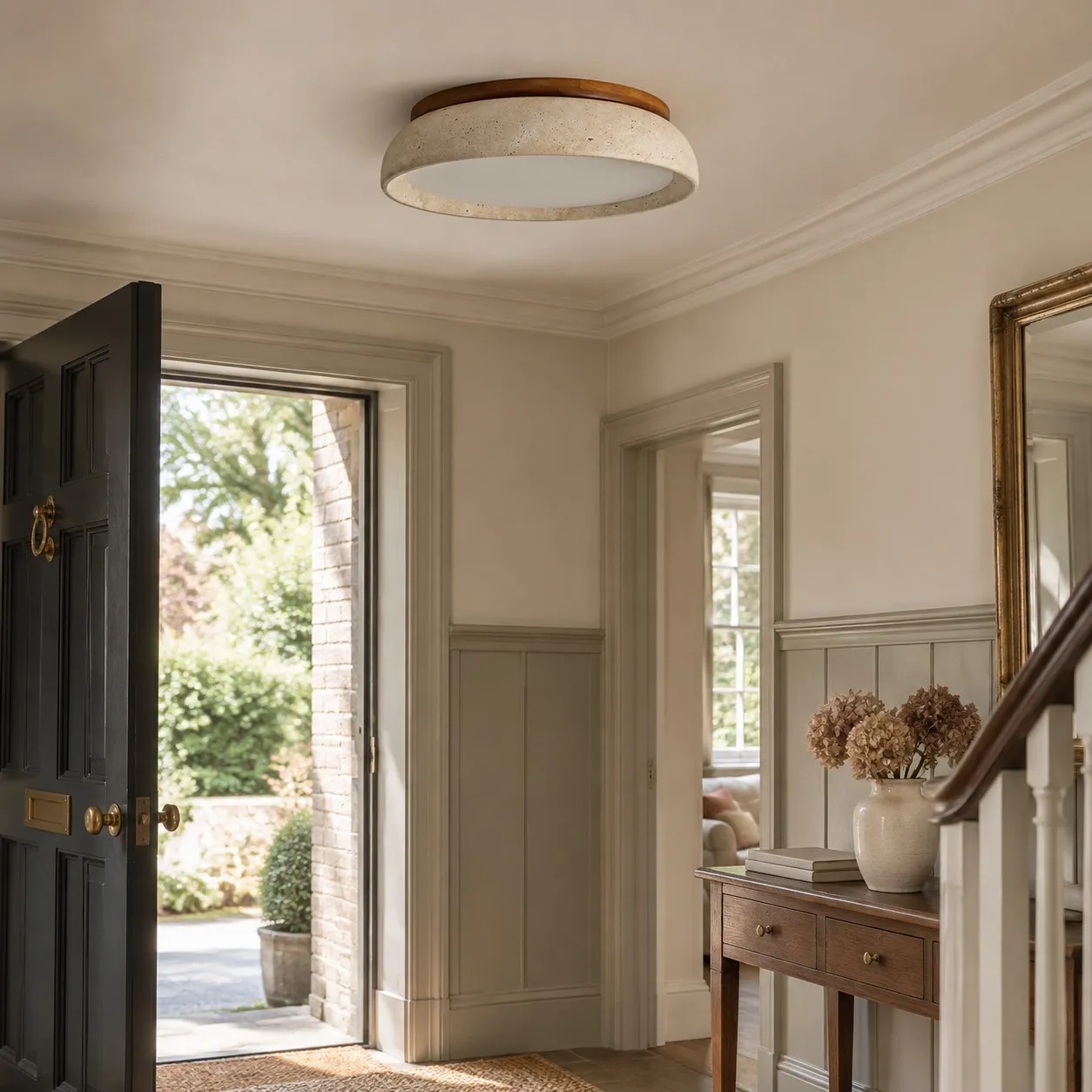
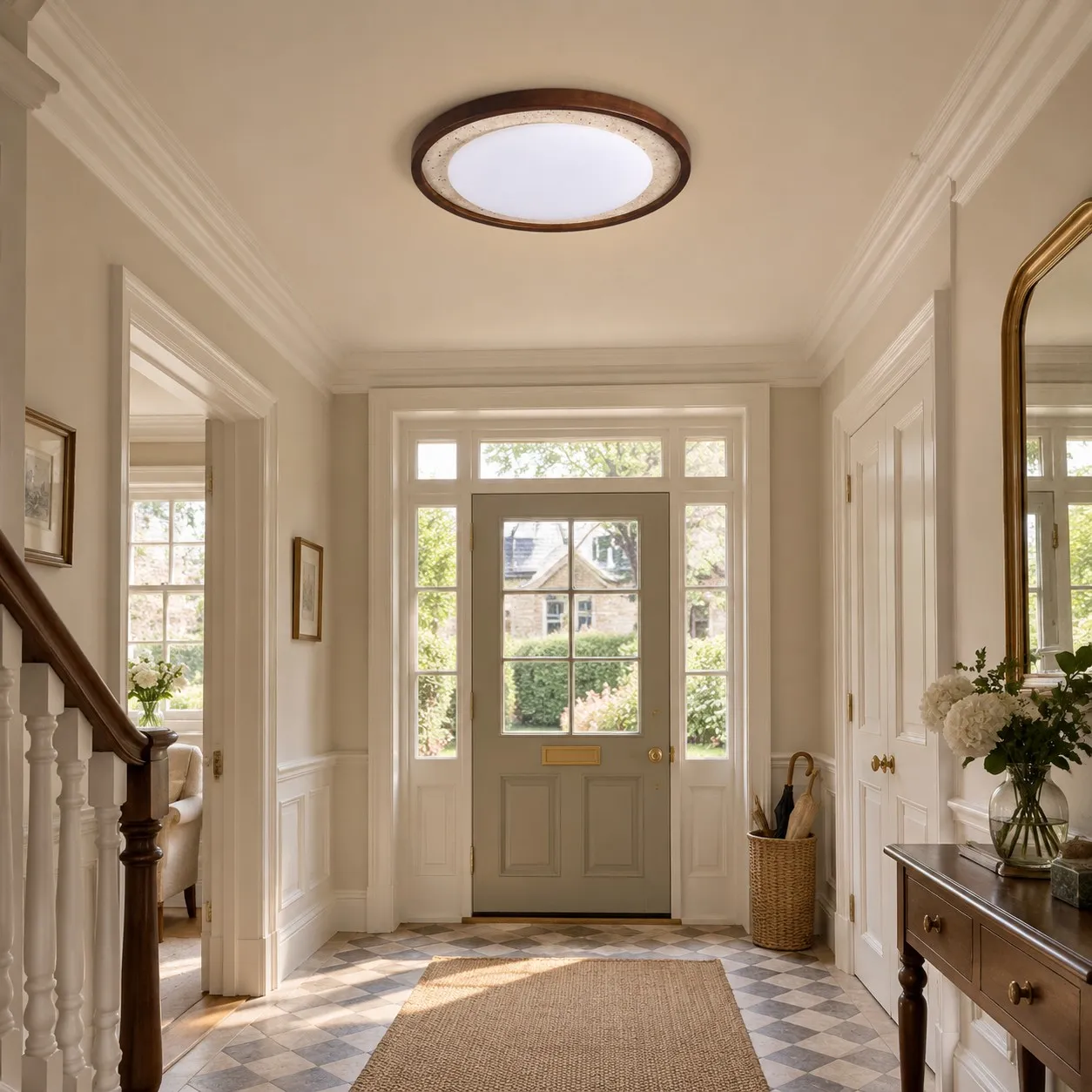
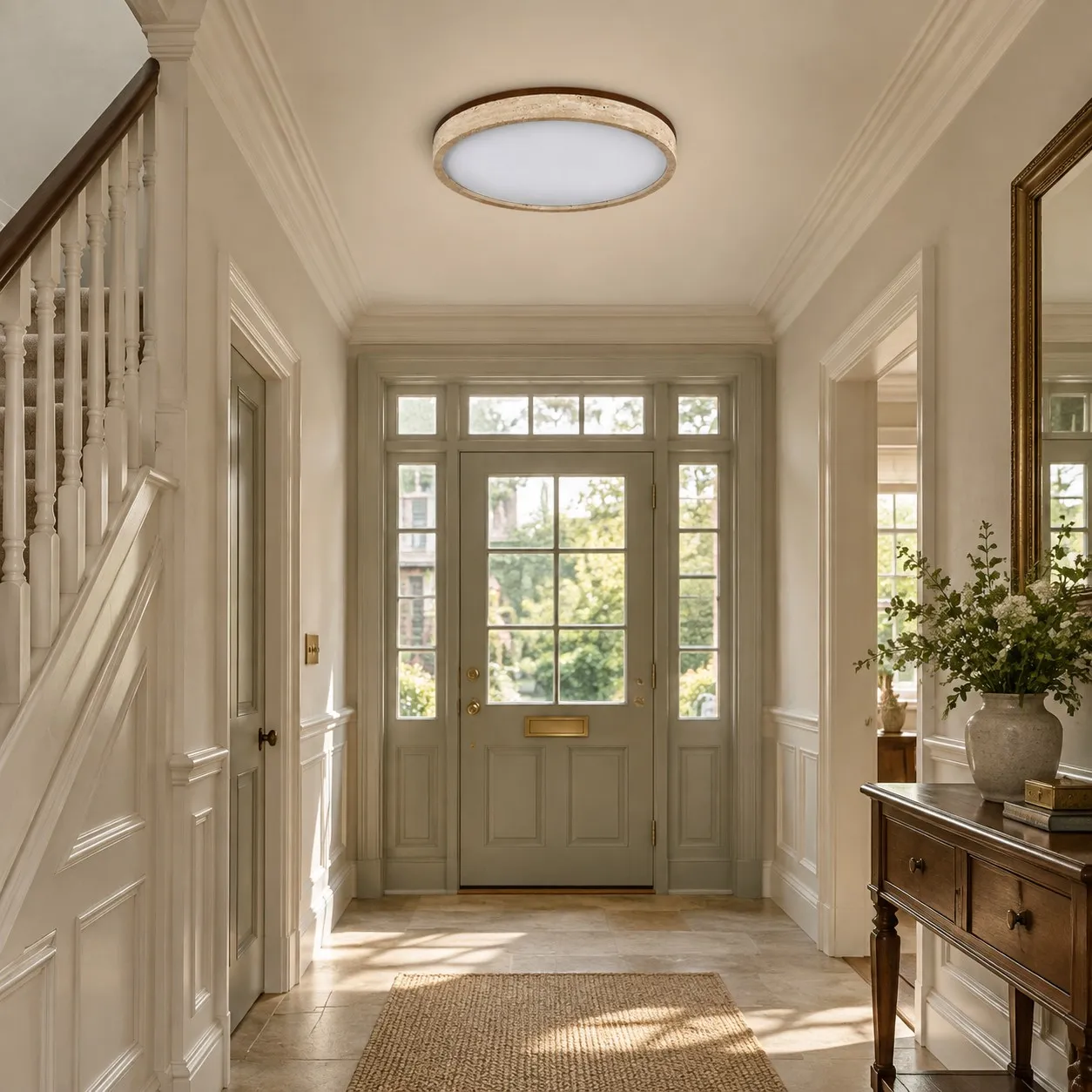
Round or gently curved furniture can echo a bowl-shaped ceiling light without repeating it literally. Leave enough clear ceiling around the fixture so its outline reads as intentional. For a narrow hallway, keep wall decoration shallow and let the overhead light guide the eye along the space.
Match the scale to the room
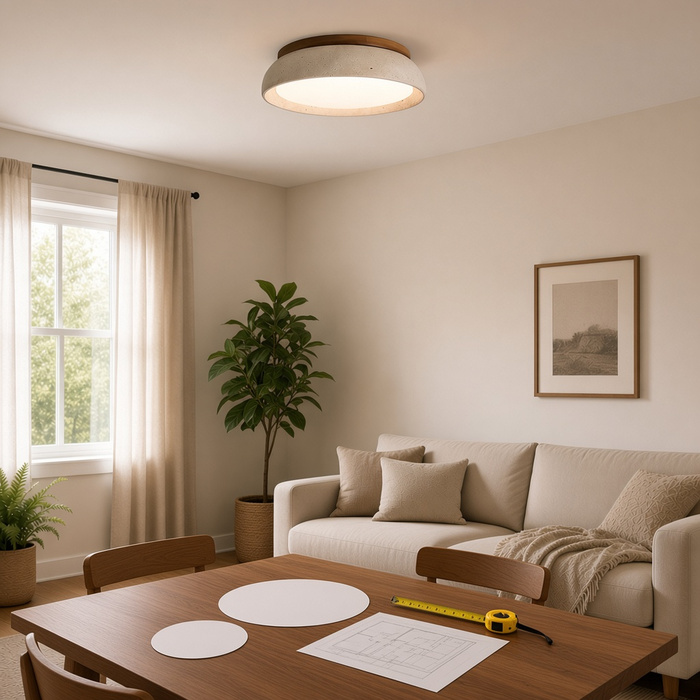
A fixture that is too small can disappear, while one that is too large can make a low ceiling feel crowded. The Veliana is listed in 30 cm and 43 cm diameters, both 7 cm high. The shallow profile is useful where headroom matters, but diameter still affects visual weight. The 30 cm version is aimed at compact rooms such as hallways and entrances; the 43 cm option has more presence for living rooms, dining areas and medium-sized bedrooms.
Before buying, mark the diameter on the ceiling with low-tack tape or cut a paper circle and view it from the doorway. For a detailed comparison, use our guide to choosing between a small and large travertine ceiling light.
Keep the template in place while you check the fixture against the nearest walls, furniture and circulation route.
Keep installation and care practical
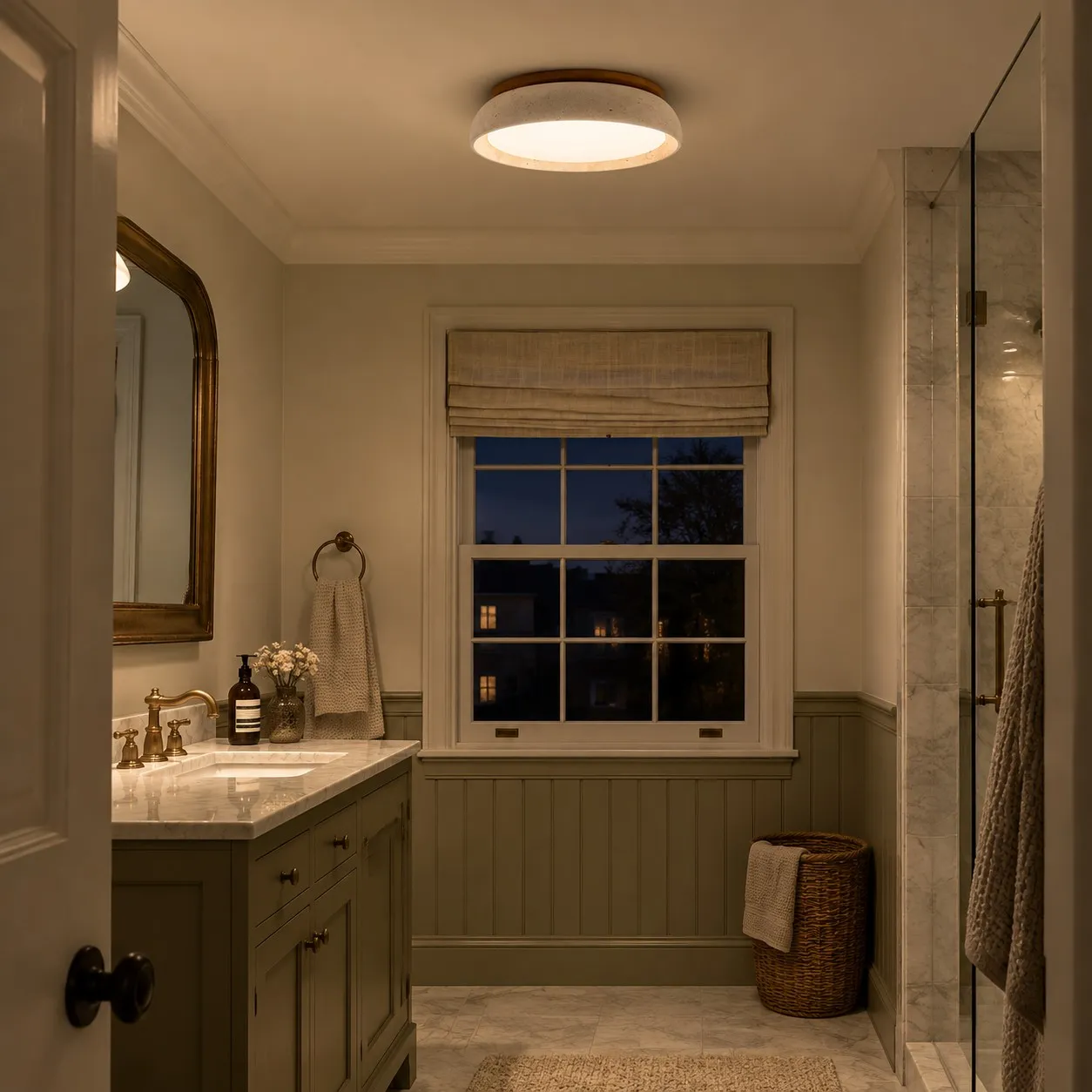
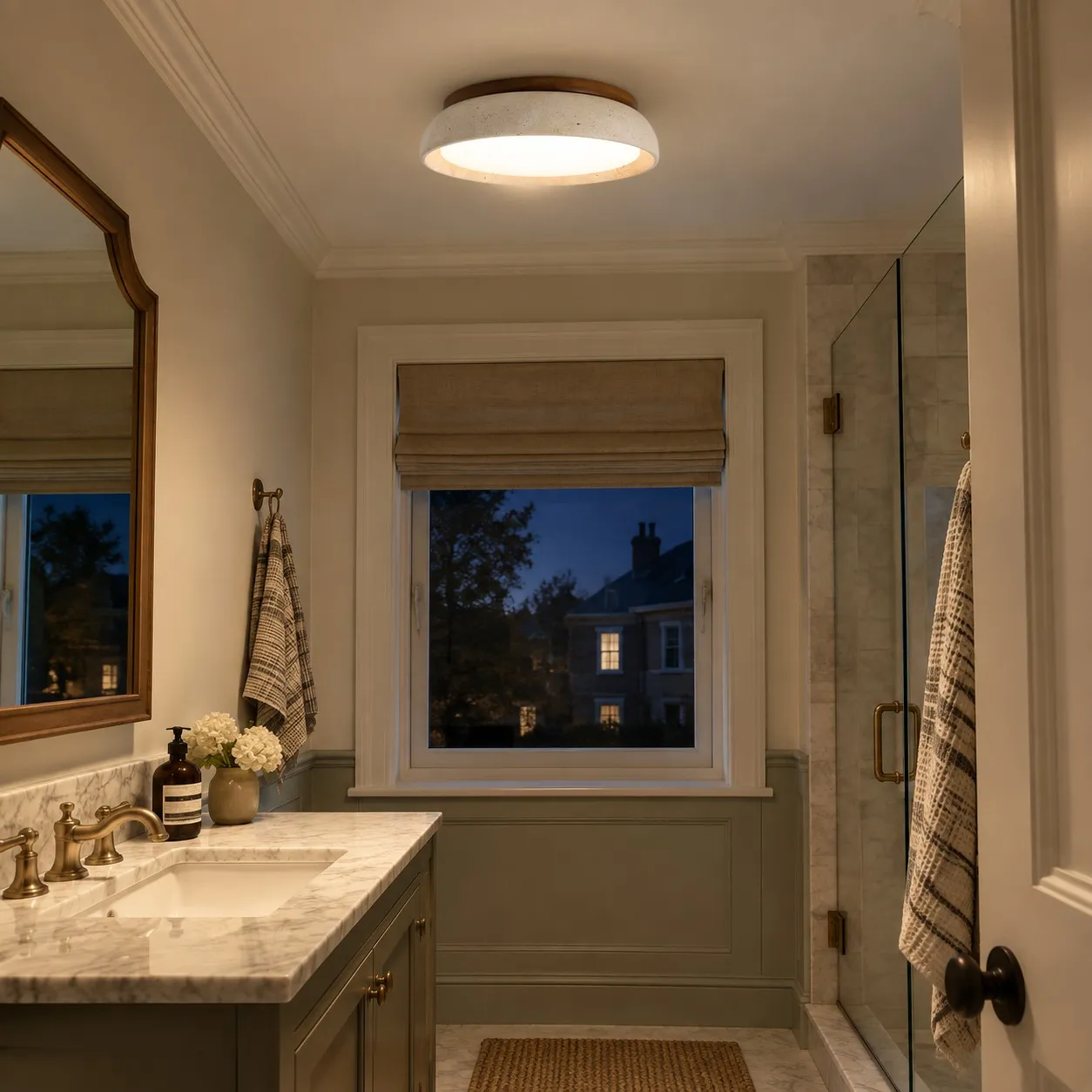
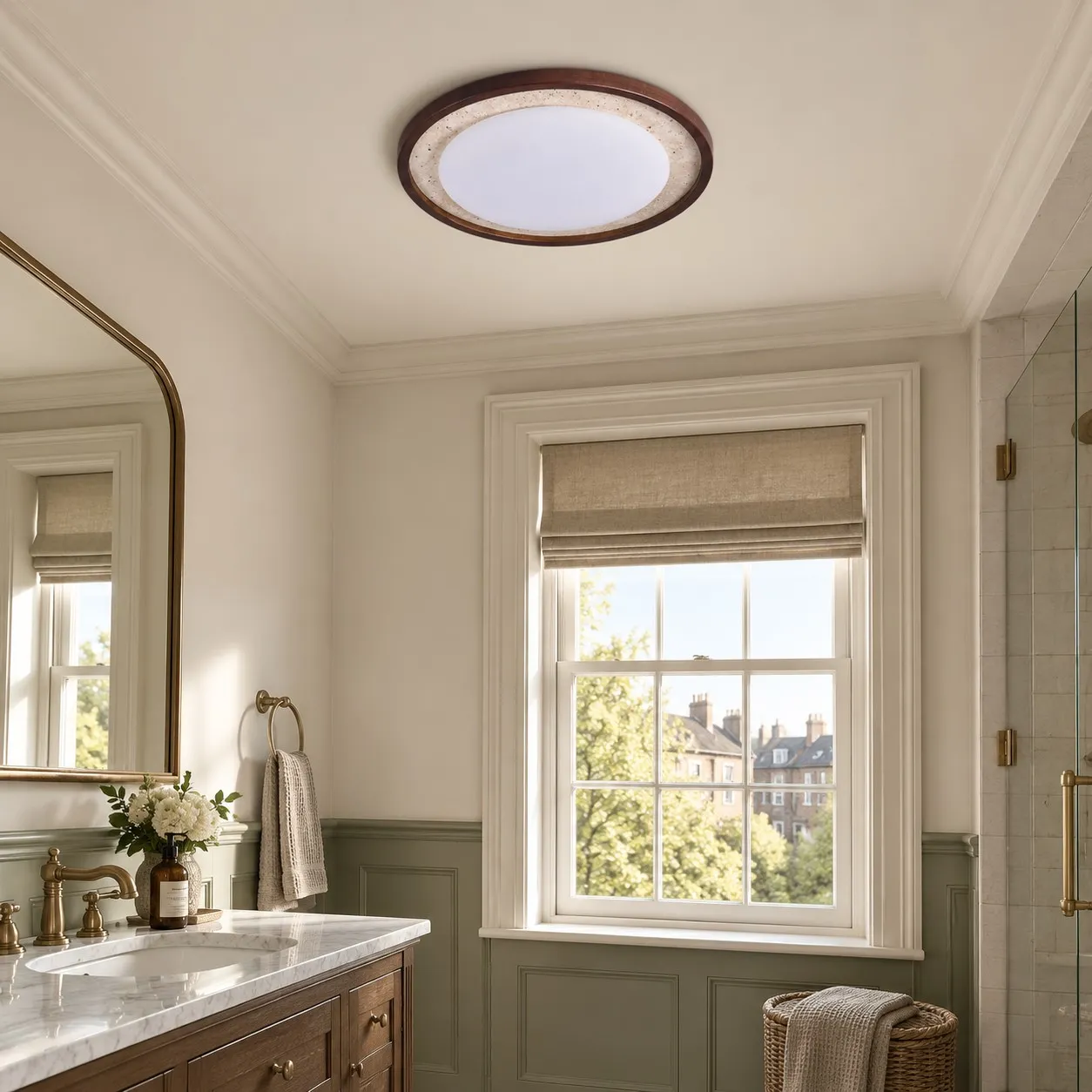
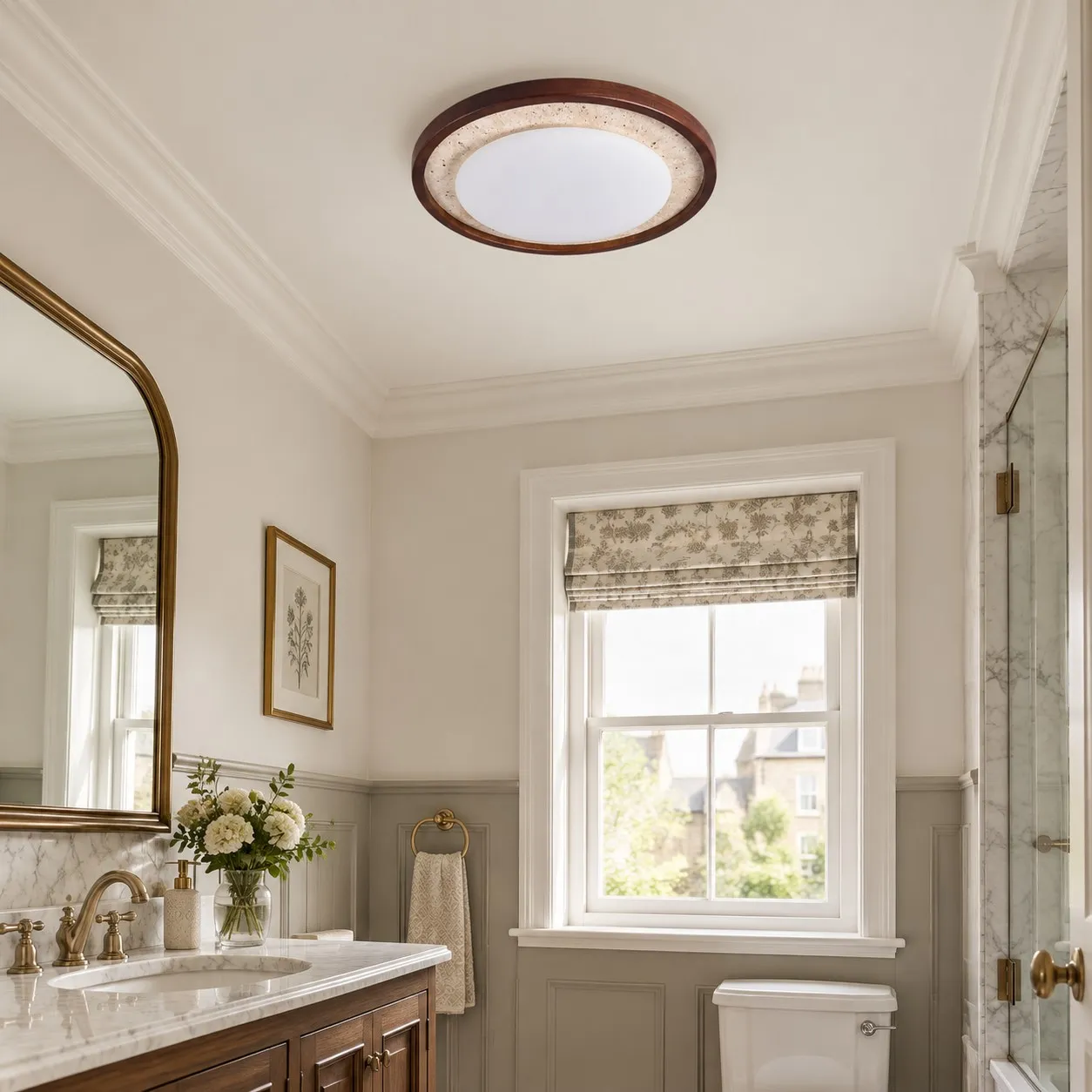
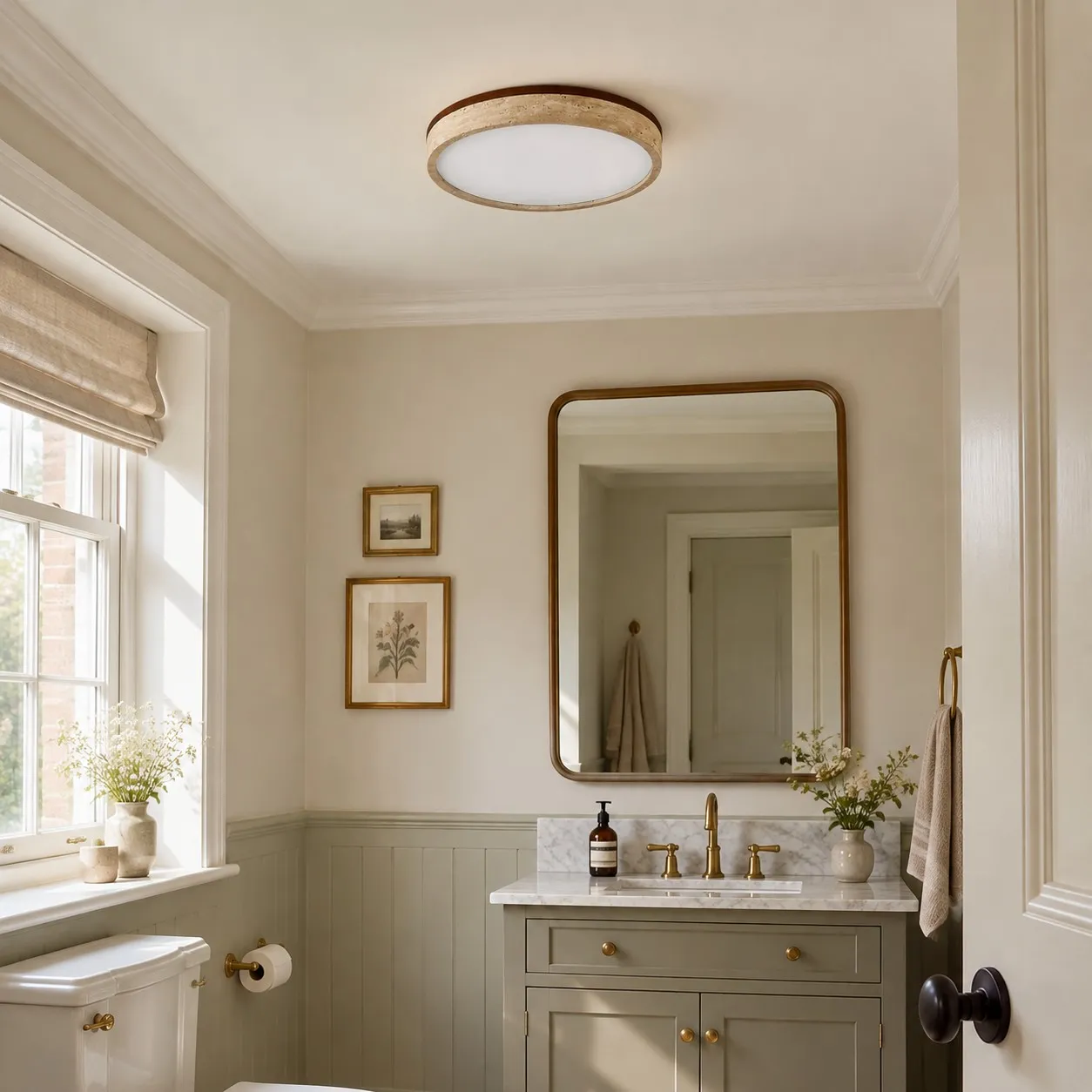
This fixture is hardwired, so installation must suit the ceiling construction and local electrical requirements. UK homeowners can consult the government's Approved Document P guidance and use a qualified electrician where required. In a bathroom, never rely on styling images alone; confirm the fixture's stated suitability and required protection for the exact bathroom zone before purchase.
Natural stone should be treated gently. Dust with a soft, dry cloth and follow the manufacturer's instructions. Avoid acidic or abrasive cleaners, which can affect calcareous stone. The Natural Stone Institute care guidance gives broader advice for natural stone surfaces.
Frequently asked questions
Does travertine work with Japandi interiors?
Yes. Its warm mineral texture complements the timber, neutral colours and restrained forms common in Japandi rooms. Keep the rest of the palette simple so the stone remains distinctive.
What colours suit a travertine ceiling light?
Warm whites, soft greys, muted greens, walnut and natural oak usually work well. Choose colours from the actual stone because every natural piece can vary.
Can I use a travertine light in a small hallway?
A shallow flush fixture can suit a hallway with limited headroom. Check the diameter against the corridor width and confirm that doors and cupboards open freely.
Should all lights in the room match?
No. Coordinate them through colour temperature, material or shape instead of using an identical set. This creates consistency without making the room feel staged.
How do I clean a travertine light?
Switch off the power, allow the fixture to cool and use a soft dry cloth. Do not apply acidic, abrasive or soaking-wet cleaners unless the manufacturer specifically permits them.