A Pendant That Looks Better Switched Off: Is That a Design Problem?
No - not if the pendant also works safely after dark and the room has other light for practical tasks. A decorative fitting spends much of its life switched off. Judging its silhouette, colour and relationship to furniture in daylight is sensible; expecting it to provide every lumen in the evening is where the design begins to fail.
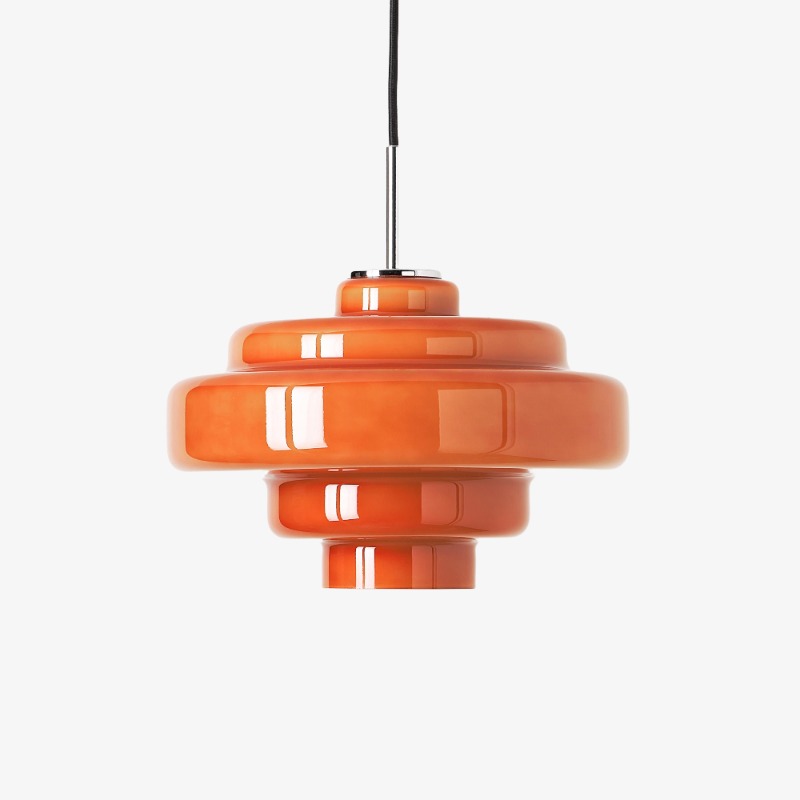
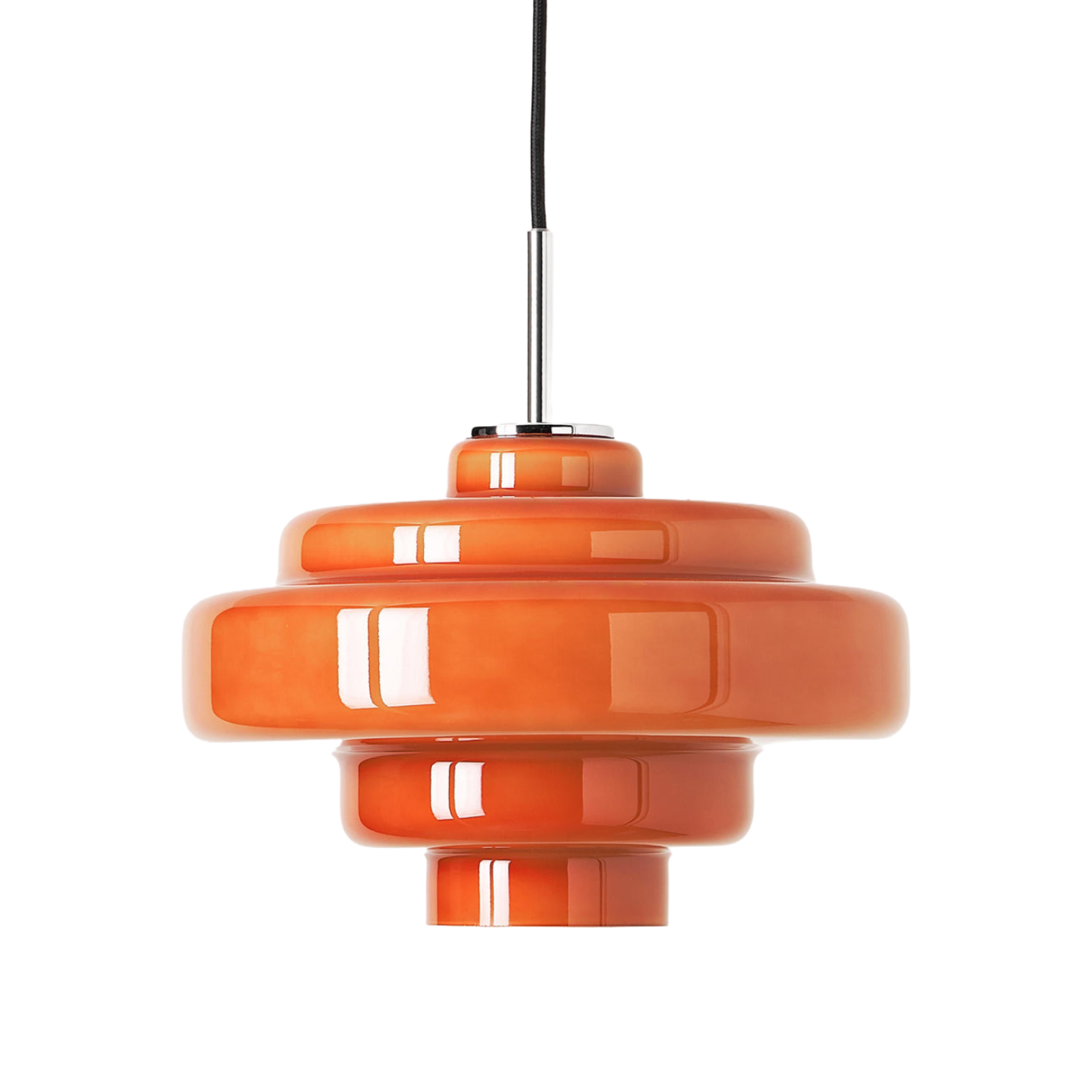
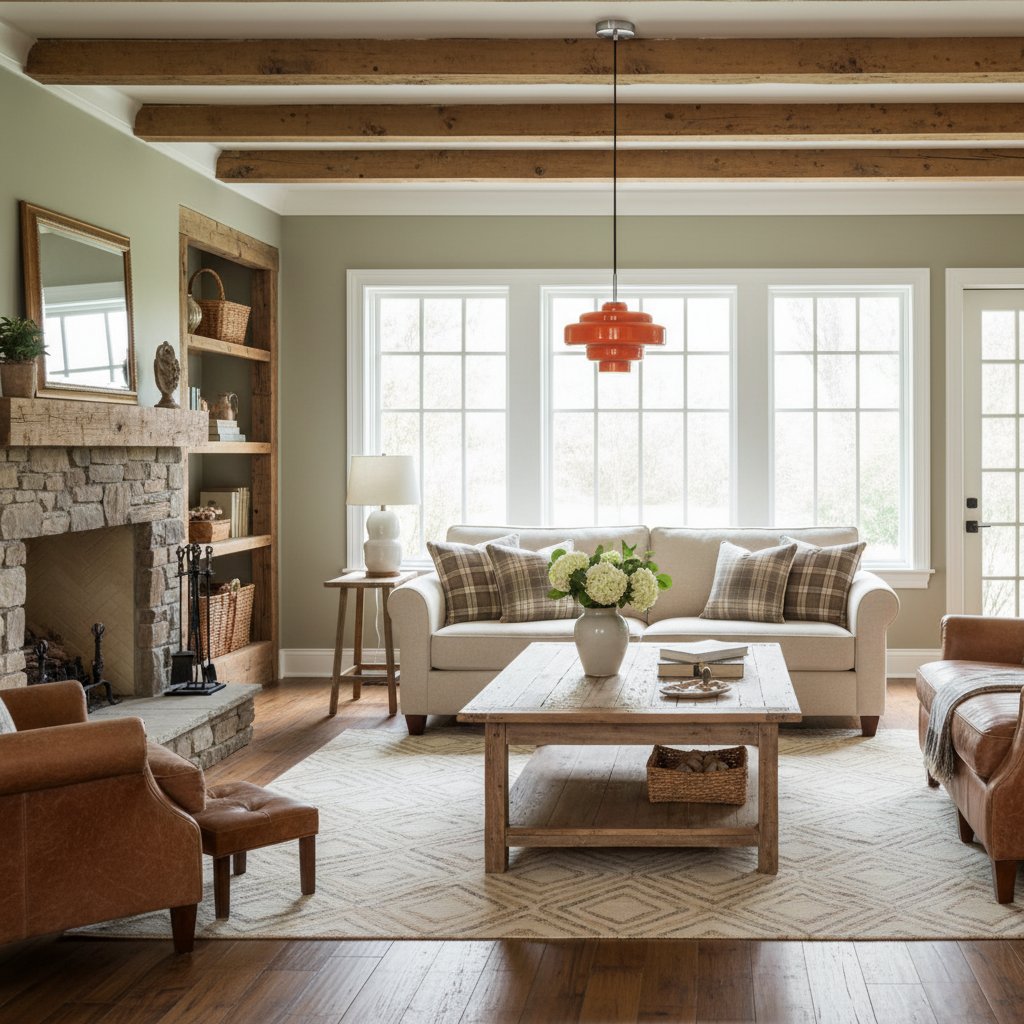
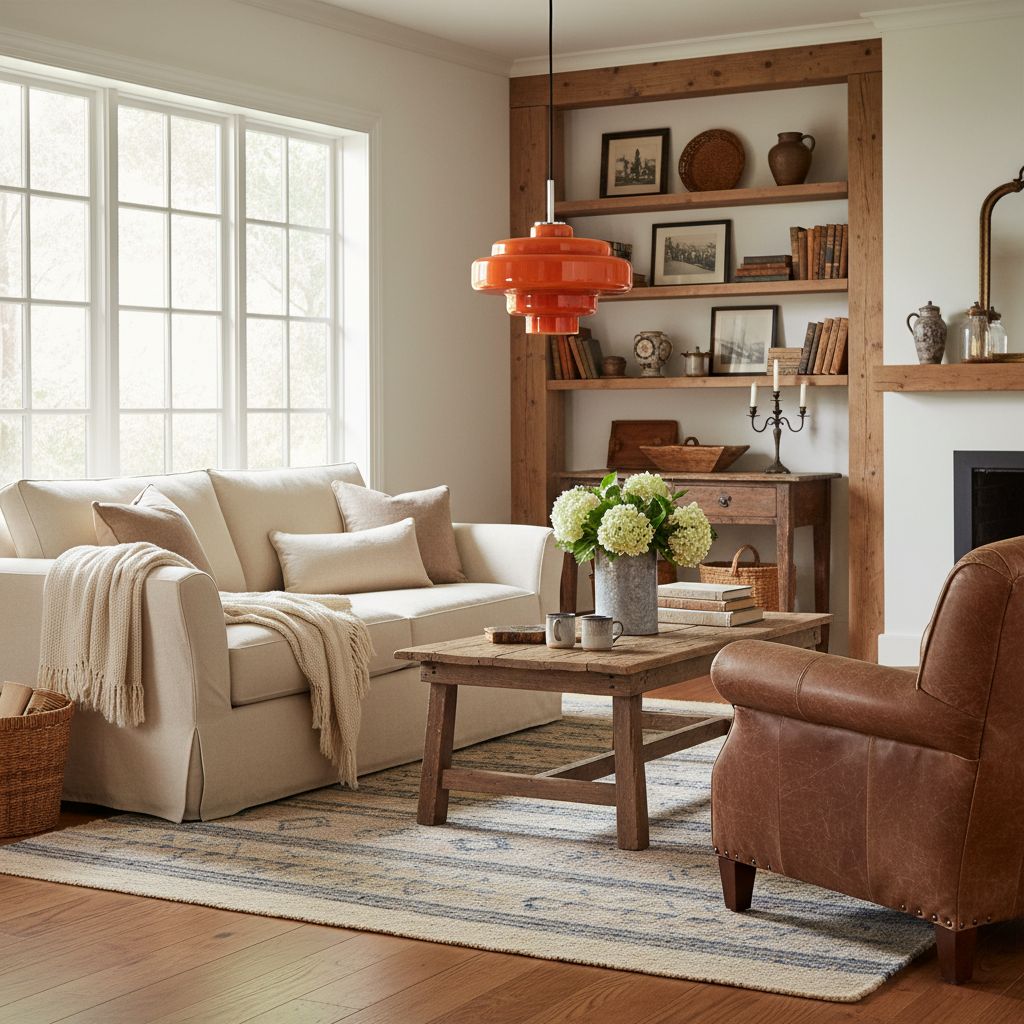
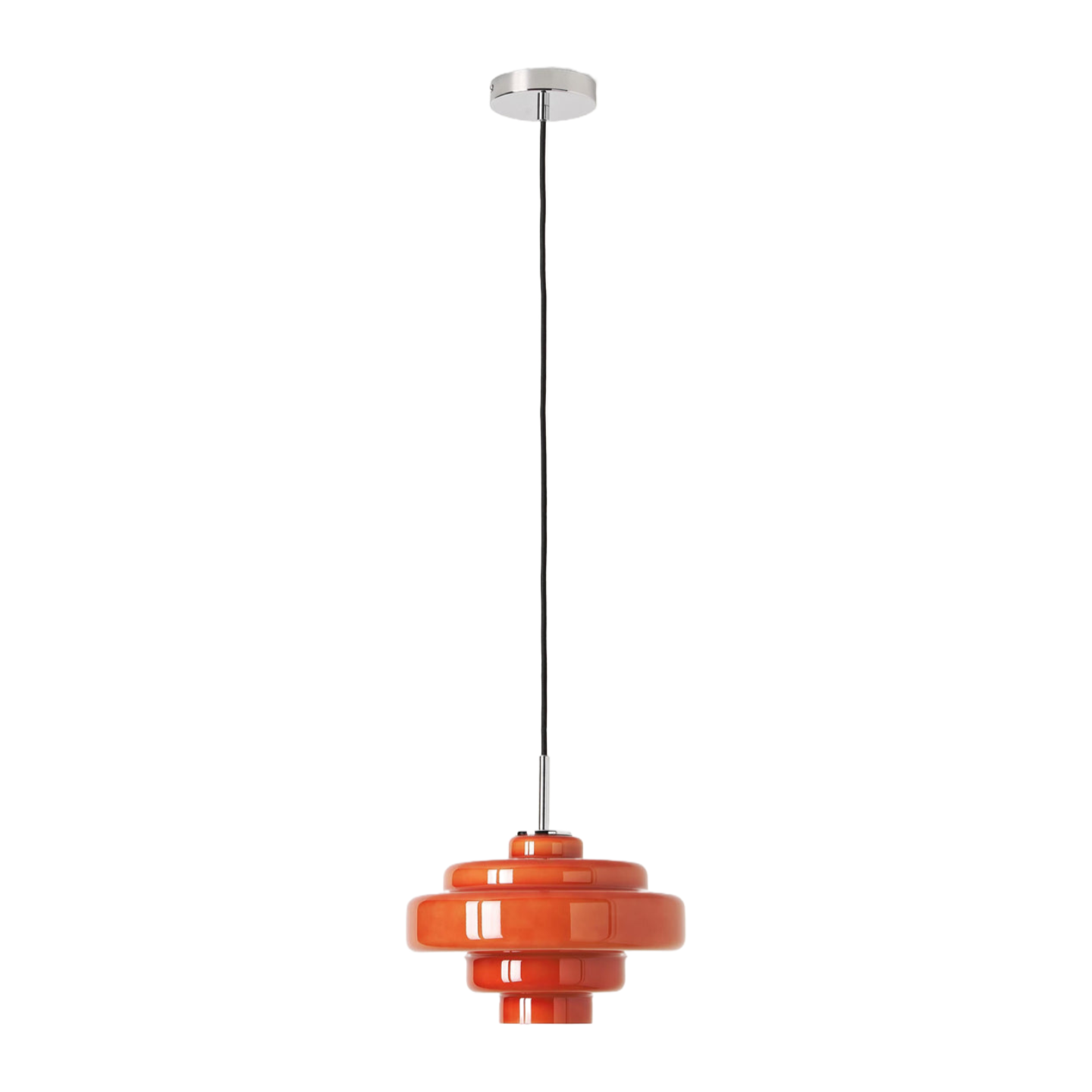
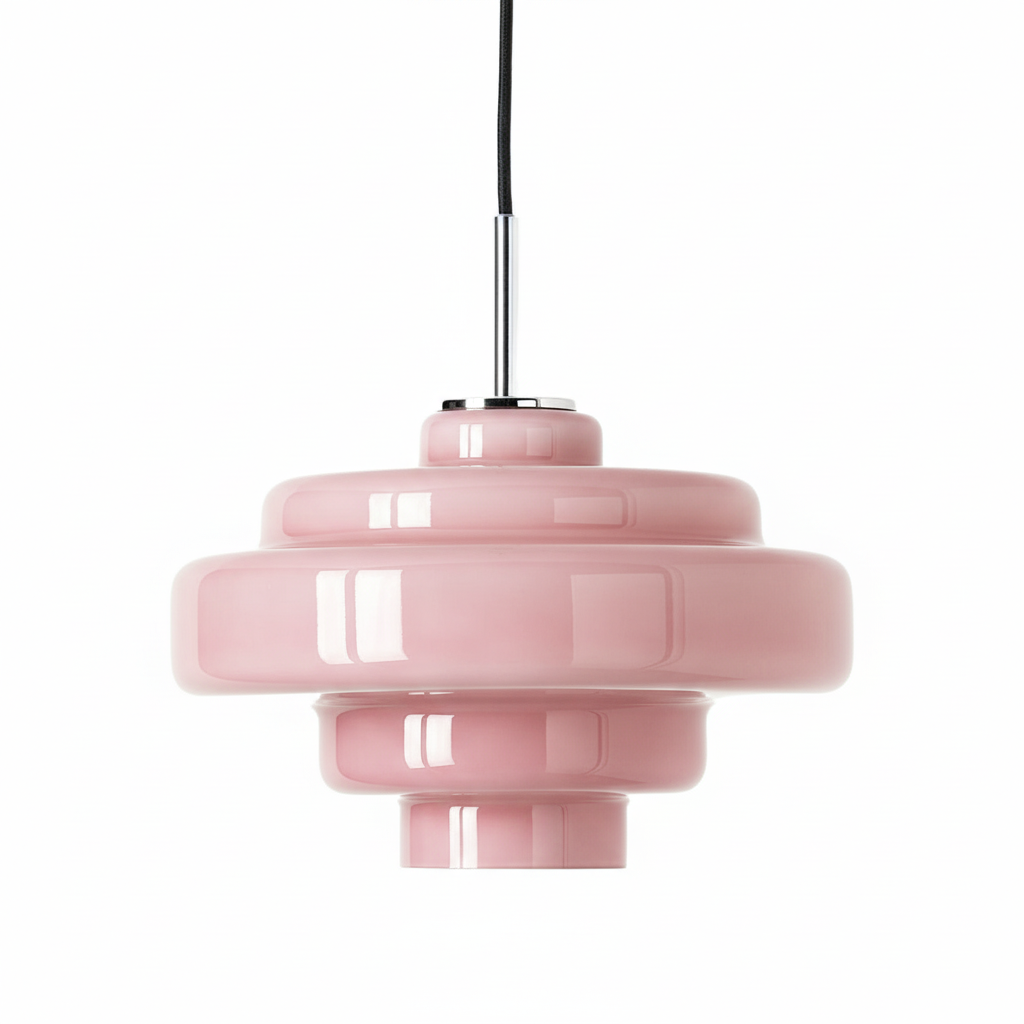
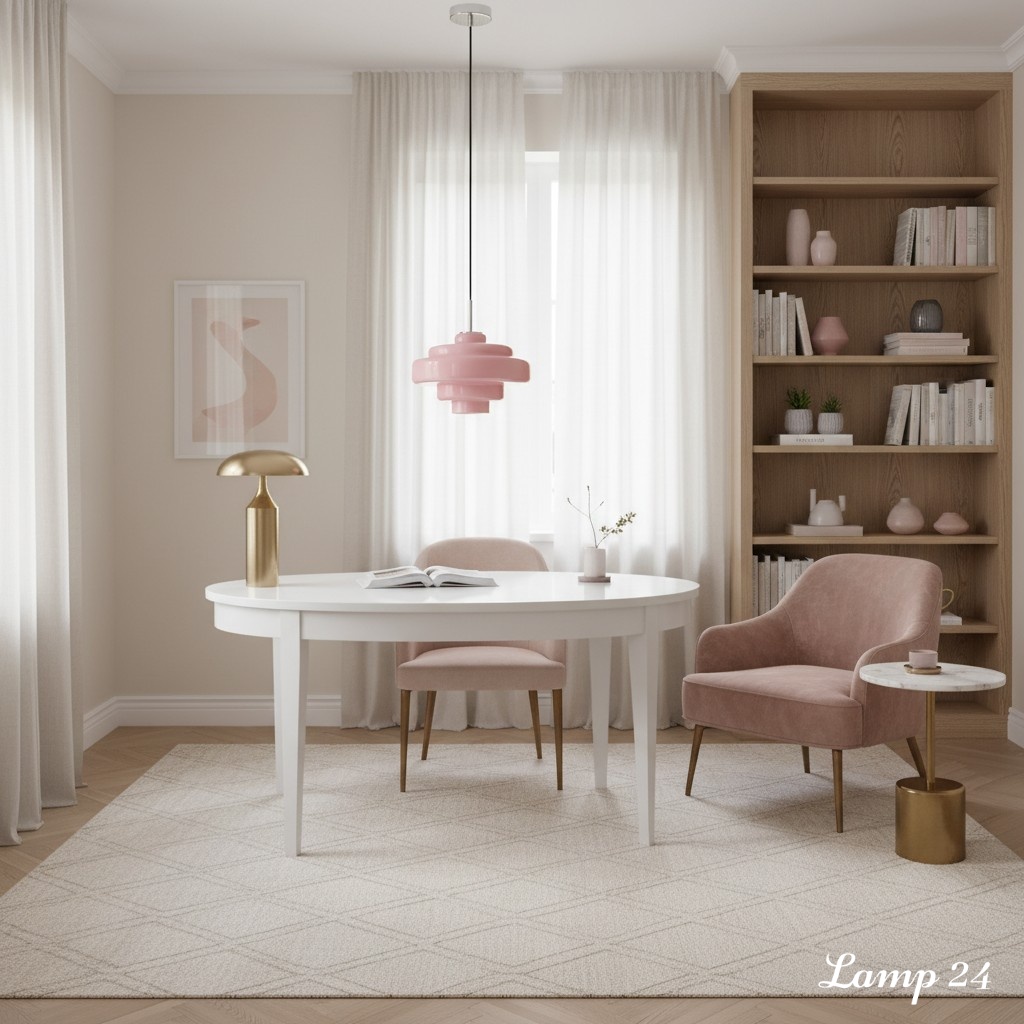
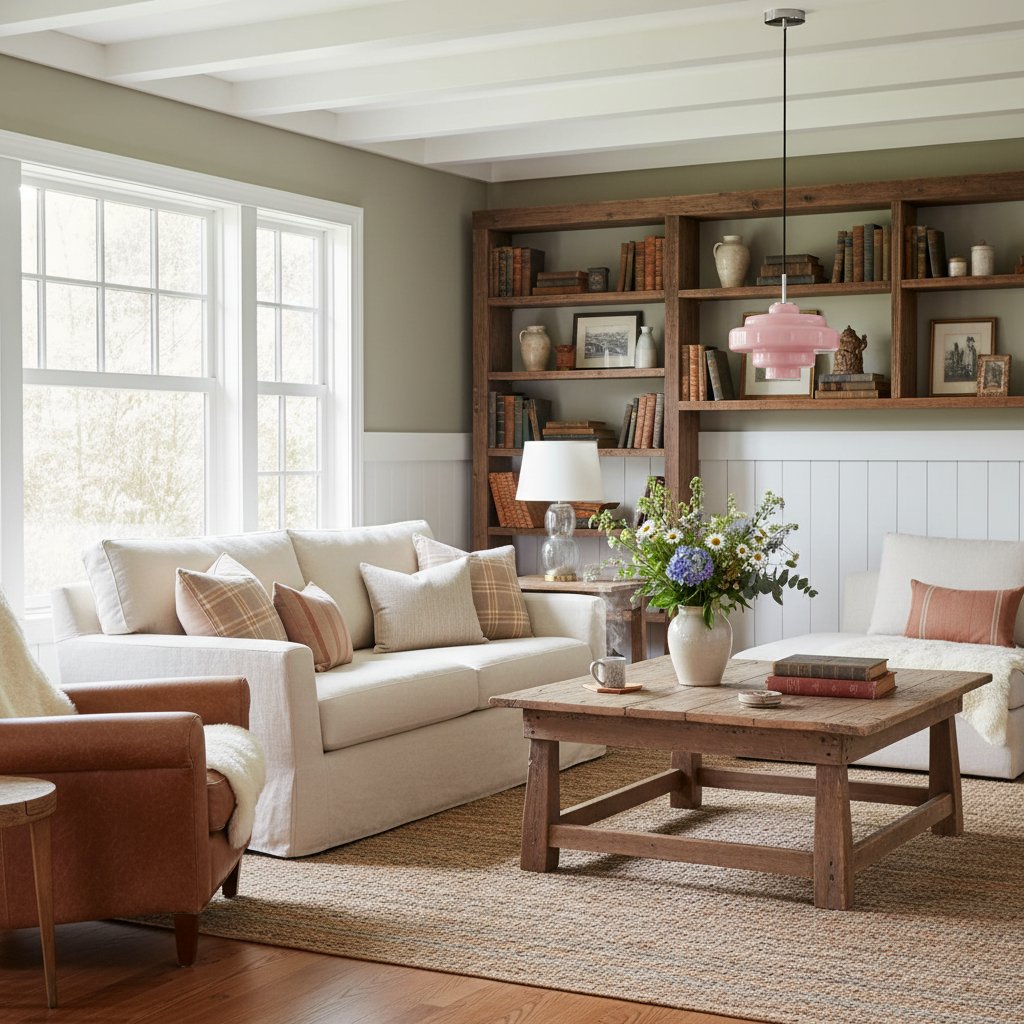
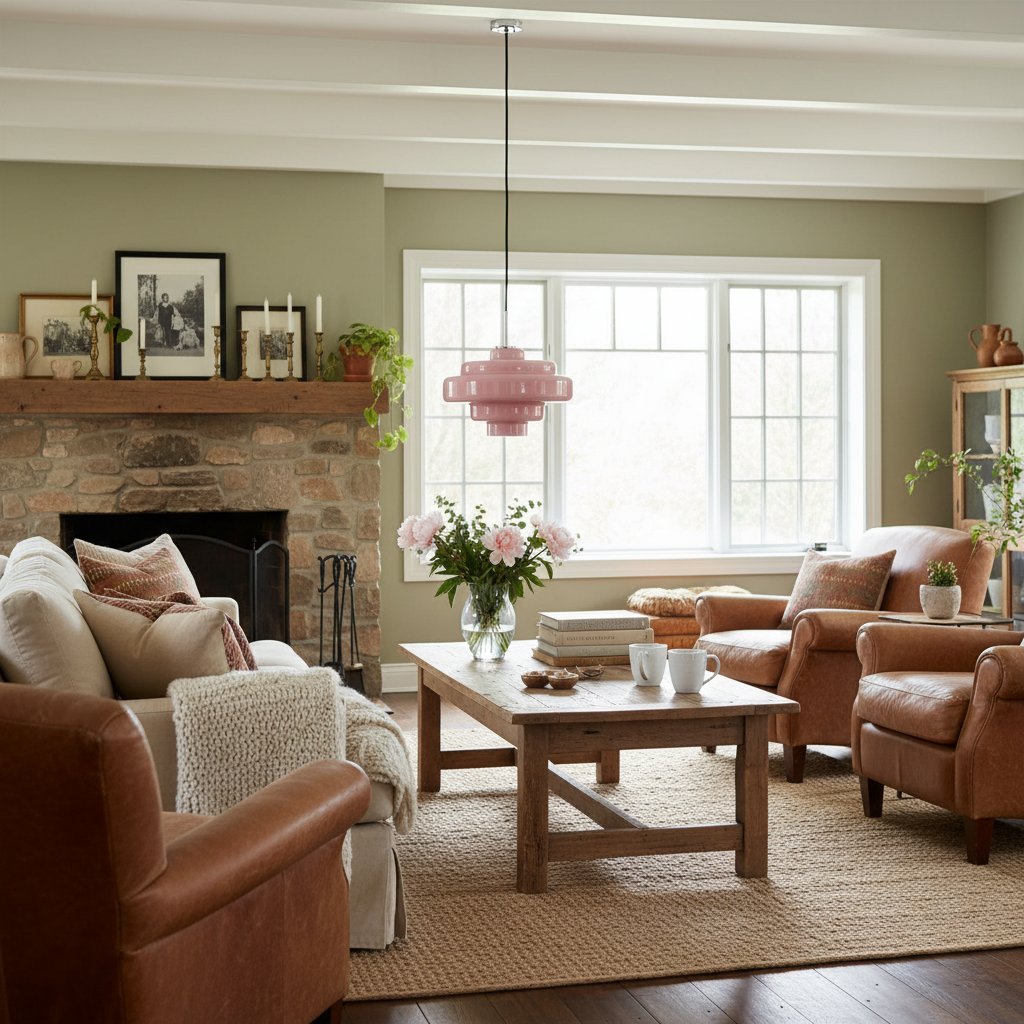
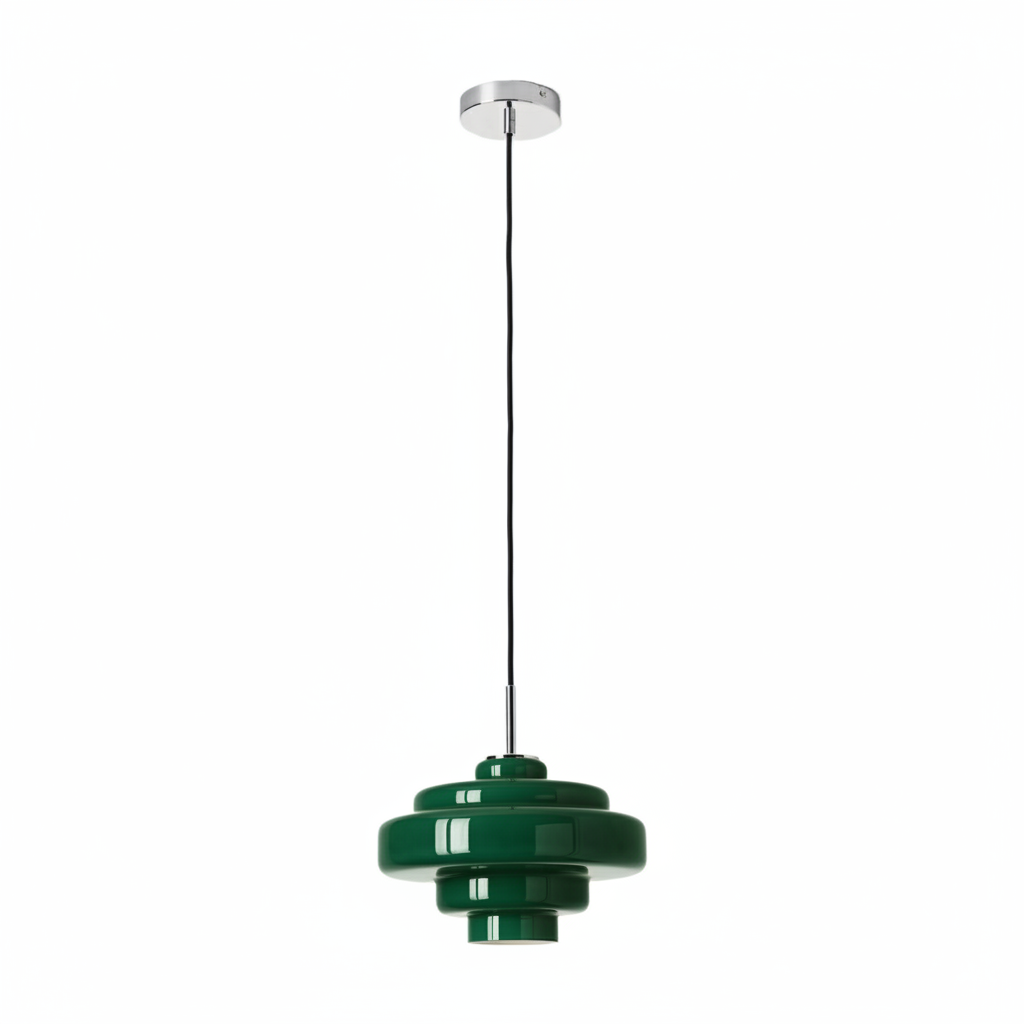
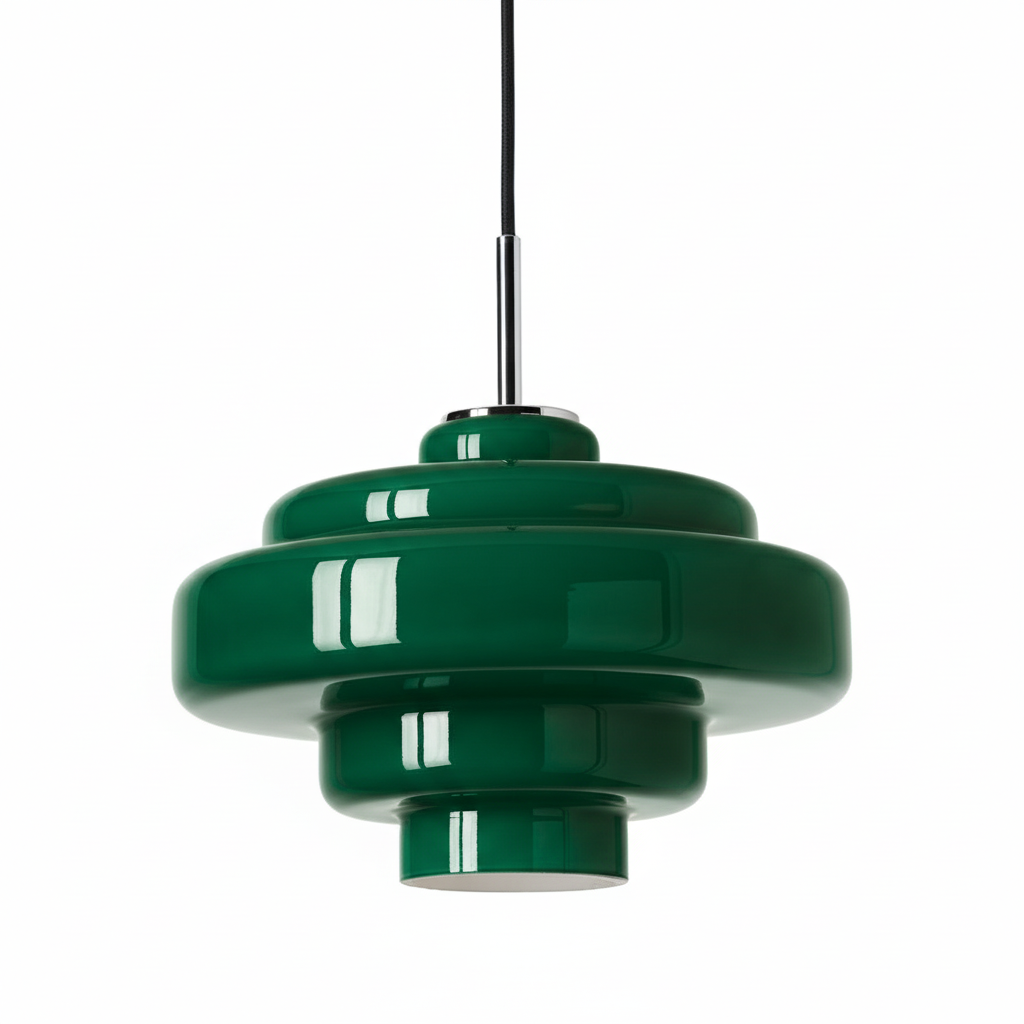
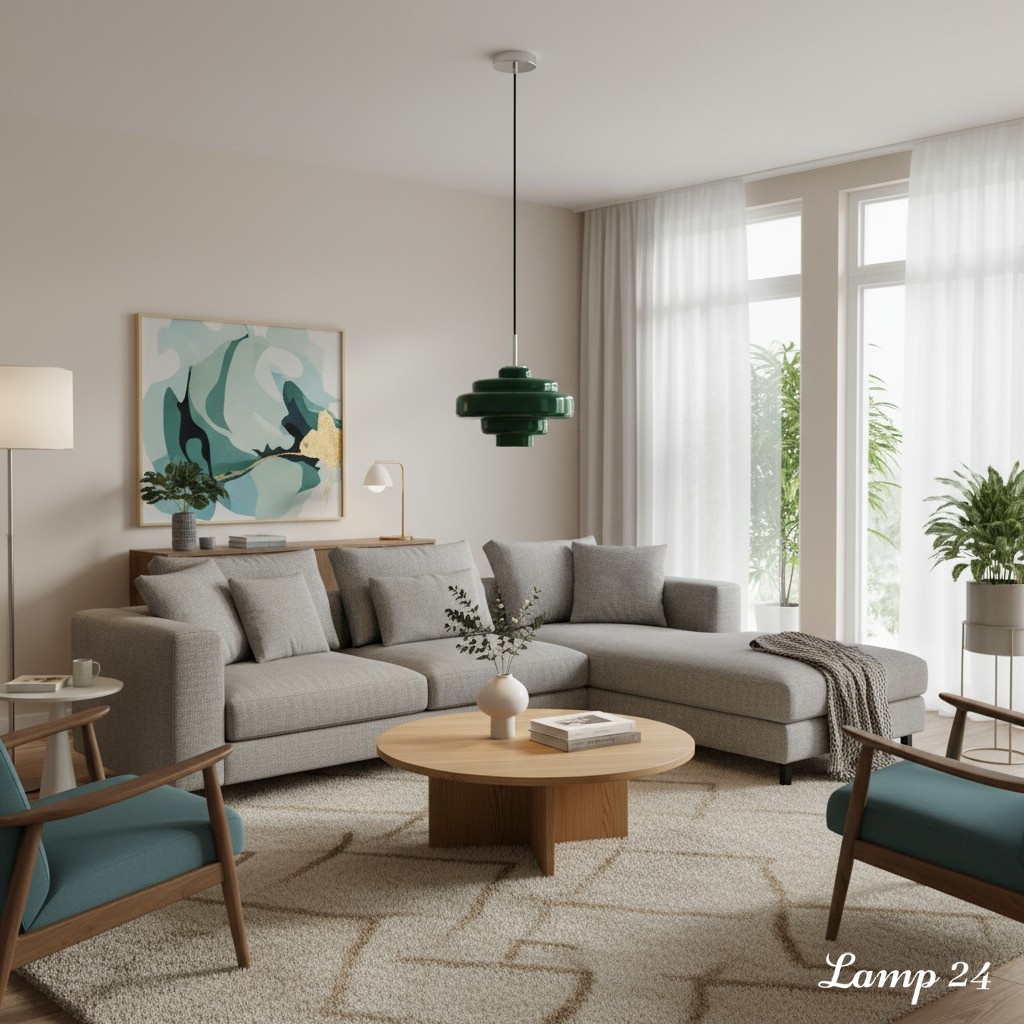
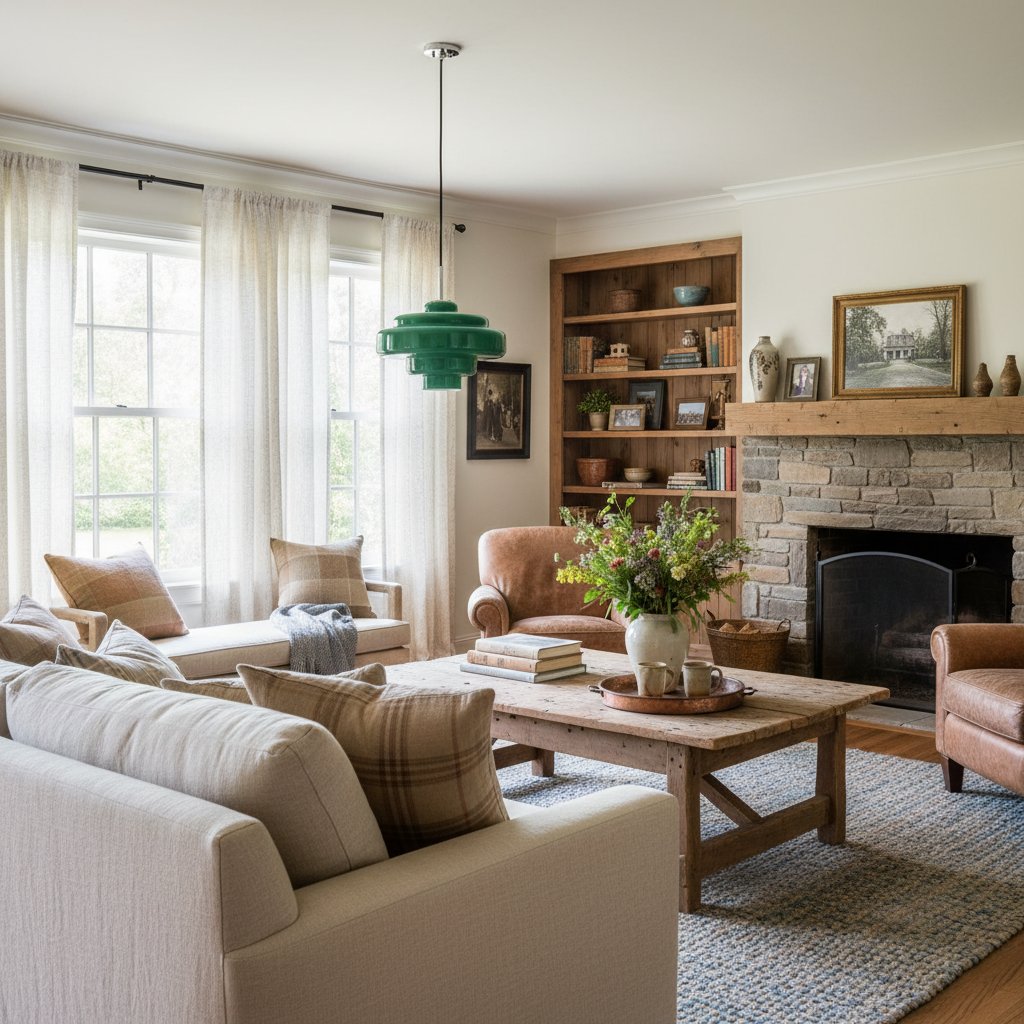
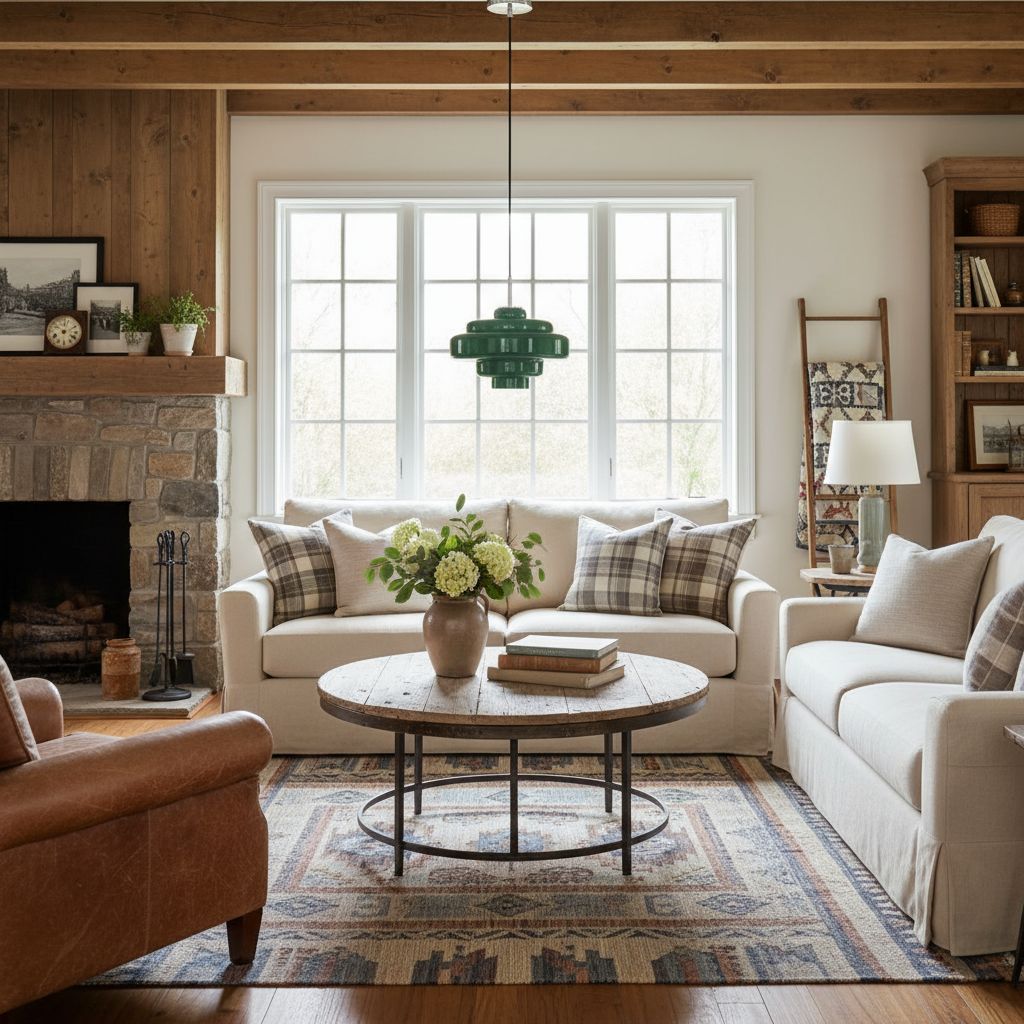
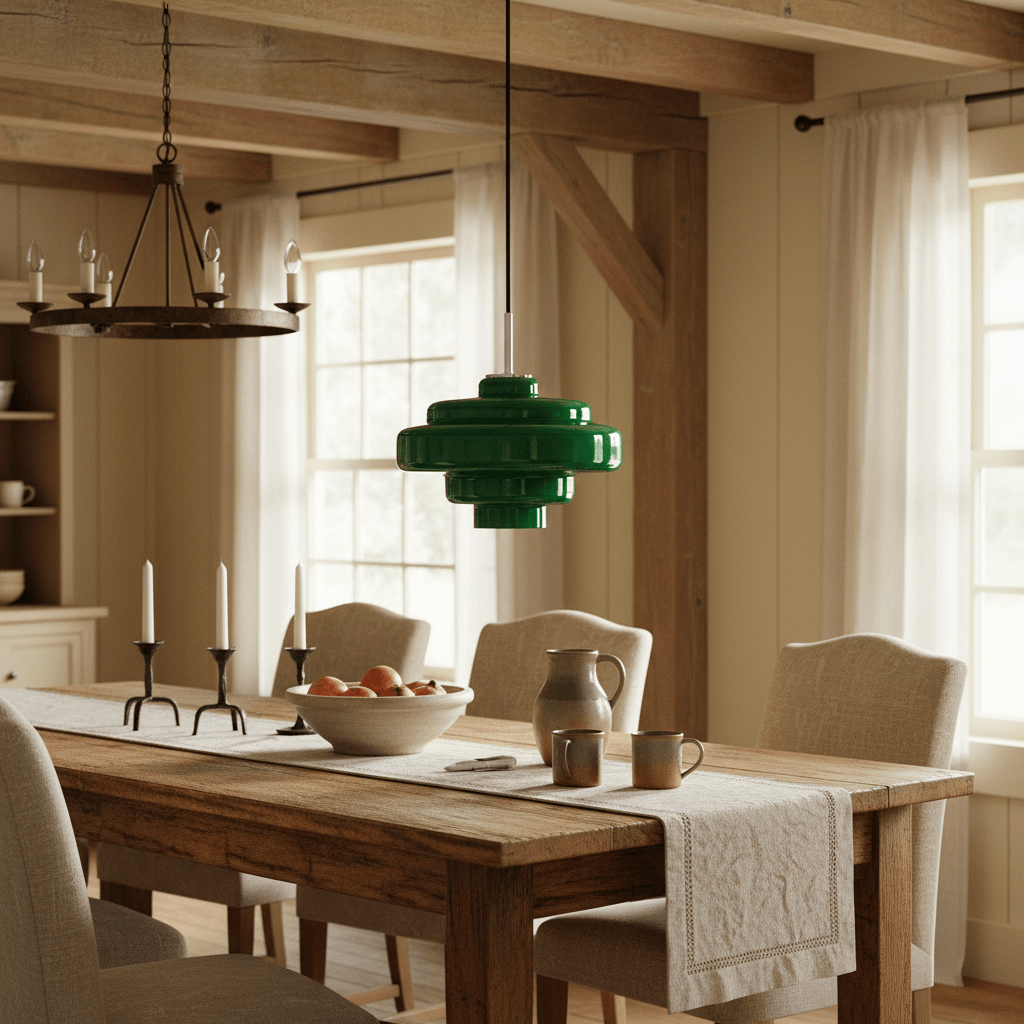
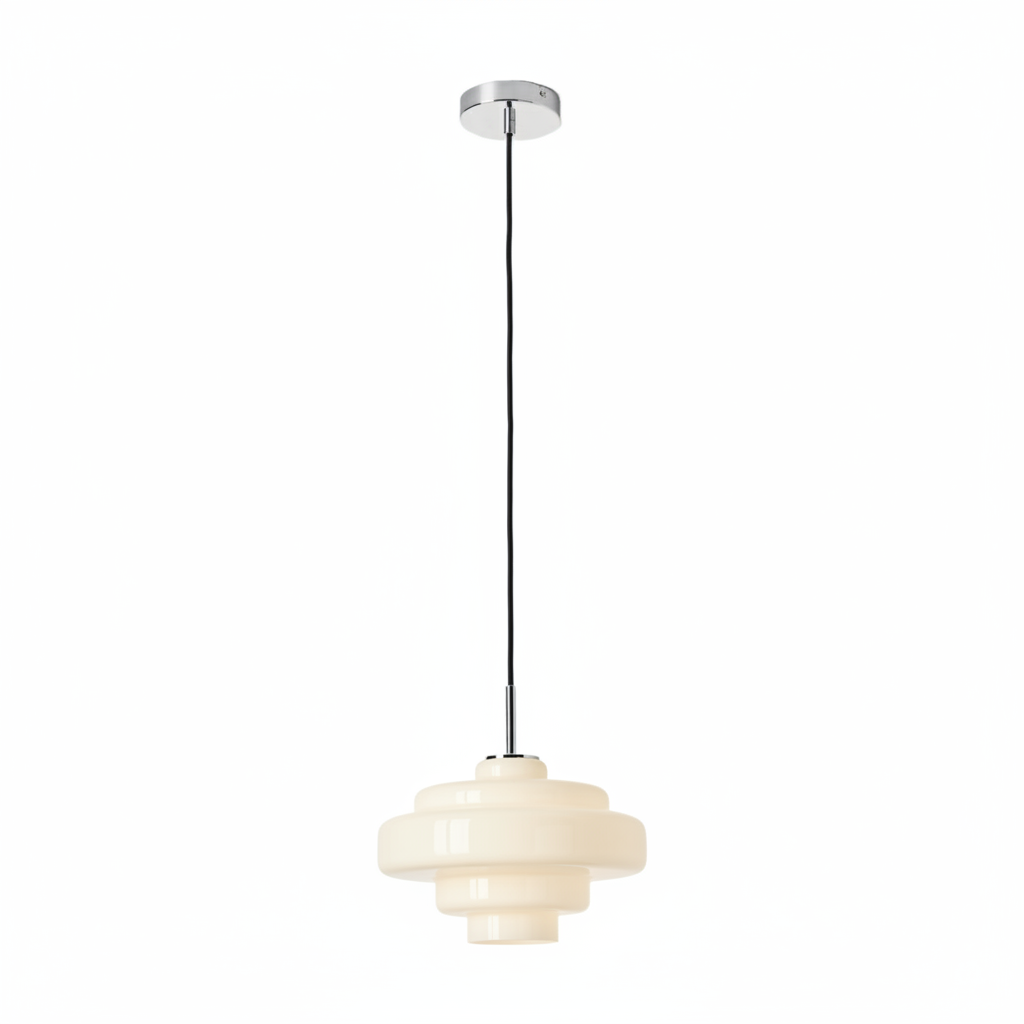
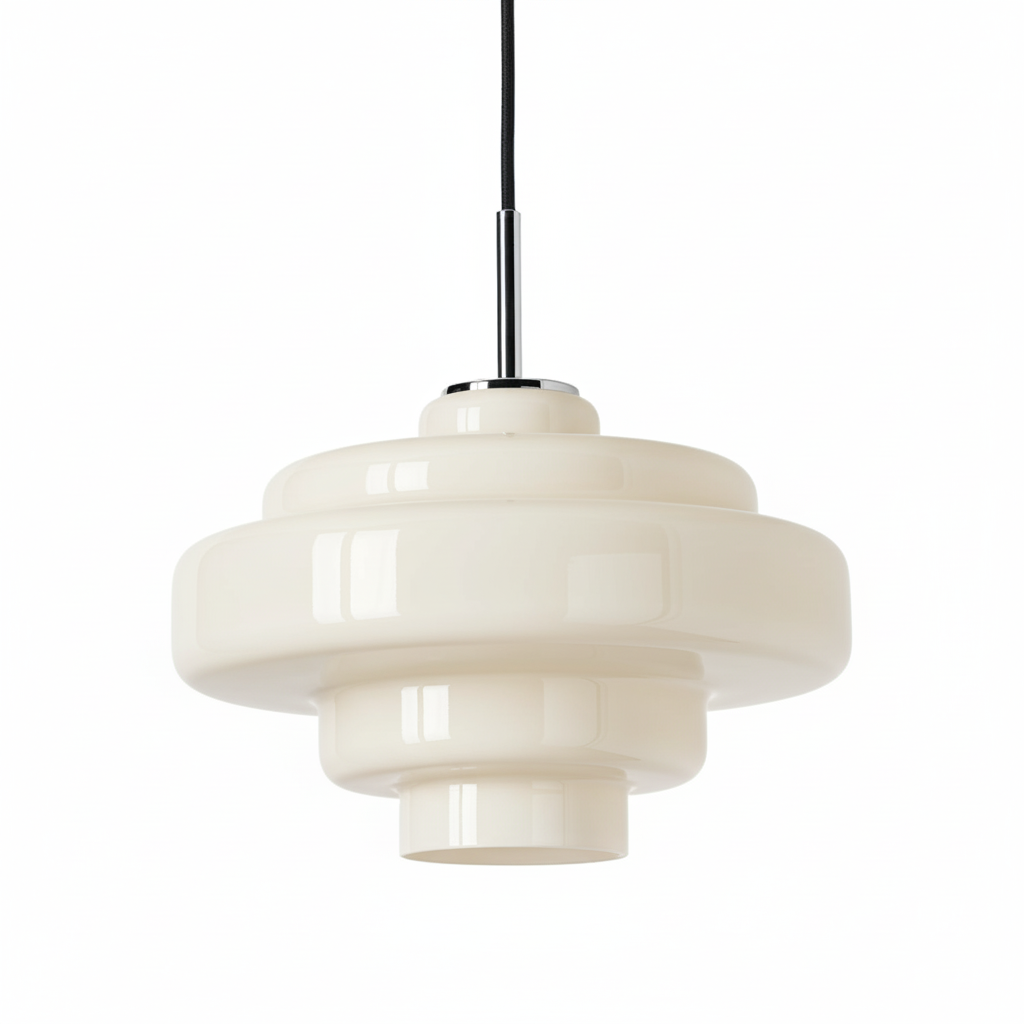
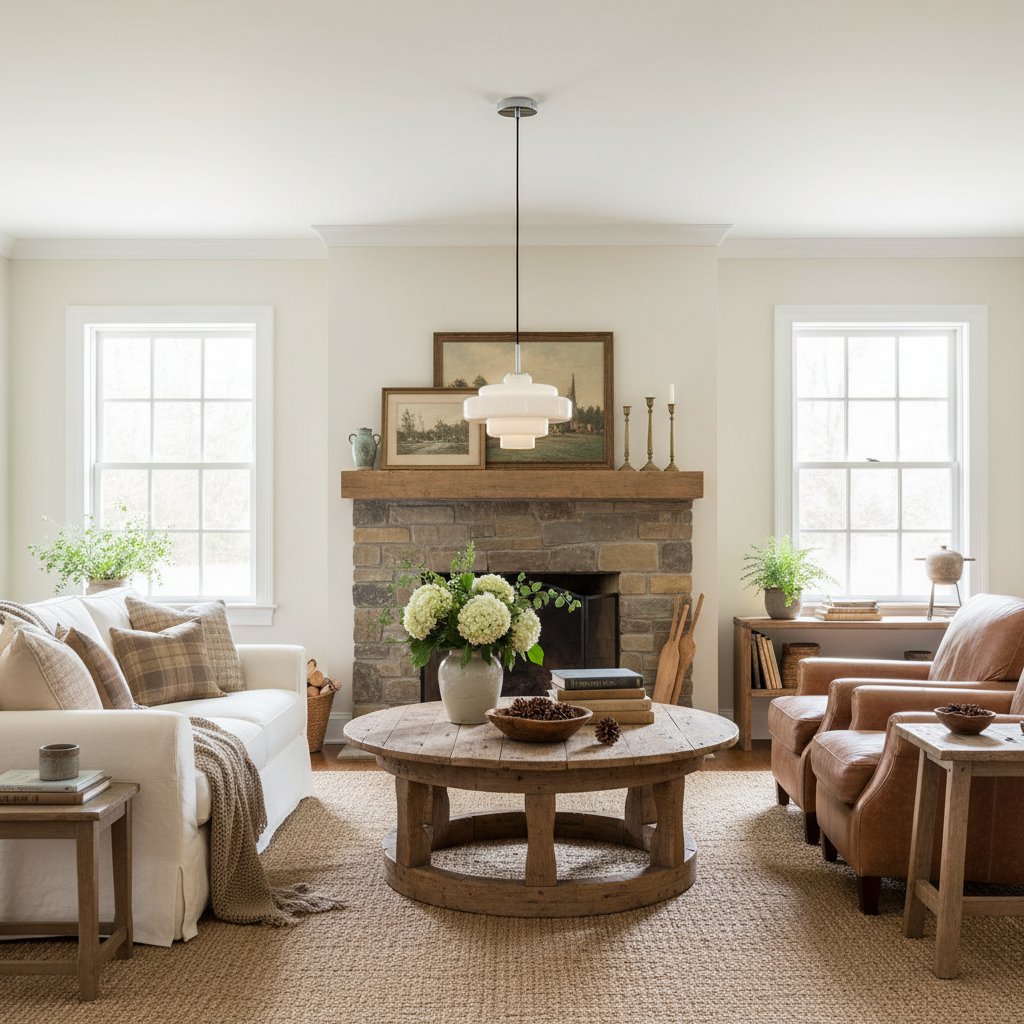
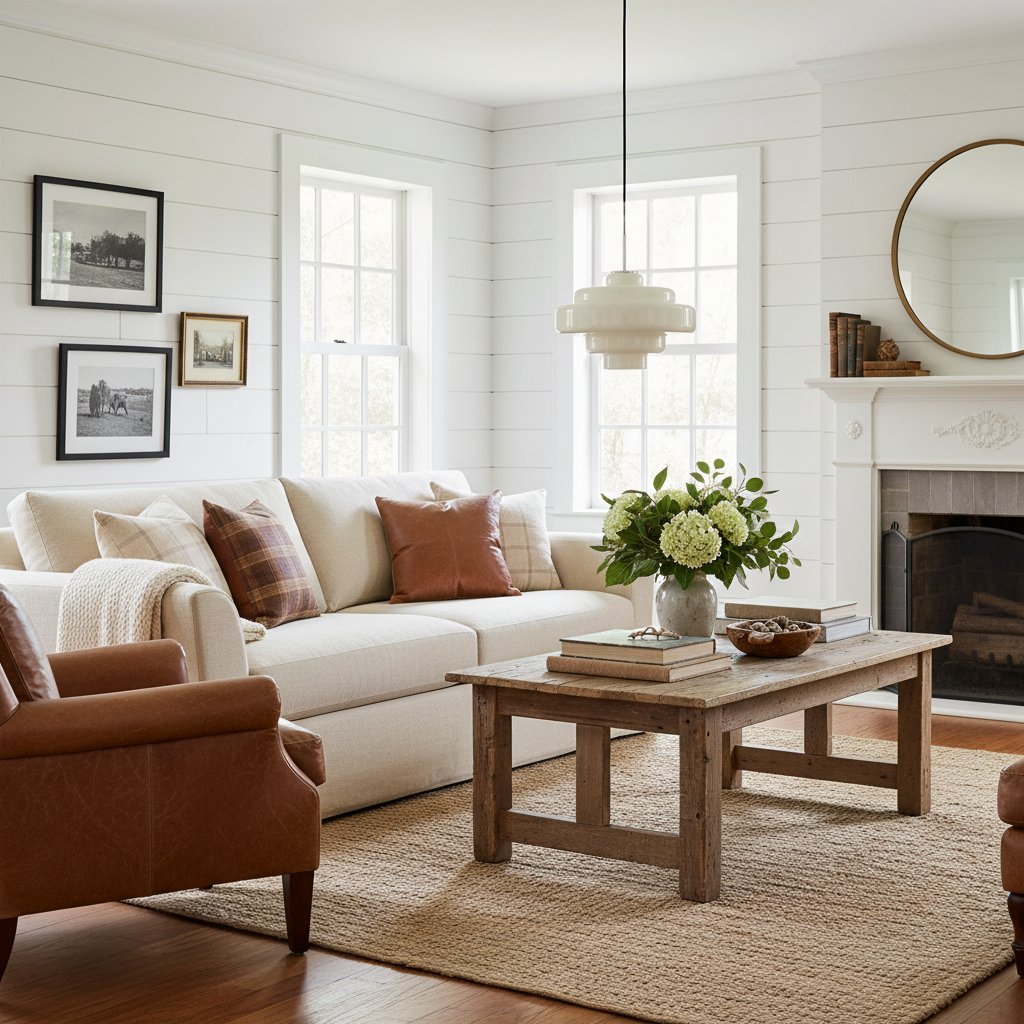
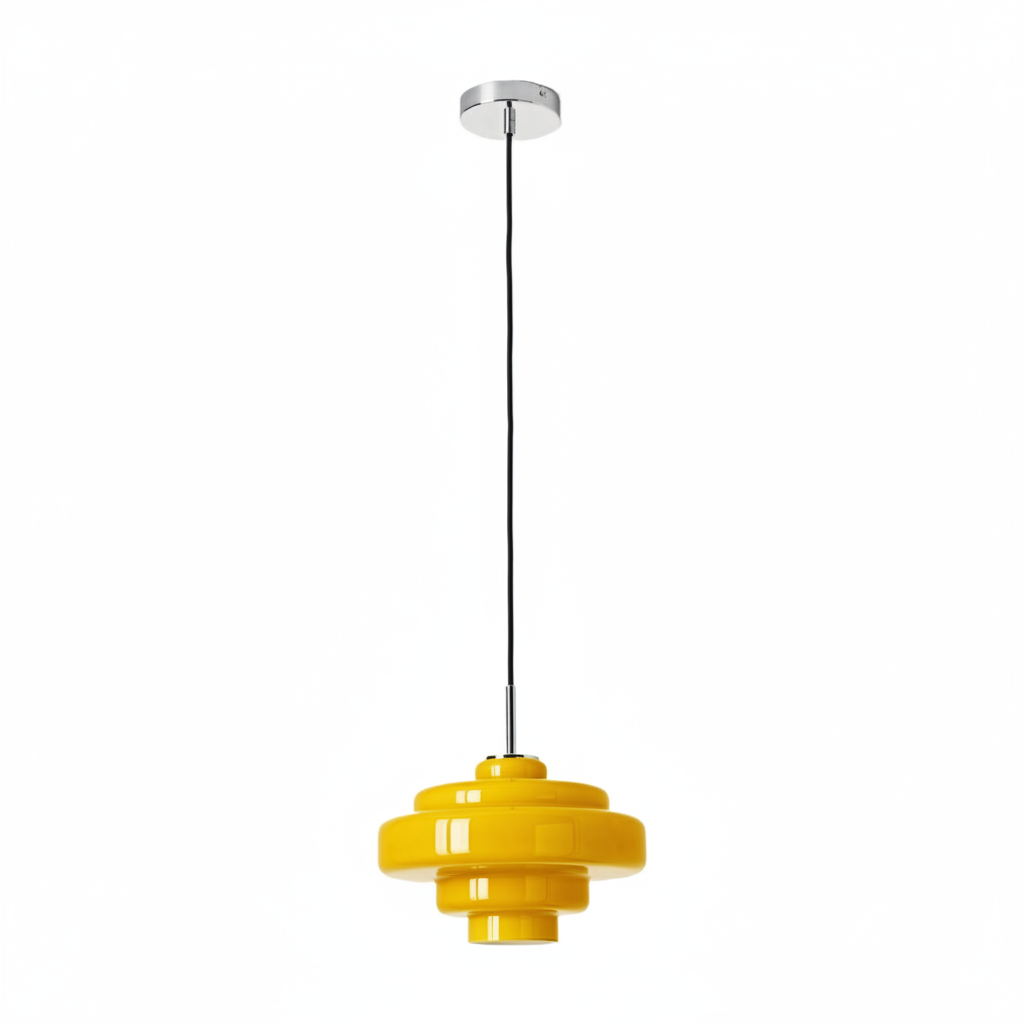
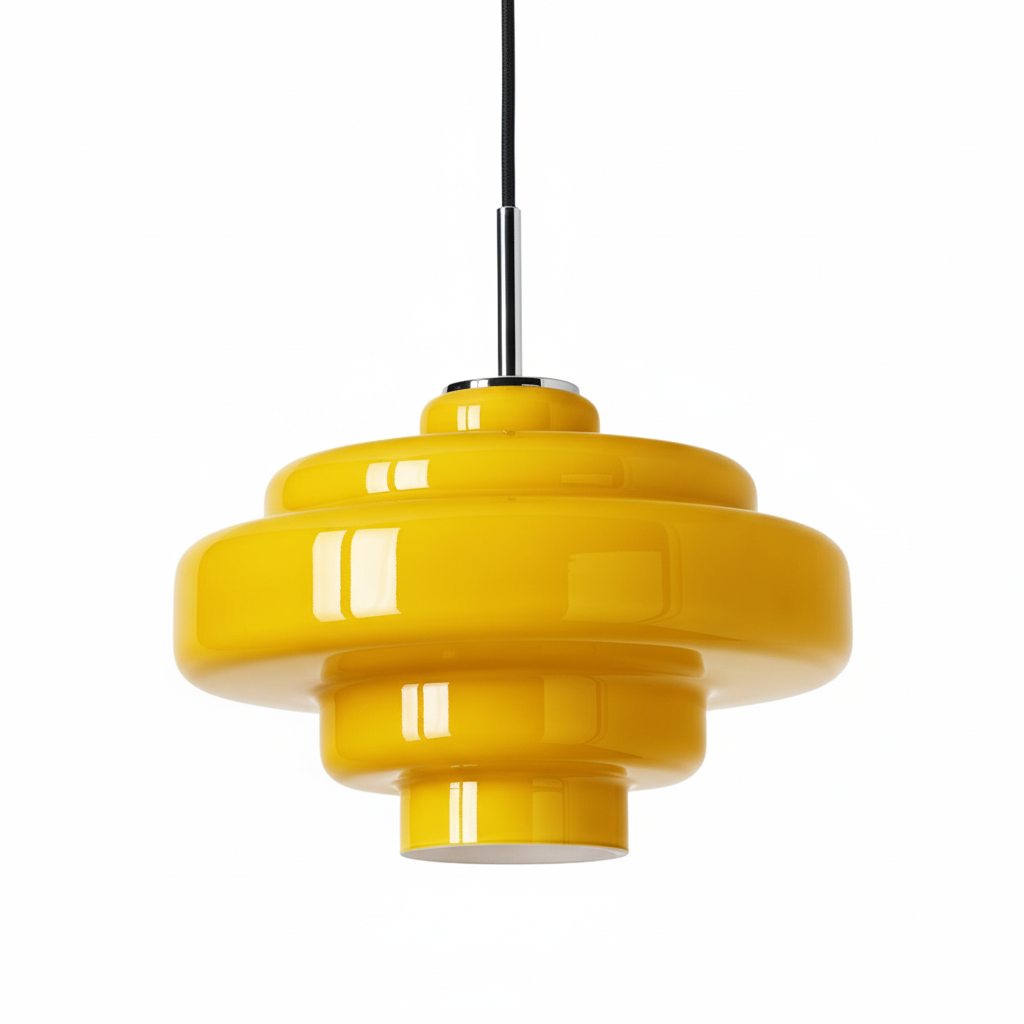
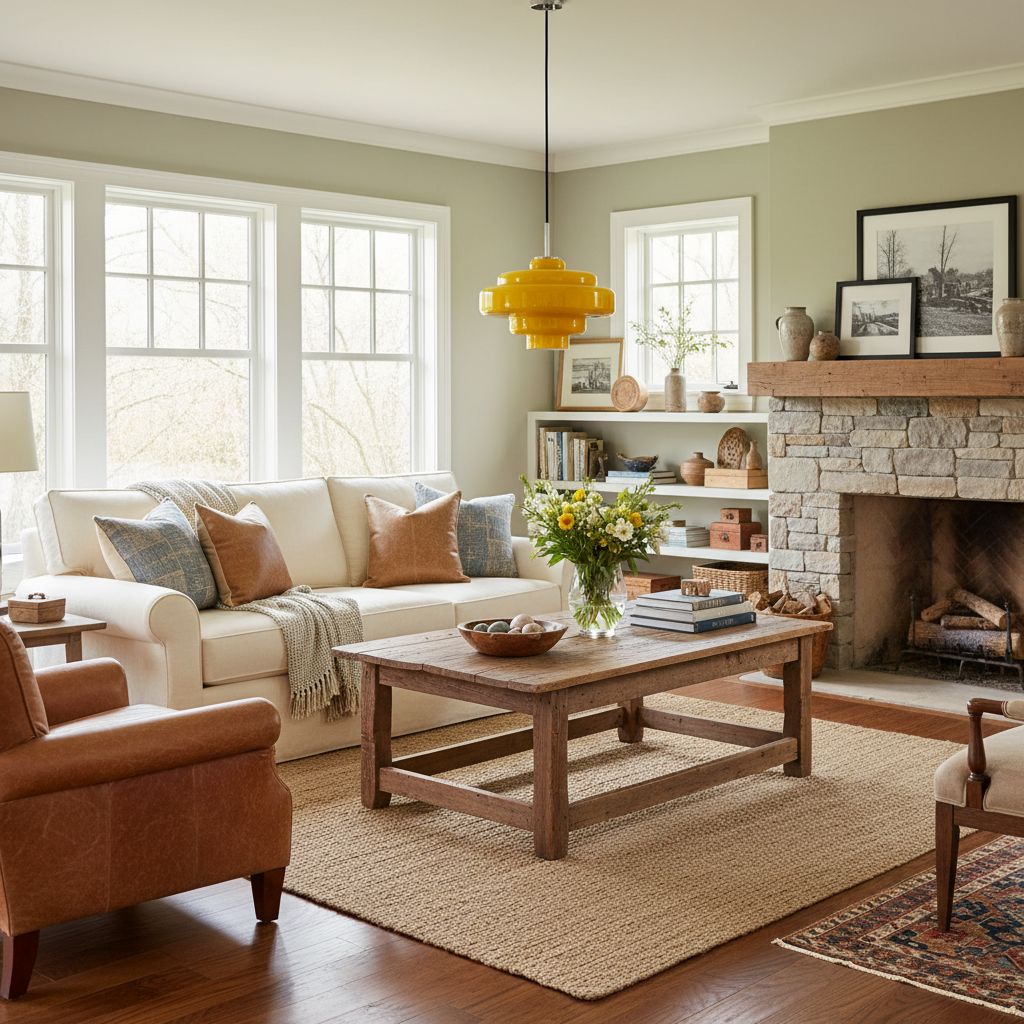
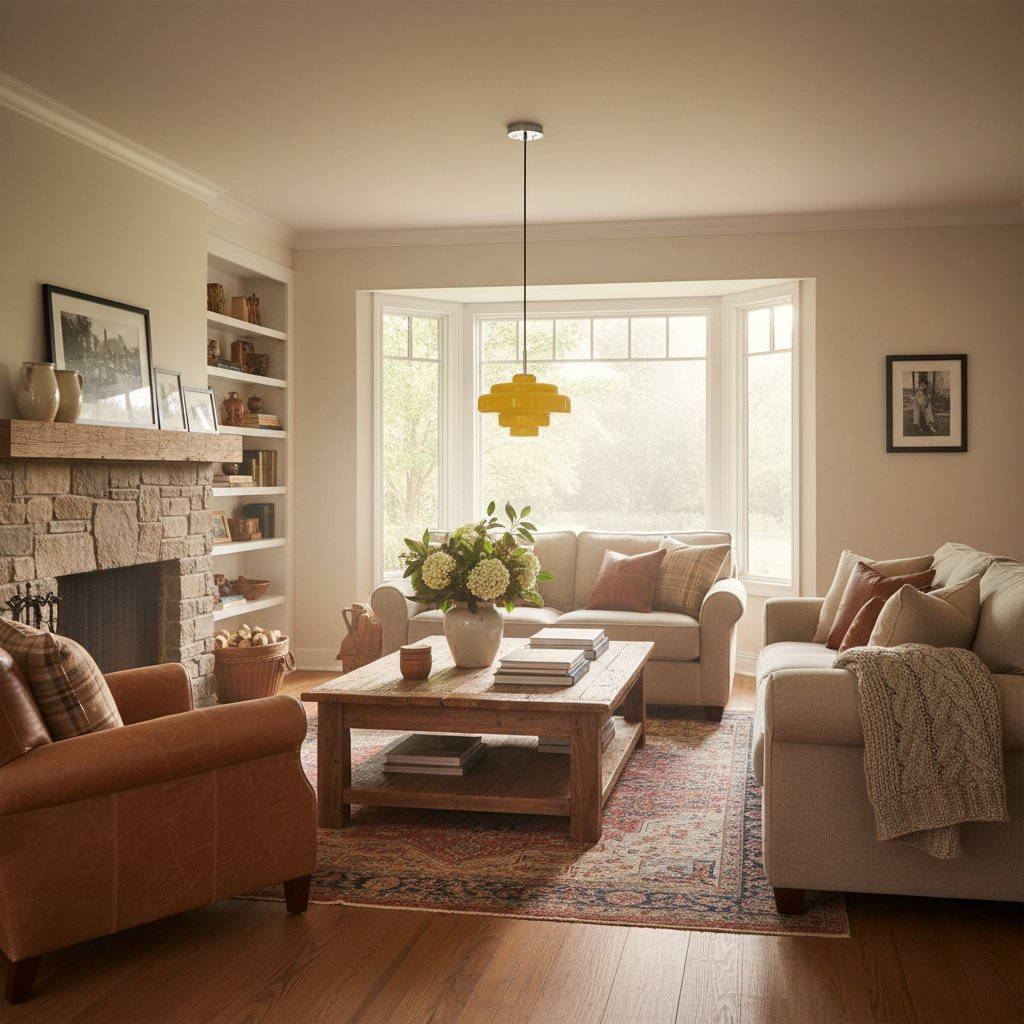
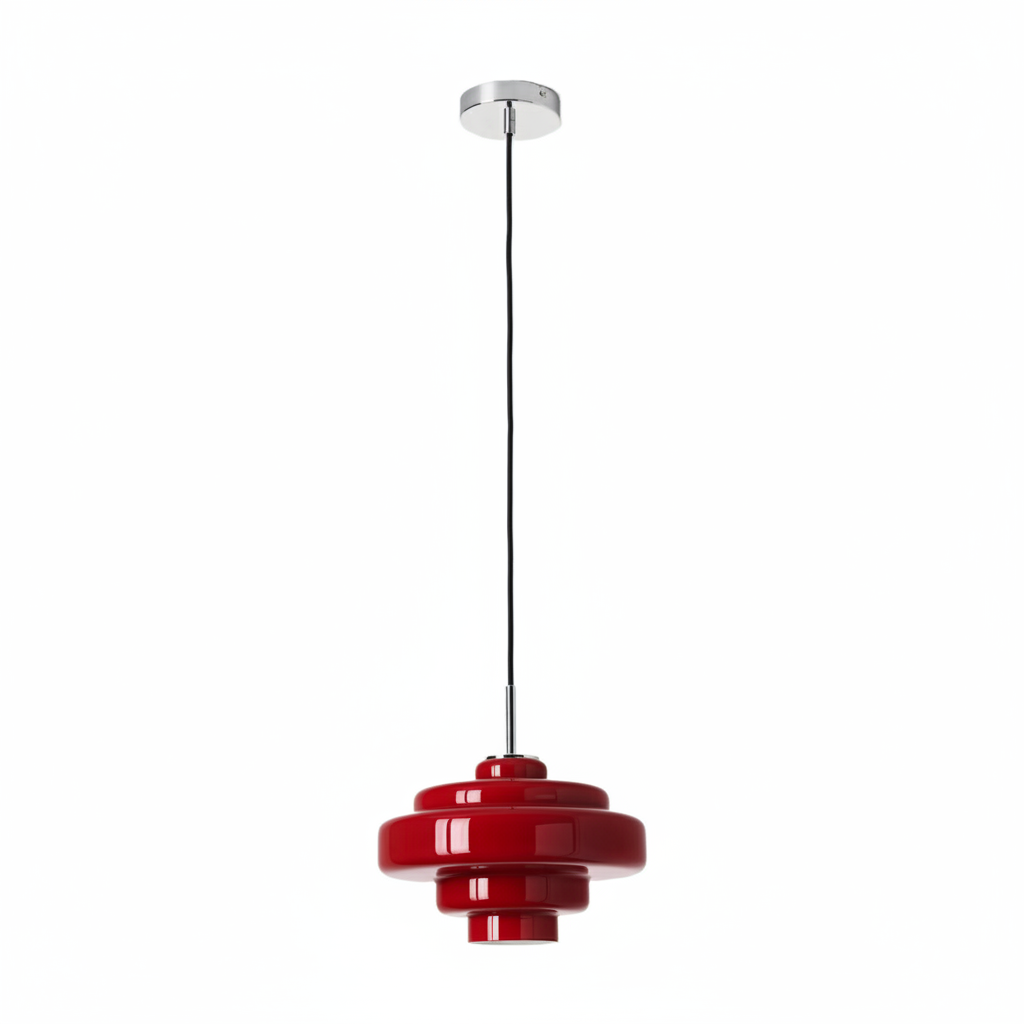
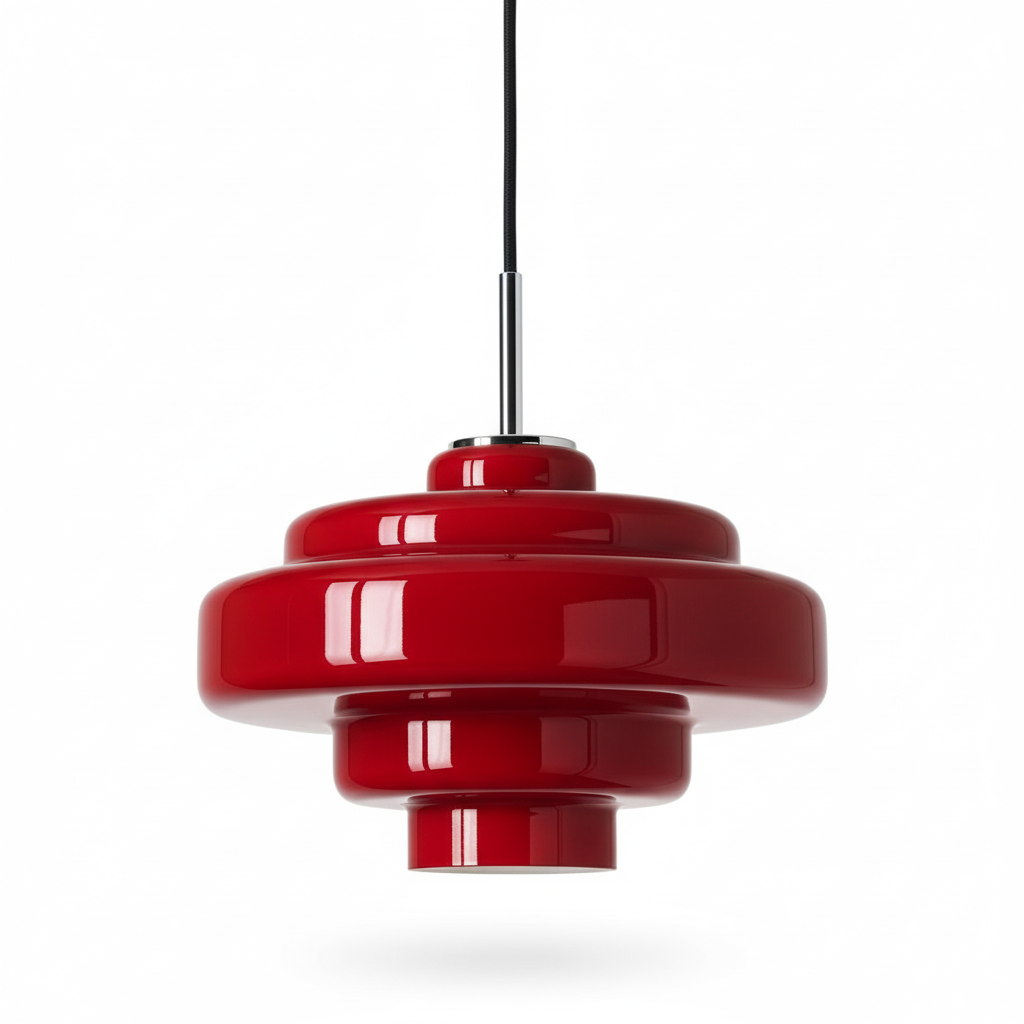
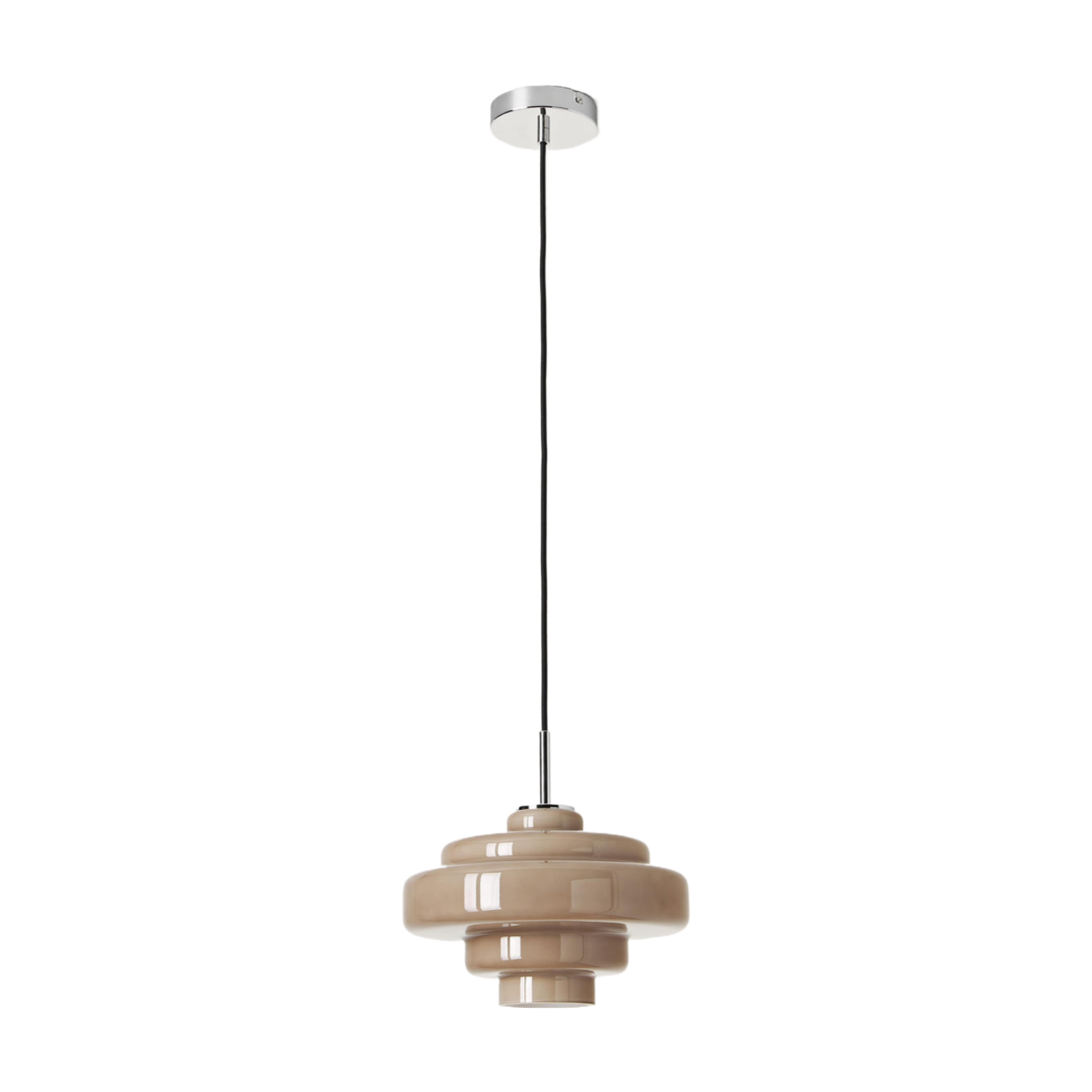
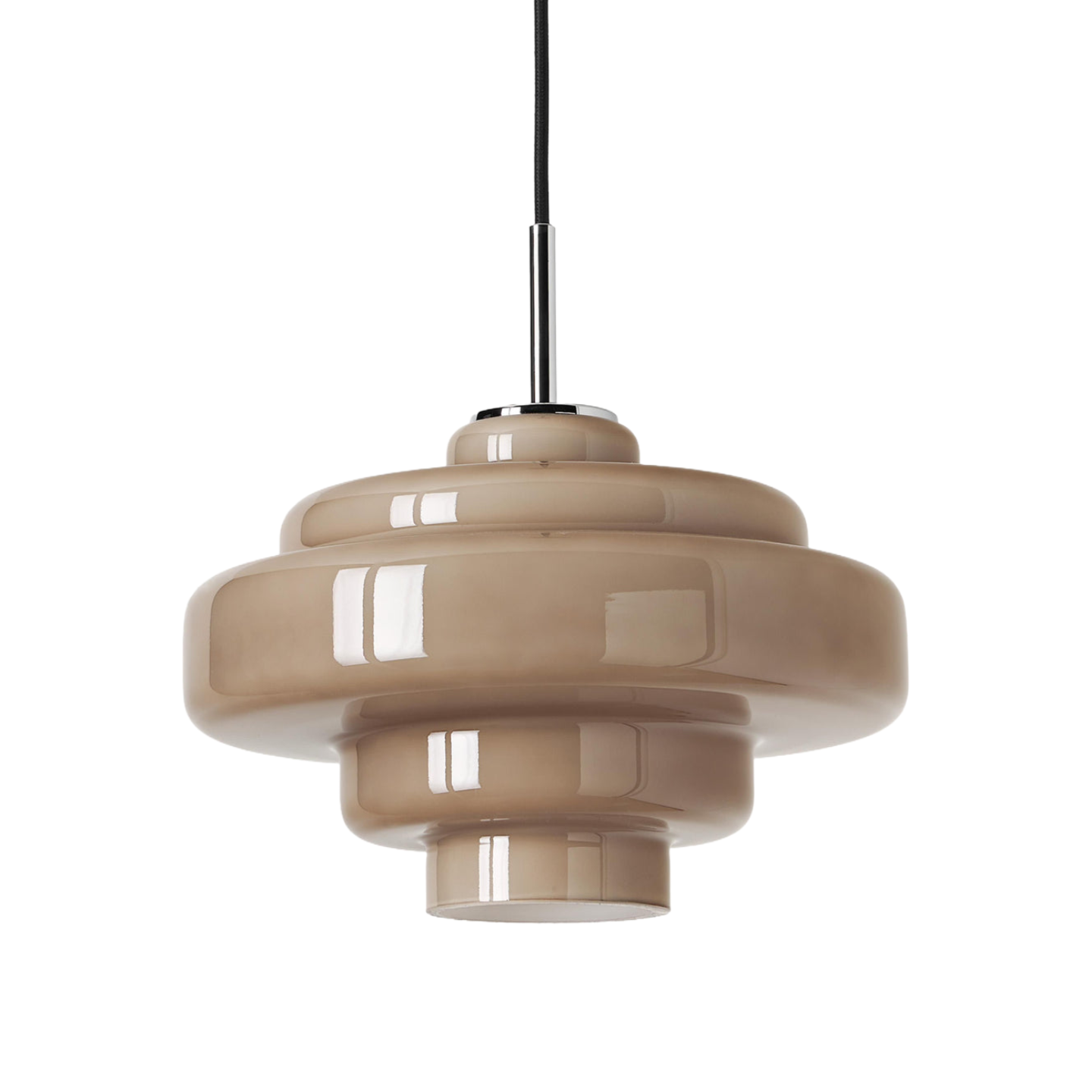
The Koloro Millie makes the question unusually visible. Its orange glass, rounded stacked profile and small chrome details behave like a suspended object before they behave like illumination. The shade gives a plain ceiling some shape at noon, then changes character when the bulb warms the glass after dusk.
The Noon Test Comes Before the Bulb Test
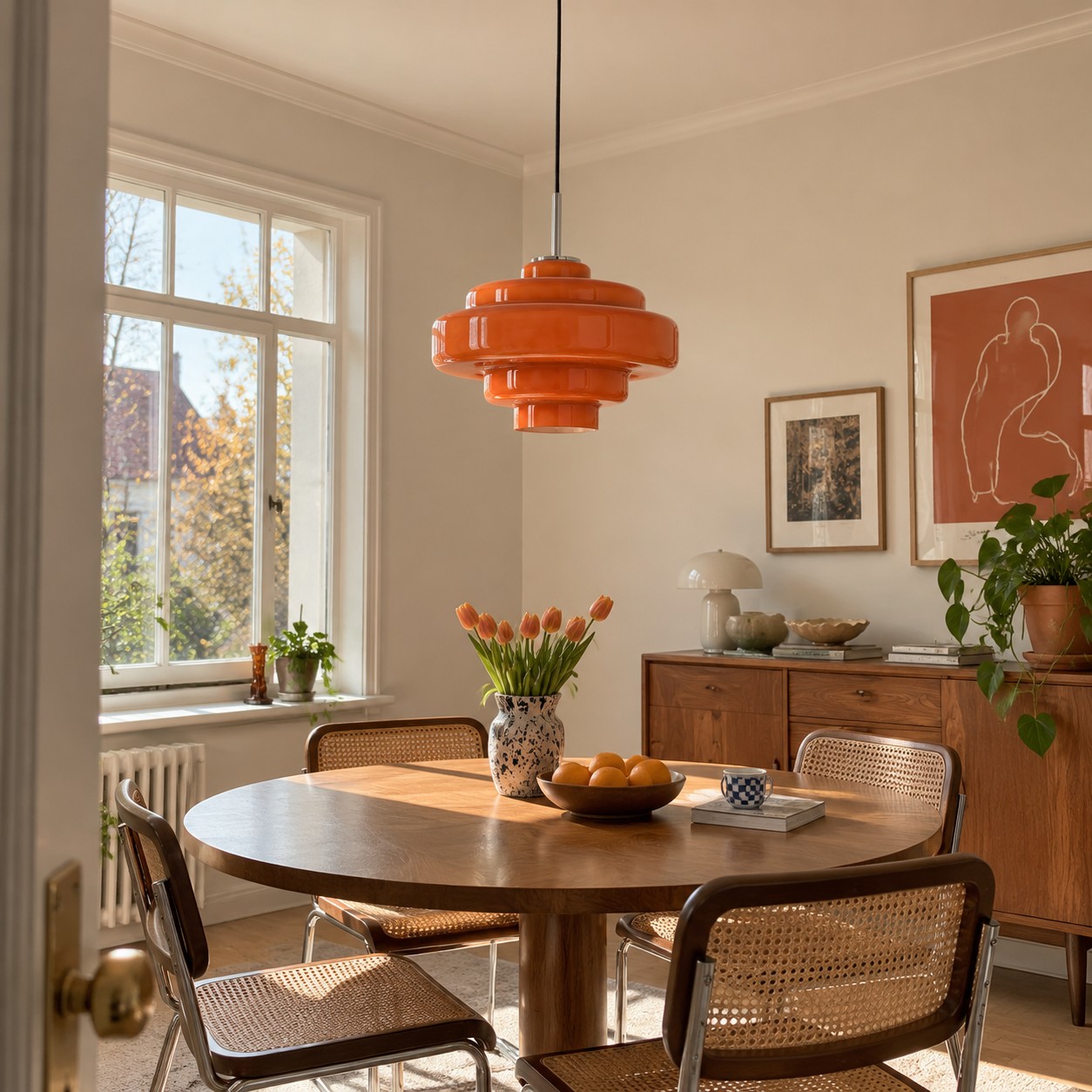
Turn off every light and look from the room's main entrance. The pendant should form a clear silhouette without slicing awkwardly through a window, tall cabinet or piece of art. Next, sit where the fixture will be seen most often. If the bottom edge crowds the view, the problem is height or position rather than colour.
Photograph three conditions: morning daylight, late-afternoon side light and the unlit room at dusk. Chrome may almost disappear in flat light and become lively beside a window. Orange glass may read fresh against white, earthy beside timber or muddy against a similarly saturated wall.
A 30 cm paper circle is enough to test the Millie's diameter. Hang it from the proposed ceiling point and walk around the furniture. The mock-up will reveal whether the shade has presence, disappears or feels too close to eye level long before an electrician arrives.
Check the Koloro's 30 cm shade before making the mock-up
Four Rooms Where the Unlit Shape Can Earn Its Keep
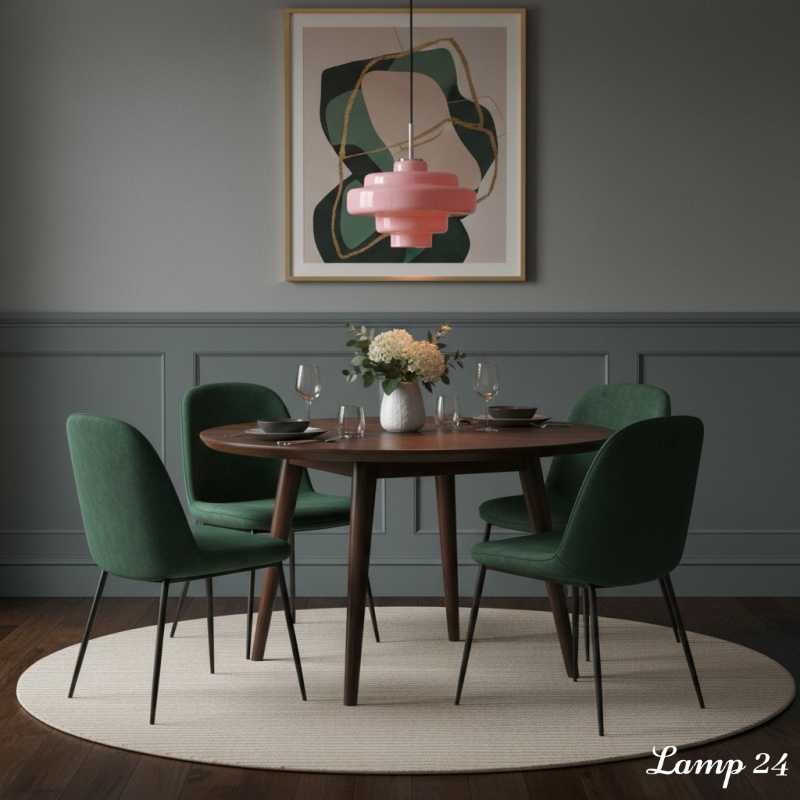
1. Above a Small Table, Let the Shade Behave Like Furniture
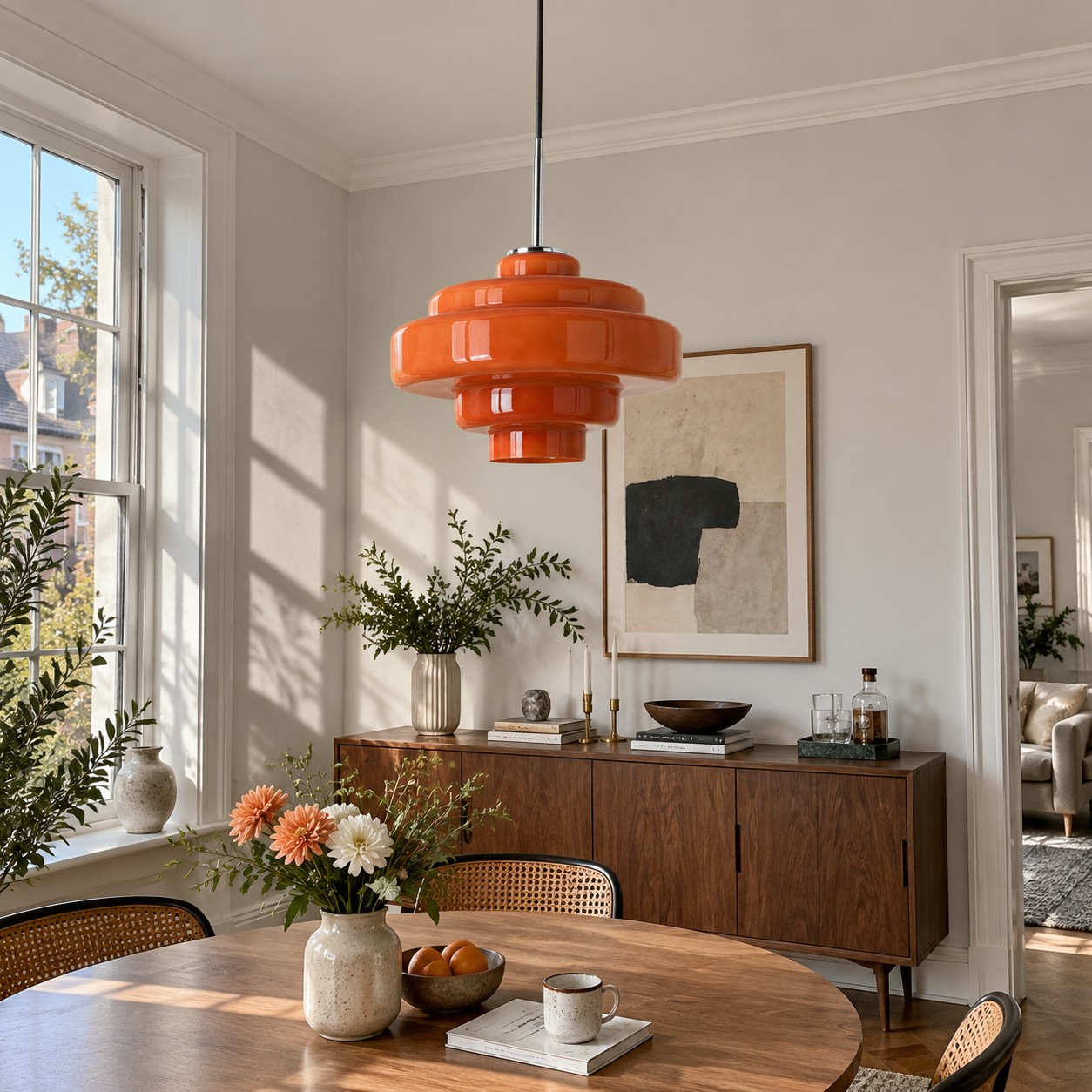
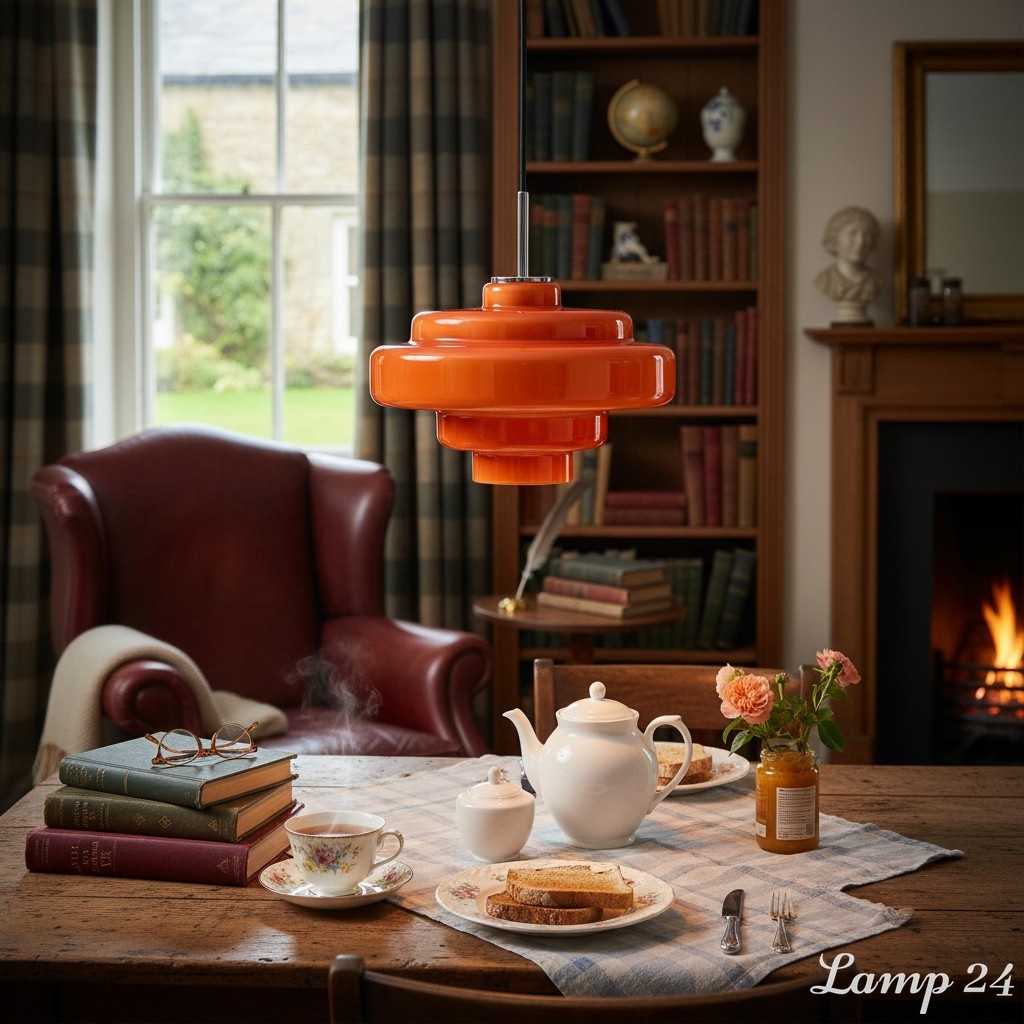
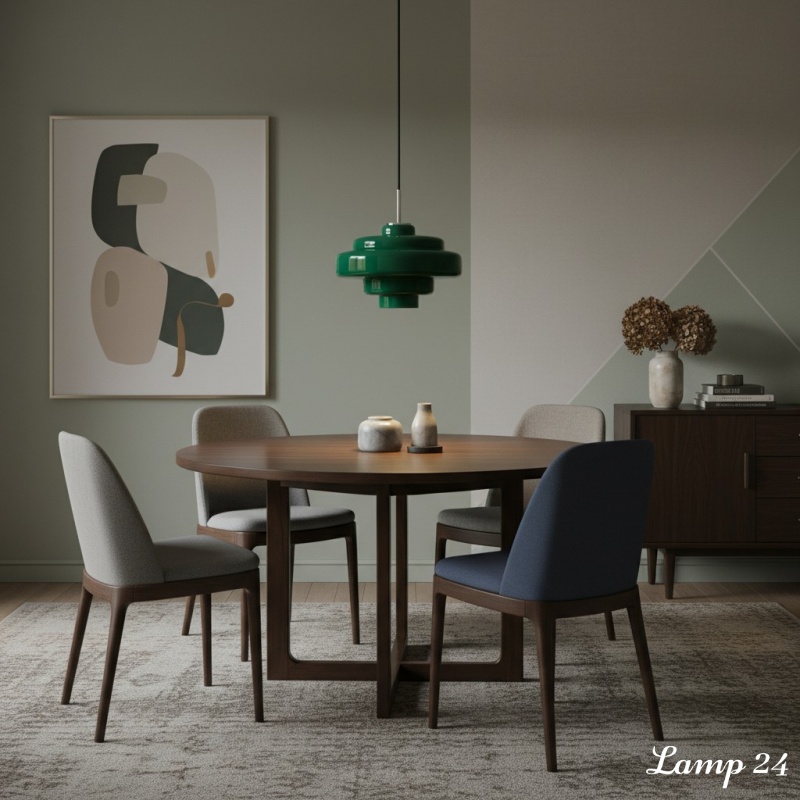
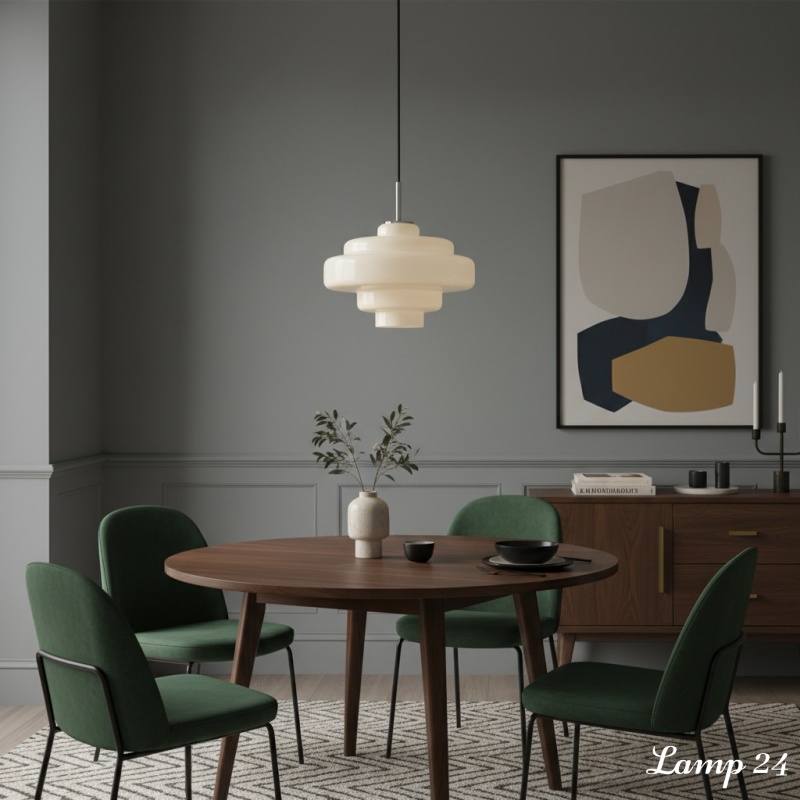
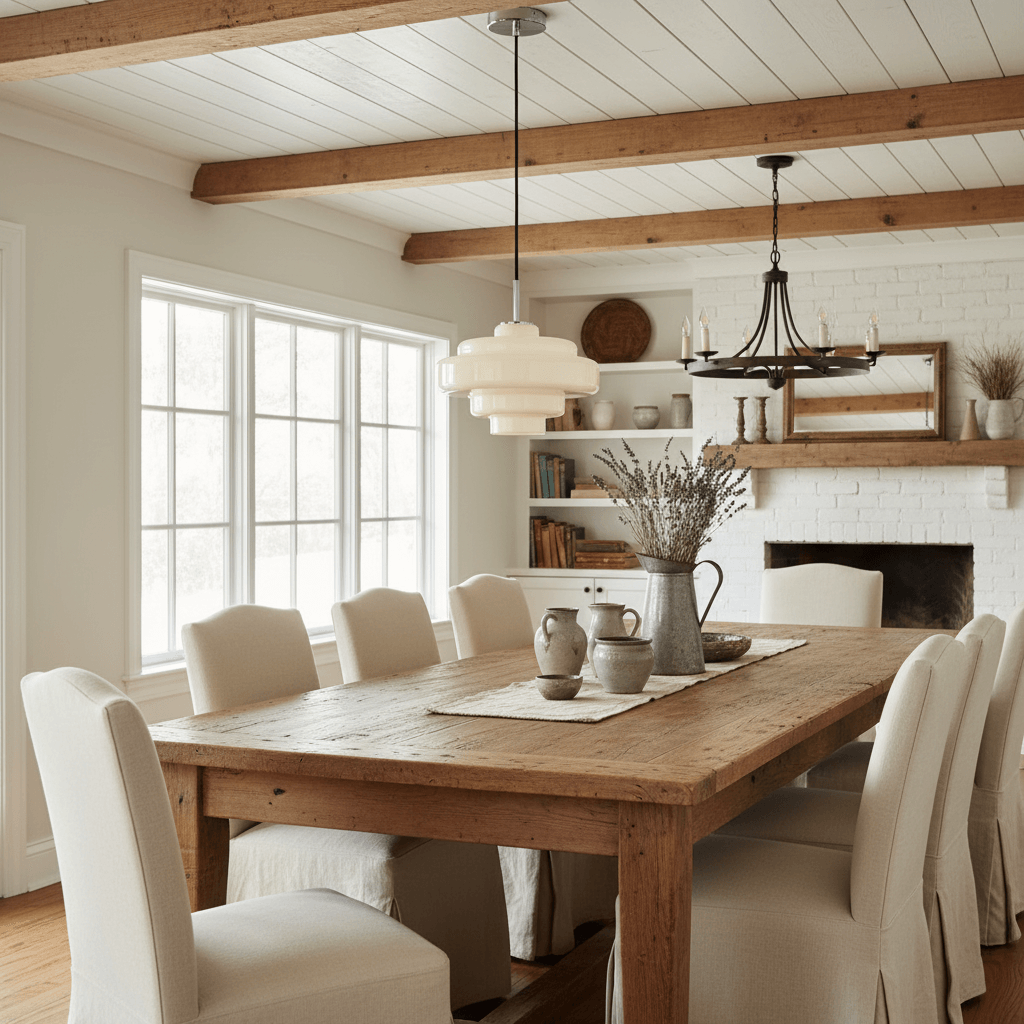
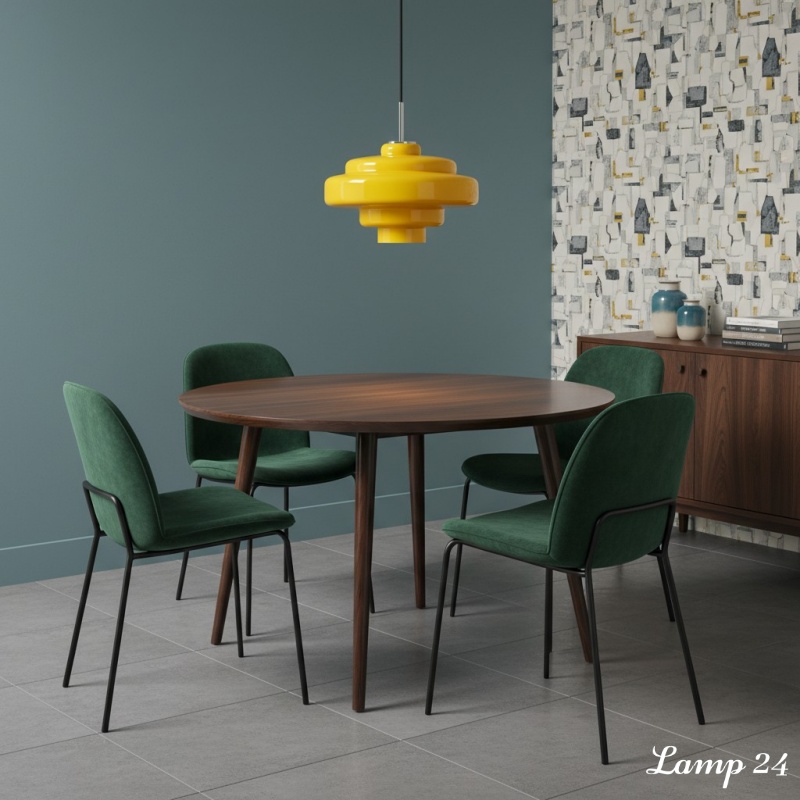
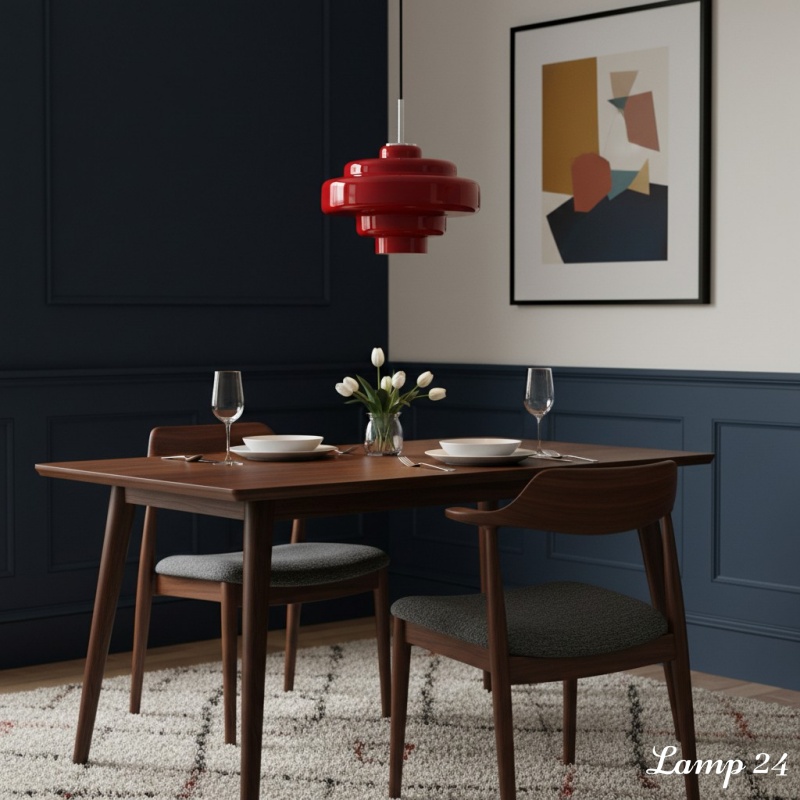
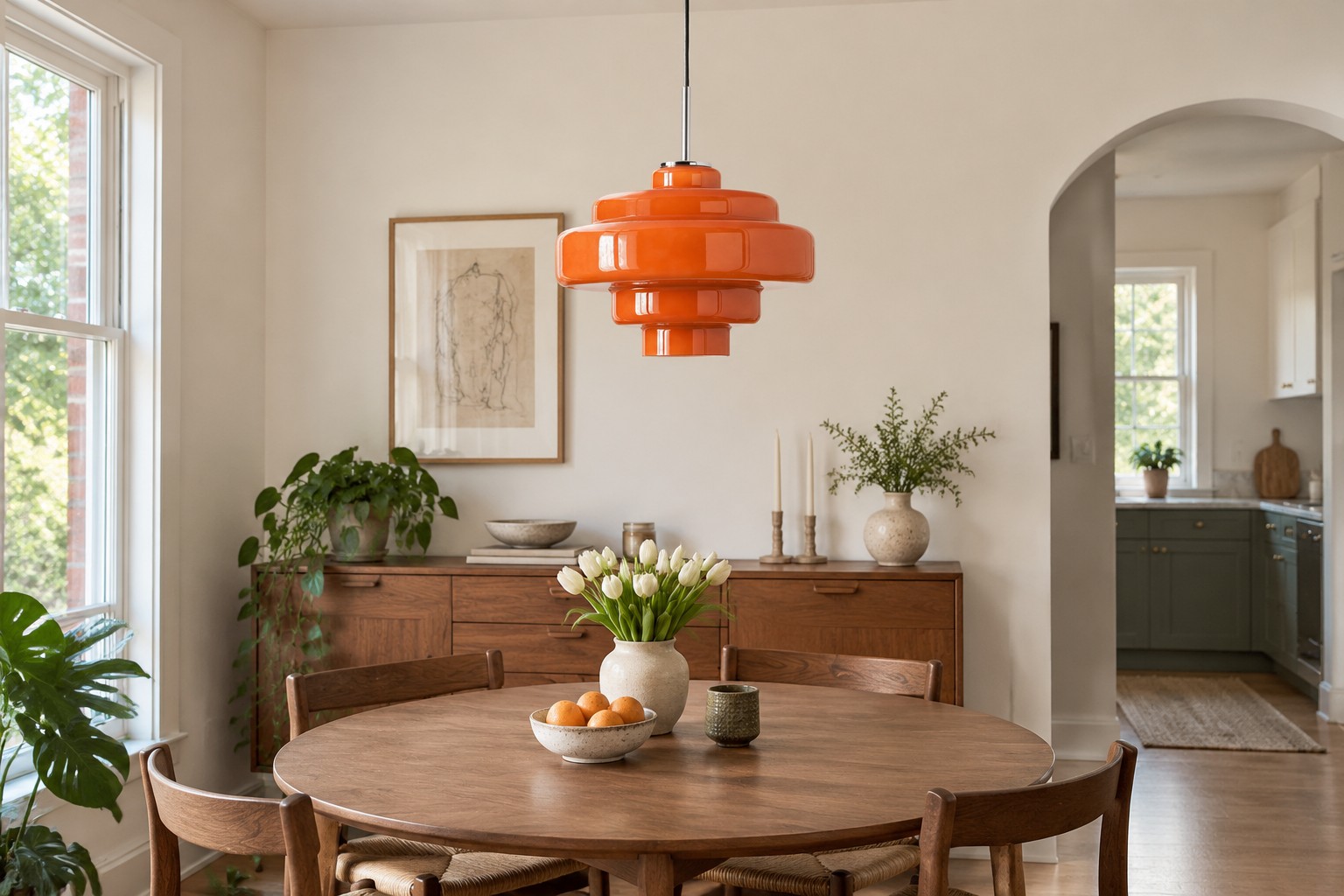
A round or compact dining table gives the pendant a natural anchor. The shade can echo the table's curve or soften a square top, while the orange glass supplies one controlled note of colour. Keep the lamp comfortably narrower than the surface below and preserve the view across the table.
2. Beside a Sideboard, Build a Vertical Composition
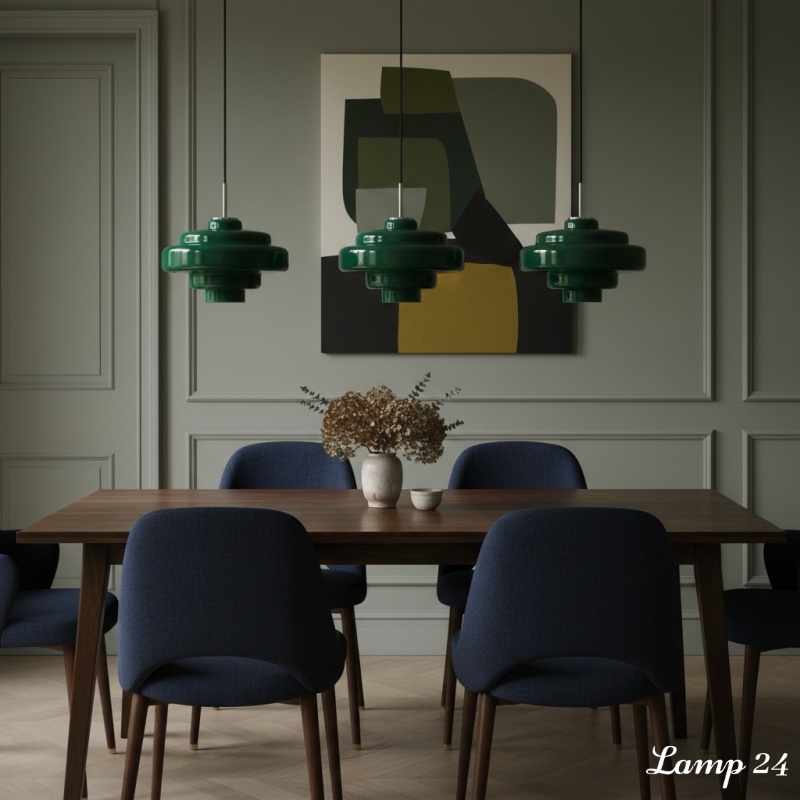
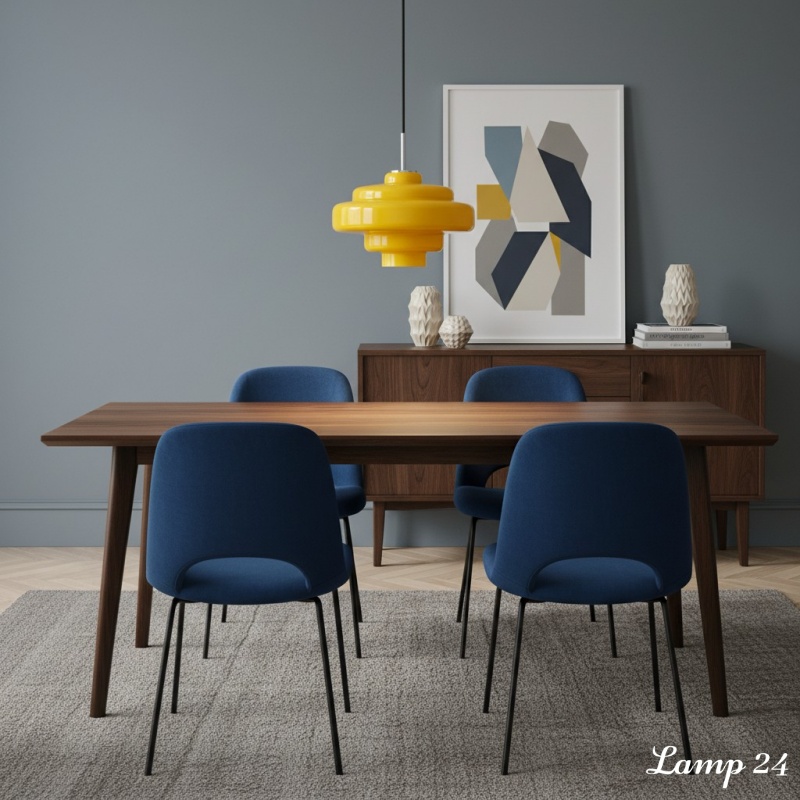
Where the ceiling point allows, a pendant can mark a sideboard, drinks station or display surface without occupying floor space. Align it with the furniture rather than with the whole wall. Leave enough distance from artwork so the two objects do not compete for the same patch of air.
3. On a Landing, Design for Two Directions at Once
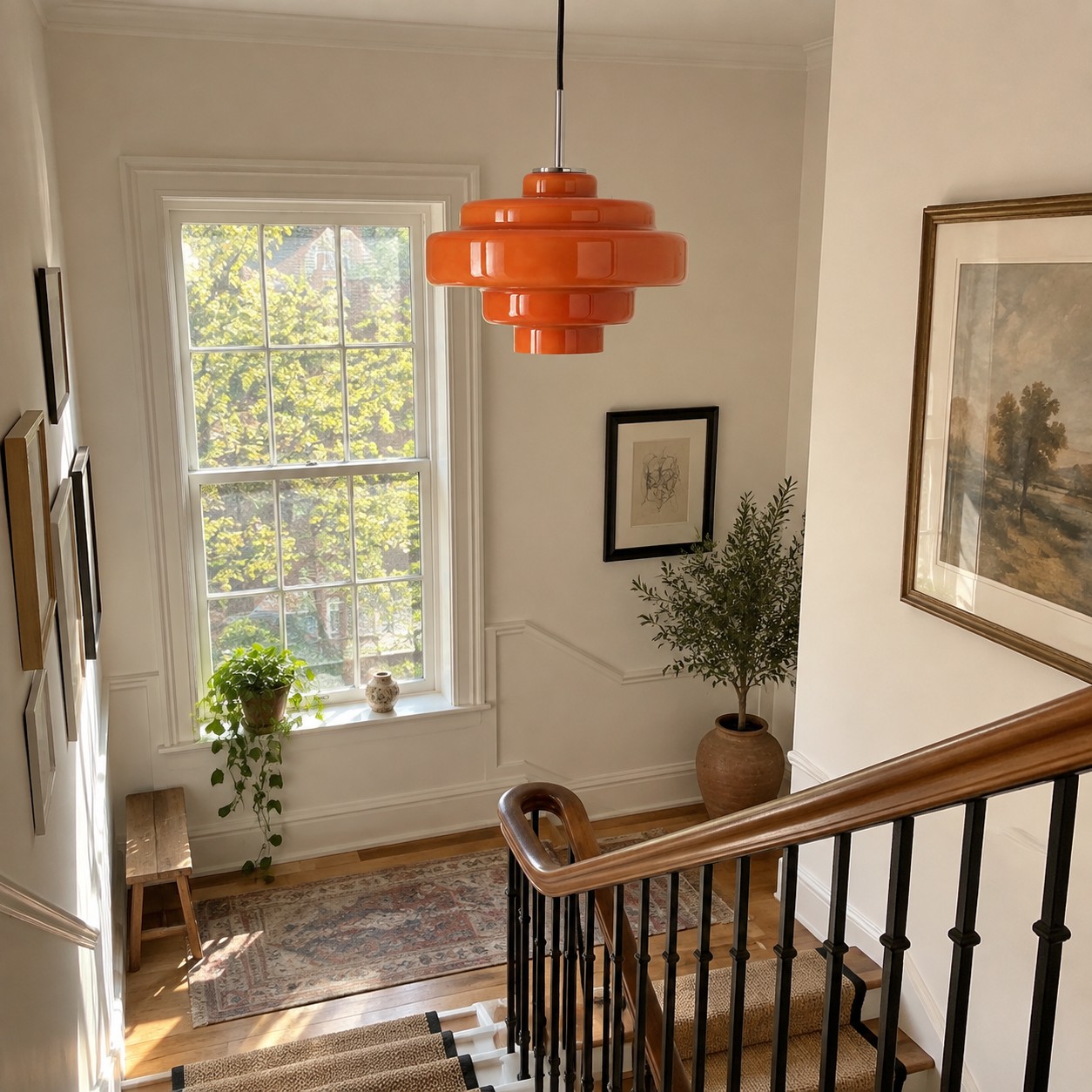
A stair landing is viewed from below and above, which makes silhouette unusually important. The Lamp That Turns a Forgotten Landing into a Visual Pause deals with the circulation test in detail. Here, concentrate on whether the unlit shade frames the stair turn without masking rails, windows or wall art.
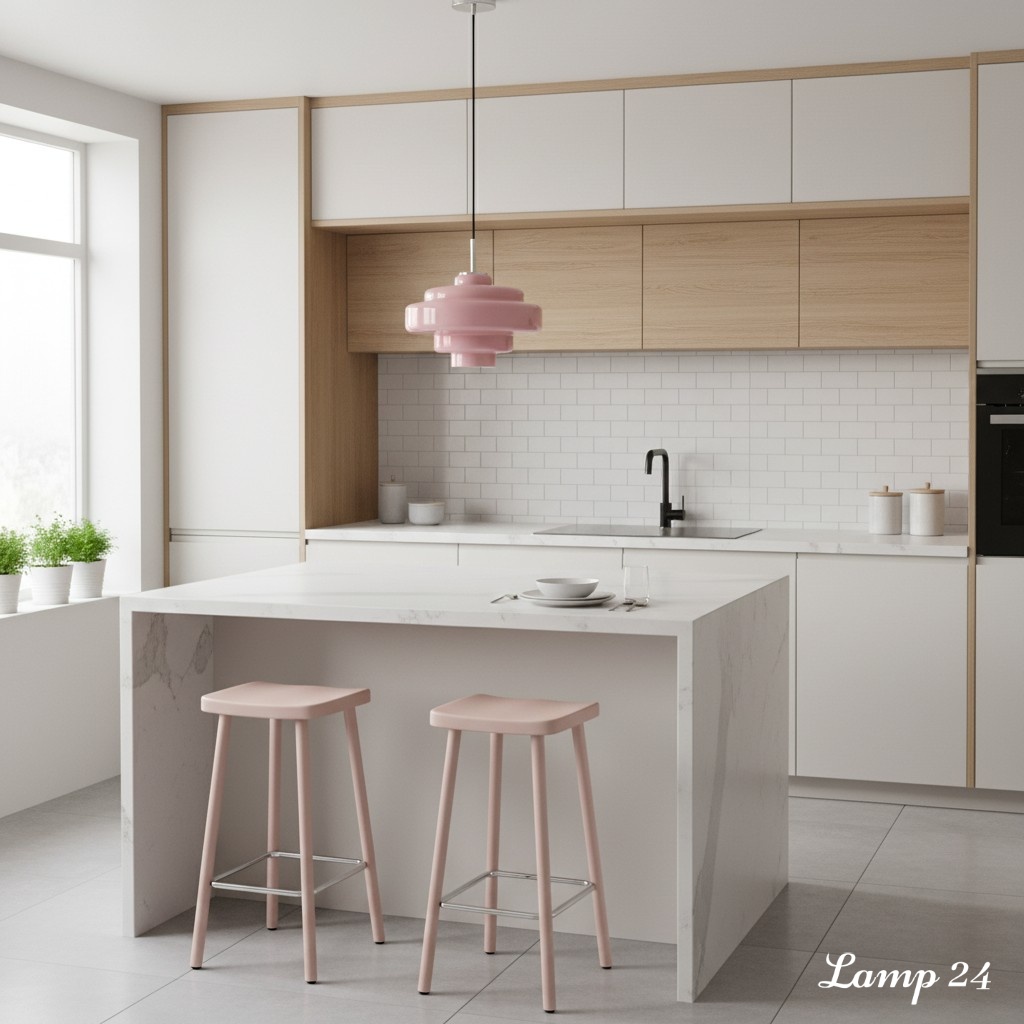
4. Over a Breakfast Counter, Give Daylight Something Warm
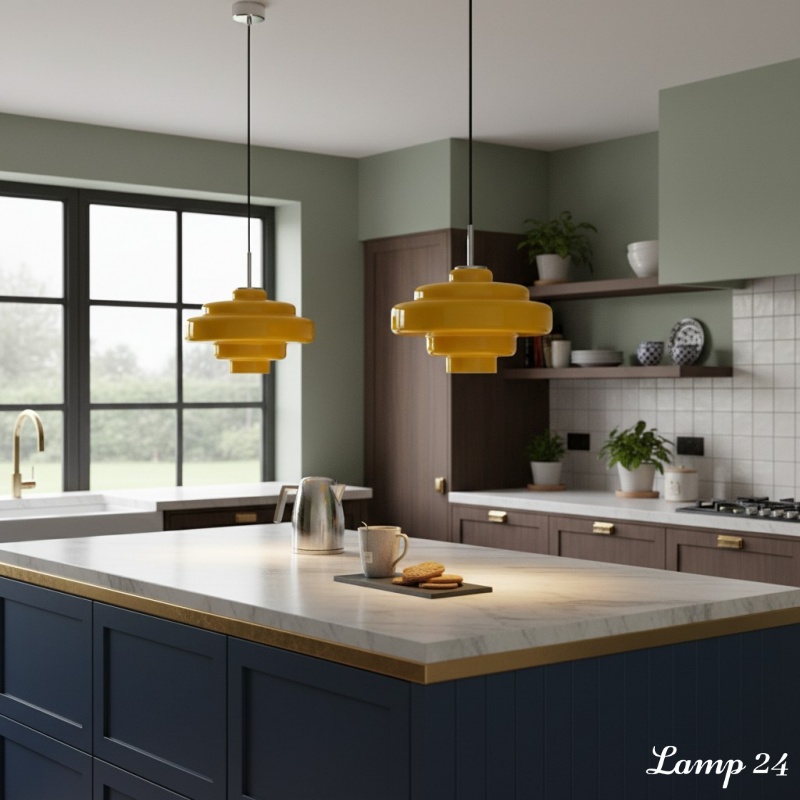
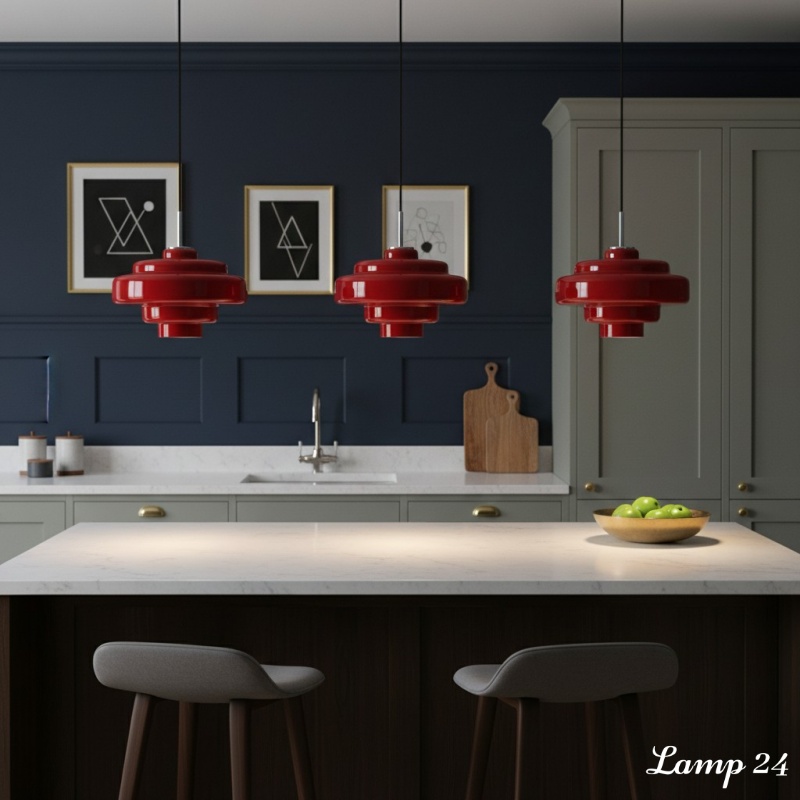
In a pale kitchen, orange glass can soften a white ceiling even before the lamp is switched on. Position it over seating or a coffee station rather than the busiest preparation area. The fixture then reads as a social marker while task lighting handles knives, chopping and cleaning.
A Beautiful Object Still Needs a Lighting Plan
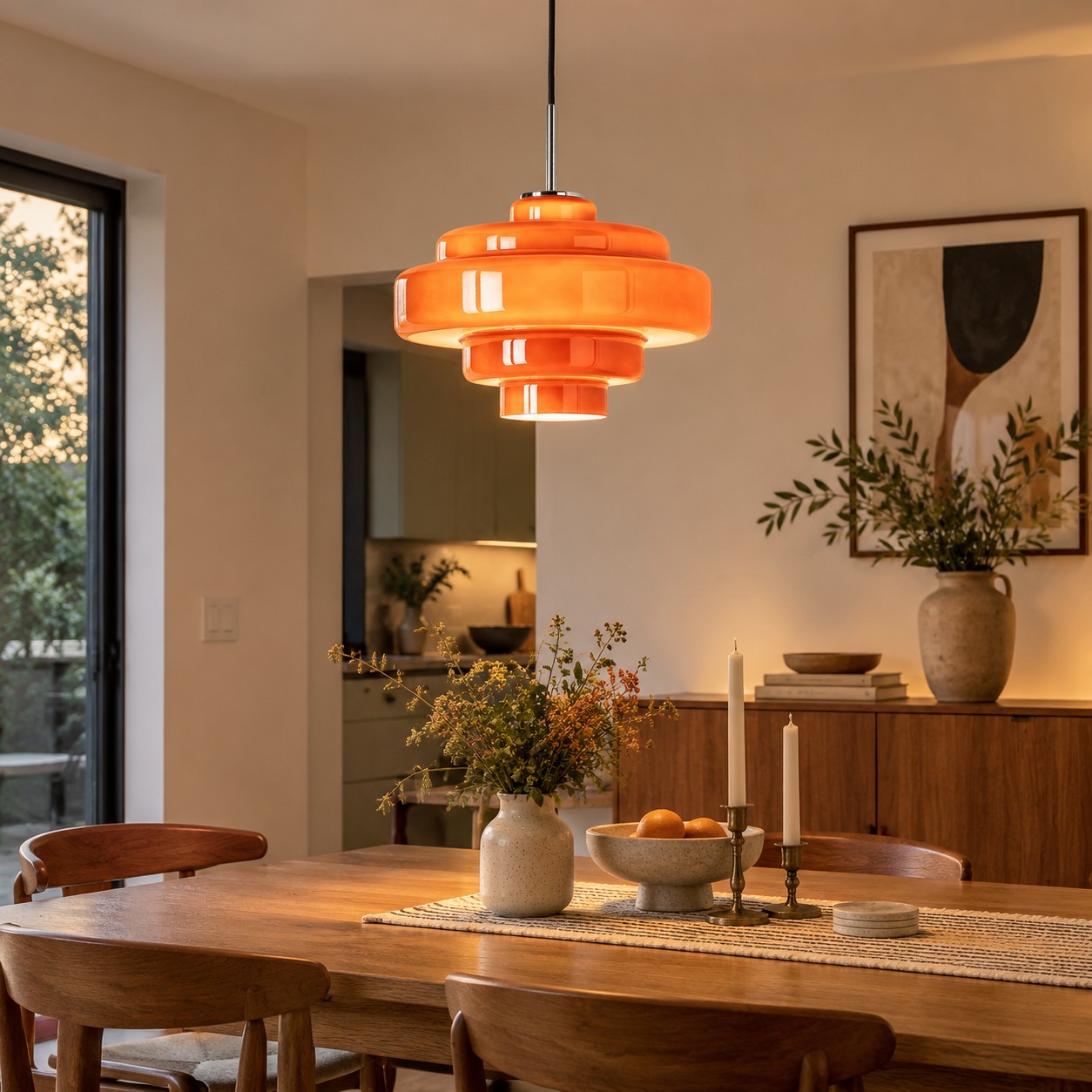
Livingetc's pendant lighting guide describes pendants as a way to bring texture, colour and warmth into a room, but it also distinguishes between focused task light and an ambient effect. That distinction protects this design from disappointment. Let the Koloro be the decorative and atmospheric layer; use other sources to make the table, worktop or stairs genuinely useful.
A warm evening can come from several modest sources rather than one bright centre. Light a wall, the underside of a cabinet or a reading zone. The pendant will appear richer because the eye can move through the room instead of being pulled towards a single exposed bulb.
Compare the Koloro's orange glass, chrome hardware and black textile cord
Walk the Room in Three Views
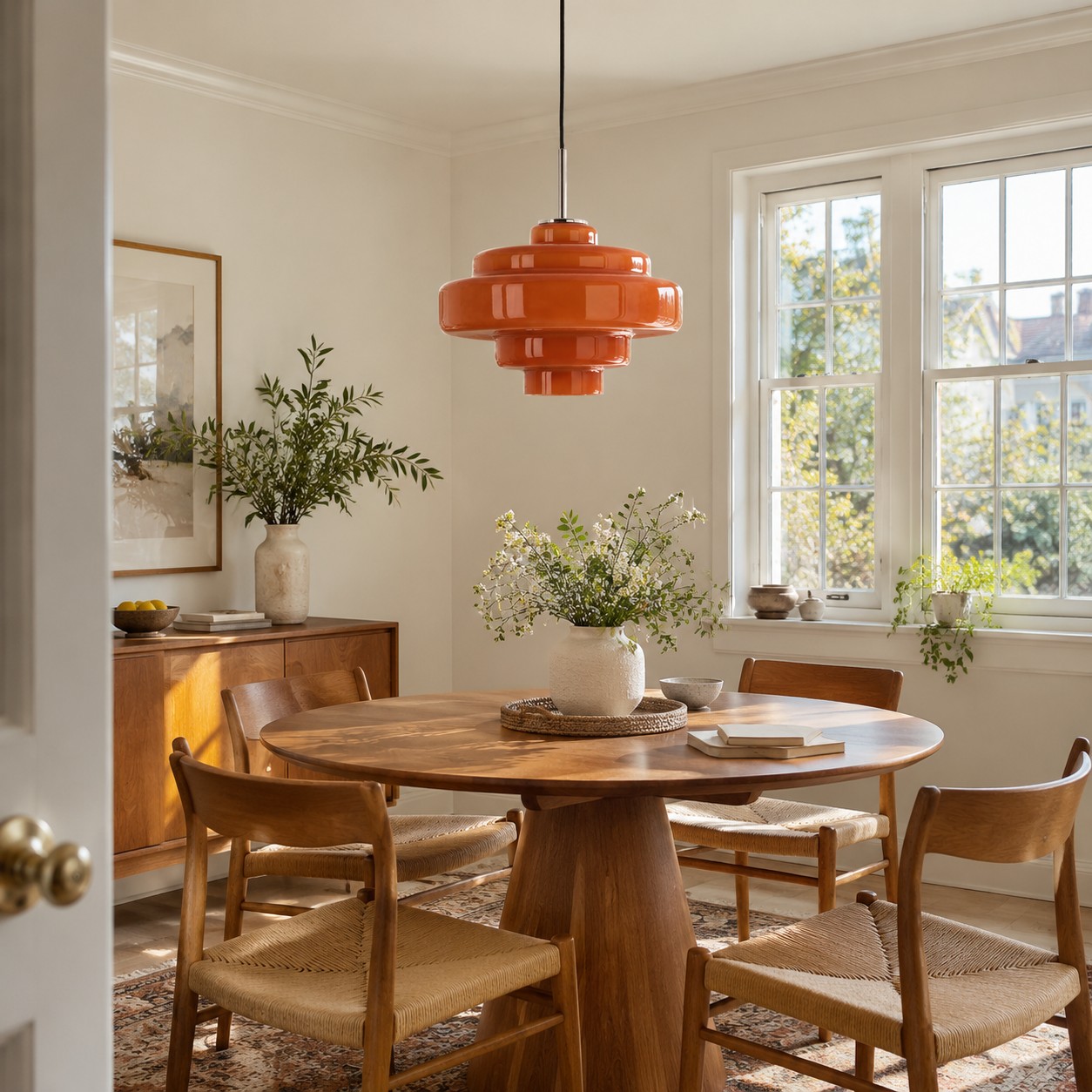
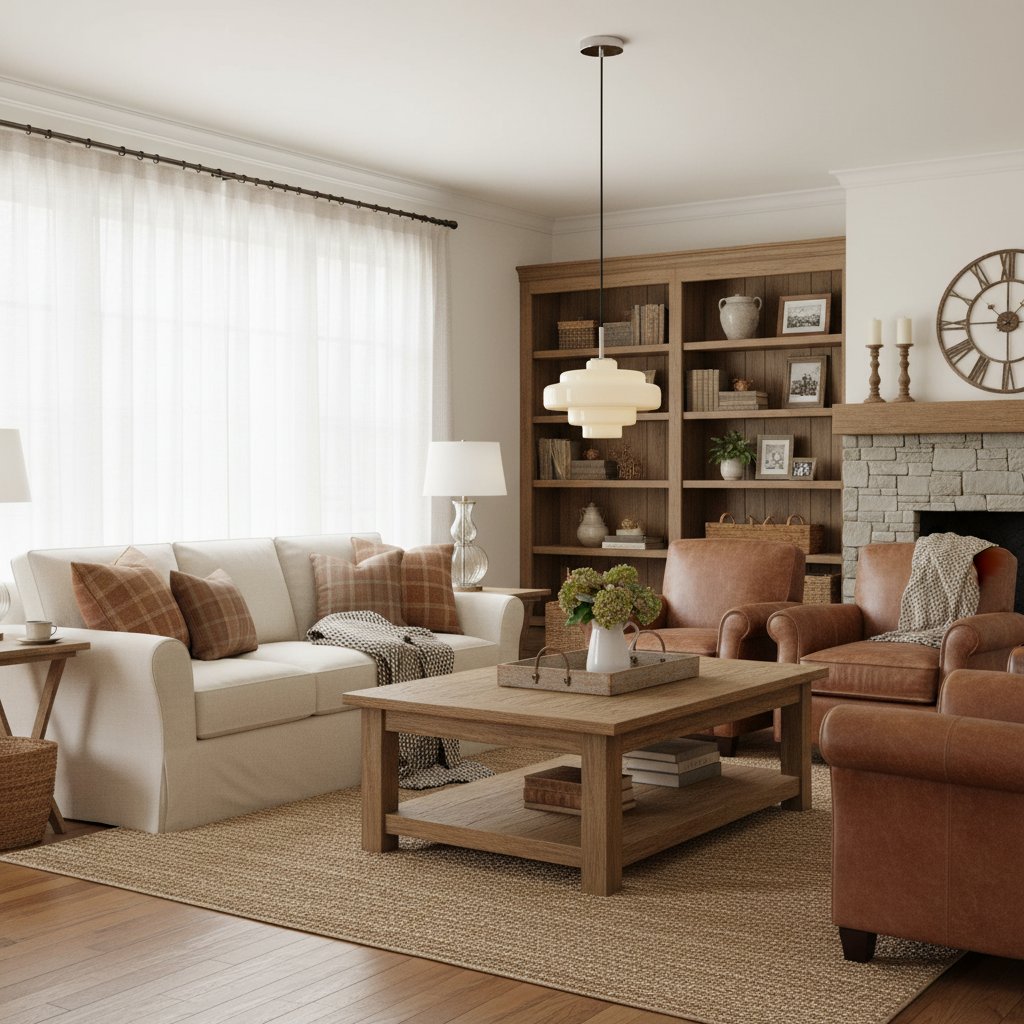
Start at the doorway: does the lamp give the room a centre? Sit down: is the bulb or lower edge in the direct line of sight? Move to the working position: does the shade obstruct a cabinet, screen or conversation across the surface below? A few centimetres of adjustment can matter more than another accessory.
The same discipline applies on stairs. Homes & Gardens notes that stair lighting should avoid glare and support visibility while also revealing architectural form. A pendant that looks sculptural when off still has to respect the route when on.
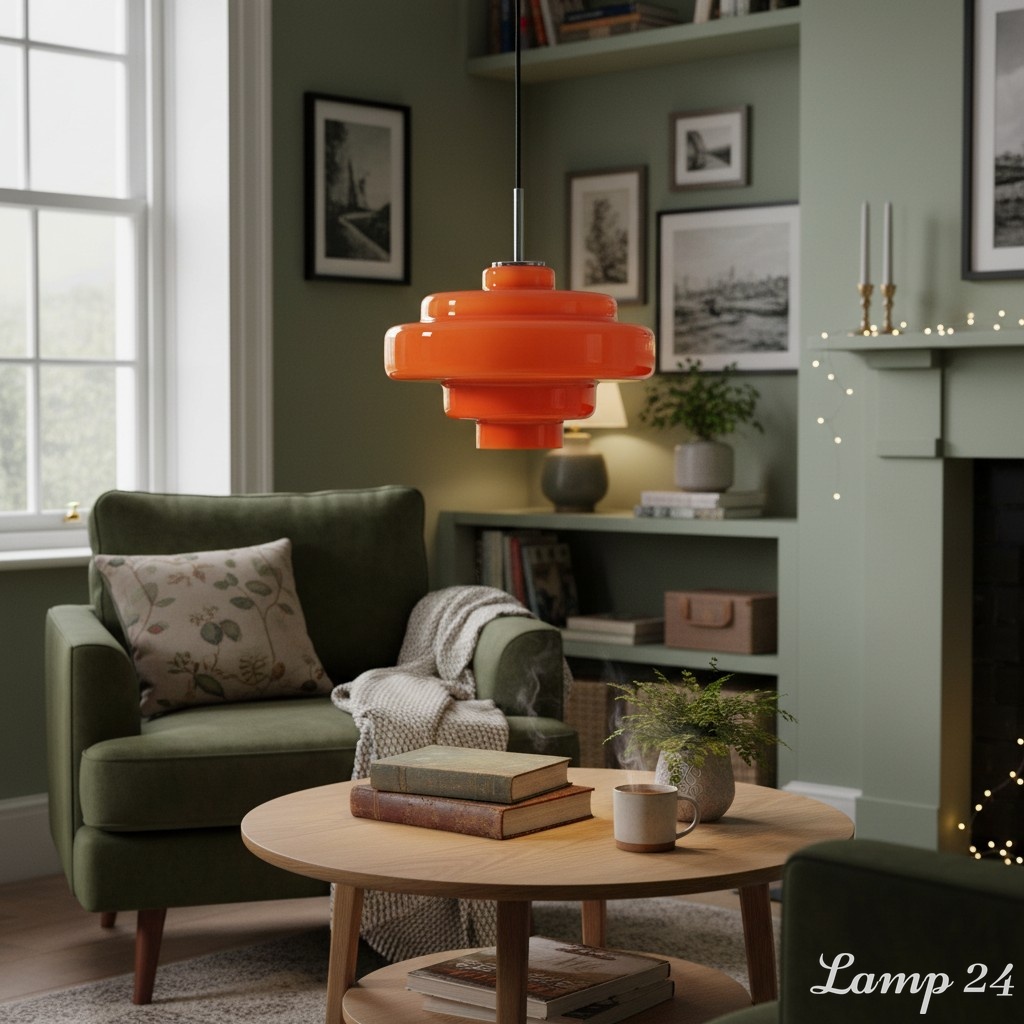
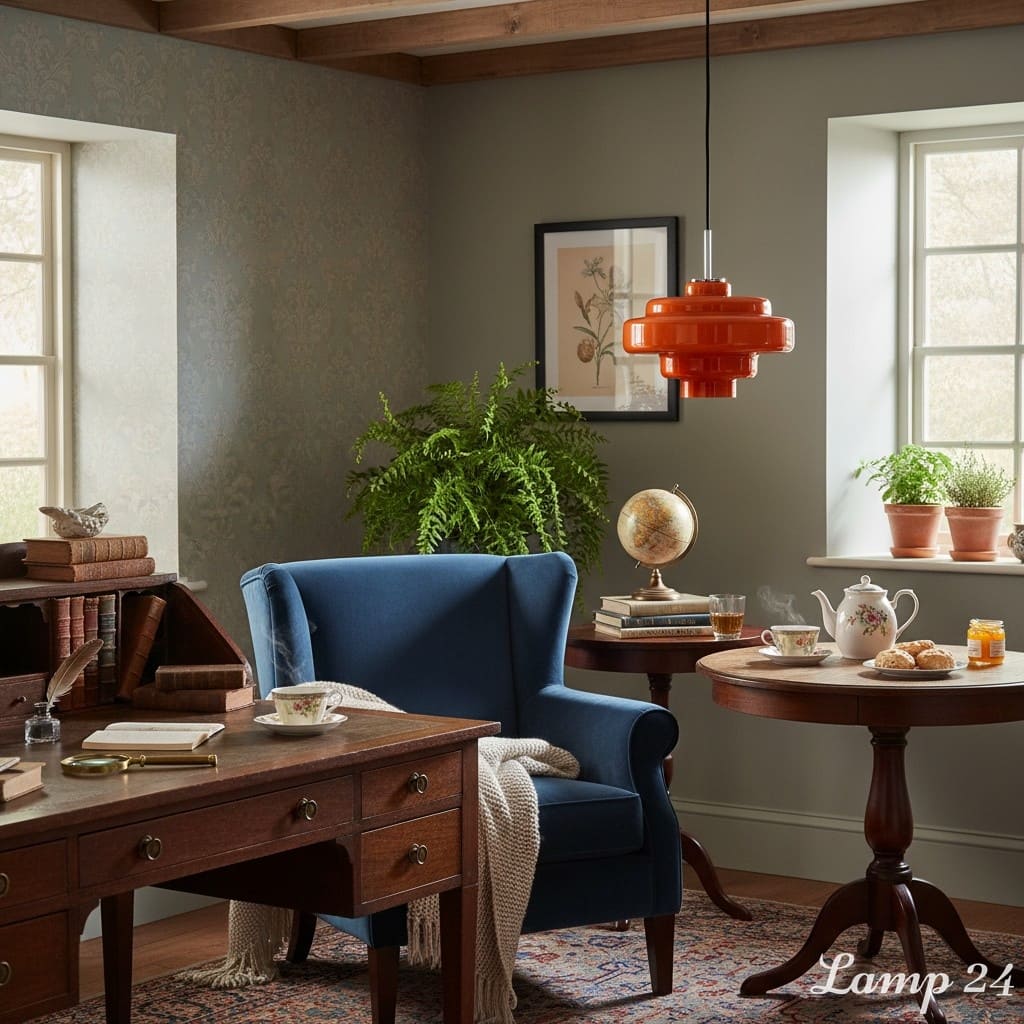
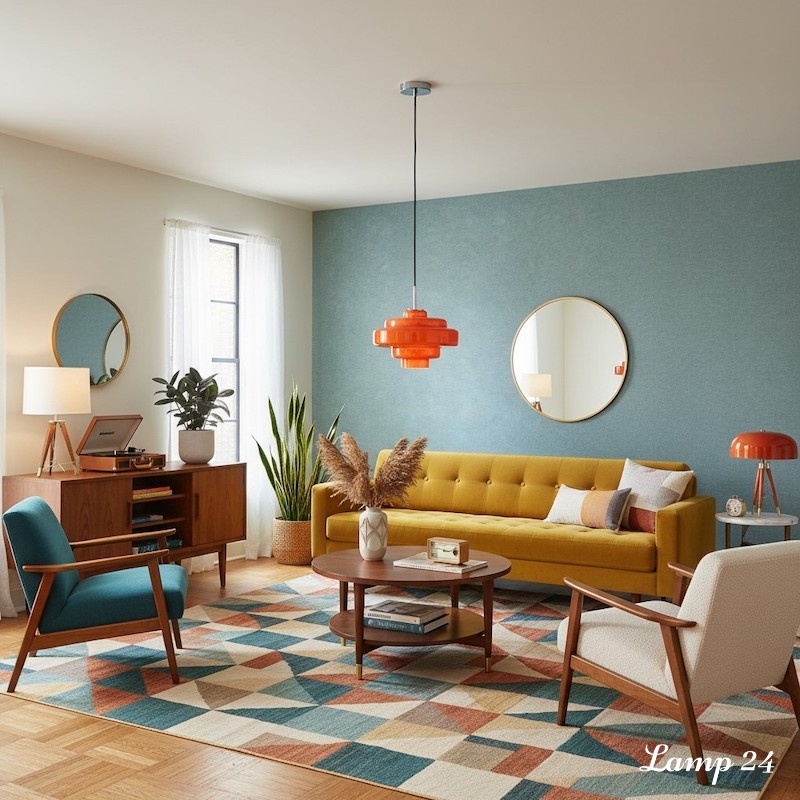
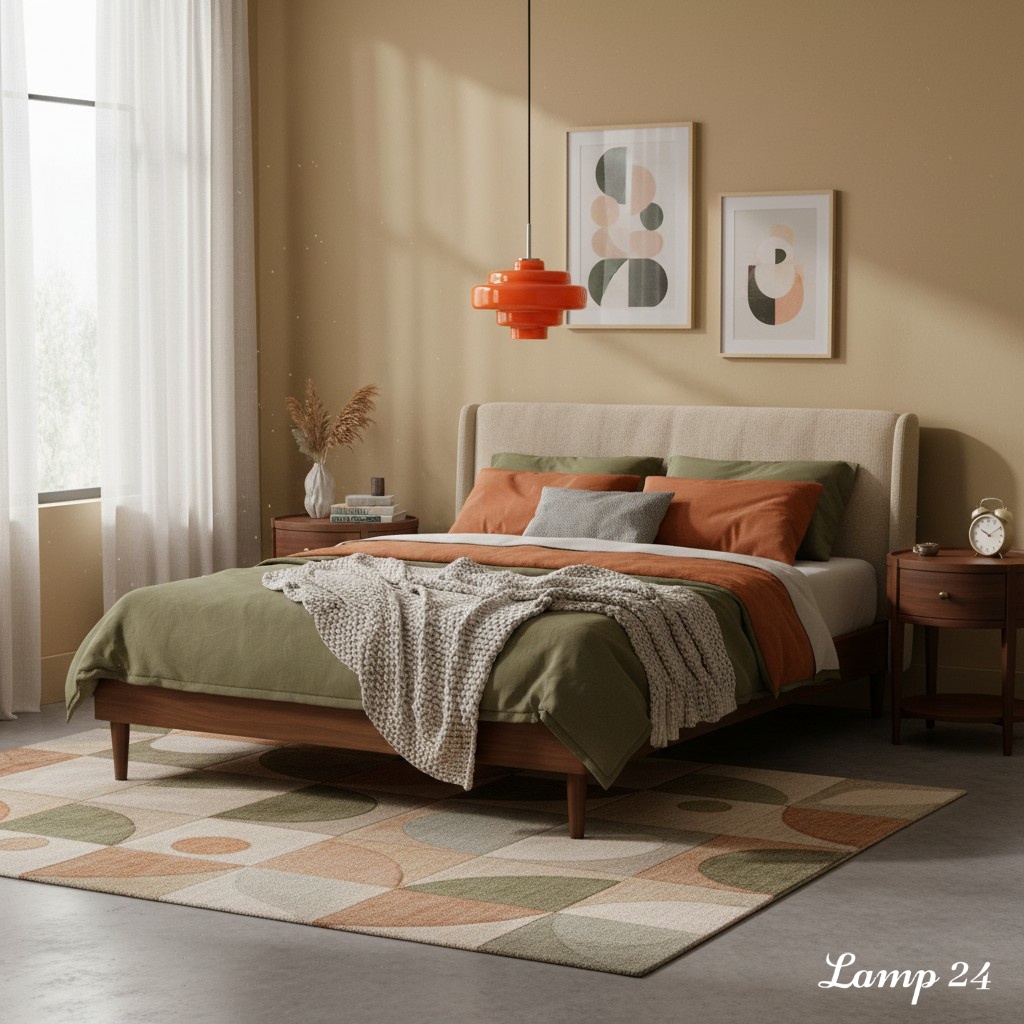
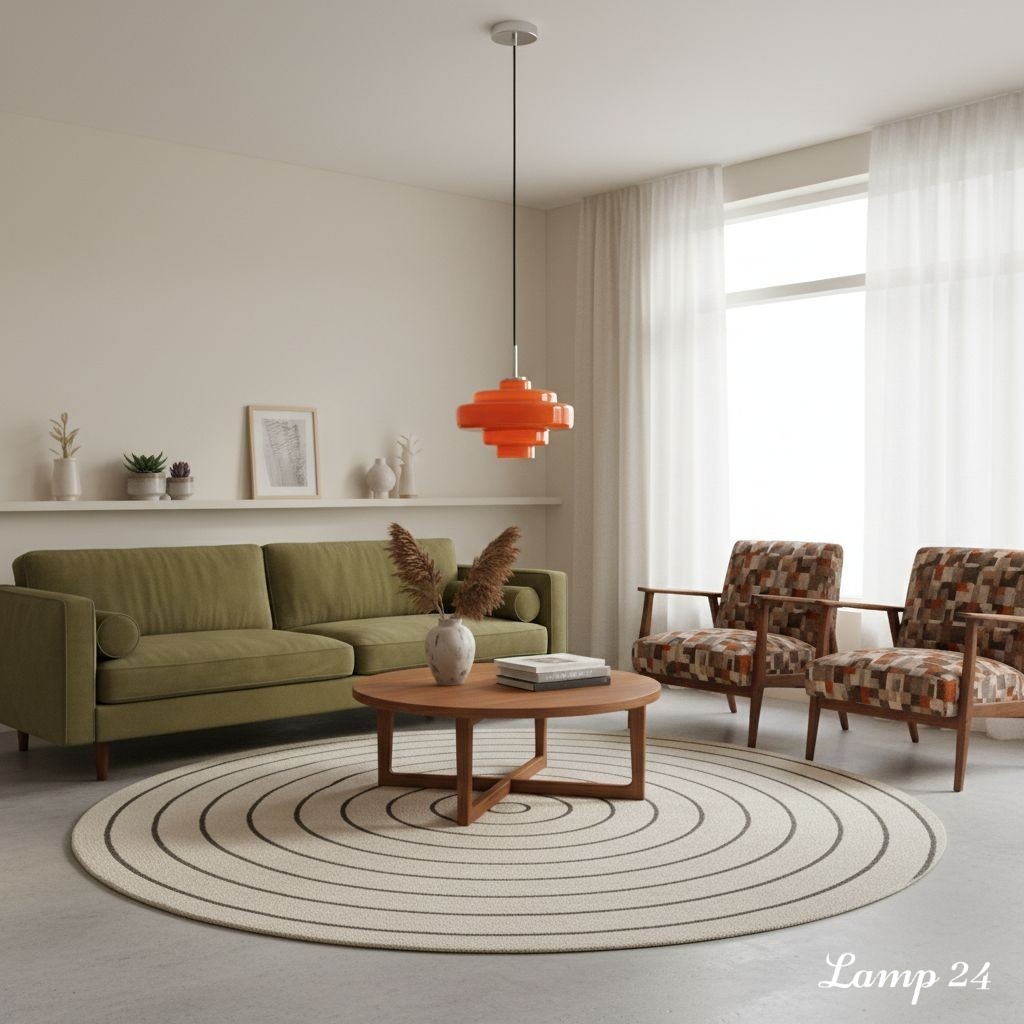
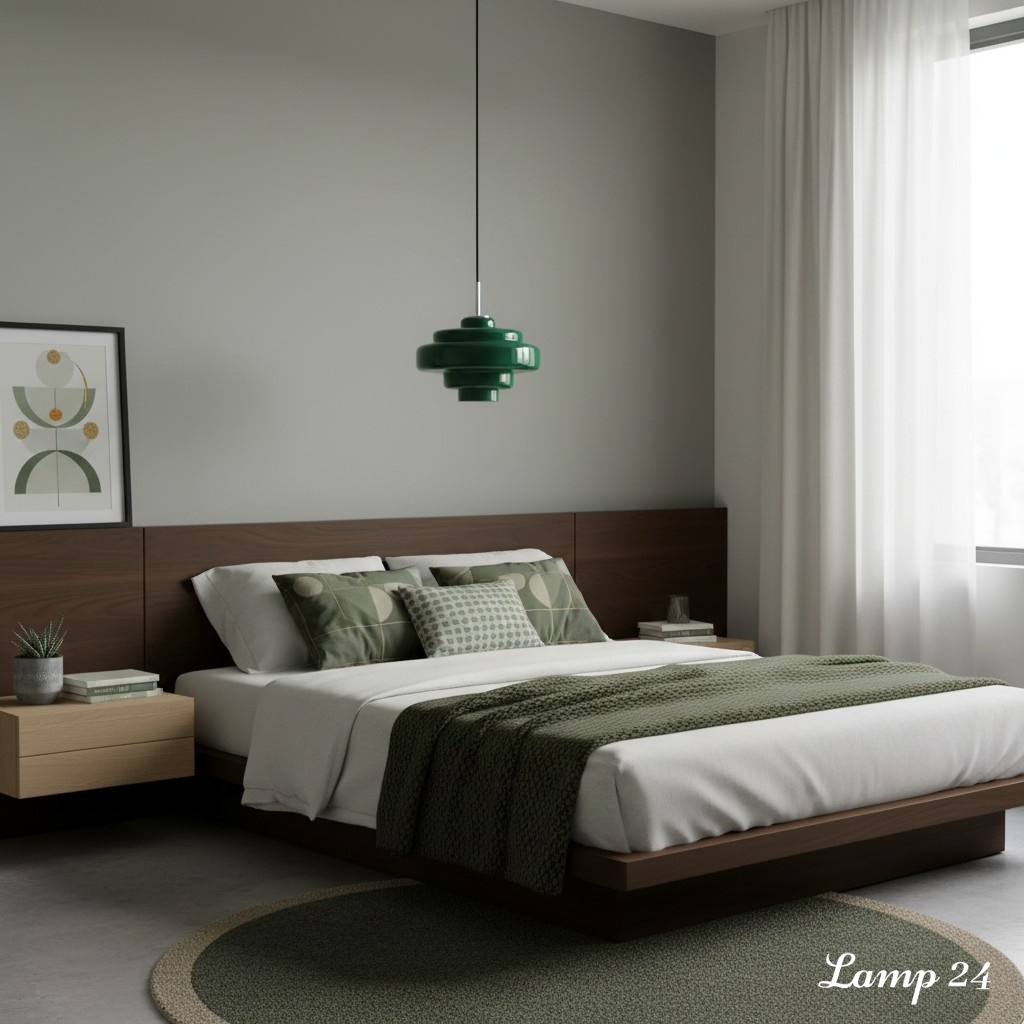
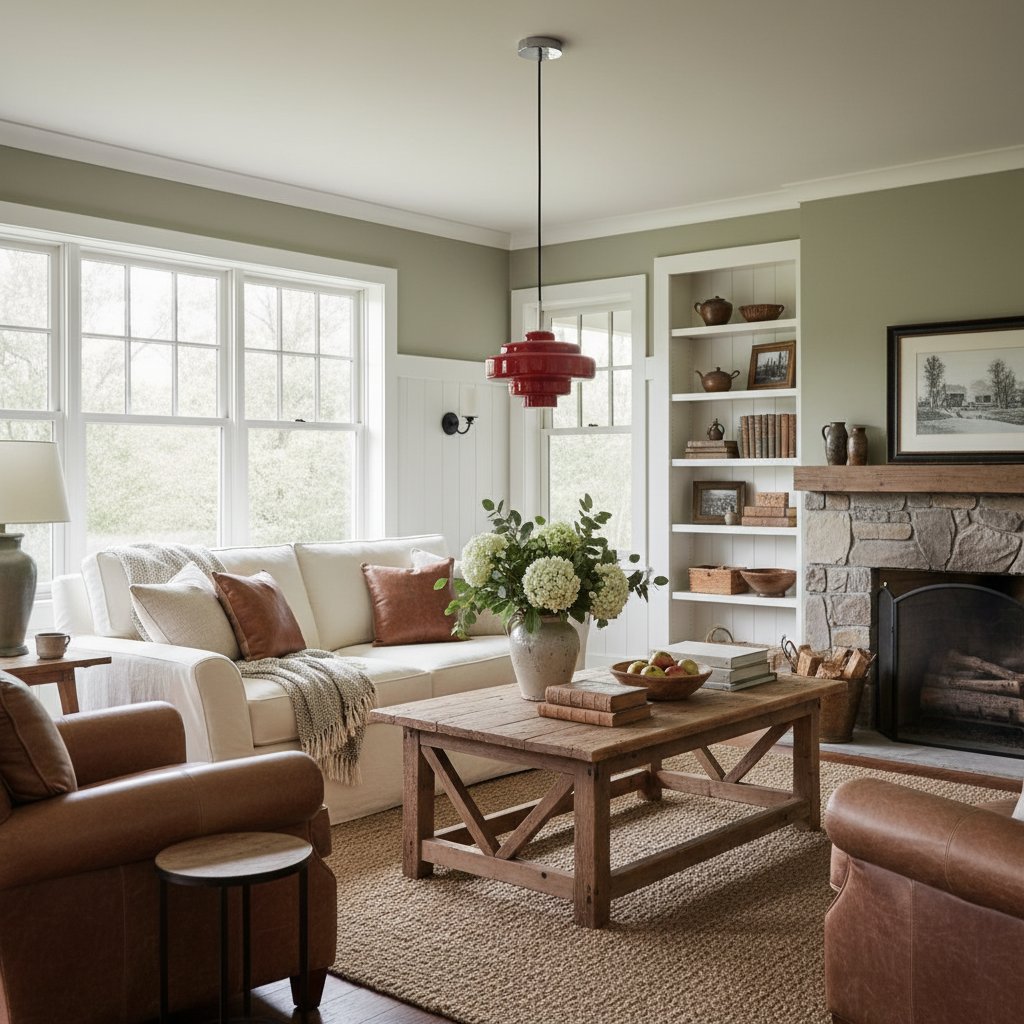
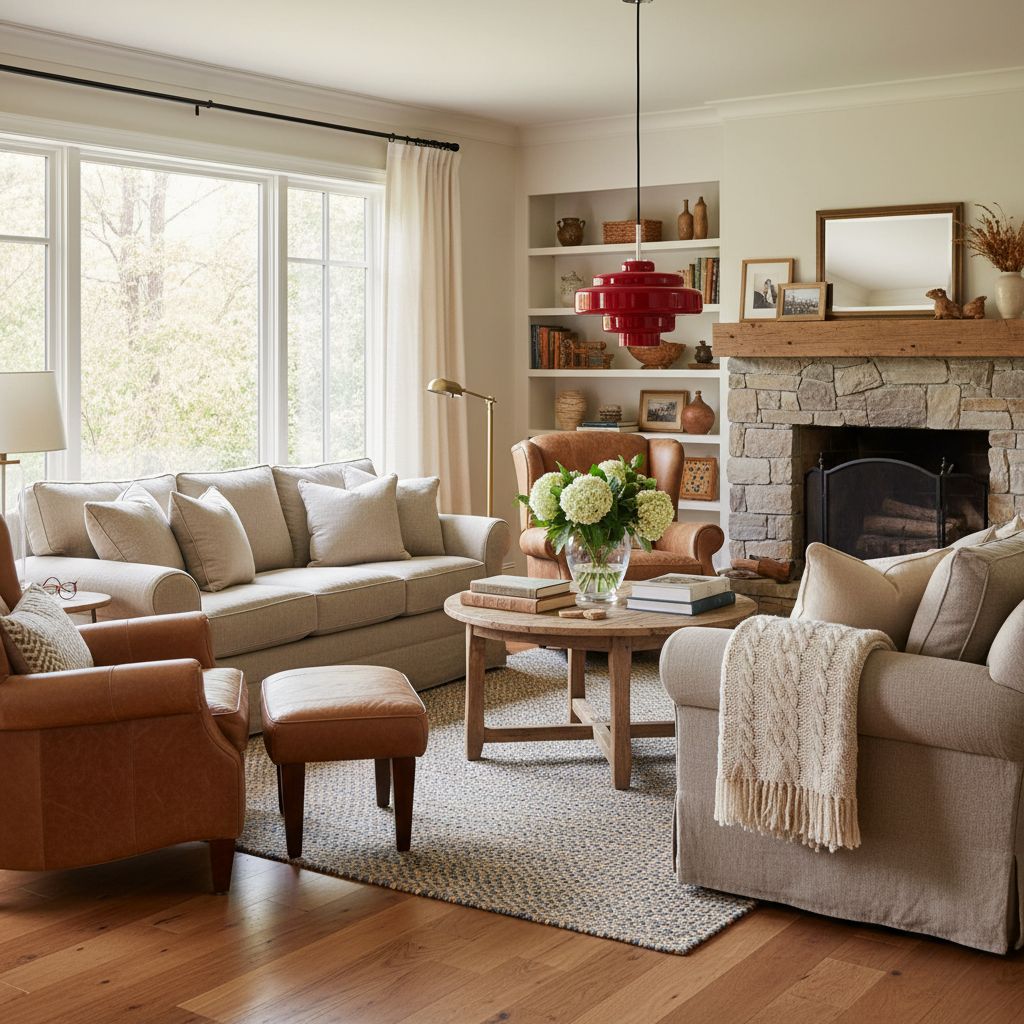
The orange glass is easiest to place when the surrounding palette stays quiet. Walnut makes it feel deeper; pale oak keeps it cheerful; grey stone sharpens the chrome; warm white walls allow the outline to remain crisp. Repeating orange in every cushion and bowl usually weakens the effect.
Four Signs It Really Is a Design Problem
- It only works from one camera angle. Move the ceiling point or choose a quieter shape.
- The bulb is painful at seated eye level. Change the drop or choose a softer, suitable bulb.
- The room becomes unusably dim. Add task and ambient layers rather than increasing one harsh source.
- The shade crowds a low ceiling. Use a flush fitting and save the pendant for a taller zone.
There is another warning in the title itself: decorative appeal cannot excuse poor installation. The Millie is hardwired, its hanging height is adjustable and the bulb is not included. The final arrangement must account for the ceiling point, furniture position, route and chosen bulb.
Where Koloro Looks Most Convincing
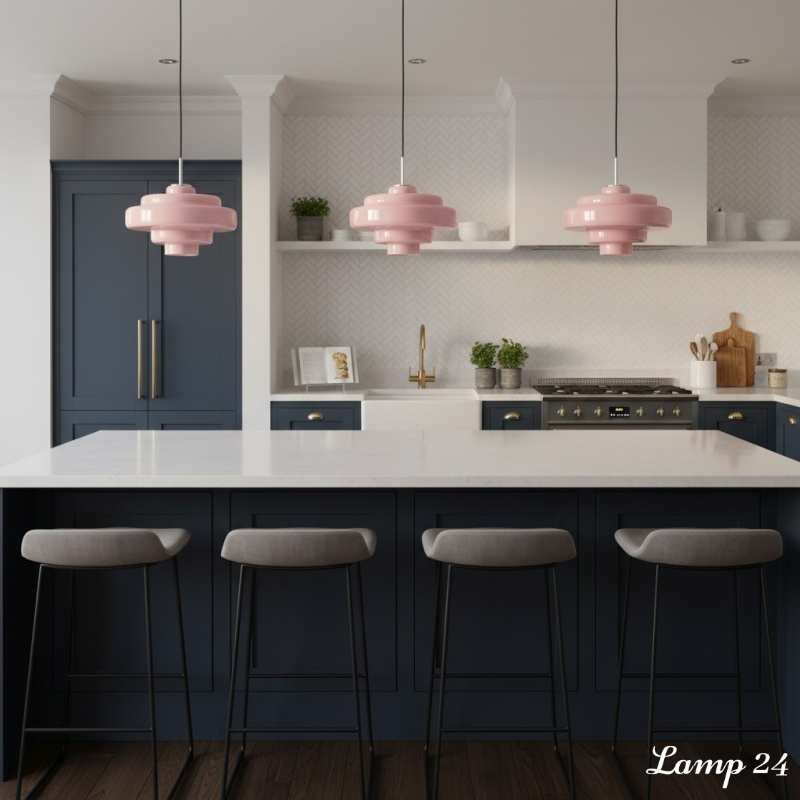
The 30 cm orange variant is strongest over a compact table, a breakfast ledge, a quiet landing or a sideboard zone. It suits rooms that need one curved object and one warm colour note. It is less persuasive over a long island where a single small shade may look lost, in a low corridor where it intrudes, or in a room with no secondary lighting.
I Hung a Mille-Feuille Above the Counter. Suddenly Everyone Wanted a Snack takes the layered shape into the kitchen and tests the point where playful form, appetite and practical counter light meet.
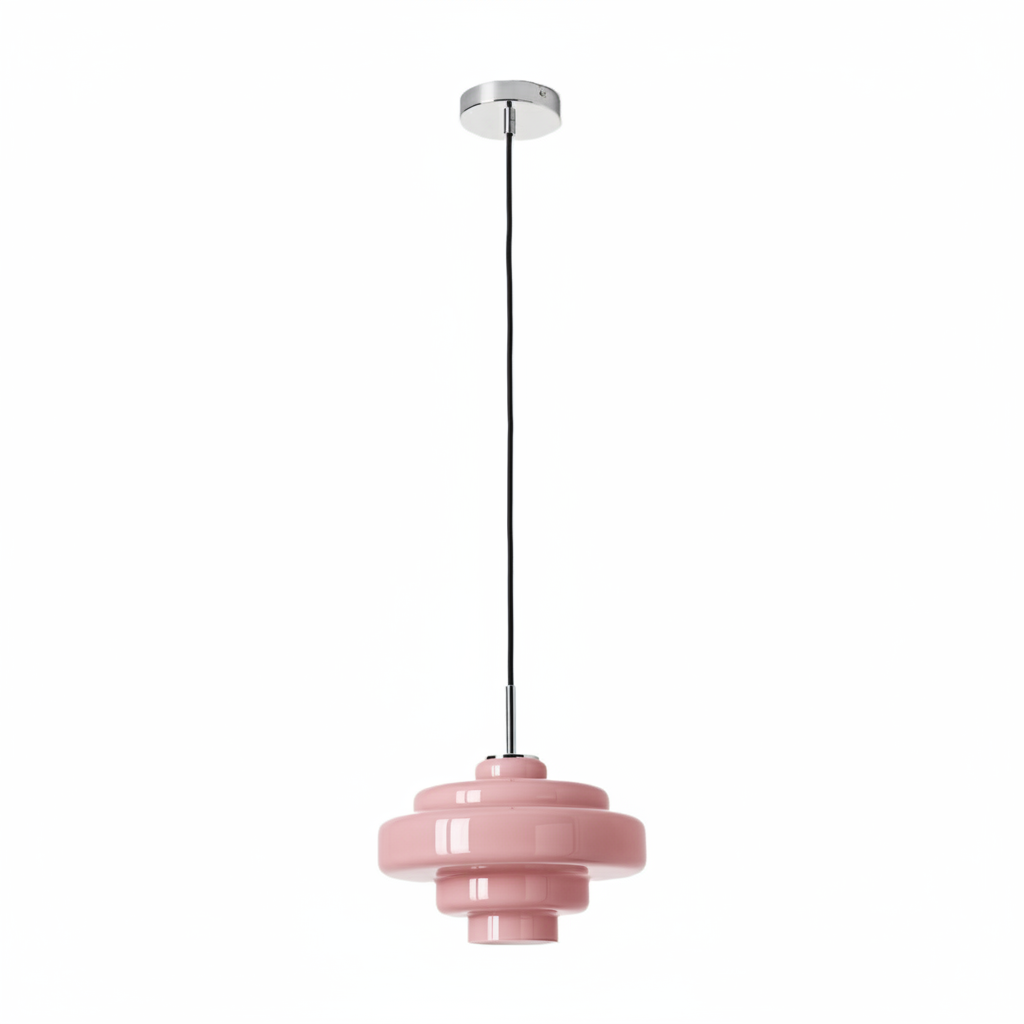
Review the Koloro finish options and hardwired installation details
Questions to Ask Before Buying a Sculptural Pendant
Is it wasteful to choose a light for its unlit appearance?
No. The fixture remains visible all day, but it must still support a workable evening scheme.
Should the pendant match the furniture?
It should relate through shape, undertone or one metal detail, not copy every finish.
Can a decorative pendant be the main room light?
Sometimes, but most rooms feel better with separate ambient and task sources.
How can glare be checked before installation?
Mock up the drop and inspect the bulb position from every seated and standing view.
What if the ceiling is low?
Choose a semi-flush or flush fixture so the sculpture does not become an obstacle.